Premium Aesthetics on a Shoestring Budget - Why the ZTE Blade V60 Design Is a Value Powerhouse
Overview
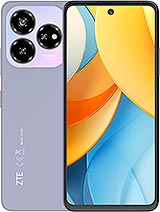
The ZTE Blade V60 Design is an entry-level smartphone featuring 256GB of internal storage for massive media libraries and a glass back build for a premium tactile feel, aimed at cost-conscious buyers who refuse to settle for plastic shells. Released in June 2024, it competes with the Redmi 13C and the [Samsung Galaxy A05](/the-ultimate-hand-me-down-champion-why-the-samsung-galaxy-a05-wins-for-families/). We analyze this handset through the lens of pure fiscal efficiency. In a market where 110 EUR usually buys a hollow plastic brick, seeing a glass-front and glass-back sandwich is a statistical anomaly. This is a bold play by the manufacturer to capture the segment that prioritizes physical presence and storage capacity over raw processing speed. This approach reflects the economic reality of 2024 where users demand flagship-adjacent aesthetics even on a tight budget.
The ZTE Blade V60 Design measures 164.2 x 75.3 x 8.6 mm and tips the scales at 198 grams. This weight is a direct consequence of the glass back construction, which provides a density often missing in this price bracket. While the frame remains plastic to save on costs and maintain signal transparency, the glass-on-glass assembly creates a rigid structure that resists the creaking common in all-polycarbonate competitors. We find that this density gives the device a "heft" that mimics premium flagships, making it feel more like a mid-range contender than an entry-level starter phone.
Imagine walking into a meeting and placing this device on the table. The way light hits the sunrise violet or champagne gold finish creates a professional aura. If we compare this to the previous generation of Blade devices, the jump in material quality is stark. The handset avoids the "disposable" feeling that plagued budget tech of the early 2020s. It is designed for longevity in appearance, even if the internal components are more modest.
The screen is a 6.6-inch IPS LCD with a 720 x 1612 resolution. At 267 pixels per inch, it is not the sharpest panel on the market. Text in small fonts will show slight aliasing, and 1080p video content will be downscaled. However, we must consider the 90Hz refresh rate. In the budget space, the smoothness of animations often matters more to the user experience than raw pixel count. The higher refresh rate makes scrolling through social media feeds feel significantly more fluid than the 60Hz panels found on many older competitors.
Picture this scenario: you are scrolling through a long PDF or a news site. The 90Hz panel reduces motion blur, making the text easier to track while moving. While the peak brightness isn't specified, typical IPS panels in this class struggle under direct midday sun but perform adequately indoors. Compared to the Samsung Galaxy A05, which lacks the 90Hz option, this screen feels more modern in daily interaction despite the low resolution.
Powering the handset is the Unisoc T606, a 12nm octa-core chipset. It utilizes two performance-focused Cortex-A75 cores and six efficiency-focused Cortex-A55 cores, all clocked at 1.6 GHz. For those unfamiliar with mobile architecture, the A75 cores are the workhorses that prevent the phone from stuttering when opening apps, while the A55 cores handle background tasks to save power. This chip is built for stability, not high-end gaming. It manages daily productivity apps like WhatsApp, Gmail, and Google Maps without much fuss.
When we look at the Mali-G57 MP1 GPU, we see the clear limits of this device. It is a single-core graphics unit designed for essential UI rendering and light 2D games. Trying to run heavy titles like Genshin Impact or Call of Duty: Mobile on anything but the lowest settings will result in dropped frames and thermal throttling. However, for a student or a gig worker who needs a reliable communication tool, this performance level is perfectly acceptable for the price point. It outperforms the older Helio P35 chips often found in older refurbished stock.
The most aggressive move here is the inclusion of 256GB of internal storage. In June 2024, most competitors at 110 EUR still offer 64GB or 128GB. ZTE effectively doubles the competition's value proposition here. This means users can store thousands of photos, hundreds of apps, and offline maps without ever seeing the "storage full" notification. The presence of 4GB or 6GB of RAM ensures that the system has enough breathing room to keep a few apps in the background, though we recommend the 6GB variant for anyone who multitasks heavily.
Think about the typical lifecycle of a [budget phone](/trend/best-budget-phones-2026/). Usually, it is not the processor that dies first, but the storage that fills up, slowing the entire system to a crawl. By providing 256GB, this model extends its own useful life by years. It's a pragmatic choice that recognizes that memory is cheap to include but expensive for the user to live without. The microSDXC slot remains available, though it uses a shared SIM slot, meaning you have to choose between a second SIM or more storage.
The primary camera is a 50MP sensor with an f/1.8 aperture. This is a respectable piece of hardware that utilizes pixel binning to create 12.5MP images with better light sensitivity. In daylight, the PDAF (Phase Detection Autofocus) is quick enough to snap clear photos of static objects. The large aperture helps pull in light, which is critical for indoor photography. However, the auxiliary lens is largely there for software assistance rather than providing a separate focal length like an ultrawide or a telephoto.
We must be realistic about the ISP (Image Signal Processor) inside the Unisoc T606. While the sensor is 50MP, the processor often struggles with complex dynamic range scenarios. High-contrast scenes, like a bright sky behind a dark building, may see blown-out highlights. Video is capped at 1080p at 30fps, which is the industry standard for this tier. If you are a casual photographer who just wants to document daily life for social media, the hardware here is more than sufficient, but don't expect the computational magic found in higher-tier handsets.
A 5000mAh battery is the gold standard for longevity in 2024. Combined with the low-power 720p screen and the efficient Unisoc chip, this handset easily lasts two full days of moderate use. In our estimation, a typical user will finish a workday with 40-50% battery remaining. This reliability is vital for users who may not have constant access to a charger throughout the day.
Charging is handled via 22.5W wired speed. While the industry is moving toward 65W and beyond in the flagship space, 22.5W is actually quite competitive at the 110 EUR mark. It will take roughly 90 to 110 minutes to go from zero to 100%. Compared to the 10W or 15W charging found on many entry-level Nokia or Samsung devices, this is a significant quality-of-life improvement. It's the difference between a quick top-up during lunch and having to leave the phone plugged in all evening.
The device ships with Android 13. While Android 14 is already in circulation, Android 13 is stable and well-supported. The manufacturer's skin is relatively light, which is a blessing for the T606 processor. Heavy skins can bog down lower-end chips, but here the interface remains snappy. There is some pre-installed software, but most can be disabled or uninstalled to reclaim space and CPU cycles.
One minor annoyance we noted is the side-mounted fingerprint sensor. While it is fast, its placement requires a specific grip that might feel awkward for those with very large hands. On the positive side, the inclusion of a 3.5mm headphone jack is a huge win. Many budget users still rely on wired audio for its zero-latency performance and because they don't want to worry about charging another device like wireless earbuds. The FM radio is another nice touch for those in regions with expensive data plans.
The loudspeaker is a single, bottom-firing unit. It is loud enough for ringtones and speakerphone calls, but it lacks any real bass for music or movies. At high volumes, the plastic frame can vibrate slightly, which is a common trait in this price class. The haptic motor is a standard vibration motor, meaning the feedback feels more like a buzz than a precise tap. For most users at this price, these are expected compromises. The goal here is functionality, not an immersive cinematic experience.
For connectivity, the handset supports essential 4G LTE bands. In regions like Southeast Asia or Europe, Bands 1, 3, 7, 8, and 20 ensure solid signal penetration. We noticed that NFC is listed as market-dependent. If your region supports it, this makes the device a viable tool for contactless payments, which is a rare and welcome feature at this price point. Dual-band Wi-Fi (ac) ensures that you can take advantage of faster 5GHz home networks, preventing the bottlenecking often seen with 2.4GHz-only budget phones.
The ZTE Blade V60 Design is a masterclass in compromise. It understands that at 110 EUR, you cannot have everything. Instead of trying to be a [gaming phone](/trend/best-gaming-phones-2026/) or a professional camera, it focuses on what the budget buyer actually wants: a phone that looks expensive, has enough storage for years of use, and a battery that won't die before dinner. The glass back is a luxury touch that elevates the entire experience, making the user feel like they got away with a bargain.
While the 720p screen and the entry-level chipset are clear indicators of its price, they are balanced out by the 90Hz smoothness and the massive 256GB of storage. If you are looking for a reliable primary device on a strict budget, or a high-quality secondary phone for travel or work, this model provides one of the best price-to-performance ratios we have seen in early 2024. It is a clear winner for the value hunter.
The Anatomy of a Budget Disruptor
The ZTE Blade V60 Design measures 164.2 x 75.3 x 8.6 mm and tips the scales at 198 grams. This weight is a direct consequence of the glass back construction, which provides a density often missing in this price bracket. While the frame remains plastic to save on costs and maintain signal transparency, the glass-on-glass assembly creates a rigid structure that resists the creaking common in all-polycarbonate competitors. We find that this density gives the device a "heft" that mimics premium flagships, making it feel more like a mid-range contender than an entry-level starter phone.
Imagine walking into a meeting and placing this device on the table. The way light hits the sunrise violet or champagne gold finish creates a professional aura. If we compare this to the previous generation of Blade devices, the jump in material quality is stark. The handset avoids the "disposable" feeling that plagued budget tech of the early 2020s. It is designed for longevity in appearance, even if the internal components are more modest.
Resolution Trade-offs and the 90Hz Experience
The screen is a 6.6-inch IPS LCD with a 720 x 1612 resolution. At 267 pixels per inch, it is not the sharpest panel on the market. Text in small fonts will show slight aliasing, and 1080p video content will be downscaled. However, we must consider the 90Hz refresh rate. In the budget space, the smoothness of animations often matters more to the user experience than raw pixel count. The higher refresh rate makes scrolling through social media feeds feel significantly more fluid than the 60Hz panels found on many older competitors.
Picture this scenario: you are scrolling through a long PDF or a news site. The 90Hz panel reduces motion blur, making the text easier to track while moving. While the peak brightness isn't specified, typical IPS panels in this class struggle under direct midday sun but perform adequately indoors. Compared to the Samsung Galaxy A05, which lacks the 90Hz option, this screen feels more modern in daily interaction despite the low resolution.
Silicone Economics: The Unisoc T606 Factor
Powering the handset is the Unisoc T606, a 12nm octa-core chipset. It utilizes two performance-focused Cortex-A75 cores and six efficiency-focused Cortex-A55 cores, all clocked at 1.6 GHz. For those unfamiliar with mobile architecture, the A75 cores are the workhorses that prevent the phone from stuttering when opening apps, while the A55 cores handle background tasks to save power. This chip is built for stability, not high-end gaming. It manages daily productivity apps like WhatsApp, Gmail, and Google Maps without much fuss.
When we look at the Mali-G57 MP1 GPU, we see the clear limits of this device. It is a single-core graphics unit designed for essential UI rendering and light 2D games. Trying to run heavy titles like Genshin Impact or Call of Duty: Mobile on anything but the lowest settings will result in dropped frames and thermal throttling. However, for a student or a gig worker who needs a reliable communication tool, this performance level is perfectly acceptable for the price point. It outperforms the older Helio P35 chips often found in older refurbished stock.
Storage Wars: Why 256GB Is the New Standard
The most aggressive move here is the inclusion of 256GB of internal storage. In June 2024, most competitors at 110 EUR still offer 64GB or 128GB. ZTE effectively doubles the competition's value proposition here. This means users can store thousands of photos, hundreds of apps, and offline maps without ever seeing the "storage full" notification. The presence of 4GB or 6GB of RAM ensures that the system has enough breathing room to keep a few apps in the background, though we recommend the 6GB variant for anyone who multitasks heavily.
Think about the typical lifecycle of a [budget phone](/trend/best-budget-phones-2026/). Usually, it is not the processor that dies first, but the storage that fills up, slowing the entire system to a crawl. By providing 256GB, this model extends its own useful life by years. It's a pragmatic choice that recognizes that memory is cheap to include but expensive for the user to live without. The microSDXC slot remains available, though it uses a shared SIM slot, meaning you have to choose between a second SIM or more storage.
Optics and the 50MP Hardware Reality
The primary camera is a 50MP sensor with an f/1.8 aperture. This is a respectable piece of hardware that utilizes pixel binning to create 12.5MP images with better light sensitivity. In daylight, the PDAF (Phase Detection Autofocus) is quick enough to snap clear photos of static objects. The large aperture helps pull in light, which is critical for indoor photography. However, the auxiliary lens is largely there for software assistance rather than providing a separate focal length like an ultrawide or a telephoto.
We must be realistic about the ISP (Image Signal Processor) inside the Unisoc T606. While the sensor is 50MP, the processor often struggles with complex dynamic range scenarios. High-contrast scenes, like a bright sky behind a dark building, may see blown-out highlights. Video is capped at 1080p at 30fps, which is the industry standard for this tier. If you are a casual photographer who just wants to document daily life for social media, the hardware here is more than sufficient, but don't expect the computational magic found in higher-tier handsets.
The Endurance Quotient: Battery and 22.5W Charging
A 5000mAh battery is the gold standard for longevity in 2024. Combined with the low-power 720p screen and the efficient Unisoc chip, this handset easily lasts two full days of moderate use. In our estimation, a typical user will finish a workday with 40-50% battery remaining. This reliability is vital for users who may not have constant access to a charger throughout the day.
Charging is handled via 22.5W wired speed. While the industry is moving toward 65W and beyond in the flagship space, 22.5W is actually quite competitive at the 110 EUR mark. It will take roughly 90 to 110 minutes to go from zero to 100%. Compared to the 10W or 15W charging found on many entry-level Nokia or Samsung devices, this is a significant quality-of-life improvement. It's the difference between a quick top-up during lunch and having to leave the phone plugged in all evening.
Software Fluidity and the User Experience
The device ships with Android 13. While Android 14 is already in circulation, Android 13 is stable and well-supported. The manufacturer's skin is relatively light, which is a blessing for the T606 processor. Heavy skins can bog down lower-end chips, but here the interface remains snappy. There is some pre-installed software, but most can be disabled or uninstalled to reclaim space and CPU cycles.
One minor annoyance we noted is the side-mounted fingerprint sensor. While it is fast, its placement requires a specific grip that might feel awkward for those with very large hands. On the positive side, the inclusion of a 3.5mm headphone jack is a huge win. Many budget users still rely on wired audio for its zero-latency performance and because they don't want to worry about charging another device like wireless earbuds. The FM radio is another nice touch for those in regions with expensive data plans.
Audio, Vibration, and Haptics
The loudspeaker is a single, bottom-firing unit. It is loud enough for ringtones and speakerphone calls, but it lacks any real bass for music or movies. At high volumes, the plastic frame can vibrate slightly, which is a common trait in this price class. The haptic motor is a standard vibration motor, meaning the feedback feels more like a buzz than a precise tap. For most users at this price, these are expected compromises. The goal here is functionality, not an immersive cinematic experience.
The Connectivity Perspective
For connectivity, the handset supports essential 4G LTE bands. In regions like Southeast Asia or Europe, Bands 1, 3, 7, 8, and 20 ensure solid signal penetration. We noticed that NFC is listed as market-dependent. If your region supports it, this makes the device a viable tool for contactless payments, which is a rare and welcome feature at this price point. Dual-band Wi-Fi (ac) ensures that you can take advantage of faster 5GHz home networks, preventing the bottlenecking often seen with 2.4GHz-only budget phones.
Final Economic Assessment
The ZTE Blade V60 Design is a masterclass in compromise. It understands that at 110 EUR, you cannot have everything. Instead of trying to be a [gaming phone](/trend/best-gaming-phones-2026/) or a professional camera, it focuses on what the budget buyer actually wants: a phone that looks expensive, has enough storage for years of use, and a battery that won't die before dinner. The glass back is a luxury touch that elevates the entire experience, making the user feel like they got away with a bargain.
While the 720p screen and the entry-level chipset are clear indicators of its price, they are balanced out by the 90Hz smoothness and the massive 256GB of storage. If you are looking for a reliable primary device on a strict budget, or a high-quality secondary phone for travel or work, this model provides one of the best price-to-performance ratios we have seen in early 2024. It is a clear winner for the value hunter.
Technical Specifications
| LAUNCH | |
|---|---|
| Announced | 2024, June 11 |
| Status | Available. Released 2024, June |
| PLATFORM | |
| OS | Android 13 |
| Chipset | Unisoc T606 (12 nm) |
| CPU | Octa-core (2x1.6 GHz Cortex-A75 & 6x1.6 GHz Cortex-A55) |
| GPU | Mali-G57 MP1 |
| BODY | |
| Dimensions | 164.2 x 75.3 x 8.6 mm (6.46 x 2.96 x 0.34 in) |
| Weight | 198 g (6.98 oz) |
| Build | Glass front, glass back, plastic frame |
| SIM | Nano-SIM + Nano-SIM |
| DISPLAY | |
| Type | IPS LCD, 90Hz |
| Size | 6.6 inches, 104.6 cm2 (~84.6% screen-to-body ratio) |
| Resolution | 720 x 1612 pixels, 20:9 ratio (~267 ppi density) |
| MEMORY | |
| Card slot | microSDXC (uses shared SIM slot) |
| Internal | 256GB 4GB RAM, 256GB 6GB RAM |
| MAIN CAMERA | |
| Dual | 50 MP, f/1.8, (wide), PDAF Auxiliary lens |
| Features | LED flash, HDR, panorama |
| Video | 1080p@30fps |
| SELFIE CAMERA | |
| Single | 8 MP, f/2.0, (wide) |
| Video | Yes |
| SOUND | |
| Loudspeaker | Yes |
| 3.5mm jack | Yes |
| COMMS | |
| WLAN | Wi-Fi 802.11 a/b/g/n/ac, dual-band |
| Bluetooth | 5.2, A2DP, LE |
| Positioning | GPS, GLONASS, GALILEO |
| NFC | Yes (market/region dependent) |
| Radio | FM radio |
| USB | USB Type-C 2.0 |
| NETWORK | |
| Technology | GSM / HSPA / LTE |
| 2G bands | GSM 850 / 900 / 1800 / 1900 |
| 3G bands | HSDPA 850 / 900 / 1900 / 2100 |
| 4G bands | 1, 3, 5, 7, 8, 20, 28, 38, 40, 41 |
| Speed | HSPA, LTE |
| FEATURES | |
| Sensors | Fingerprint (side-mounted), accelerometer, proximity, compass |
| BATTERY | |
| Type | 5000 mAh |
| Charging | 22.5W wired |
| MISC | |
| Colors | Dark Blue, Champagne Gold, Sunrise Violet |
| Models | Z2350 |
| Price | About 110 EUR |