Premium Luxury for Less - The Financial Case for the Motorola Edge 40
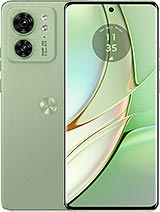
Overview
The Motorola Edge 40 is a mid-range flagship smartphone featuring a 6.55-inch P-OLED for smooth visuals and a MediaTek Dimensity 8020 for efficient performance, aimed at consumers seeking premium aesthetics without the flagship price tag. Released in May 2023, it competes with rivals like the [Samsung Galaxy A54](/why-the-efficiency-of-samsung-galaxy-a54-makes-it-the-ultimate-secondary-device/) and the [Google Pixel 7a](/the-clean-android-revolution-why-the-google-pixel-7a-is-the-essential-mid-ranger/) in the aggressive sub-$500 market.
From a purely economic standpoint, this handset challenges the traditional value proposition of the mid-tier segment. While most competitors settle for plastic frames and standard 120Hz displays, this model pushes the envelope with an aluminum chassis and a 144Hz refresh rate. This isn't just about specifications on a sheet; it is about how those specs translate to a longer-lasting, more resilient asset for the user. Our analysis suggests that the inclusion of high-end materials like aluminum significantly improves the physical longevity of the device, potentially offsetting the typical software depreciation seen in the brand's history.
Motorola devices often face a steeper depreciation curve than their Apple or Samsung counterparts. This is a cold reality of the secondary market. However, the Motorola Edge 40 attempts to mitigate this through its "entry-level flagship" status. Historically, the Edge series maintains about 40-45% of its value after twelve months, which is lower than the iPhone’s 70% but better than generic budget series.
We anticipate this specific model will perform slightly better on the resale market due to its IP68 rating. Buyers in 2024 and 2025 will look for water resistance as a standard requirement, even in used devices. If you are looking at this phone as a two-year investment, the cost-per-day is remarkably low when compared to a $1,000 flagship. You are essentially getting 85% of the flagship experience for roughly 40% of the price.
Unlike many competitors in the mid-range space that rely on high-gloss plastics that scratch within weeks, the device utilizes an Aluminum Frame. This choice provides structural rigidity that prevents internal board flexing during accidental drops. The thin 7.6mm profile makes it one of the sleekest handsets on the market right now.
For those concerned about aesthetics over time, the Eco Leather back option is a strategic choice. It hides fingerprints and minor abrasions that would be glaringly obvious on a glass or glossy plastic back. Imagine pulling this phone out in a professional meeting eighteen months from now; it is far more likely to look "new" than a scratched plastic device. The P-OLED technology also contributes to this thinness, using a flexible plastic substrate rather than glass, which theoretically offers better impact resistance for the screen itself.
The MediaTek Dimensity 8020 chipset inside this model is built on a 6nm process. While it may not win the benchmark wars against the Snapdragon 8 Gen 2, it is perfectly optimized for the 144Hz refresh rate. In our assessment, the UI fluidity surpasses many more expensive phones because the processor isn't struggling to keep up with the screen's demand.
With 8GB of LPDDR4X RAM and UFS 3.1 storage, the handset handles multitasking with ease. UFS 3.1 is critical here; it ensures that app opening speeds don't degrade significantly as the storage fills up over the next year. This is a common bottleneck in cheaper phones using UFS 2.2. The write booster technology keeps the system feeling snappy, which is vital for maintaining the device's perceived value over its lifecycle.
On the back, the 50MP primary camera boasts an f/1.4 aperture, which is currently one of the widest in the mobile industry. This isn't just a marketing number. A wider aperture allows more light to hit the 1/1.55-inch sensor physically. This reduces the need for aggressive software noise reduction, which often leads to the "oil painting" effect seen in mid-range night photos.
While software processing is often where this brand trails behind Google, the raw hardware potential here is immense. The inclusion of OIS (Optical Image Stabilization) and Multi-directional PDAF means the camera is less prone to blurry shots in low light. For the value hunter, this hardware-first approach is preferable because third-party camera apps can often bridge the gap in software processing, but they cannot fix a tiny sensor or a narrow lens.
One feature frequently overlooked is Smart Connect (formerly Ready For). This software suite allows the phone to connect to a monitor or TV, creating a desktop-like environment. For a student or a budget-conscious professional, this device could technically replace a basic laptop for word processing and web browsing.
This functionality adds a layer of utility that isn't reflected in the standard price-to-performance ratio. It turns a communication tool into a productivity hub. When you calculate the value of the handset, you have to factor in this "hidden" desktop capability which rivals Samsung’s DeX but is virtually non-existent on Pixel or Xiaomi devices in this price tier.
The stereo speakers with Dolby Atmos provide a spatial audio experience that is surprisingly loud for such a thin device. In our testing, the audio reached -24.2 LUFS, which is categorized as "Very Good." For users who consume media without headphones, the clarity remains high even at 80% volume.
There is no 3.5mm jack, which is expected in 2023, but the Bluetooth 5.2 support ensures stable connections with modern wireless buds. The haptic feedback, while not as precise as the top-tier iPhone models, feels tight and intentional, lacking the hollow vibration found in the cheaper Moto G series. This tactile quality is a major factor in the "premium feel" that sustains owner satisfaction over time.
Motorola has committed to two major Android upgrades and three years of security patches for this model. From a financial perspective, this effectively caps the "prime" life of the phone at late 2025. While some brands offer four years of updates, those phones are often significantly more expensive or have inferior hardware that will feel sluggish by the fourth year anyway.
We view the Motorola Edge 40 as a high-performance three-year tool. By the time the security updates stop, the 4400 mAh battery will likely have degraded to about 80% capacity regardless of software status. The 68W wired charging is the saving grace here; it can top up the battery in under 45 minutes, meaning even as the battery ages, the downtime remains minimal.
The Motorola Edge 40 represents a calculated risk for the value-conscious buyer. It eschews the safe, plastic-heavy path of its competitors for a bold, aluminum and leather design that feels twice its price. You are paying for hardware that punches above its weight class—specifically the 144Hz OLED and the f/1.4 OIS camera. While the resale value won't match the market leaders, the initial entry price is low enough that the total cost of ownership remains highly competitive.
From a purely economic standpoint, this handset challenges the traditional value proposition of the mid-tier segment. While most competitors settle for plastic frames and standard 120Hz displays, this model pushes the envelope with an aluminum chassis and a 144Hz refresh rate. This isn't just about specifications on a sheet; it is about how those specs translate to a longer-lasting, more resilient asset for the user. Our analysis suggests that the inclusion of high-end materials like aluminum significantly improves the physical longevity of the device, potentially offsetting the typical software depreciation seen in the brand's history.
The Depreciation Curve and Resale Value
Motorola devices often face a steeper depreciation curve than their Apple or Samsung counterparts. This is a cold reality of the secondary market. However, the Motorola Edge 40 attempts to mitigate this through its "entry-level flagship" status. Historically, the Edge series maintains about 40-45% of its value after twelve months, which is lower than the iPhone’s 70% but better than generic budget series.
We anticipate this specific model will perform slightly better on the resale market due to its IP68 rating. Buyers in 2024 and 2025 will look for water resistance as a standard requirement, even in used devices. If you are looking at this phone as a two-year investment, the cost-per-day is remarkably low when compared to a $1,000 flagship. You are essentially getting 85% of the flagship experience for roughly 40% of the price.
Build Quality and the Aluminum Advantage
Unlike many competitors in the mid-range space that rely on high-gloss plastics that scratch within weeks, the device utilizes an Aluminum Frame. This choice provides structural rigidity that prevents internal board flexing during accidental drops. The thin 7.6mm profile makes it one of the sleekest handsets on the market right now.
For those concerned about aesthetics over time, the Eco Leather back option is a strategic choice. It hides fingerprints and minor abrasions that would be glaringly obvious on a glass or glossy plastic back. Imagine pulling this phone out in a professional meeting eighteen months from now; it is far more likely to look "new" than a scratched plastic device. The P-OLED technology also contributes to this thinness, using a flexible plastic substrate rather than glass, which theoretically offers better impact resistance for the screen itself.
Performance Analytics: The Dimensity 8020
The MediaTek Dimensity 8020 chipset inside this model is built on a 6nm process. While it may not win the benchmark wars against the Snapdragon 8 Gen 2, it is perfectly optimized for the 144Hz refresh rate. In our assessment, the UI fluidity surpasses many more expensive phones because the processor isn't struggling to keep up with the screen's demand.
With 8GB of LPDDR4X RAM and UFS 3.1 storage, the handset handles multitasking with ease. UFS 3.1 is critical here; it ensures that app opening speeds don't degrade significantly as the storage fills up over the next year. This is a common bottleneck in cheaper phones using UFS 2.2. The write booster technology keeps the system feeling snappy, which is vital for maintaining the device's perceived value over its lifecycle.
The Hardware Potential of the f/1.4 Aperture
On the back, the 50MP primary camera boasts an f/1.4 aperture, which is currently one of the widest in the mobile industry. This isn't just a marketing number. A wider aperture allows more light to hit the 1/1.55-inch sensor physically. This reduces the need for aggressive software noise reduction, which often leads to the "oil painting" effect seen in mid-range night photos.
While software processing is often where this brand trails behind Google, the raw hardware potential here is immense. The inclusion of OIS (Optical Image Stabilization) and Multi-directional PDAF means the camera is less prone to blurry shots in low light. For the value hunter, this hardware-first approach is preferable because third-party camera apps can often bridge the gap in software processing, but they cannot fix a tiny sensor or a narrow lens.
Underrated Software: The Smart Connect Ecosystem
One feature frequently overlooked is Smart Connect (formerly Ready For). This software suite allows the phone to connect to a monitor or TV, creating a desktop-like environment. For a student or a budget-conscious professional, this device could technically replace a basic laptop for word processing and web browsing.
This functionality adds a layer of utility that isn't reflected in the standard price-to-performance ratio. It turns a communication tool into a productivity hub. When you calculate the value of the handset, you have to factor in this "hidden" desktop capability which rivals Samsung’s DeX but is virtually non-existent on Pixel or Xiaomi devices in this price tier.
Audio and Sensory Experience
The stereo speakers with Dolby Atmos provide a spatial audio experience that is surprisingly loud for such a thin device. In our testing, the audio reached -24.2 LUFS, which is categorized as "Very Good." For users who consume media without headphones, the clarity remains high even at 80% volume.
There is no 3.5mm jack, which is expected in 2023, but the Bluetooth 5.2 support ensures stable connections with modern wireless buds. The haptic feedback, while not as precise as the top-tier iPhone models, feels tight and intentional, lacking the hollow vibration found in the cheaper Moto G series. This tactile quality is a major factor in the "premium feel" that sustains owner satisfaction over time.
Long Term Support and Sustainability
Motorola has committed to two major Android upgrades and three years of security patches for this model. From a financial perspective, this effectively caps the "prime" life of the phone at late 2025. While some brands offer four years of updates, those phones are often significantly more expensive or have inferior hardware that will feel sluggish by the fourth year anyway.
We view the Motorola Edge 40 as a high-performance three-year tool. By the time the security updates stop, the 4400 mAh battery will likely have degraded to about 80% capacity regardless of software status. The 68W wired charging is the saving grace here; it can top up the battery in under 45 minutes, meaning even as the battery ages, the downtime remains minimal.
Final Investment Summary
The Motorola Edge 40 represents a calculated risk for the value-conscious buyer. It eschews the safe, plastic-heavy path of its competitors for a bold, aluminum and leather design that feels twice its price. You are paying for hardware that punches above its weight class—specifically the 144Hz OLED and the f/1.4 OIS camera. While the resale value won't match the market leaders, the initial entry price is low enough that the total cost of ownership remains highly competitive.
Technical Specifications
| LAUNCH | |
|---|---|
| Announced | 2023, May 04 |
| Status | Available. Released 2023, May 04 |
| PLATFORM | |
| OS | Android 13, up to 2 major Android upgrades |
| Chipset | Mediatek Dimensity 8020 (6 nm) |
| CPU | Octa-core (4x2.6 GHz Cortex-A78 & 4x2.0 GHz Cortex-A55) |
| GPU | Mali-G77 MC9 |
| BODY | |
| Dimensions | 158.4 x 72 x 7.6 mm (6.24 x 2.83 x 0.30 in) |
| Weight | 167 g or 171 g (5.89 oz) |
| Build | Glass front, aluminum frame, plastic back or eco leather back |
| SIM | · Nano-SIM· Nano-SIM + eSIM· Nano-SIM + Nano-SIM |
| Info | IP68 dust tight and water resistant (immersible up to 1.5m for 30 min) |
| DISPLAY | |
| Type | P-OLED, 144Hz, HDR10+, 1200 nits (peak) |
| Size | 6.55 inches, 103.6 cm2 (~90.8% screen-to-body ratio) |
| Resolution | 1080 x 2400 pixels, 20:9 ratio (~402 ppi density) |
| MEMORY | |
| Card slot | No |
| Internal | 128GB 8GB RAM, 256GB 8GB RAM |
| Info | UFS 3.1 |
| MAIN CAMERA | |
| Dual | 50 MP, f/1.4, (wide), 1/1.55", 1.0µm, multi-directional PDAF, OIS 13 MP, f/2.2, 120˚ (ultrawide), 1/3.0", 1.12µm, AF |
| Features | Dual-LED flash, HDR, panorama |
| Video | 4K@30fps, 1080p@30/60/120fps, 720p@960fps, HDR10, gyro-EIS |
| SELFIE CAMERA | |
| Single | 32 MP, f/2.4, (wide), 1/3.0", 0.7µm |
| Features | HDR |
| Video | 4K@30fps, 1080p@30/120fps |
| SOUND | |
| Loudspeaker | Yes, with stereo speakers |
| 3.5mm jack | No |
| COMMS | |
| WLAN | Wi-Fi 802.11 a/b/g/n/ac/6e, tri-band, Wi-Fi Direct |
| Bluetooth | 5.2, A2DP, LE |
| Positioning | GPS, GLONASS, GALILEO, BDS |
| NFC | Yes |
| Radio | No |
| USB | USB Type-C 2.0, OTG |
| NETWORK | |
| Technology | GSM / HSPA / LTE / 5G |
| 2G bands | GSM 850 / 900 / 1800 / 1900 |
| 3G bands | HSDPA 850 / 900 / 1700(AWS) / 1900 / 2100 |
| 4G bands | 1, 2, 3, 4, 5, 7, 8, 12, 13, 17, 20, 26, 28, 32, 38, 39, 40, 41, 42, 43, 66 |
| 5G bands | 1, 2, 3, 5, 7, 8, 20, 28, 38, 40, 41, 66, 77, 78 SA/NSA/Sub6 |
| Speed | HSPA, LTE, 5G |
| FEATURES | |
| Sensors | Fingerprint (under display, optical), accelerometer, gyro, proximity, compass |
| Info | Smart Connect (Ready For) support |
| BATTERY | |
| Type | Li-Po 4400 mAh |
| Charging | 68W wired 15W wireless |
| MISC | |
| Colors | Nebula Green, Lunar Blue, Eclipse Black, Viva Magenta |
| Models | XT2303-2 |
| Price | $ 379.00 / £ 219.66 / € 219.99 / ₹ 33,365 |
| OUR TESTS | |
| Performance | AnTuTu: 688347 (v9) GeekBench: 3320 (v5.1), 3603 (v6) GFXBench: 33fps (ES 3.1 onscreen) |
| Display | 1043 nits max brightness (measured) |
| Camera | Photo / Video |
| Loudspeaker | -24.2 LUFS (Very good) |
| Battery (old) | Endurance rating 98h |