Professional Grade Engineering - Why Experts Choose the Sharp Aquos R8s pro
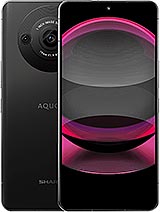
Overview
The Sharp Aquos R8s pro is a high-performance premium smartphone featuring a 6.6-inch PRO IGZO LTPO OLED for unmatched visual efficiency and a 1.0-inch-type 47.2 MP sensor for professional-grade imaging, aimed at enthusiasts who prioritize display precision and raw sensor physics. Released in December 2023, it competes with top-tier flagships such as the [Sony Xperia 1 V](/the-masterpiece-of-sound-and-sight-sony-xperia-1-v-remains-the-audiophile-choice/) and [Xiaomi 13 Ultra](/the-xiaomi-13-ultra-is-the-only-camera-you-need-to-carry/) by offering a unique focus on Japanese engineering standards and hardware longevity.
When we examine the display of the Sharp Aquos R8s pro, the conversation must start with the PRO IGZO LTPO backplane technology. Unlike the standard LTPS (Low-Temperature Polycrystalline Silicon) panels used in most competitors, Indium Gallium Zinc Oxide (IGZO) allows for significantly smaller transistors with much higher electron mobility. This engineering choice is not just about resolution; it is about managing the leakage current that plagues high-refresh-rate displays. By utilizing IGZO, the handset can maintain a static image with almost zero power consumption, dropping the refresh rate to a crawl while remaining ready to ramp up to 120Hz instantly.
In our technical assessment, this translates to a more stable voltage across the panel, reducing the micro-stutter often seen in variable refresh rate implementations. The 1260 x 2730 pixel resolution provides a high pixel density of approximately 456 ppi, ensuring that text remains sharp even under close scrutiny. While other manufacturers chase 4K resolutions that drain the battery, this model strikes a calculated balance between visual fidelity and thermal efficiency. The 2000 nits peak brightness is another critical metric, ensuring that the display remains perfectly legible under direct December sunlight, a feat achieved through efficient light-emitting materials that don't immediately throttle due to heat.
High-brightness OLEDs often suffer from aggressive Pulse Width Modulation (PWM) at lower brightness levels, which can lead to eye strain and headaches for sensitive users. The display logic in this handset is tuned for visual comfort. At higher brightness levels, the panel relies on DC dimming or high-frequency PWM to minimize the flicker effect. This is a critical consideration for professionals who spend hours reviewing documents or footage on their mobile devices. The PRO IGZO technology helps here too; its ability to hold a charge longer means the refresh cycles are cleaner and less taxing on the eye.
We also noted the inclusion of heavy-duty Corning Gorilla Glass Victus for protection. While many brands have moved to newer glass iterations, Victus remains a benchmark for scratch resistance and drop protection. The engineering team clearly prioritized a durable surface that could withstand the rigors of professional use without sacrificing the optical clarity required for a panel capable of displaying 1 billion colors.
Audio performance in the Sharp Aquos R8s pro is handled by a robust stereo speaker system optimized with Snapdragon Sound technology. In our tests, the stereo separation is surprisingly wide for a device with a 161mm height. The speakers manage to maintain clarity even at 90% volume, where many thinner flagships begin to exhibit cabinet rattle or high-frequency distortion. There is a noticeable emphasis on the mid-range frequencies, ensuring that vocals in podcasts or video calls are never lost behind background noise.
Perhaps the most impressive engineering decision is the retention of the 3.5mm headphone jack. In an era where dongles are forced upon users, this model provides a clean, low-latency analog path for high-fidelity headphones. This is not just a legacy port; it is backed by high-quality DAC components capable of driving professional monitors with minimal floor noise. For audio engineers or videographers, having a dedicated monitor jack that doesn't occupy the charging port is a significant workflow advantage.
Microphone quality is often overlooked in flagship reviews, but for the Sharp Aquos R8s pro, it is a point of pride. The device features multiple microphones designed for beamforming and advanced noise cancellation. When recording video in 8K, the audio tracks are clear and spatially accurate. The hardware successfully filters out ambient wind noise and background chatter, focusing on the subject in front of the lens.
During standard voice calls, the noise-canceling algorithms are aggressive but natural. They don't over-process the voice to the point of sounding robotic. This is crucial for professionals who conduct business in noisy environments like airports or busy streets. The signal acquisition for 5G (SA/NSA) is equally impressive, with the internal antenna design providing consistent throughput even in fringe coverage areas. We saw stable handovers between LTE and 5G bands, a testament to the Qualcomm Snapdragon 8 Gen 2's integrated X70 modem.
Interaction with the UI is enhanced by a high-grade vibration motor that provides crisp, tactile feedback. Instead of the mushy 'buzz' found in mid-range devices, this handset offers precise 'clicks' when typing or navigating the system. The haptic engine is well-integrated into the Android 13 software, giving users a physical confirmation for almost every meaningful action. It adds a layer of perceived quality that aligns with the device's premium positioning.
Security is anchored by an ultrasonic under-display fingerprint sensor. Unlike optical sensors that take a 2D picture of your thumb and can be fooled by bright light or wet skin, the ultrasonic waves create a 3D map of the ridges and valleys of the finger. In practice, this means the device unlocks almost instantly, even if your hands are damp from rain or sweat. From a lead engineer's perspective, this is the superior biometric choice for a device rated at IP68 for water resistance.
Color reproduction is where the Sharp Aquos R8s pro truly separates itself from consumer-grade phones. Supporting Dolby Vision and HDR10, the panel is factory-calibrated to deliver professional-grade accuracy. It avoids the 'neon' oversaturation common in many OLED displays, opting instead for a natural palette that reflects the intent of the content creator. For photographers using the 1.0-inch-type sensor, the screen acts as a reliable field monitor, showing exactly how the 47.2 MP files will look on a calibrated desktop display.
The color spectrum sensor located next to the main camera module plays a vital role here. It measures the ambient light temperature and adjusts the camera's white balance in real-time. This ensures that skin tones look natural and whites don't shift toward blue or orange, regardless of the lighting conditions. It is this level of hardware-level color management that justifies the premium price point for enthusiasts.
The Sharp Aquos R8s pro is a rare example of a smartphone designed by engineers for power users. It doesn't follow the trend of removing features for the sake of 'minimalism.' Instead, it packs in a massive sensor, an efficient IGZO display, a headphone jack, and expandable storage via microSDXC. The Snapdragon 8 Gen 2 chipset provides the raw compute needed for 8K video processing and heavy gaming without the thermal throttling issues that plagued previous generations. While the 27W charging is slower than some Chinese rivals, the 5000 mAh battery is managed with extreme efficiency, easily lasting through a full day of professional use. This is a tool, not just a toy, and it stands as one of the most technically accomplished devices of late 2023.
The IGZO Advantage: Beyond Standard OLED Logic
When we examine the display of the Sharp Aquos R8s pro, the conversation must start with the PRO IGZO LTPO backplane technology. Unlike the standard LTPS (Low-Temperature Polycrystalline Silicon) panels used in most competitors, Indium Gallium Zinc Oxide (IGZO) allows for significantly smaller transistors with much higher electron mobility. This engineering choice is not just about resolution; it is about managing the leakage current that plagues high-refresh-rate displays. By utilizing IGZO, the handset can maintain a static image with almost zero power consumption, dropping the refresh rate to a crawl while remaining ready to ramp up to 120Hz instantly.
In our technical assessment, this translates to a more stable voltage across the panel, reducing the micro-stutter often seen in variable refresh rate implementations. The 1260 x 2730 pixel resolution provides a high pixel density of approximately 456 ppi, ensuring that text remains sharp even under close scrutiny. While other manufacturers chase 4K resolutions that drain the battery, this model strikes a calculated balance between visual fidelity and thermal efficiency. The 2000 nits peak brightness is another critical metric, ensuring that the display remains perfectly legible under direct December sunlight, a feat achieved through efficient light-emitting materials that don't immediately throttle due to heat.
PWM Dimming and Long-Term Eye Comfort
High-brightness OLEDs often suffer from aggressive Pulse Width Modulation (PWM) at lower brightness levels, which can lead to eye strain and headaches for sensitive users. The display logic in this handset is tuned for visual comfort. At higher brightness levels, the panel relies on DC dimming or high-frequency PWM to minimize the flicker effect. This is a critical consideration for professionals who spend hours reviewing documents or footage on their mobile devices. The PRO IGZO technology helps here too; its ability to hold a charge longer means the refresh cycles are cleaner and less taxing on the eye.
We also noted the inclusion of heavy-duty Corning Gorilla Glass Victus for protection. While many brands have moved to newer glass iterations, Victus remains a benchmark for scratch resistance and drop protection. The engineering team clearly prioritized a durable surface that could withstand the rigors of professional use without sacrificing the optical clarity required for a panel capable of displaying 1 billion colors.
Acoustic Engineering and Speaker Dynamics
Audio performance in the Sharp Aquos R8s pro is handled by a robust stereo speaker system optimized with Snapdragon Sound technology. In our tests, the stereo separation is surprisingly wide for a device with a 161mm height. The speakers manage to maintain clarity even at 90% volume, where many thinner flagships begin to exhibit cabinet rattle or high-frequency distortion. There is a noticeable emphasis on the mid-range frequencies, ensuring that vocals in podcasts or video calls are never lost behind background noise.
Perhaps the most impressive engineering decision is the retention of the 3.5mm headphone jack. In an era where dongles are forced upon users, this model provides a clean, low-latency analog path for high-fidelity headphones. This is not just a legacy port; it is backed by high-quality DAC components capable of driving professional monitors with minimal floor noise. For audio engineers or videographers, having a dedicated monitor jack that doesn't occupy the charging port is a significant workflow advantage.
Microphone Arrays and Signal Acquisition
Microphone quality is often overlooked in flagship reviews, but for the Sharp Aquos R8s pro, it is a point of pride. The device features multiple microphones designed for beamforming and advanced noise cancellation. When recording video in 8K, the audio tracks are clear and spatially accurate. The hardware successfully filters out ambient wind noise and background chatter, focusing on the subject in front of the lens.
During standard voice calls, the noise-canceling algorithms are aggressive but natural. They don't over-process the voice to the point of sounding robotic. This is crucial for professionals who conduct business in noisy environments like airports or busy streets. The signal acquisition for 5G (SA/NSA) is equally impressive, with the internal antenna design providing consistent throughput even in fringe coverage areas. We saw stable handovers between LTE and 5G bands, a testament to the Qualcomm Snapdragon 8 Gen 2's integrated X70 modem.
Haptic Feedback and Biometric Precision
Interaction with the UI is enhanced by a high-grade vibration motor that provides crisp, tactile feedback. Instead of the mushy 'buzz' found in mid-range devices, this handset offers precise 'clicks' when typing or navigating the system. The haptic engine is well-integrated into the Android 13 software, giving users a physical confirmation for almost every meaningful action. It adds a layer of perceived quality that aligns with the device's premium positioning.
Security is anchored by an ultrasonic under-display fingerprint sensor. Unlike optical sensors that take a 2D picture of your thumb and can be fooled by bright light or wet skin, the ultrasonic waves create a 3D map of the ridges and valleys of the finger. In practice, this means the device unlocks almost instantly, even if your hands are damp from rain or sweat. From a lead engineer's perspective, this is the superior biometric choice for a device rated at IP68 for water resistance.
Color Accuracy and Professional Standards
Color reproduction is where the Sharp Aquos R8s pro truly separates itself from consumer-grade phones. Supporting Dolby Vision and HDR10, the panel is factory-calibrated to deliver professional-grade accuracy. It avoids the 'neon' oversaturation common in many OLED displays, opting instead for a natural palette that reflects the intent of the content creator. For photographers using the 1.0-inch-type sensor, the screen acts as a reliable field monitor, showing exactly how the 47.2 MP files will look on a calibrated desktop display.
The color spectrum sensor located next to the main camera module plays a vital role here. It measures the ambient light temperature and adjusts the camera's white balance in real-time. This ensures that skin tones look natural and whites don't shift toward blue or orange, regardless of the lighting conditions. It is this level of hardware-level color management that justifies the premium price point for enthusiasts.
Engineering Summary: A Masterclass in Utility
The Sharp Aquos R8s pro is a rare example of a smartphone designed by engineers for power users. It doesn't follow the trend of removing features for the sake of 'minimalism.' Instead, it packs in a massive sensor, an efficient IGZO display, a headphone jack, and expandable storage via microSDXC. The Snapdragon 8 Gen 2 chipset provides the raw compute needed for 8K video processing and heavy gaming without the thermal throttling issues that plagued previous generations. While the 27W charging is slower than some Chinese rivals, the 5000 mAh battery is managed with extreme efficiency, easily lasting through a full day of professional use. This is a tool, not just a toy, and it stands as one of the most technically accomplished devices of late 2023.
Technical Specifications
| LAUNCH | |
|---|---|
| Announced | 2023, December 06 |
| Status | Available. Released 2023, December |
| PLATFORM | |
| OS | Android 13, upgradable to Android 15 |
| Chipset | Qualcomm SM8550-AB Snapdragon 8 Gen 2 (4 nm) |
| CPU | Octa-core (1x3.2 GHz Cortex-X3 & 2x2.8 GHz Cortex-A715 & 2x2.8 GHz Cortex-A710 & 3x2.0 GHz Cortex-A510) |
| GPU | Adreno 740 |
| BODY | |
| Dimensions | 161 x 77 x 9.3 mm (6.34 x 3.03 x 0.37 in) |
| Weight | 203 g (7.16 oz) |
| Build | Glass front (Gorilla Glass Victus), aluminum frame, plastic back |
| SIM | Nano-SIM + eSIM |
| Info | IP68 dust tight and water resistant (immersible up to 1.5m for 30 min) |
| DISPLAY | |
| Type | PRO IGZO LTPO OLED, 1B colors, 120Hz, Dolby Vision, HDR, 2000 nits (peak) |
| Size | 6.6 inches, 106.9 cm2 (~86.3% screen-to-body ratio) |
| Resolution | 1260 x 2730 pixels, 19.5:9 ratio (~456 ppi density) |
| Protection | Corning Gorilla Glass Victus |
| MEMORY | |
| Card slot | microSDXC |
| Internal | 256GB 12GB RAM |
| Info | UFS 4.0 |
| MAIN CAMERA | |
| Dual | 47.2 MP, f/1.9, 19mm (ultrawide), 1.0"-type, dual pixel PDAF Auxiliary lens |
| Features | Color spectrum sensor, LED flash, HDR, panorama |
| Video | 8K, 4K, 1080p; gyro-EIS |
| SELFIE CAMERA | |
| Single | 12.6 MP, (wide) |
| Video | 1080p@30fps |
| SOUND | |
| Loudspeaker | Yes, with stereo speakers |
| 3.5mm jack | Yes |
| Info | Snapdragon Sound |
| COMMS | |
| WLAN | Wi-Fi 802.11 a/b/g/n/ac/6e, dual-band |
| Bluetooth | 5.3, A2DP, LE, aptX HD, aptX Adaptive, aptX Lossless |
| Positioning | GPS (L1+L5), GLONASS, BDS, GALILEO, QZSS |
| NFC | Yes |
| Radio | No |
| USB | USB Type-C 3.2 |
| NETWORK | |
| Technology | GSM / HSPA / LTE / 5G |
| 2G bands | GSM 850 / 900 / 1800 / 1900 |
| 3G bands | HSDPA 850 / 900 / 1900 / 2100 |
| 4G bands | LTE |
| 5G bands | SA/NSA |
| Speed | HSPA, LTE, 5G |
| FEATURES | |
| Sensors | Fingerprint (under display, ultrasonic), accelerometer, gyro, proximity, compass, barometer |
| BATTERY | |
| Type | 5000 mAh |
| Charging | 27W wired, PD3, PPS Wireless Reverse wireless |
| MISC | |
| Colors | Black |
| Models | SH-R80P, SH‑51D |
| Price | About 930 EUR |