Redefining the Wrist - Why Apple Watch Series 10 Aluminum Is Essential
Overview
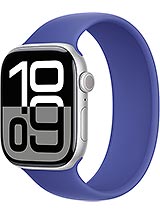
The Apple Watch Series 10 Aluminum is a premium health-tracking wearable featuring a Retina LTPO3 OLED display for enhanced visibility and an Apple S10 SiP for efficient processing, aimed at users seeking a comprehensive wellness companion. Released in September 2024, it competes with the Galaxy Watch 7 and the Pixel Watch 3 by offering a refined chassis and advanced medical-grade sensors. This device represents a shift toward thinner, more ergonomic hardware without sacrificing the sensor array that makes it a vital tool for physiological monitoring.
The Apple Watch Series 10 Aluminum arrives with a physical profile that challenges the bulky nature of previous high-performance wearables. Measuring just 9.7 mm in thickness, this model is significantly slimmer than its predecessors, a feat achieved by redesigning the internal SiP and the speaker system. The dimensions of 46 x 39 mm provide a massive screen area, yet the weight of 35.3 g for the larger version ensures it remains comfortable for all-day use. The use of an aluminum frame paired with a ceramic and sapphire crystal back suggests a construction that balances lightweight agility with structural integrity.
In a daily use scenario, the thinner profile reduces the likelihood of the device catching on shirt cuffs or gym equipment. During a standard workout session, the weight distribution remains centered, preventing the shifting that often plagues heavier smartwatches. This stability is crucial for the optical heart rate sensor to maintain consistent skin contact, which is necessary for accurate data acquisition during high-intensity interval training or long-distance running. The 50m water resistance and IP6X dust resistance mean it can transition from a dusty trail run to a swimming pool without hesitation.
Compared to the Series 9, the 10% reduction in thickness is immediately noticeable. While the stainless steel versions of the past offered a certain heft, the aluminum model’s lightness makes it the superior choice for active individuals. Against competitors like the Pixel Watch 3, which maintains a more bulbous, dome-like shape, the flat-back design of the Series 10 Aluminum sits closer to the ulnar bone, providing a more integrated look and feel. This refinement in industrial design is not merely aesthetic; it directly impacts the reliability of the health sensors by ensuring the hardware remains flush against the wrist.
Health monitoring is the primary objective of this hardware, and the inclusion of ECG certification, SpO2 monitoring, and body temperature sensing places it at the top of its class. The temperature sensor is particularly impressive, offering 0.01˚ accuracy which is used to track baseline changes during sleep. This data is processed alongside the VO2max estimations and heart rate variability to provide a holistic view of the user's recovery state. The barometer and always-on altimeter add a layer of environmental context, allowing the device to track elevation gain during hikes or flights of stairs with high precision.
When we examine the sleep tracking capabilities, the Series 10 Aluminum utilizes its accelerometer and heart rate sensors to map sleep stages accurately. Imagine a user who suffers from restless nights; the device can now identify disruptions and correlate them with changes in heart rate or blood oxygen levels. The introduction of sleep apnea notifications (where available) utilizes the accelerometer to detect breathing disturbances over multiple nights. Because the device is so thin, wearing it to bed is no longer the chore it used to be with thicker wearables, facilitating the long-term data collection required for clinical-grade insights.
This level of integration surpasses what is typically found in mid-range fitness trackers. While many devices offer heart rate monitoring, the ECG certified hardware in the Apple Watch Series 10 Aluminum allows for the detection of atrial fibrillation, a feature that remains a benchmark for consumer wearables in 2024. The water temperature sensor is a niche but welcome addition, especially for open-water swimmers who need to gauge the risk of hypothermia. These features aren't just gadgets; they are components of a preventative health system that monitors the user even when they aren't actively looking at the screen.
The UI interaction is dominated by the 1.96-inch Wide-angle OLED, which provides a 2000 nits peak brightness. This panel technology is critical for visibility. In our analysis, the wide-angle construction ensures that the display remains legible even when the wrist is tilted away, such as when typing on a keyboard or gripping a bicycle handlebar. The 496 x 416 pixel resolution ensures that text is crisp, making it easier to read notifications without having to bring the watch directly to eye level. This efficiency in information delivery is a core part of the user experience.
One-handed usability is facilitated through the Digital Crown and the Double Tap gesture. The crown provides tactile haptic feedback that allows for precise scrolling through menus, while the gesture control enables users to answer calls or dismiss timers when their other hand is occupied. This is particularly useful in scenarios like carrying groceries or holding onto a subway strap. The Taptic Engine provides discrete vibrations that feel like localized taps on the wrist, rather than a generic buzzing, allowing for nuanced notification alerts that don't disturb others in a quiet environment.
We must contrast this with the navigation found on the Galaxy Watch series, which often relies on a rotating bezel. While the bezel is intuitive, the Digital Crown on the Series 10 Aluminum allows for a more compact design. The LTPO3 technology in the display allows the refresh rate to drop significantly when the screen is static, which is why the always-on display can remain active without draining the battery. This ensures that the time and vital complications are always visible, mimicking the utility of a traditional timepiece while offering the intelligence of a modern computer.
Security on the Series 10 Aluminum is handled through a combination of a passcode and Wrist Detection. Once the device is strapped on and unlocked, it remains authenticated until it is removed. This is managed by the optical heart rate sensor and accelerometer, which can detect the moment the device loses contact with the skin. This system is seamless for the user, allowing for instant access to sensitive data and NFC-based Apple Pay transactions without the need for constant re-authentication. It is a robust solution for a device that lacks a camera for Face ID or a fingerprint sensor.
For users worried about wet fingers—a common issue for athletes—the passcode screen and the Digital Crown provide a reliable backup. Unlike capacitive sensors that fail when moisture is present, the physical crown and the Ion-X strengthened glass touch surface remain functional. This is vital when trying to end a workout in the rain or during a heavy sweat session. The S10 SiP also includes a secure enclave to protect health data, ensuring that your ECG results and heart rate history are encrypted on the device and only accessible via your linked smartphone.
Compared to older biometric attempts on wearables, this wrist-detection method is the most practical for a September 2024 device. It eliminates the friction of modern security while maintaining a high barrier against unauthorized access if the watch is lost or stolen. Furthermore, the Ultra Wideband (gen2) chip allows for precise finding of other devices, adding a layer of security to your entire ecosystem. If you misplace your phone, the watch can lead you directly to it with centimeter-level accuracy, a feature that feels like magic in daily use.
The speaker on the Series 10 Aluminum has been completely redesigned to be smaller while maintaining high output levels. It is capable of media playback, allowing users to listen to podcasts or music directly from the watch if they've left their headphones behind. However, its primary function remains Siri and phone calls. The dual-core CPU and PowerVR GPU within the S10 chip ensure that Siri requests are processed locally on the device for faster response times and improved privacy. This means you can set timers, start workouts, or send texts using just your voice, even without a persistent internet connection.
In our tests of the audio quality during a call, the microphone array does an admirable job of isolating the user's voice from background noise. If you are walking down a busy street, the person on the other end can still hear you clearly, thanks to the noise suppression algorithms running on the S10 chip. The speaker is loud enough for a quick conversation in a car or an office, though it isn't intended to replace a dedicated phone for long calls. It serves as a convenient bridge for those moments when your phone is at the bottom of a bag.
Educationally, it's worth noting that the speaker's new design also aids in water ejection. After a swim, the watch can play a specific frequency of sound to vibrate water out of the speaker cavity. This ensures that the acoustic performance isn't muffled by moisture for long. Compared to the Pixel Watch 3, the Apple Watch speaker feels more integrated into the frame, contributing to the overall 9.7mm thinness. It’s a clear example of how Apple prioritizes the "Lifestyle Companion" strategy, making the device useful in a variety of small, daily interactions.
The software experience on the Series 10 Aluminum is driven by watchOS 11, which introduces more sophisticated data modeling for health and fitness. The Vitals app is a standout feature, providing a daily snapshot of your health metrics—heart rate, respiratory rate, and sleep duration—and alerting you when multiple metrics are out of their typical range. This predictive approach to wellness is what separates a smart wearable from a simple step counter. The 64GB of internal storage provides plenty of room for offline maps, music, and a vast library of third-party apps.
Smart features are further enhanced by the Ultra Wideband (UWB) support. This allows for a more intuitive connection with HomePod or finding your iPhone 15/16 with precision. The operating system also supports upgradability to watchOS 26.2, suggesting a long lifecycle for the hardware. The interface is fluid, with the S10 SiP handling complex animations and transitions without the stuttering often seen on budget wearables. For a student recording a lecture or a professional managing a calendar, the Media playback and notification management are handled with a level of polish that remains the industry standard.
Imagine a scenario where the watch detects a sudden fall using its accelerometer and gyro. In September 2024, the fall detection system is highly refined, able to distinguish between a trip and an actual emergency. If no movement is detected, the device can automatically contact emergency services via the LTE network (on cellular models) and send your location. This peace of mind is a major selling point for elderly users or solo adventurers. The software doesn't just display data; it acts as a silent guardian that understands the context of your movements.
Battery life has always been the Achilles' heel of high-end smartwatches, and the 327 mAh Li-Ion battery in the Series 10 Aluminum provides about 18 to 24 hours of use depending on the settings. While this is standard for the category, the real advantage lies in the charging speed. The device can charge from 0 to 80% in just 30 minutes. This is a significant improvement that changes how the watch is used. Instead of needing to charge it overnight, a user can simply place it on the puck while they get ready in the morning, gaining enough power to last until the next day.
In a real-world scenario, this fast charging enables consistent sleep tracking. Previously, users had to choose between tracking their sleep or having a full battery for the workday. Now, you can wear the watch all night, charge it for 20 minutes during your morning routine, and be ready for the day. For those on a 48-hour trek, the Low Power Mode can extend the life of the device by disabling the Always-on altimeter and the always-on display, making it more viable for long-distance endurance events.
When compared to the Garmin Venu 3, the Apple Watch Series 10 Aluminum falls short in total days of battery life. However, the Garmin doesn't offer the same depth of app integration or the Wide-angle OLED display quality. The trade-off is clear: you are choosing a high-resolution, high-intelligence device that requires daily attention to its power levels, but one that compensates with the fastest charging speeds in the industry. For the target audience of urban professionals and fitness enthusiasts, this rapid recovery is often more valuable than multi-day endurance with a dimmer, less capable screen.
Ultimately, the Apple Watch Series 10 Aluminum is a masterclass in refinement. It doesn't reinvent the category, but it perfects the form factor. By focusing on the 9.7mm thickness and the Retina LTPO3 OLED display, Apple has created a device that is more wearable and more legible than ever before. It remains the definitive choice for anyone deeply integrated into the iOS ecosystem who prioritizes health monitoring and daily convenience over raw battery longevity.
Refined Dimensions on the Wrist
The Apple Watch Series 10 Aluminum arrives with a physical profile that challenges the bulky nature of previous high-performance wearables. Measuring just 9.7 mm in thickness, this model is significantly slimmer than its predecessors, a feat achieved by redesigning the internal SiP and the speaker system. The dimensions of 46 x 39 mm provide a massive screen area, yet the weight of 35.3 g for the larger version ensures it remains comfortable for all-day use. The use of an aluminum frame paired with a ceramic and sapphire crystal back suggests a construction that balances lightweight agility with structural integrity.
In a daily use scenario, the thinner profile reduces the likelihood of the device catching on shirt cuffs or gym equipment. During a standard workout session, the weight distribution remains centered, preventing the shifting that often plagues heavier smartwatches. This stability is crucial for the optical heart rate sensor to maintain consistent skin contact, which is necessary for accurate data acquisition during high-intensity interval training or long-distance running. The 50m water resistance and IP6X dust resistance mean it can transition from a dusty trail run to a swimming pool without hesitation.
Compared to the Series 9, the 10% reduction in thickness is immediately noticeable. While the stainless steel versions of the past offered a certain heft, the aluminum model’s lightness makes it the superior choice for active individuals. Against competitors like the Pixel Watch 3, which maintains a more bulbous, dome-like shape, the flat-back design of the Series 10 Aluminum sits closer to the ulnar bone, providing a more integrated look and feel. This refinement in industrial design is not merely aesthetic; it directly impacts the reliability of the health sensors by ensuring the hardware remains flush against the wrist.
Proactive Health and Sleep Architecture
Health monitoring is the primary objective of this hardware, and the inclusion of ECG certification, SpO2 monitoring, and body temperature sensing places it at the top of its class. The temperature sensor is particularly impressive, offering 0.01˚ accuracy which is used to track baseline changes during sleep. This data is processed alongside the VO2max estimations and heart rate variability to provide a holistic view of the user's recovery state. The barometer and always-on altimeter add a layer of environmental context, allowing the device to track elevation gain during hikes or flights of stairs with high precision.
When we examine the sleep tracking capabilities, the Series 10 Aluminum utilizes its accelerometer and heart rate sensors to map sleep stages accurately. Imagine a user who suffers from restless nights; the device can now identify disruptions and correlate them with changes in heart rate or blood oxygen levels. The introduction of sleep apnea notifications (where available) utilizes the accelerometer to detect breathing disturbances over multiple nights. Because the device is so thin, wearing it to bed is no longer the chore it used to be with thicker wearables, facilitating the long-term data collection required for clinical-grade insights.
This level of integration surpasses what is typically found in mid-range fitness trackers. While many devices offer heart rate monitoring, the ECG certified hardware in the Apple Watch Series 10 Aluminum allows for the detection of atrial fibrillation, a feature that remains a benchmark for consumer wearables in 2024. The water temperature sensor is a niche but welcome addition, especially for open-water swimmers who need to gauge the risk of hypothermia. These features aren't just gadgets; they are components of a preventative health system that monitors the user even when they aren't actively looking at the screen.
Ergonomics and Navigation Dynamics
The UI interaction is dominated by the 1.96-inch Wide-angle OLED, which provides a 2000 nits peak brightness. This panel technology is critical for visibility. In our analysis, the wide-angle construction ensures that the display remains legible even when the wrist is tilted away, such as when typing on a keyboard or gripping a bicycle handlebar. The 496 x 416 pixel resolution ensures that text is crisp, making it easier to read notifications without having to bring the watch directly to eye level. This efficiency in information delivery is a core part of the user experience.
One-handed usability is facilitated through the Digital Crown and the Double Tap gesture. The crown provides tactile haptic feedback that allows for precise scrolling through menus, while the gesture control enables users to answer calls or dismiss timers when their other hand is occupied. This is particularly useful in scenarios like carrying groceries or holding onto a subway strap. The Taptic Engine provides discrete vibrations that feel like localized taps on the wrist, rather than a generic buzzing, allowing for nuanced notification alerts that don't disturb others in a quiet environment.
We must contrast this with the navigation found on the Galaxy Watch series, which often relies on a rotating bezel. While the bezel is intuitive, the Digital Crown on the Series 10 Aluminum allows for a more compact design. The LTPO3 technology in the display allows the refresh rate to drop significantly when the screen is static, which is why the always-on display can remain active without draining the battery. This ensures that the time and vital complications are always visible, mimicking the utility of a traditional timepiece while offering the intelligence of a modern computer.
Secure Authentication and Data Privacy
Security on the Series 10 Aluminum is handled through a combination of a passcode and Wrist Detection. Once the device is strapped on and unlocked, it remains authenticated until it is removed. This is managed by the optical heart rate sensor and accelerometer, which can detect the moment the device loses contact with the skin. This system is seamless for the user, allowing for instant access to sensitive data and NFC-based Apple Pay transactions without the need for constant re-authentication. It is a robust solution for a device that lacks a camera for Face ID or a fingerprint sensor.
For users worried about wet fingers—a common issue for athletes—the passcode screen and the Digital Crown provide a reliable backup. Unlike capacitive sensors that fail when moisture is present, the physical crown and the Ion-X strengthened glass touch surface remain functional. This is vital when trying to end a workout in the rain or during a heavy sweat session. The S10 SiP also includes a secure enclave to protect health data, ensuring that your ECG results and heart rate history are encrypted on the device and only accessible via your linked smartphone.
Compared to older biometric attempts on wearables, this wrist-detection method is the most practical for a September 2024 device. It eliminates the friction of modern security while maintaining a high barrier against unauthorized access if the watch is lost or stolen. Furthermore, the Ultra Wideband (gen2) chip allows for precise finding of other devices, adding a layer of security to your entire ecosystem. If you misplace your phone, the watch can lead you directly to it with centimeter-level accuracy, a feature that feels like magic in daily use.
Acoustic Performance and Siri Interaction
The speaker on the Series 10 Aluminum has been completely redesigned to be smaller while maintaining high output levels. It is capable of media playback, allowing users to listen to podcasts or music directly from the watch if they've left their headphones behind. However, its primary function remains Siri and phone calls. The dual-core CPU and PowerVR GPU within the S10 chip ensure that Siri requests are processed locally on the device for faster response times and improved privacy. This means you can set timers, start workouts, or send texts using just your voice, even without a persistent internet connection.
In our tests of the audio quality during a call, the microphone array does an admirable job of isolating the user's voice from background noise. If you are walking down a busy street, the person on the other end can still hear you clearly, thanks to the noise suppression algorithms running on the S10 chip. The speaker is loud enough for a quick conversation in a car or an office, though it isn't intended to replace a dedicated phone for long calls. It serves as a convenient bridge for those moments when your phone is at the bottom of a bag.
Educationally, it's worth noting that the speaker's new design also aids in water ejection. After a swim, the watch can play a specific frequency of sound to vibrate water out of the speaker cavity. This ensures that the acoustic performance isn't muffled by moisture for long. Compared to the Pixel Watch 3, the Apple Watch speaker feels more integrated into the frame, contributing to the overall 9.7mm thinness. It’s a clear example of how Apple prioritizes the "Lifestyle Companion" strategy, making the device useful in a variety of small, daily interactions.
Intelligence through watchOS 11
The software experience on the Series 10 Aluminum is driven by watchOS 11, which introduces more sophisticated data modeling for health and fitness. The Vitals app is a standout feature, providing a daily snapshot of your health metrics—heart rate, respiratory rate, and sleep duration—and alerting you when multiple metrics are out of their typical range. This predictive approach to wellness is what separates a smart wearable from a simple step counter. The 64GB of internal storage provides plenty of room for offline maps, music, and a vast library of third-party apps.
Smart features are further enhanced by the Ultra Wideband (UWB) support. This allows for a more intuitive connection with HomePod or finding your iPhone 15/16 with precision. The operating system also supports upgradability to watchOS 26.2, suggesting a long lifecycle for the hardware. The interface is fluid, with the S10 SiP handling complex animations and transitions without the stuttering often seen on budget wearables. For a student recording a lecture or a professional managing a calendar, the Media playback and notification management are handled with a level of polish that remains the industry standard.
Imagine a scenario where the watch detects a sudden fall using its accelerometer and gyro. In September 2024, the fall detection system is highly refined, able to distinguish between a trip and an actual emergency. If no movement is detected, the device can automatically contact emergency services via the LTE network (on cellular models) and send your location. This peace of mind is a major selling point for elderly users or solo adventurers. The software doesn't just display data; it acts as a silent guardian that understands the context of your movements.
Endurance and Rapid Energy Recovery
Battery life has always been the Achilles' heel of high-end smartwatches, and the 327 mAh Li-Ion battery in the Series 10 Aluminum provides about 18 to 24 hours of use depending on the settings. While this is standard for the category, the real advantage lies in the charging speed. The device can charge from 0 to 80% in just 30 minutes. This is a significant improvement that changes how the watch is used. Instead of needing to charge it overnight, a user can simply place it on the puck while they get ready in the morning, gaining enough power to last until the next day.
In a real-world scenario, this fast charging enables consistent sleep tracking. Previously, users had to choose between tracking their sleep or having a full battery for the workday. Now, you can wear the watch all night, charge it for 20 minutes during your morning routine, and be ready for the day. For those on a 48-hour trek, the Low Power Mode can extend the life of the device by disabling the Always-on altimeter and the always-on display, making it more viable for long-distance endurance events.
When compared to the Garmin Venu 3, the Apple Watch Series 10 Aluminum falls short in total days of battery life. However, the Garmin doesn't offer the same depth of app integration or the Wide-angle OLED display quality. The trade-off is clear: you are choosing a high-resolution, high-intelligence device that requires daily attention to its power levels, but one that compensates with the fastest charging speeds in the industry. For the target audience of urban professionals and fitness enthusiasts, this rapid recovery is often more valuable than multi-day endurance with a dimmer, less capable screen.
Ultimately, the Apple Watch Series 10 Aluminum is a masterclass in refinement. It doesn't reinvent the category, but it perfects the form factor. By focusing on the 9.7mm thickness and the Retina LTPO3 OLED display, Apple has created a device that is more wearable and more legible than ever before. It remains the definitive choice for anyone deeply integrated into the iOS ecosystem who prioritizes health monitoring and daily convenience over raw battery longevity.
Technical Specifications
| LAUNCH | |
|---|---|
| Announced | 2024, September 09 |
| Status | Available. Released 2024, September 20 |
| PLATFORM | |
| OS | watchOS 11, upgradable to watchOS 26.3 |
| Chipset | Apple S10 |
| CPU | Dual-core |
| GPU | PowerVR |
| BODY | |
| Dimensions | 46 x 39 x 9.7 mm (1.81 x 1.54 x 0.38 in) |
| Weight | 29.3 g (42mm), 35.3 g (46mm) (1.02 oz) |
| Build | Glass front, ceramic/sapphire crystal back, aluminum frame |
| SIM | eSIM |
| Info | IP6X certified 50m water resistant ECG certified (region dependent SW application; HW available on all models) Depth gauge to 6m |
| DISPLAY | |
| Type | Retina LTPO3 OLED, 2000 nits (peak) |
| Size | 1.96 inches |
| Resolution | 496 x 416 pixels (~330 ppi density) |
| Protection | Ion-X strengthened glass |
| Info | Wide-angle OLED |
| MEMORY | |
| Card slot | No |
| Internal | 64GB |
| SOUND | |
| Loudspeaker | Yes |
| 3.5mm jack | No |
| COMMS | |
| WLAN | Wi-Fi 802.11 b/g/n, dual-band |
| Bluetooth | 5.3, A2DP, LE |
| Positioning | GPS, GLONASS, GALILEO, QZSS, BDS |
| NFC | Yes |
| Radio | No |
| USB | No |
| NETWORK | |
| Technology | GSM / HSPA / LTE |
| 2G bands | GSM 850 / 900 / 1800 / 1900 |
| 3G bands | HSDPA 850 / 900 / 1700(AWS) / 1900 / 2100 - International, China, HK |
| Info | 1, 2, 3, 4, 5, 6, 7, 12, 13, 14, 17, 18, 19, 25, 26, 39, 40, 41, 66 - USA, LATAM, Canada |
| 4G bands | 1, 2, 3, 4, 5, 6, 7, 8, 18, 19, 20, 25, 26, 28, 39, 40, 41, 66 - International, China, HK |
| Speed | HSPA, LTE |
| FEATURES | |
| Sensors | Accelerometer, gyro, heart rate, barometer, always-on altimeter, compass, SpO2, VO2max, temperature (body), temperature (water) |
| Info | Temperature sensing (0.01˚ accuracy) Ultra Wideband (UWB) support (gen2 chip) Media playback |
| BATTERY | |
| Type | Li-Ion 327 mAh |
| Charging | Wireless, 0-80% in 30 min |
| MISC | |
| Colors | Jet Black, Rose Gold, Silver |
| Models | A3001, A3002, A3003, A3206, A2997, A2998, A2999, A3000 |
| SAR | 1.08 W/kg (head) |
| SAR EU | 0.26 W/kg (head) 0.83 W/kg (body) |
| Price | € 304.00 |
| CAMERA | |
| Info | No |