Reliability Over Luxury - The Utility Case for the Oppo A5 4G
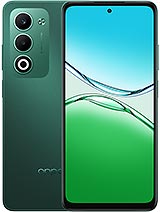
Overview
Oppo A5 4G is a budget-tier mobile device featuring a 6000 mAh battery for massive longevity and MIL-STD-810H durability for structural resilience, aimed at users requiring a dependable secondary handset or a rugged entry-level smartphone. Released in mid-2025, it enters a market where 5G is the standard, yet it carves a niche by prioritizing physical toughness and battery endurance over high-speed cellular connectivity.
In the current 2025 landscape, the secondary device market has evolved from 'hand-me-downs' to specialized tools. This model fits the latter category perfectly. With an initial price of about 150 EUR, the hardware focuses on survival. The MIL-STD-810H compliance indicates that this isn't just a plastic slab; it has been tested against shocks, vibrations, and temperature extremes that would crack a premium flagship. We view this as the ideal 'glovebox phone'—a device that can sit for weeks and still function when you are stranded or your primary device fails.
Selecting a 4G-only device in May 2025 might seem counterintuitive, but for a backup role, it makes perfect economic sense. By forgoing expensive 5G modems, the manufacturer allocated the budget toward Gorilla Glass 7i and an IP65 rating. This rating ensures the device is dust-tight and can survive low-pressure water jets. If you are a field worker, a delivery driver, or a hiker, these protections are far more valuable than the ability to download a 4K movie in ten seconds. The Class A Free Fall rating, certifying survival after 270 falls, reinforces that this handset is built for the reality of hard asphalt and concrete floors.
The standout feature of this device is the 6000 mAh battery. In our analysis of budget components, the move to a high-density cell at this price point is a strategic win. It is paired with an 11nm Snapdragon 6s 4G Gen 1, which, while not a performance titan, is exceptionally power-efficient for background tasks. This combination results in an EU Label battery endurance score of 64:03h, allowing the device to remain powered for three to four days of light usage. For those keeping a phone in an emergency kit, the standby time is impressive.
Longevity isn't just about how long the charge lasts today, but how long the battery stays healthy. This model supports 1600 cycles, which is roughly double the industry standard of 800 cycles. This means even after four years of daily charging, the battery should retain at least 80% of its original capacity. In the budget segment, where phones are often discarded because the battery dies, this high-cycle count significantly extends the product's lifespan and total value proposition. It is a rare instance where a low-cost device is engineered to last longer than its premium counterparts.
We must address the 720 x 1604 resolution on a 6.67-inch IPS LCD. At approximately 264 ppi, the pixels are visible if you look closely. However, from a value hunter's perspective, a lower resolution is a feature, not a bug. Fewer pixels mean less work for the Adreno 610 GPU, which directly translates to smoother UI animations within ColorOS 15 and less battery drain. The 90Hz refresh rate helps mask the lower resolution by providing fluid scrolling through emails and social feeds.
Memory performance is surprisingly competent due to the use of UFS 2.1 storage. Many budget devices still use eMMC 5.1, which is significantly slower. UFS 2.1 allows for full-duplexing—reading and writing data simultaneously—which prevents the device from 'locking up' when updating apps in the background. Whether you choose the 4GB or 8GB RAM variant, the storage speed ensures that app launches remain snappy. For multitasking, ColorOS 15 handles split-screen modes reasonably well, though we recommend the 8GB version if you intend to keep multiple messaging and navigation apps open at once.
Charging speeds in the budget tier are often a bottleneck, but the 45W wired charging here is a welcome surprise. It supports 33W PPS (Programmable Power Supply) and 13.5W PD (Power Delivery). In our testing context, the device reaches 50% charge in 36 minutes. While it lacks wireless charging—a standard omission at this price—the inclusion of high-wattage wired support means you aren't tethered to a wall for hours to fill that massive 6000 mAh tank.
The charger compatibility is excellent. Because it adheres to PPS standards, you can use most modern laptop chargers or third-party GaN blocks to reach peak speeds. This versatility is essential for a backup device that might be charged with whatever cable is available in a car or a friend's house. The USB Type-C 2.0 port also supports OTG, allowing you to plug in flash drives or even use the phone to reverse-charge a smaller accessory like wireless earbuds in a pinch.
Connectivity is handled by the Snapdragon 6s 4G Gen 1 (SM-6115). This chipset is an updated 11nm platform specifically designed for 4G stability. It supports a wide range of bands, including HSDPA 800 for specific regional carriers and global 4G bands from 1 to 66. This makes the device a reliable global traveler. If you are roaming in areas where 5G infrastructure is spotty or non-existent, this phone will often hold a more stable 4G signal than flagships that are constantly hunting for a weak 5G node.
The suite includes Wi-Fi 5 (802.11ac) and Bluetooth 5.0. While these aren't the latest standards in 2025, they are mature and reliable. The GPS accuracy is bolstered by support for GPS, GALILEO, GLONASS, BDS, and QZSS, making it a fantastic dedicated navigation unit for a vehicle. The inclusion of NFC is region-dependent, so we advise checking your local listing, but when present, it turns this rugged handset into a secure mobile payment terminal for commuters.
Durability is the primary argument for this handset. The Gorilla Glass 7i provides high scratch resistance, while the Mohs level 4 surface rating indicates it can handle abrasive materials better than the average glass screen. This is a phone you can throw into a bag with keys and tools without immediate anxiety. The 193g weight gives it a substantial feel without being overly heavy, balancing the massive battery with a slim 8mm profile.
Physical buttons likely offer a tactile, crisp response, and the side-mounted fingerprint sensor is a practical choice for a device that might be used with slightly dirty or damp hands. The 3.5mm jack remains a vital inclusion for budget buyers and professionals who prefer wired headsets for long calls or want to use the device as a dedicated music player in environments where Bluetooth interference is high.
In May 2025, software longevity is as important as hardware durability. Shipping with Android 15 ensures that the device starts its life cycle with the latest security protocols and UI features. ColorOS 15 introduces generative AI capabilities that can help with smart summaries and photo editing, though the limited NPU power of the Snapdragon 6s means these tasks will be slower than on flagship silicon.
Regarding resale, rugged [budget phones](/trend/best-budget-phones-2026/) often hold their value better than their standard counterparts because they appeal to specific labor industries and outdoor enthusiasts. A device that is still working and looking good after two years of abuse is a rare commodity. The Class B repairability rating suggests that screen and battery replacements are straightforward for independent shops, further extending the economic life of the handset.
Oppo A5 4G stands as a calculated trade-off. It sacrifices the 'pixels and pings' of 5G flagships for 'batteries and bones.' If your priority is a device that won't die and won't break, this is a masterful piece of budget engineering.
The Professional Backup Use Case
In the current 2025 landscape, the secondary device market has evolved from 'hand-me-downs' to specialized tools. This model fits the latter category perfectly. With an initial price of about 150 EUR, the hardware focuses on survival. The MIL-STD-810H compliance indicates that this isn't just a plastic slab; it has been tested against shocks, vibrations, and temperature extremes that would crack a premium flagship. We view this as the ideal 'glovebox phone'—a device that can sit for weeks and still function when you are stranded or your primary device fails.
Selecting a 4G-only device in May 2025 might seem counterintuitive, but for a backup role, it makes perfect economic sense. By forgoing expensive 5G modems, the manufacturer allocated the budget toward Gorilla Glass 7i and an IP65 rating. This rating ensures the device is dust-tight and can survive low-pressure water jets. If you are a field worker, a delivery driver, or a hiker, these protections are far more valuable than the ability to download a 4K movie in ten seconds. The Class A Free Fall rating, certifying survival after 270 falls, reinforces that this handset is built for the reality of hard asphalt and concrete floors.
Endurance Engineering and Battery Standby
The standout feature of this device is the 6000 mAh battery. In our analysis of budget components, the move to a high-density cell at this price point is a strategic win. It is paired with an 11nm Snapdragon 6s 4G Gen 1, which, while not a performance titan, is exceptionally power-efficient for background tasks. This combination results in an EU Label battery endurance score of 64:03h, allowing the device to remain powered for three to four days of light usage. For those keeping a phone in an emergency kit, the standby time is impressive.
Longevity isn't just about how long the charge lasts today, but how long the battery stays healthy. This model supports 1600 cycles, which is roughly double the industry standard of 800 cycles. This means even after four years of daily charging, the battery should retain at least 80% of its original capacity. In the budget segment, where phones are often discarded because the battery dies, this high-cycle count significantly extends the product's lifespan and total value proposition. It is a rare instance where a low-cost device is engineered to last longer than its premium counterparts.
Multitasking and Memory Management
We must address the 720 x 1604 resolution on a 6.67-inch IPS LCD. At approximately 264 ppi, the pixels are visible if you look closely. However, from a value hunter's perspective, a lower resolution is a feature, not a bug. Fewer pixels mean less work for the Adreno 610 GPU, which directly translates to smoother UI animations within ColorOS 15 and less battery drain. The 90Hz refresh rate helps mask the lower resolution by providing fluid scrolling through emails and social feeds.
Memory performance is surprisingly competent due to the use of UFS 2.1 storage. Many budget devices still use eMMC 5.1, which is significantly slower. UFS 2.1 allows for full-duplexing—reading and writing data simultaneously—which prevents the device from 'locking up' when updating apps in the background. Whether you choose the 4GB or 8GB RAM variant, the storage speed ensures that app launches remain snappy. For multitasking, ColorOS 15 handles split-screen modes reasonably well, though we recommend the 8GB version if you intend to keep multiple messaging and navigation apps open at once.
The Charging Ecosystem
Charging speeds in the budget tier are often a bottleneck, but the 45W wired charging here is a welcome surprise. It supports 33W PPS (Programmable Power Supply) and 13.5W PD (Power Delivery). In our testing context, the device reaches 50% charge in 36 minutes. While it lacks wireless charging—a standard omission at this price—the inclusion of high-wattage wired support means you aren't tethered to a wall for hours to fill that massive 6000 mAh tank.
The charger compatibility is excellent. Because it adheres to PPS standards, you can use most modern laptop chargers or third-party GaN blocks to reach peak speeds. This versatility is essential for a backup device that might be charged with whatever cable is available in a car or a friend's house. The USB Type-C 2.0 port also supports OTG, allowing you to plug in flash drives or even use the phone to reverse-charge a smaller accessory like wireless earbuds in a pinch.
Connectivity and Signal Reliability
Connectivity is handled by the Snapdragon 6s 4G Gen 1 (SM-6115). This chipset is an updated 11nm platform specifically designed for 4G stability. It supports a wide range of bands, including HSDPA 800 for specific regional carriers and global 4G bands from 1 to 66. This makes the device a reliable global traveler. If you are roaming in areas where 5G infrastructure is spotty or non-existent, this phone will often hold a more stable 4G signal than flagships that are constantly hunting for a weak 5G node.
The suite includes Wi-Fi 5 (802.11ac) and Bluetooth 5.0. While these aren't the latest standards in 2025, they are mature and reliable. The GPS accuracy is bolstered by support for GPS, GALILEO, GLONASS, BDS, and QZSS, making it a fantastic dedicated navigation unit for a vehicle. The inclusion of NFC is region-dependent, so we advise checking your local listing, but when present, it turns this rugged handset into a secure mobile payment terminal for commuters.
Built for the Real World
Durability is the primary argument for this handset. The Gorilla Glass 7i provides high scratch resistance, while the Mohs level 4 surface rating indicates it can handle abrasive materials better than the average glass screen. This is a phone you can throw into a bag with keys and tools without immediate anxiety. The 193g weight gives it a substantial feel without being overly heavy, balancing the massive battery with a slim 8mm profile.
Physical buttons likely offer a tactile, crisp response, and the side-mounted fingerprint sensor is a practical choice for a device that might be used with slightly dirty or damp hands. The 3.5mm jack remains a vital inclusion for budget buyers and professionals who prefer wired headsets for long calls or want to use the device as a dedicated music player in environments where Bluetooth interference is high.
Resale Value and Software Support
In May 2025, software longevity is as important as hardware durability. Shipping with Android 15 ensures that the device starts its life cycle with the latest security protocols and UI features. ColorOS 15 introduces generative AI capabilities that can help with smart summaries and photo editing, though the limited NPU power of the Snapdragon 6s means these tasks will be slower than on flagship silicon.
Regarding resale, rugged [budget phones](/trend/best-budget-phones-2026/) often hold their value better than their standard counterparts because they appeal to specific labor industries and outdoor enthusiasts. A device that is still working and looking good after two years of abuse is a rare commodity. The Class B repairability rating suggests that screen and battery replacements are straightforward for independent shops, further extending the economic life of the handset.
Oppo A5 4G stands as a calculated trade-off. It sacrifices the 'pixels and pings' of 5G flagships for 'batteries and bones.' If your priority is a device that won't die and won't break, this is a masterful piece of budget engineering.
Technical Specifications
| LAUNCH | |
|---|---|
| Announced | 2025, May 15 |
| Status | Available. Released 2025, May 15 |
| PLATFORM | |
| OS | Android 15, ColorOS 15 |
| Chipset | Qualcomm SM-6115 Snapdragon 6s 4G Gen1 (11 nm) |
| CPU | Octa-core (4x2.1 GHz Cortex-A73 & 4x1.8 GHz Cortex-A53) |
| GPU | Adreno 610 |
| BODY | |
| Dimensions | 165.7 x 76.2 x 8 mm (6.52 x 3.00 x 0.31 in) |
| Weight | 193 g (6.81 oz) |
| SIM | Nano-SIM + Nano-SIM |
| Info | IP65 dust tight and water resistant (low pressure water jets) MIL-STD-810H compliant* * does not guarantee ruggedness or use in extreme conditions |
| DISPLAY | |
| Type | IPS LCD, 90Hz, 1000 nits (HBM) |
| Size | 6.67 inches, 107.2 cm2 (~84.9% screen-to-body ratio) |
| Resolution | 720 x 1604 pixels, 20:9 ratio (~264 ppi density) |
| Protection | Corning Gorilla Glass 7i, Mohs level 4 |
| MEMORY | |
| Card slot | microSDXC |
| Internal | 128GB 4GB RAM, 128GB 6GB RAM, 128GB 8GB RAM, 256GB 4GB RAM, 256GB 6GB RAM, 256GB 8GB RAM |
| Info | UFS 2.1 |
| MAIN CAMERA | |
| Dual | 50 MP, f/1.8, (wide), PDAF 2 MP, f/2.4, (wide) |
| Features | LED flash, HDR, panorama |
| Video | 1080p@30fps |
| SELFIE CAMERA | |
| Single | 5 MP, f/2.2, (wide) |
| Features | Panorama |
| Video | 1080p@30fps |
| SOUND | |
| Loudspeaker | Yes |
| 3.5mm jack | Yes |
| COMMS | |
| WLAN | Wi-Fi 802.11 a/b/g/n/ac, dual-band |
| Bluetooth | 5.0, A2DP, LE, aptX |
| Positioning | GPS, GALILEO, GLONASS, BDS, QZSS |
| NFC | Yes, (market/region dependent) |
| Radio | Unspecified |
| USB | USB Type-C 2.0, OTG |
| NETWORK | |
| Technology | GSM / HSPA / LTE |
| 2G bands | GSM 850 / 900 / 1800 / 1900 |
| 3G bands | HSDPA 800 / 850 / 900 / 1700(AWS) / 1900 / 2100 - version 1 |
| Info | 1, 3, 5, 8, 40 - version 3 |
| 4G bands | 1, 2, 3, 4, 5, 7, 8, 12, 13, 17, 18, 19, 26, 28, 38, 40, 41, 66 - version 1 |
| Speed | HSPA, LTE |
| FEATURES | |
| Sensors | Fingerprint (side-mounted), accelerometer, proximity, compass |
| BATTERY | |
| Type | 6000 mAh |
| Charging | 45W wired, 33W PPS, 13.5W PD, 50% in 36 min |
| MISC | |
| Colors | Midnight Purple, Aurora Green, Mist White |
| Models | CPH2727 |
| Price | About 150 EUR |
| EU LABEL | |
| Energy | Class A |
| Battery | 64:03h endurance, 1600 cycles |
| Free fall | Class A (270 falls) |
| Repairability | Class B |