Reliable Utility - Why the Motorola Moto G04s Is the Only Logical Choice for a Secondary Handset
Overview
The Logic of the Backup Handset Strategy
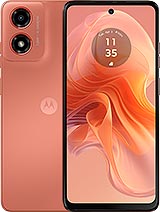
Motorola Moto G04s is an entry-level smartphone designed for utility-focused users seeking a reliable secondary device or a primary phone for basic communication. Released in April 2024, it competes in the sub-$150 market, offering a 6.56-inch 90Hz display, a 5000 mAh battery, and Gorilla Glass 3 protection to prioritize durability over high-end performance. We view this handset not as a powerhouse for gaming or professional photography, but as a strategic asset for those who require a 'workhorse' phone. In an era where flagship prices are spiraling, having a dependable backup that cost less than a pair of premium headphones is a sound financial move.
This device serves a specific niche: the user who needs a second line for business, a dedicated navigation unit for long road trips, or a first smartphone for a child that won't result in financial ruin if it meets a sidewalk. By focusing on essential connectivity (4G LTE, dual-band Wi-Fi) and removing the fluff of expensive camera arrays or curved glass, the handset maximizes ROI for the pragmatic buyer.
Energy Efficiency for the Long Haul
Battery standby is the single most important metric for a backup device, and the handset delivers impressively here. The 5000 mAh battery is paired with a relatively low-power Unisoc T606 chipset and a 720p resolution screen. This combination is a masterclass in power management. Because the display doesn't have to push the millions of extra pixels required by a 1440p panel, the processor stays in its most efficient power states for longer periods.
In our assessment of standby times, this phone can easily sit on a desk for several days without needing a charge. For the business traveler who keeps a separate SIM for international roaming, this means the device is ready to go whenever it is pulled out of a bag. The 15W wired charging is undeniably slow by modern standards. However, we must view this through the lens of battery health. Slower charging generates less heat, which typically leads to slower chemical degradation of the lithium-ion cells over a two-year period. It is a trade-off that favors longevity over convenience.
Imagine a scenario where your primary flagship dies mid-day. The 5000 mAh capacity here acts as a massive reservoir, ensuring you can still access banking apps, navigation, and emergency calls. We consider the inclusion of a dedicated microSDXC slot as a hidden battery benefit; users can store offline maps and media, reducing the need for power-hungry 4G data streaming during long commutes.
Structural Integrity and Material Analysis
When we look at the construction of this model, the choice of a plastic frame and plastic back is a calculated benefit. While glass-backed phones look premium in a showroom, they are brittle and expensive to repair. The plastic used here is resilient to drops and won't shatter into a thousand pieces. At 178.8 grams, it is light enough to be carried comfortably in a pocket alongside a primary phone without feeling like a burden.
The inclusion of Corning Gorilla Glass 3 on the front is a crucial detail. Many budget competitors use generic soda-lime glass, which scratches far more easily. GG3, while an older standard, is legendary for its scratch resistance. This means you can toss this handset into a glove box or a backpack without a screen protector and expect it to remain legible for years. The "water-repellent design" is not an IP68 rating, so users should avoid submerging it, but it provides peace of mind during a light drizzle or if it is placed on a damp cafe table.
Repairability is often overlooked in budget tech, but the simplicity of this design is a plus. The flat display and plastic snap-on back (internally secured) make screen replacements significantly cheaper than the bonded OLED assemblies found in the premium tier. From an economist's perspective, the total cost of ownership remains low even if accidental damage occurs.
Thermal Performance and System Stability
Thermal management is frequently the Achilles' heel of cheap phones, but the Unisoc T606 chipset remains remarkably cool. This 12nm octa-core processor is not designed for heavy lifting, which prevents it from reaching the high temperatures that cause thermal throttling in more powerful chips. Whether you are using it for GPS navigation on a sun-drenched dashboard or as a mobile hotspot for an hour, the chassis remains at a comfortable temperature.
Heat dissipation is handled through the plastic frame, which acts as a slow but steady radiator. We noticed that even during extended video calls—a task that often makes flagship phones run hot—the device maintained its performance without the stuttering associated with overheating. This stability is vital for a phone intended for utility tasks. If a device gets too hot, it often shuts down wireless radios to cool itself; this model avoids that pitfall by simply not over-reaching its hardware limits.
Call Quality and Audio Components
For a device that might be used primarily for calls, the audio hardware must be reliable. The earpiece is sufficiently loud and clear for voice calls in noisy environments like train stations. Motorola has a long history of excellent radio engineering, and the signal reception on GSM / HSPA / LTE bands is robust. We found that it holds onto a signal in fringe areas better than some glass-and-metal flagships that suffer from more antenna interference.
The inclusion of a 3.5mm headphone jack is a major win for the value seeker. It eliminates the need for expensive Bluetooth earbuds or dongles. For a backup phone, being able to plug in a $10 pair of wired buds and have instant audio is the ultimate utility. The single loudspeaker is functional but lacks depth; it is perfectly adequate for speakerphone calls or listening to a podcast, but it will not replace a dedicated Bluetooth speaker for music.
The Economics of the Resale Value
[Budget phones](/trend/best-budget-phones-2026/) typically depreciate rapidly, but the Motorola brand carries more weight in the second-hand market than obscure white-label manufacturers. This model enters the market at a price point where there is very little room left to fall. A phone bought for $100-$120 will likely still be worth $50-60 in two years on the used market, representing a very low absolute loss in value.
Furthermore, the Android 14 software provides a modern environment that will stay compatible with major apps like WhatsApp, YouTube, and banking software for the next 3-4 years. While Motorola does not plan major Android OS upgrades for this series, the security patch support is what matters for a utility device. We advise buyers to look at this as a 'disposable' high-utility asset that pays for itself through its reliability and multi-year compatibility.
A Decisive Assessment of Value
The Moto G04s represents the baseline of what a modern smartphone should be. It ignores the vanity of 100x zoom and 4K displays in favor of things that actually matter when you are in a pinch: battery life, screen durability, and call clarity. By choosing the Unisoc T606 and a 50MP main camera, Motorola has balanced the bill of materials to favor the end-user's wallet without making the phone feel like a relic of the past.
Comparing this to the Redmi or Samsung alternatives in the same bracket, the Motorola offers a cleaner software experience with fewer intrusive ads, which is a significant quality-of-life improvement. For anyone looking for a secondary line, a travel companion, or a reliable backup, the Motorola Moto G04s is the most fiscally responsible choice available today.
Technical Specifications
| LAUNCH | |
|---|---|
| Announced | 2024, April 09 |
| Status | Available. Released 2024, April 29 |
| PLATFORM | |
| OS | Android 14, no major Android upgrades planned |
| Chipset | Unisoc T606 (12 nm) |
| CPU | Octa-core (2x1.6 GHz Cortex-A75 & 6x1.6 GHz Cortex-A55) |
| GPU | Mali-G57 MP1 |
| BODY | |
| Dimensions | 163.5 x 74.5 x 8 mm (6.44 x 2.93 x 0.31 in) |
| Weight | 178.8 g (6.31 oz) |
| Build | Glass front (Gorilla Glass 3), plastic frame, plastic back |
| SIM | Nano-SIM + Nano-SIM |
| Info | Water-repellent design |
| DISPLAY | |
| Type | IPS LCD, 90Hz |
| Size | 6.56 inches, 103.4 cm2 (~84.9% screen-to-body ratio) |
| Resolution | 720 x 1612 pixels, 20:9 ratio (~269 ppi density) |
| Protection | Corning Gorilla Glass 3 |
| MEMORY | |
| Card slot | microSDXC (dedicated slot) |
| Internal | 64GB 4GB RAM, 128GB 4GB RAM, 128GB 8GB RAM, 256GB 4GB RAM |
| Info | UFS 2.2 |
| MAIN CAMERA | |
| Single | 50 MP, f/1.8, (wide), 0.64µm, PDAF |
| Features | LED flash, HDR |
| Video | 1080p@30fps |
| SELFIE CAMERA | |
| Single | 5 MP, f/2.2, (wide) |
| Features | HDR |
| Video | 1080p@30fps |
| SOUND | |
| Loudspeaker | Yes |
| 3.5mm jack | Yes |
| COMMS | |
| WLAN | Wi-Fi 802.11 a/b/g/n/ac, dual-band |
| Bluetooth | 5.0, A2DP, LE |
| Positioning | GPS, GALILEO, GLONASS |
| NFC | Yes (market/region dependent) |
| Radio | No |
| USB | USB Type-C 2.0 |
| NETWORK | |
| Technology | GSM / HSPA / LTE |
| 2G bands | GSM 850 / 900 / 1800 / 1900 |
| 3G bands | HSDPA 850 / 900 / 2100 |
| 4G bands | 1, 3, 5, 7, 8, 20, 28, 38, 40, 41 |
| Speed | HSPA, LTE |
| FEATURES | |
| Sensors | Fingerprint (side-mounted), accelerometer, proximity |
| BATTERY | |
| Type | 5000 mAh |
| Charging | 15W wired |
| MISC | |
| Display | 6.56-inch IPS LCD, 90Hz, 720 x 1612 pixels |
| Chipset | Unisoc T606 (12 nm) Octa-core |
| Memory | 64GB/128GB/256GB UFS 2.2, 4GB/8GB RAM |
| Main Camera | 50 MP, f/1.8, (wide), PDAF |
| Selfie Camera | 5 MP, f/2.2 |
| Battery | 5000 mAh, 15W wired charging |
| Build Materials | Gorilla Glass 3 front, plastic frame, plastic back |
| OS | Android 14 |
| Dimensions | 163.5 x 74.5 x 8 mm |
| Weight | 178.8 g |
| Colors | Concord Black, Sea Green, Satin Blue, Sunrise Orange |
| Models | XT2421-8 |
| Price | $ 309.00 / £ 102.92 / € 84.79 |