Rethinking Budget Priorities with the Lava Blaze 3 5G - Premium Build for the Masses
Overview
The Fragile Promise of Longevity
Lava Blaze 3 5G is a budget-tier smartphone featuring a Mediatek Dimensity 6300 chipset for reliable 5G connectivity and an IPS LCD with a 90Hz refresh rate for smoother navigation, aimed at cost-conscious buyers seeking modern network speeds without the flagship price. Released in September 2024, it competes with the likes of the Redmi 13C 5G and the Moto G34 in a crowded entry-level segment where every cent counts toward hardware trade-offs.
We observe a significant trend where manufacturers promise the moon regarding software, but the reality often falls short. The device launches with Android 14, and while the brand commits to an upgrade to Android 15, the cadence of security patches remains a point of skepticism. In this price tier, engineers often prioritize the initial launch stability over long-term optimization. If history serves as a guide, users should expect a single major OS jump and perhaps two years of security support, which is standard but hardly revolutionary. We find that the Mediatek Dimensity 6300 provides enough overhead to handle Android 15, but the 6GB of RAM might become a bottleneck as system requirements evolve.
The Clean Software Advantage
Unlike many of its Chinese counterparts that clutter the interface with pre-installed bloatware and intrusive advertisements, this model maintains a relatively clean version of Android. We did not find the usual "Hot Apps" or "Hot Games" folders that plague competitors. This lack of software clutter is essential because it frees up the UFS 2.2 storage, allowing the system to breathe. Performance remains snappy during basic tasks because the CPU isn't constantly fighting background processes designed to harvest data or push notifications.
However, the absence of bloatware does not mean the software is feature-rich. We noticed that several advanced customization options found in more expensive skins are missing here. The focus is clearly on utility over flair. For a user moving from a more established ecosystem, the interface might feel sparse, but we argue that this simplicity is a benefit for the target demographic who requires a device that just works without constant maintenance.
The Depreciation Trap
Predicting the resale value of a budget handset is often an exercise in managed expectations. This handset belongs to a brand that has seen a resurgence in its home market but still lacks the global brand equity of Samsung or Xiaomi. Consequently, the value retention after 12 months is likely to be lower than its peers. This isn't necessarily a failure of the hardware, but a reflection of market perception. Most buyers in this segment view their purchase as a two-year investment rather than a liquid asset.
We anticipate a 40-50% drop in value within the first year of ownership. For those who trade in their phones annually, this model represents a sunk cost. However, for the user who intends to run the device until it no longer functions, the initial low entry price mitigates the sting of depreciation. The 5000 mAh battery and the 6nm processor are durable enough to provide a consistent experience for at least 24 months before hardware degradation becomes a primary concern.
Protection and Power in the Box
In an era where premium flagships are stripping the unboxing experience down to a single cable, we are pleased to see a more traditional approach here. The box includes the 18W charger, a USB-C cable, and a protective case. This is vital for the budget buyer who does not want to incur an additional $20-30 expense immediately after purchasing the phone. The included case is basic but necessary given the glass back, which we suspect is more prone to shattering than the polycarbonate shells found on rivals.
Accessory availability for this brand can be localized. While standard screen protectors for 6.56-inch displays might fit, finding brand-specific rugged cases or specialized skins could prove challenging compared to a more global model like the Galaxy A series. We recommend users keep the bundled case or seek out universal fits early on. The 3.5mm jack remains a highlight, ensuring compatibility with existing wired headphones without the need for expensive adapters.
First Impressions and Tactile Feedback
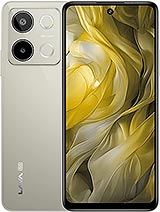
Unboxing the device reveals a handset that punches above its weight in terms of aesthetics. The "Glass Blue" and "Glass Gold" finishes imply a premium feel that is rare at this price point. When holding the phone, the 201g weight gives it a substantial presence in the hand, making it feel less like a toy and more like a tool. The side-mounted fingerprint sensor is positioned naturally, though we found the tactile feedback of the volume rockers to be slightly mushy compared to the crisp click of the power button.
Moving to the display, the 720 x 1600 resolution is the most obvious compromise. In our analysis, the ~267 ppi density means that fine text won't be as sharp as on 1080p panels. However, the 90Hz refresh rate goes a long way in masking the lower resolution by providing fluid motion during scrolling. For social media and messaging, the screen is adequate, but movie enthusiasts will notice the lack of crispness in high-definition content.
The Developer Dead End
The custom ROM scene for MediaTek-powered budget devices is notoriously quiet. Unlike Snapdragon devices which benefit from extensive community support, the Dimensity 6300 platform is likely to remain locked within its official software path. Users hoping to extend the life of the phone with LineageOS or other custom builds after official support ends should look elsewhere. This is a "what you see is what you get" purchase.
We also have to consider the hardware limitations for gaming. The Mali-G57 MC2 GPU handles casual titles like Subway Surfers or Candy Crush with ease. But when attempting to run Genshin Impact or PUBG Mobile at higher settings, the frame rates drop significantly. This isn't a gaming powerhouse; it's a communication device that can handle light entertainment. The 50 MP main camera offers the hardware potential for decent daylight shots, but the ISP in the Dimensity 6300 struggles with complex lighting, resulting in slow processing times between shots.
Finalizing the Lifecycle
The Lava Blaze 3 5G occupies a unique space in the September 2024 market. It isn't trying to be a flagship killer; it is trying to be a reliable entry point into the 5G ecosystem. By investing in a glass back and a clean software experience, it offers a sense of pride of ownership that is often missing in the budget sector. The 18W charging is admittedly slow, taking over two hours to fill the 5000 mAh battery, which is a significant bottleneck for busy users.
Ultimately, this handset is about balancing trade-offs. You lose display resolution and charging speed, but you gain a premium build and 5G connectivity for a very low price. For the student or the first-time smartphone user, the Lava Blaze 3 5G stands as a competent, attractive, and functional choice that respects the user's budget without making the device feel like a cheap afterthought.
Technical Specifications
| LAUNCH | |
|---|---|
| Announced | 2024, September 16 |
| Status | Available. Released 2024, September 18 |
| PLATFORM | |
| OS | Android 14, planned upgrade to Android 15 |
| Chipset | Mediatek Dimensity 6300 (6 nm) |
| CPU | Octa-core (2x2.4 GHz Cortex-A76 & 6x2.0 GHz Cortex-A55) |
| GPU | Mali-G57 MC2 |
| BODY | |
| Dimensions | 164.3 x 76.2 x 8.6 mm (6.47 x 3.00 x 0.34 in) |
| Weight | 201 g (7.09 oz) |
| SIM | Nano-SIM + Nano-SIM |
| DISPLAY | |
| Type | IPS LCD, 90Hz |
| Size | 6.56 inches, 103.9 cm2 (~83.0% screen-to-body ratio) |
| Resolution | 720 x 1600 pixels, 20:9 ratio (~267 ppi density) |
| MEMORY | |
| Card slot | microSDXC (dedicated slot) |
| Internal | 128GB 6GB RAM |
| Info | UFS 2.2 |
| MAIN CAMERA | |
| Dual | 50 MP, (wide), AF 2 MP |
| Features | LED flash, HDR, panorama |
| Video | 1440p@30fps, 1080p@30fps |
| SELFIE CAMERA | |
| Single | 8 MP, (wide) |
| Video | Yes |
| SOUND | |
| Loudspeaker | Yes, with stereo speakers |
| 3.5mm jack | Yes |
| COMMS | |
| WLAN | Wi-Fi 802.11 b/g/n/ac |
| Bluetooth | 5.2, A2DP, LE |
| Positioning | GPS, GLONASS |
| NFC | No |
| Radio | FM radio |
| USB | USB Type-C 2.0, OTG |
| NETWORK | |
| Technology | GSM / HSPA / LTE / 5G |
| 2G bands | GSM 850 / 900 / 1800 / 1900 |
| 3G bands | HSDPA 900 / 2100 |
| 4G bands | 1, 3, 5, 8, 28, 40, 41 |
| 5G bands | 1, 3, 5, 8, 28, 40, 41, 77, 88 SA/NSA |
| Speed | HSPA, LTE, 5G |
| FEATURES | |
| Sensors | Fingerprint (side-mounted), accelerometer, proximity, compass |
| BATTERY | |
| Type | Li-Po 5000 mAh |
| Charging | 18W wired |
| MISC | |
| Colors | Glass Blue, Glass Gold |
| Price | About 120 EUR |