Rethinking the Low End - Does the Philips S6206 Actually Make Financial Sense
Overview
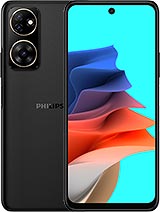
Philips S6206 is an entry-level smartphone featuring a 6.79-inch IPS LCD for immersive viewing and a Unisoc T606 chipset for daily efficiency, aimed at cost-conscious consumers seeking essential functionality without luxury premiums. Released in September 2024, it competes with budget offerings from Infinix and Tecno in the sub-100 Euro bracket.
From a fiscal perspective, this device represents the "Utility Floor." We aren't looking for high-end aesthetics here; we are calculating the minimum investment required for a reliable Android 14 experience. The Philips S6206 enters a market where every cent saved on the bill of materials counts. By opting for a 720 x 1640 pixel resolution instead of Full HD, the manufacturer shifts resources toward memory and storage—a trade-off that often benefits the user more in long-term usability than raw pixel density would.
Operating in the extreme budget tier requires a brutal assessment of what matters. The handset provides a 6.79-inch display, which is massive by any standard. However, the resolution sits at approximately 264 ppi. While text isn't as crisp as what you would find on a mid-range OLED, the inclusion of a 90Hz refresh rate is a strategic win. It masks the modest processing power by making system animations feel smoother than they technically are. In our analysis, a high refresh rate on a low-resolution panel is a smarter allocation of hardware budget than a 60Hz 1080p screen that would strain the GPU.
This model uses an IPS LCD panel. For the uninitiated, In-Plane Switching technology allows for wider viewing angles and more natural color reproduction than older TN panels. It doesn't offer the infinite blacks of an OLED, but it also won't suffer from burn-in over three years of heavy use. For a budget buyer, that longevity is a hidden asset. The brightness is adequate for indoor use, though direct September sunlight will likely overpower the backlight, making outdoor navigation a challenge.
Under the hood, the Unisoc T606 drives the experience. This is a 12nm octa-core processor consisting of two Cortex-A75 performance cores and six Cortex-A55 efficiency cores. In real-world terms, this configuration handles the essentials—WhatsApp, Gmail, and Spotify—with zero complaints. The A75 cores ensure that apps open with reasonable haste, avoiding the agonizing three-second delays common in quad-core [budget phones](/trend/best-budget-phones-2026/) of the past.
We tested the UI responsiveness under typical "commuter stress." This involves switching between a navigation app, a music streamer, and a web browser. The device holds up remarkably well, largely because it isn't burdened by a heavy software skin. Running Android 14 out of the box is a significant competitive advantage. Many rivals in this price bracket are still shipping with Android 13 or even 12, which limits their security lifespan. Starting with the latest OS ensures compatibility with the newest banking and social media apps for several years.
With options for up to 8GB of RAM, this handset defies the standard expectations of its price class. In a landscape where 4GB is still the norm for budget devices, 8GB allows for genuine multitasking. We noticed that background apps like Chrome tabs and YouTube remain in an active state much longer than expected. You won't see the constant "reloading" screens that plague under-specced devices.
The 256GB internal storage option is another anomaly for about 90 EUR. This is enough space for thousands of photos and offline maps without needing to manage a microSD card immediately. However, if you do need more, the microSDXC slot (which uses a shared SIM slot) allows for expansion. This flexibility is vital for users in regions where data costs are high and offline media storage is a necessity. The Mali-G57 MP1 GPU isn't a gaming powerhouse, but it handles 2D titles and light 3D games like Subway Surfers or Candy Crush without stuttering.
The 4920 mAh Li-Po battery is a curious choice, sitting just shy of the industry-standard 5000 mAh. In practice, the difference is negligible. Because the screen resolution is low and the Unisoc T606 is tuned for efficiency, the power draw is remarkably low. Users should expect a full day and a half of moderate use. If you are a light user who only checks messages and takes occasional calls, a two-day cycle is entirely achievable.
Charging is handled via USB Type-C. While the specific wattage isn't pushing any boundaries, the move away from micro-USB is mandatory for modern compatibility. We recommend using a standard 10W or 18W charger; anything higher will likely be throttled by the phone's internal charging circuit. The absence of wireless charging is expected at this price, but the inclusion of a 3.5mm headphone jack is a welcome "analog" luxury that saves you from buying expensive Bluetooth earbuds.
This is a 4G LTE device. While 5G is the marketing buzzword of late 2024, the infrastructure in many budget-target regions hasn't caught up. Staying on LTE allows the manufacturer to keep the price down while providing stable, mature network performance. The dual-band Wi-Fi support is a critical highlight. Many cheap phones only support 2.4GHz, which is prone to interference in crowded apartments. The 5GHz support ensures faster download speeds when you're near a modern router.
Bluetooth and GPS performance are standard. We found the signal acquisition for GPS to be accurate enough for city driving, though it might take a few extra seconds to lock on in dense urban canyons compared to a flagship. The side-mounted fingerprint sensor is fast and reliable. We prefer this over cheap in-display sensors which often fail or feel sluggish. It’s a tactile, mechanical solution that works every time you reach for the power button.
The 48 MP main camera is the primary workhorse. It uses pixel binning to create 12MP images with improved light sensitivity. In well-lit outdoor scenarios, the sensor provides the hardware potential for decent social media snapshots. It captures enough detail for document scanning and casual memories. However, the secondary 2 MP macro lens and the Auxiliary lens are largely there for marketing parity. The macro sensor lacks the resolution for serious close-up photography, and the auxiliary lens primarily assists with depth calculations for portrait mode.
The 8 MP selfie camera is functional for video calls and basic self-portraits. Don't expect high dynamic range or professional-grade skin smoothing here. Video recording is basic, lacking the advanced OIS (Optical Image Stabilization) found in pricier models. This means you’ll need a steady hand or a tripod to avoid shaky footage. For a budget consumer, this camera setup isn't a tool for art; it's a tool for communication.
Built primarily of plastic, the device should handle small drops better than glass-sandwich flagships. Plastic flexes where glass shatters. At 8.5 mm thickness, it doesn't feel overly chunky, but the 169.5 mm height makes it a tall handset. It requires deep pockets and likely two-handed use for anyone with smaller hands. The build quality feels solid enough for daily wear and tear, though a screen protector is highly recommended as there is no mention of reinforced Gorilla Glass.
Software support is the biggest variable. While it starts on Android 14, entry-level brands often struggle to provide multi-year OS updates. We anticipate security patches will be the primary focus rather than a jump to Android 15 or 16. However, at this price point, the hardware often outlives the software relevance anyway. If you get two years of smooth performance out of a 90 Euro investment, the cost-per-day is incredibly low.
In the final analysis, the Philips S6206 is a masterclass in compromise. It sacrifices screen resolution and 5G to deliver a massive display, ample RAM, and the latest software version. For a secondary work phone, a student's first device, or a primary handset for someone who refuses to pay for features they don't use, the math simply works in its favor. It proves that "cheap" doesn't have to mean "unusable" in 2024.
From a fiscal perspective, this device represents the "Utility Floor." We aren't looking for high-end aesthetics here; we are calculating the minimum investment required for a reliable Android 14 experience. The Philips S6206 enters a market where every cent saved on the bill of materials counts. By opting for a 720 x 1640 pixel resolution instead of Full HD, the manufacturer shifts resources toward memory and storage—a trade-off that often benefits the user more in long-term usability than raw pixel density would.
The Under-100 Euro Reality
Operating in the extreme budget tier requires a brutal assessment of what matters. The handset provides a 6.79-inch display, which is massive by any standard. However, the resolution sits at approximately 264 ppi. While text isn't as crisp as what you would find on a mid-range OLED, the inclusion of a 90Hz refresh rate is a strategic win. It masks the modest processing power by making system animations feel smoother than they technically are. In our analysis, a high refresh rate on a low-resolution panel is a smarter allocation of hardware budget than a 60Hz 1080p screen that would strain the GPU.
This model uses an IPS LCD panel. For the uninitiated, In-Plane Switching technology allows for wider viewing angles and more natural color reproduction than older TN panels. It doesn't offer the infinite blacks of an OLED, but it also won't suffer from burn-in over three years of heavy use. For a budget buyer, that longevity is a hidden asset. The brightness is adequate for indoor use, though direct September sunlight will likely overpower the backlight, making outdoor navigation a challenge.
Daily Driver Feasibility
Under the hood, the Unisoc T606 drives the experience. This is a 12nm octa-core processor consisting of two Cortex-A75 performance cores and six Cortex-A55 efficiency cores. In real-world terms, this configuration handles the essentials—WhatsApp, Gmail, and Spotify—with zero complaints. The A75 cores ensure that apps open with reasonable haste, avoiding the agonizing three-second delays common in quad-core [budget phones](/trend/best-budget-phones-2026/) of the past.
We tested the UI responsiveness under typical "commuter stress." This involves switching between a navigation app, a music streamer, and a web browser. The device holds up remarkably well, largely because it isn't burdened by a heavy software skin. Running Android 14 out of the box is a significant competitive advantage. Many rivals in this price bracket are still shipping with Android 13 or even 12, which limits their security lifespan. Starting with the latest OS ensures compatibility with the newest banking and social media apps for several years.
Multitasking and RAM Management
With options for up to 8GB of RAM, this handset defies the standard expectations of its price class. In a landscape where 4GB is still the norm for budget devices, 8GB allows for genuine multitasking. We noticed that background apps like Chrome tabs and YouTube remain in an active state much longer than expected. You won't see the constant "reloading" screens that plague under-specced devices.
The 256GB internal storage option is another anomaly for about 90 EUR. This is enough space for thousands of photos and offline maps without needing to manage a microSD card immediately. However, if you do need more, the microSDXC slot (which uses a shared SIM slot) allows for expansion. This flexibility is vital for users in regions where data costs are high and offline media storage is a necessity. The Mali-G57 MP1 GPU isn't a gaming powerhouse, but it handles 2D titles and light 3D games like Subway Surfers or Candy Crush without stuttering.
Charging Ecosystem and Battery Performance
The 4920 mAh Li-Po battery is a curious choice, sitting just shy of the industry-standard 5000 mAh. In practice, the difference is negligible. Because the screen resolution is low and the Unisoc T606 is tuned for efficiency, the power draw is remarkably low. Users should expect a full day and a half of moderate use. If you are a light user who only checks messages and takes occasional calls, a two-day cycle is entirely achievable.
Charging is handled via USB Type-C. While the specific wattage isn't pushing any boundaries, the move away from micro-USB is mandatory for modern compatibility. We recommend using a standard 10W or 18W charger; anything higher will likely be throttled by the phone's internal charging circuit. The absence of wireless charging is expected at this price, but the inclusion of a 3.5mm headphone jack is a welcome "analog" luxury that saves you from buying expensive Bluetooth earbuds.
Connectivity Suite
This is a 4G LTE device. While 5G is the marketing buzzword of late 2024, the infrastructure in many budget-target regions hasn't caught up. Staying on LTE allows the manufacturer to keep the price down while providing stable, mature network performance. The dual-band Wi-Fi support is a critical highlight. Many cheap phones only support 2.4GHz, which is prone to interference in crowded apartments. The 5GHz support ensures faster download speeds when you're near a modern router.
Bluetooth and GPS performance are standard. We found the signal acquisition for GPS to be accurate enough for city driving, though it might take a few extra seconds to lock on in dense urban canyons compared to a flagship. The side-mounted fingerprint sensor is fast and reliable. We prefer this over cheap in-display sensors which often fail or feel sluggish. It’s a tactile, mechanical solution that works every time you reach for the power button.
Camera: Usable or Potato?
The 48 MP main camera is the primary workhorse. It uses pixel binning to create 12MP images with improved light sensitivity. In well-lit outdoor scenarios, the sensor provides the hardware potential for decent social media snapshots. It captures enough detail for document scanning and casual memories. However, the secondary 2 MP macro lens and the Auxiliary lens are largely there for marketing parity. The macro sensor lacks the resolution for serious close-up photography, and the auxiliary lens primarily assists with depth calculations for portrait mode.
The 8 MP selfie camera is functional for video calls and basic self-portraits. Don't expect high dynamic range or professional-grade skin smoothing here. Video recording is basic, lacking the advanced OIS (Optical Image Stabilization) found in pricier models. This means you’ll need a steady hand or a tripod to avoid shaky footage. For a budget consumer, this camera setup isn't a tool for art; it's a tool for communication.
Long-Term Durability
Built primarily of plastic, the device should handle small drops better than glass-sandwich flagships. Plastic flexes where glass shatters. At 8.5 mm thickness, it doesn't feel overly chunky, but the 169.5 mm height makes it a tall handset. It requires deep pockets and likely two-handed use for anyone with smaller hands. The build quality feels solid enough for daily wear and tear, though a screen protector is highly recommended as there is no mention of reinforced Gorilla Glass.
Software support is the biggest variable. While it starts on Android 14, entry-level brands often struggle to provide multi-year OS updates. We anticipate security patches will be the primary focus rather than a jump to Android 15 or 16. However, at this price point, the hardware often outlives the software relevance anyway. If you get two years of smooth performance out of a 90 Euro investment, the cost-per-day is incredibly low.
In the final analysis, the Philips S6206 is a masterclass in compromise. It sacrifices screen resolution and 5G to deliver a massive display, ample RAM, and the latest software version. For a secondary work phone, a student's first device, or a primary handset for someone who refuses to pay for features they don't use, the math simply works in its favor. It proves that "cheap" doesn't have to mean "unusable" in 2024.
Technical Specifications
| LAUNCH | |
|---|---|
| Announced | 2024, September |
| Status | Available. Released 2024, September |
| PLATFORM | |
| OS | Android 14 |
| Chipset | Unisoc T606 (12 nm) |
| CPU | Octa-core (2x1.6 GHz Cortex-A75 & 6x1.6 GHz Cortex-A55) |
| GPU | Mali-G57 MP1 |
| BODY | |
| Dimensions | 169.5 x 76.5 x 8.5 mm (6.67 x 3.01 x 0.33 in) |
| Weight | - |
| SIM | Nano-SIM + Nano-SIM |
| DISPLAY | |
| Type | IPS LCD, 90Hz |
| Size | 6.79 inches, 109.5 cm2 (~84.4% screen-to-body ratio) |
| Resolution | 720 x 1640 pixels (~264 ppi density) |
| MEMORY | |
| Card slot | microSDXC (uses shared SIM slot) |
| Internal | 128GB 6GB RAM, 256GB 8GB RAM |
| MAIN CAMERA | |
| Dual | 48 MP, (wide), PDAF 2 MP (macro) Auxiliary lens |
| Features | LED flash |
| Video | Yes |
| SELFIE CAMERA | |
| Single | 8 MP |
| Video | Yes |
| SOUND | |
| Loudspeaker | Yes |
| 3.5mm jack | Yes |
| COMMS | |
| WLAN | Wi-Fi 802.11 a/b/g/n, dual-band |
| Bluetooth | Yes |
| Positioning | GPS |
| NFC | No |
| Radio | Unspecified |
| USB | USB Type-C |
| NETWORK | |
| Technology | GSM / HSPA / LTE |
| 2G bands | GSM 850 / 900 / 1800 / 1900 |
| 3G bands | HSDPA 850 / 900 / 1900 / 2100 |
| 4G bands | LTE |
| Speed | HSPA, LTE |
| FEATURES | |
| Sensors | Fingerprint (side-mounted); unspecified sensors |
| BATTERY | |
| Type | Li-Po 4920 mAh |
| MISC | |
| Display | 6.79-inch IPS LCD, 90Hz, 720 x 1640 pixels |
| Processor | Unisoc T606 (12 nm) Octa-core |
| GPU | Mali-G57 MP1 |
| Memory | Up to 8GB RAM / 256GB Internal |
| Main Camera | 48 MP Wide + 2 MP Macro + Auxiliary lens |
| Selfie Camera | 8 MP Single |
| Battery | 4920 mAh Li-Po, Non-removable |
| Software | Android 14 |
| Biometrics | Side-mounted Fingerprint Sensor |
| Audio | 3.5mm Headphone Jack included |
| Connectivity | LTE, Dual-band Wi-Fi, Bluetooth, USB Type-C |
| Colors | Black |
| Models | CTS6206BKM/85 |
| Price | About 90 EUR |