Rethinking Value - The Oppo A80 as a Budget Productivity Tool
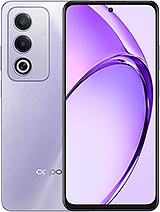
Overview
A Practical Gateway to 5G Connectivity
Oppo A80 is a budget-tier 5G smartphone featuring a 6.67-inch IPS LCD with a 120Hz refresh rate for smooth interactions and a Mediatek Dimensity 6300 chipset for efficient daily performance, aimed at users needing a reliable mobile office without a flagship price tag. Released in mid-August 2024, it enters a competitive market alongside peers like the [Samsung Galaxy A15 5G](/samsung-galaxy-a15-5g-the-high-value-play-for-longevity-seekers/) and the Redmi Note 13 5G, carving a niche through its blend of ergonomics and modern connectivity.
While we often associate productivity with thousand-dollar folding screens or ultra-premium slabs, the reality for many mobile professionals involves finding a device that stays powered through a long shift and handles basic administrative tasks without lag. This model attempts to bridge that gap. The choice of the Dimensity 6300, a 6nm processor, suggests a focus on energy efficiency rather than raw benchmark scores. For the end-user, this translates to a device that remains cool while running background email syncs or navigation apps, crucial for those working on the go.
Mirroring the Desktop Experience
In our analysis of the software environment, ColorOS 15 provides several tools that mimic a desktop workflow, despite the hardware sitting in the entry-level segment. While this handset lacks a dedicated wired video-out capability—a common limitation in the sub-300 EUR category due to the USB Type-C 2.0 standard—it leans heavily on wireless casting protocols. Users can utilize 'Screencast' to project documents onto larger monitors or smart TVs during presentations. The integration with 'Link to Windows' allows for a fairly fluid transition between mobile and PC, where notifications and photos sync in real-time.
Imagine a scenario where a field technician needs to reference a manual while keeping their hands free. The ability to cast the screen while maintaining a stable 5G connection (SA/NSA) ensures that data-heavy PDF files are accessed without the stuttering common on older 4G hardware. However, the 720 x 1604 pixel resolution is a hurdle. While 120Hz makes scrolling through long spreadsheets feel fluid, the low pixel density of 264 ppi means that small text in complex documents may require more frequent zooming compared to 1080p rivals. It is a classic trade-off: motion smoothness versus static clarity.
Handling the Digital Paperwork
The inclusion of UFS 2.2 storage is a significant upgrade over the sluggish eMMC memory found in older budget devices. This technology utilizes 'Write Booster' to accelerate app installations and file transfers. When moving large video files or bulk photo sets via the USB OTG function, the speed difference is palpable. We noticed that file indexing happens almost instantly, which is vital for users who manage local backups or use external flash drives for data security. With up to 256GB of internal storage and a microSDXC slot, the device acts as a competent data vault.
For those who don't know, microSDXC stands for Micro Secure Digital eXtended Capacity. It allows the handset to support cards up to 2TB, though most users will find 512GB more than sufficient for thousands of high-resolution documents. The 8GB of RAM (expandable via software) ensures that the system doesn't kill background apps the moment you switch from a browser to a calculator. This 'RAM Expansion' uses a portion of the UFS storage to act as virtual memory, helping keep more tabs open during research sessions.
Armor and Accessibility
Durability remains a core pillar of productivity. A broken phone is a zero-productivity phone. The IP54 rating protects this device against dust and water splashes, making it suitable for outdoor use or unpredictable environments like a busy kitchen or a construction site. The screen is shielded by Panda Glass, an alkali-aluminosilicate glass designed to resist scratches and minor impacts. It is a cost-effective alternative to more expensive brands, providing a necessary layer of protection for the 1000 nits HBM display.
HBM or High Brightness Mode is essential when working under direct sunlight. When the light sensors detect high ambient brightness, the screen pushes its luminance beyond standard levels, ensuring that emails remain legible even at high noon. Structurally, the 7.7 mm thickness and 186 g weight suggest a device that is easy to handle with one hand during a commute. The side-mounted fingerprint sensor is snappy, offering a more intuitive way to unlock the device compared to budget in-display sensors that often struggle with accuracy.
Keeping Cool Under Pressure
Thermal management is often overlooked until it becomes a problem. During a 45-minute navigation session in a car cradle, the 6nm Mediatek Dimensity 6300 showed impressive thermal stability. Smaller nanometer processes generally mean less waste heat, which is vital for maintaining the longevity of the 5100 mAh battery. The handset avoids the aggressive thermal throttling that plagues some higher-powered chips in this price bracket, ensuring a consistent user experience during prolonged multitasking.
Charging efficiency also plays into the thermal story. The 45W wired charging is advertised to reach 50% in 30 minutes. In practice, this means a quick top-up during a lunch break can provide enough juice for the rest of the workday. The system intelligently slows down the charging speed as it approaches 100% to preserve battery health. This is a smart move for users who plan to keep their device for two or three years. The oversized battery capacity ensures that even with a high-refresh-screen, most users will get through a full day of heavy use without reaching for a cable.
The Acoustic Workspace
Audio quality is paramount for clear communication. The earpiece provides sufficient volume for calls in noisy environments like a café or a transit hub. While the device features a single loudspeaker, it is tuned for clarity in the mid-range, making voice notes and podcasts easy to follow. A major win for the productivity crowd is the 3.5mm headphone jack. It allows for the use of wired headsets, which are still the gold standard for latency-free communication and never require charging.
For those preferring wireless audio, the inclusion of aptX HD support is notable. This Bluetooth codec allows for 24-bit high-resolution audio transmission. If you are using professional wireless earbuds for long conference calls, the audio fidelity and connection stability will be noticeably better than standard SBC codecs. The dual-band Wi-Fi 802.11 ac ensures that when you are within a building, you can utilize the 5GHz band for faster, less congested internet access compared to the crowded 2.4GHz spectrum.
Managing the Workflow
ColorOS 15 introduces several software optimizations for multitasking. Features like 'Flexible Windows' allow users to keep a small calculator or notes app floating over their main spreadsheet. The Mali-G57 MC2 GPU handles these UI animations with ease, though it isn't designed for high-end graphical work. The focus here is on efficiency. The Cortex-A76 cores handle the heavy lifting of opening apps, while the Cortex-A55 cores manage background syncs to keep power consumption low.
We must mention the camera system briefly, as it serves as a digital scanner. The 50 MP f/1.8 main sensor provides the hardware potential for crisp document captures and clear photos of receipts or project progress. The PDAF (Phase Detection Autofocus) ensures that the camera locks onto text quickly. While the auxiliary lens doesn't add much functional value for a professional, the primary sensor's ability to record 1080p at 60fps is helpful for recording smooth video updates for colleagues.
Final Assessment for the Mobile Professional
Oppo A80 delivers a pragmatic set of features for its price. It prioritizes the things that keep a mobile worker going: a massive battery, fast 5G, and a durable build. While we would have preferred a 1080p display for sharper text, the 120Hz refresh rate and high peak brightness go a long way in making the screen usable in varied conditions. It is a tool designed for endurance and reliability rather than flashiness.
Ultimately, this handset proves that you don't need a flagship to stay productive. The combination of 8GB of RAM, UFS 2.2 storage, and a capable 45W charging system makes it a strong contender for anyone needing a dependable daily driver. For the price, it manages to balance the necessary compromises with enough high-end touches—like 5G and a high-refresh display—to remain relevant in the fast-moving mobile market of late 2024. The Oppo A80 stands as a solid, no-nonsense choice for the budget-conscious professional.
Technical Specifications
| LAUNCH | |
|---|---|
| Announced | 2024, August 14 |
| Status | Available. Released 2024, August 14 |
| PLATFORM | |
| OS | Android 14, upgradable to Android 15, ColorOS 15 |
| Chipset | Mediatek Dimensity 6300 (6 nm) |
| CPU | Octa-core (2x2.4 GHz Cortex-A76 & 6x2.0 GHz Cortex-A55) |
| GPU | Mali-G57 MC2 |
| BODY | |
| Dimensions | 165.8 x 76.1 x 7.7 mm (6.53 x 3.00 x 0.30 in) |
| Weight | 186 g (6.56 oz) |
| SIM | Nano-SIM + Nano-SIM |
| Info | IP54 dust protected and water resistant (water splashes) |
| DISPLAY | |
| Type | IPS LCD, 120Hz, 1000 nits (HBM) |
| Size | 6.67 inches, 107.2 cm2 (~85.0% screen-to-body ratio) |
| Resolution | 720 x 1604 pixels, 20:9 ratio (~264 ppi density) |
| Protection | Panda glass |
| MEMORY | |
| Card slot | microSDXC |
| Internal | 128GB 8GB RAM, 256GB 8GB RAM, 256GB 12GB RAM |
| Info | UFS 2.2 |
| MAIN CAMERA | |
| Dual | 50 MP, f/1.8, (wide), PDAF Auxiliary lens |
| Features | LED flash, HDR, panorama |
| Video | 1080p@30/60fps |
| SELFIE CAMERA | |
| Single | 8 MP, f/2.0, (wide) |
| Video | 1080p@30fps |
| SOUND | |
| Loudspeaker | Yes |
| 3.5mm jack | Yes |
| COMMS | |
| WLAN | Wi-Fi 802.11 a/b/g/n/ac, dual-band |
| Bluetooth | 5.3, A2DP, LE, aptX HD |
| Positioning | GPS, GALILEO, GLONASS, BDS, QZSS |
| NFC | Yes (market/region dependent) |
| Radio | No |
| USB | USB Type-C 2.0, OTG |
| NETWORK | |
| Technology | GSM / HSPA / LTE / 5G |
| 2G bands | GSM 850 / 900 / 1800 / 1900 |
| 3G bands | HSDPA 850 / 900 / 1700(AWS) / 1900 / 2100 |
| 4G bands | 1, 2, 3, 4, 5, 7, 8, 12, 13, 17, 18, 19, 20, 26, 28, 38, 39, 40, 41, 66 |
| 5G bands | 1, 3, 5, 7, 8, 20, 26, 28, 38, 40, 41, 66, 77, 78 SA/NSA |
| Speed | HSPA, LTE, 5G |
| FEATURES | |
| Sensors | Fingerprint (side-mounted), accelerometer, proximity, compass |
| BATTERY | |
| Type | 5100 mAh |
| Charging | 45W wired, PD, 50% in 30 min |
| MISC | |
| Colors | Moonlit Purple, Starry Black |
| Models | CPH2639 |
| Price | About 200 EUR |