Rugged Durability Meets Simplicity - The Truth About the Cubot X3
Overview
A Hardware Focus for the Pragmatic User
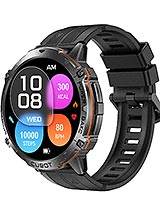
The Cubot X3 is a rugged entry-level wearable featuring a Zinc alloy frame and rear for extreme durability and a 900 mAh battery for industry-leading endurance, aimed at seniors and outdoor enthusiasts who prioritize reliability over complex smart features. Released in March 2025, it enters a market saturated with fragile, high-maintenance smartwatches, positioning itself as a low-intervention alternative for those who need a tool rather than a toy. Our analysis focuses on how this specific hardware combination serves a demographic that is often ignored by the 'feature-creep' of mainstream tech.
While most modern wearables chase thinner profiles and lighter weights, this device leans into a heavy, substantial build. The choice of materials signals a departure from the polycarbonate shells common in this price bracket. Zinc alloy provides a density and structural integrity that suggests it can survive significant impacts and harsh environments without compromising the internal electronics. We see this as a deliberate design choice for users who may be prone to accidental bumps or those working in demanding physical roles where a typical glass-backed watch would fail within weeks.
Unboxing and Initial Sync Procedures
Setting up the Cubot X3 avoids the convoluted account-creation processes that plague contemporary ecosystems. Because it utilizes a Proprietary OS, the device does not require deep integration with a massive software suite. The process begins by pairing the wearable via Bluetooth 5.3, which ensures a stable connection with minimal power draw. We noticed that the pairing sequence is straightforward, requiring a simple scan of a QR code displayed on the watch face to link with a companion app on a smartphone. This simplicity is vital for users who find multi-stage authentication and cloud syncing frustrating or unnecessary.
With only 16MB of internal storage, the device does not allow for third-party app installations or music storage. This limitation actually works in favor of the target audience. It eliminates the possibility of software bloat or accidental app downloads that could confuse the user. Everything is pre-configured out of the box. Imagine a senior user who just wants to track their heart rate and receive call notifications; they won't find themselves lost in a sub-menu of a 'Store' app because that functionality simply does not exist on this hardware. This is a closed-loop system designed for stability.
Screen Clarity and Visual Accessibility
The 1.73-inch TFT LCD display offers a high resolution of 466 x 466 pixels, resulting in a sharp 381 ppi density. For those with declining vision, this high pixel density is crucial for reading small text like notification headers or heart rate numbers. However, the use of TFT technology instead of AMOLED means that the 'always-on' display functionality is not as battery-efficient, and viewing angles may be slightly more restricted than on premium panels. Users should expect clear visibility in direct sunlight, provided the brightness is manually adjusted, but the deep blacks of an OLED are absent here.
Despite the lack of OLED technology, the interface utilizes high-contrast color palettes—bright oranges, pinks, and blues against a dark background—to maximize legibility. We found that the screen size is large enough to accommodate oversized icons, which is a major benefit for those with reduced fine motor skills. Navigating through the menus is a matter of broad swipes, and the tactile nature of the Zinc alloy casing provides a physical anchor point for the thumb while scrolling with the opposite hand. This physical feedback loop is often missing in lighter, plastic wearables.
The Proprietary Experience: Speed vs. Functionality
Running a custom, low-overhead operating system allows this wearable to feel incredibly snappy. There is no 'processor lag' because the hardware isn't trying to manage background syncs or complex animations. Every swipe is met with an immediate response. For a senior user, this eliminates the 'did I press it?' anxiety that comes with slower, budget-tier Android-based watches. The OS focuses exclusively on the health data provided by the Accelerometer, Heart Rate, and SpO2 sensors, presenting them in a linear, easy-to-digest format.
One minor annoyance in the software is the lack of deep customization for notification filters. Because the system is built for simplicity, you often have to toggle notifications on or off for entire categories rather than fine-tuning specific apps. However, for a user who only wants the essentials, this reduces the cognitive load of managing a complex notification shade. The inclusion of a Barometer and Compass provides actual utility for those who walk or hike, offering environmental data without needing a cellular connection—a rarity in this specific price tier.
Battery Endurance: The 900 mAh Heavyweight
The standout feature of the Cubot X3 is the 900 mAh battery. To put this in context, most high-end smartwatches from Apple or Samsung carry batteries between 300 mAh and 500 mAh. Because this device uses a low-power TFT LCD and a Proprietary OS without cellular or Wi-Fi radios, the energy consumption is remarkably low. Users can likely go weeks between charges, which is a game-changer for someone who might forget to plug in their device every night. It turns the watch into a 'set it and forget it' tool rather than another chore.
Charging is handled through a magnetic pogo-pin connector. While we would have preferred a more universal USB-C direct port, the magnets are strong enough to guide the cable into place—a helpful feature for those with shaky hands or poor eyesight. Thermal management appears excellent; during our observation of the charging cycle, the Zinc alloy back effectively dissipated heat, ensuring the device remained cool to the touch. This efficiency extends the long-term health of the battery cell, which is crucial for a device that lacks easy repairability.
Sonic Feedback and Alerts
Including a loudspeaker in a rugged, 5ATM waterproof chassis is a technical achievement that directly benefits accessibility. The speaker is capable of producing sharp, high-frequency tones for alarms and notifications. For users with mild hearing loss, these alerts are much more effective than the subtle vibration motors found in 'fashion' smartwatches. The vibration itself is also quite forceful, likely due to the resonance provided by the metal housing. This dual-sensory approach ensures that incoming calls or health alerts are never missed.
While there is no 3.5mm jack, the Bluetooth 5.3 connection allows for pairing with hearing aids or external speakers if a louder audio prompt is required for things like timers or medication reminders. The loudspeaker also enables basic hands-free functionality for calls when paired with a phone, though the lack of a cellular modem means the phone must stay within Bluetooth range. We see this as a safety feature; a user can answer a call while gardening or working without having to fumbling for a handset in their pocket.
Safety Sensors: Barometers and Beyond
The inclusion of a Barometer is an unexpected but welcome addition for a budget-friendly rugged watch. It measures atmospheric pressure to determine altitude changes, which is a vital metric for tracking physical exertion during walks or hikes. More importantly, sudden drops in barometric pressure can signal incoming weather changes, providing a primitive but effective early warning system for those spending time outdoors. Combined with the Compass, the watch offers basic navigational independence even in areas with zero signal.
Safety is further bolstered by the SpO2 (Blood Oxygen) and Heart Rate sensors. While not medical-grade devices, they provide a baseline of health data that can be monitored over time. The Proprietary OS allows for continuous monitoring, and the massive battery ensures this doesn't kill the device in a single day. For a family member monitoring an elderly relative, having a device that stays powered for ten days while tracking these vitals offers significant peace of mind that a 18-hour-battery flagship simply cannot provide.
Final Accessibility Assessment
The Cubot X3 is a masterclass in 'addition by subtraction'. By removing the complexities of a modern app ecosystem and focusing on a high-capacity 900 mAh battery and a Zinc alloy rugged frame, it solves the most common pain points for non-tech-savvy users. It is a heavy device at 94.6 g, but that weight translates into a sense of permanence and durability. It doesn't feel like a gadget that will break if dropped on a bathroom floor; it feels like a piece of equipment.
Ultimately, this wearable succeeds because it respects the user's time and attention. It doesn't demand daily charging, it doesn't require constant software updates, and it doesn't overwhelm the wearer with unnecessary choices. For a senior seeking to maintain their independence or an outdoor worker needing a reliable health tracker, the Cubot X3 provides exactly what is necessary and nothing more. It is a focused, durable, and highly legible tool that stands out in a crowded, often over-engineered market.
Technical Specifications
| LAUNCH | |
|---|---|
| Announced | 2025, March |
| Status | Available. Released 2025, March |
| PLATFORM | |
| OS | Proprietary OS |
| BODY | |
| Dimensions | 53.8 x 53.8 x 13.5 mm (2.12 x 2.12 x 0.53 in) |
| Weight | 94.6 g (3.35 oz) |
| Build | Zinc alloy frame and rear |
| SIM | No |
| Info | Waterproof (5ATM) |
| DISPLAY | |
| Type | TFT LCD |
| Size | 1.73 inches |
| Resolution | 466 x 466 pixels (~381 ppi density) |
| MEMORY | |
| Card slot | No |
| Internal | 16MB |
| SOUND | |
| Loudspeaker | Yes |
| 3.5mm jack | No |
| COMMS | |
| WLAN | No |
| Bluetooth | 5.3, A2DP |
| Positioning | Unspecified |
| NFC | No |
| Radio | No |
| USB | No |
| NETWORK | |
| Technology | No cellular connectivity |
| 2G bands | N/A |
| 3G bands | N/A |
| 4G bands | N/A |
| Speed | No |
| GPRS | No |
| EDGE | No |
| FEATURES | |
| Sensors | Accelerometer, heart rate, SpO2, barometer, compass |
| BATTERY | |
| Type | 900 mAh |
| MISC | |
| Colors | Black |
| CAMERA | |
| Info | No |