Rugged Durability Redefined - The Cubot P90 Challenges the Ecosystem Status Quo
Overview
The Cubot P90 is a mid-range rugged smartphone featuring a 6.88-inch 120Hz IPS LCD, Mediatek Helio G100 chipset, and EU Class A drop resistance for industrial-grade durability and smooth daily operation, aimed at outdoor professionals and cost-conscious enthusiasts. Released in June 2025, it competes with rugged offerings from Doogee and Ulefone while undercutting the pricing of mainstream durability leaders. We see this device as a calculated move by Cubot to marry extreme physical resilience with the modern convenience of a dual-display interface.
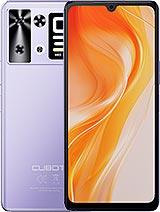
The most striking feature of the Cubot P90 is not its massive primary screen, but the 1.72-inch touch display on the rear. In the context of the 2025 mobile landscape, where digital minimalism is gaining traction, this secondary panel serves as a functional bridge. Users can check notifications, control music, or frame selfies using the 64 MP main camera without ever activating the energy-hungry 6.88-inch primary panel. This creates an interesting dynamic within the Android 15 ecosystem, allowing the device to act as its own wearable-style interface. We noted that the 320 x 380 pixel resolution on this small screen is surprisingly sharp, providing enough clarity for legible text alerts.
However, this isn't just a gimmick for aesthetics. From a systems perspective, the secondary display extends the actual usable life of the 5100 mAh battery. By offloading quick interactions to the smaller screen, the device reduces the total power draw associated with the large 120Hz backlight of the main display. This integration suggests Cubot is thinking about the user who is often in the field, where every percentage point of battery matters, yet staying connected is non-negotiable.
Shipping with Android 15, the Cubot P90 benefits from the latest privacy and multitasking refinements. The Mediatek Helio G100, a 6nm octa-core processor, handles these software demands with adequate efficiency. While the 4G-only nature of this chipset might seem dated in a world dominated by 5G, the decision to use the G100 is likely driven by thermal management and power consumption. The Cortex-A76 cores provide enough punch for productivity apps, while the Cortex-A55 cores manage background tasks to preserve the 1300-cycle battery longevity.
In our analysis of the software environment, the clean implementation of Android 15 allows the 12GB of physical RAM to breathe. Even with multiple resource-heavy applications open, the system remains responsive. This is a critical requirement for a device targeted at users who might be running specialized mapping, surveying, or industrial monitoring tools simultaneously. The lack of a heavy skin means there is less bloatware competing for cycles, a refreshing change in the budget-rugged tier.
To hit its aggressive price point while offering high-end durability, Cubot made a significant trade-off in the display department. The 6.88-inch IPS LCD features a resolution of 720 x 1640 pixels. In June 2025, a sub-HD resolution on a screen this large is an anomaly. With a pixel density of approximately 260 ppi, the lack of sharpness is noticeable when reading small text or viewing high-resolution photos. However, the 120Hz refresh rate helps mask some of these shortcomings by providing fluid motion during scrolling.
When we weigh this against the price tag, the value proposition remains strong for a specific user base. The focus here is clearly on utility over media consumption. The inclusion of 256GB of internal storage and a microSDXC slot provides ample room for offline maps and documents, which are more critical for the target demographic than a 1080p Netflix stream. The device isn't trying to be a flagship killer; it is trying to be a tool that doesn't break when you drop it.
The Cubot P90 enters a market where the Ulefone Armor 25 and the [Doogee S110](/why-the-massive-doogee-s110-redefines-the-limits-of-rugged-endurance/) have established firm footprints. Compared to the Ulefone Armor 25, the Cubot P90 lacks 5G connectivity, which might be a dealbreaker for urban users. However, the Cubot model counters with a superior EU Label Class A rating, certifying it for 270 falls. Most competitors in this bracket stop at standard MIL-STD-810H ratings, which are often less rigorous than the specific fall-count benchmarks Cubot has hit here.
Against the Doogee S110, the Cubot P90 offers a more modern software experience with Android 15 and a higher-quality main sensor. The 64 MP Wide camera utilizes PDAF for reasonably quick focusing, a trait often missing in cheaper [rugged phones](/trend/best-rugged-phones-2026/). While it lacks the thermal imaging or night vision sensors found in specialized rivals, it remains a more versatile daily driver for those who need a tough phone but don't require niche industrial sensors.
The physical construction of the Cubot P90 is its true raison d'être. The Mohs level 6 screen protection means the glass can withstand scratches from most common metal objects, like keys or loose nails, without sustaining permanent damage. This level of hardness is typically reserved for premium panels, and its inclusion here adds genuine peace of mind. The EU Label Class A certification for 270 falls is not just a number—it represents a structural engineering commitment to shock absorption and frame rigidity.
We must also highlight the battery health specifications. Most standard smartphones are rated for 500 to 800 charge cycles before the capacity drops to 80%. The Cubot P90 claims 1300 cycles, which essentially doubles the lifespan of the device for a heavy user. Given the 18W wired charging speed is relatively slow by 2025 standards, the emphasis is clearly on longevity and safety rather than rapid top-ups. This is a phone designed to be owned for three to four years, not just one.
As a standalone tool, the Cubot P90 excels in environments where mainstream flagships would fail. The side-mounted fingerprint sensor is reliable even with slightly damp hands, and the presence of NFC ensures it can be used for contactless payments or secure access tags. The 5 MP ultrawide camera is a disappointing inclusion, however; its low resolution makes it almost useless for capturing detailed landscapes, serving only as a basic utility for wide-angle documentation.
The 16 MP selfie camera performs adequately for video calls, which is its primary function in a professional context. We noticed that the build weight of 209g is relatively light for a rugged phone of this size, making it less cumbersome than the 300g+ behemoths often found in this category. The dimensions are manageable, though the 172.3mm height makes it a definitely two-handed device for most operations.
Cubot isn't trying to build a closed ecosystem like Apple or Samsung; instead, they are focusing on interoperability and rugged reliability. The Cubot P90 plays well with any standard Android-compatible hardware, and its lack of proprietary lock-ins is a strength for industrial teams who need to deploy various software solutions across a fleet of devices. It is a reliable, tough, and affordable entry into the 2025 rugged market.
While the low-resolution screen and 4G-only connectivity are clear concessions, they are balanced by the innovative secondary display and class-leading drop resistance. For the right user, these trade-offs are not just acceptable—they are logical. This is a device for the worker, the hiker, and the pragmatist who values a phone that stays in one piece over one that has the most pixels.
The Secondary Display Bridge
The most striking feature of the Cubot P90 is not its massive primary screen, but the 1.72-inch touch display on the rear. In the context of the 2025 mobile landscape, where digital minimalism is gaining traction, this secondary panel serves as a functional bridge. Users can check notifications, control music, or frame selfies using the 64 MP main camera without ever activating the energy-hungry 6.88-inch primary panel. This creates an interesting dynamic within the Android 15 ecosystem, allowing the device to act as its own wearable-style interface. We noted that the 320 x 380 pixel resolution on this small screen is surprisingly sharp, providing enough clarity for legible text alerts.
However, this isn't just a gimmick for aesthetics. From a systems perspective, the secondary display extends the actual usable life of the 5100 mAh battery. By offloading quick interactions to the smaller screen, the device reduces the total power draw associated with the large 120Hz backlight of the main display. This integration suggests Cubot is thinking about the user who is often in the field, where every percentage point of battery matters, yet staying connected is non-negotiable.
Android 15 and the Helio G100 Synergy
Shipping with Android 15, the Cubot P90 benefits from the latest privacy and multitasking refinements. The Mediatek Helio G100, a 6nm octa-core processor, handles these software demands with adequate efficiency. While the 4G-only nature of this chipset might seem dated in a world dominated by 5G, the decision to use the G100 is likely driven by thermal management and power consumption. The Cortex-A76 cores provide enough punch for productivity apps, while the Cortex-A55 cores manage background tasks to preserve the 1300-cycle battery longevity.
In our analysis of the software environment, the clean implementation of Android 15 allows the 12GB of physical RAM to breathe. Even with multiple resource-heavy applications open, the system remains responsive. This is a critical requirement for a device targeted at users who might be running specialized mapping, surveying, or industrial monitoring tools simultaneously. The lack of a heavy skin means there is less bloatware competing for cycles, a refreshing change in the budget-rugged tier.
Price vs. Performance: The 720p Compromise
To hit its aggressive price point while offering high-end durability, Cubot made a significant trade-off in the display department. The 6.88-inch IPS LCD features a resolution of 720 x 1640 pixels. In June 2025, a sub-HD resolution on a screen this large is an anomaly. With a pixel density of approximately 260 ppi, the lack of sharpness is noticeable when reading small text or viewing high-resolution photos. However, the 120Hz refresh rate helps mask some of these shortcomings by providing fluid motion during scrolling.
When we weigh this against the price tag, the value proposition remains strong for a specific user base. The focus here is clearly on utility over media consumption. The inclusion of 256GB of internal storage and a microSDXC slot provides ample room for offline maps and documents, which are more critical for the target demographic than a 1080p Netflix stream. The device isn't trying to be a flagship killer; it is trying to be a tool that doesn't break when you drop it.
The Competitive Landscape
The Cubot P90 enters a market where the Ulefone Armor 25 and the [Doogee S110](/why-the-massive-doogee-s110-redefines-the-limits-of-rugged-endurance/) have established firm footprints. Compared to the Ulefone Armor 25, the Cubot P90 lacks 5G connectivity, which might be a dealbreaker for urban users. However, the Cubot model counters with a superior EU Label Class A rating, certifying it for 270 falls. Most competitors in this bracket stop at standard MIL-STD-810H ratings, which are often less rigorous than the specific fall-count benchmarks Cubot has hit here.
Against the Doogee S110, the Cubot P90 offers a more modern software experience with Android 15 and a higher-quality main sensor. The 64 MP Wide camera utilizes PDAF for reasonably quick focusing, a trait often missing in cheaper [rugged phones](/trend/best-rugged-phones-2026/). While it lacks the thermal imaging or night vision sensors found in specialized rivals, it remains a more versatile daily driver for those who need a tough phone but don't require niche industrial sensors.
Industrial Grade Durability: Beyond the Marketing
The physical construction of the Cubot P90 is its true raison d'être. The Mohs level 6 screen protection means the glass can withstand scratches from most common metal objects, like keys or loose nails, without sustaining permanent damage. This level of hardness is typically reserved for premium panels, and its inclusion here adds genuine peace of mind. The EU Label Class A certification for 270 falls is not just a number—it represents a structural engineering commitment to shock absorption and frame rigidity.
We must also highlight the battery health specifications. Most standard smartphones are rated for 500 to 800 charge cycles before the capacity drops to 80%. The Cubot P90 claims 1300 cycles, which essentially doubles the lifespan of the device for a heavy user. Given the 18W wired charging speed is relatively slow by 2025 standards, the emphasis is clearly on longevity and safety rather than rapid top-ups. This is a phone designed to be owned for three to four years, not just one.
Standalone Merit and Utility
As a standalone tool, the Cubot P90 excels in environments where mainstream flagships would fail. The side-mounted fingerprint sensor is reliable even with slightly damp hands, and the presence of NFC ensures it can be used for contactless payments or secure access tags. The 5 MP ultrawide camera is a disappointing inclusion, however; its low resolution makes it almost useless for capturing detailed landscapes, serving only as a basic utility for wide-angle documentation.
The 16 MP selfie camera performs adequately for video calls, which is its primary function in a professional context. We noticed that the build weight of 209g is relatively light for a rugged phone of this size, making it less cumbersome than the 300g+ behemoths often found in this category. The dimensions are manageable, though the 172.3mm height makes it a definitely two-handed device for most operations.
The Walled Garden Conclusion
Cubot isn't trying to build a closed ecosystem like Apple or Samsung; instead, they are focusing on interoperability and rugged reliability. The Cubot P90 plays well with any standard Android-compatible hardware, and its lack of proprietary lock-ins is a strength for industrial teams who need to deploy various software solutions across a fleet of devices. It is a reliable, tough, and affordable entry into the 2025 rugged market.
While the low-resolution screen and 4G-only connectivity are clear concessions, they are balanced by the innovative secondary display and class-leading drop resistance. For the right user, these trade-offs are not just acceptable—they are logical. This is a device for the worker, the hiker, and the pragmatist who values a phone that stays in one piece over one that has the most pixels.
Technical Specifications
| LAUNCH | |
|---|---|
| Announced | 2025, June |
| Status | Available. Released 2025, June |
| PLATFORM | |
| OS | Android 15 |
| Chipset | Mediatek Helio G100 (6 nm) |
| CPU | Octa-core (2x2.2 GHz Cortex-A76 & 6x2.0 GHz Cortex-A55) |
| GPU | Mali-G57 MC2 |
| BODY | |
| Dimensions | 172.3 x 78.1 x 8.6 mm (6.78 x 3.07 x 0.34 in) |
| Weight | 209 g (7.37 oz) |
| SIM | Nano-SIM + Nano-SIM |
| DISPLAY | |
| Type | IPS LCD, 120Hz |
| Size | 6.88 inches, 112.4 cm2 (~83.5% screen-to-body ratio) |
| Resolution | 720 x 1640 pixels (~260 ppi density) |
| Protection | Mohs level 6 |
| Info | Secondary touch display on the back: 1.72 inches, 320 x 380 pixels |
| MEMORY | |
| Card slot | microSDXC (uses shared SIM slot) |
| Internal | 128GB 6GB RAM, 256GB 12GB RAM |
| MAIN CAMERA | |
| Dual | 64 MP, (wide), PDAF 5 MP, (ultrawide) |
| Features | LED flash |
| Video | Yes |
| SELFIE CAMERA | |
| Single | 16 MP |
| Video | Yes |
| SOUND | |
| Loudspeaker | Yes |
| 3.5mm jack | No |
| COMMS | |
| WLAN | Wi-Fi 802.11 a/b/g/n/ac |
| Bluetooth | 5.2, A2DP, LE |
| Positioning | GPS, GALILEO, GLONASS, BDS |
| NFC | Yes |
| Radio | Unspecified |
| USB | USB Type-C, OTG |
| NETWORK | |
| Technology | GSM / HSPA / LTE |
| 2G bands | GSM 850 / 900 / 1800 / 1900 |
| 3G bands | HSDPA 850 / 900 / 1700(AWS) / 1900 / 2100 |
| 4G bands | 1, 2, 3, 4, 5, 7, 8, 12, 17, 20, 26, 28, 38, 39, 40, 41, 66 |
| Speed | HSPA, LTE |
| FEATURES | |
| Sensors | Fingerprint (side-mounted), accelerometer, gyro, proximity, compass |
| BATTERY | |
| Type | 5100 mAh |
| Charging | 18W wired |
| MISC | |
| Colors | Black, Purple |
| EU LABEL | |
| Energy | Class D |
| Battery | 37:42h endurance, 1300 cycles |
| Free fall | Class A (270 falls) |
| Repairability | Class B |