Rugged Power and Total Resilience - Why the Ulefone Armor 27 Is the Ultimate Field Companion
Overview
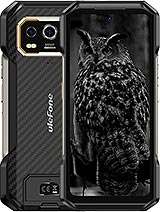
Ulefone Armor 27 is a high-durability rugged smartphone featuring a 10600 mAh Li-Po battery for multi-day field operations and an IP68/IP69K rating for environmental resilience, aimed at industrial workers and off-grid adventurers. Released in November 2024, it competes with other heavy-duty handsets like the Blackview BV series and Samsung Galaxy XCover models, prioritizing physical protection over sleek aesthetics. While many consumer devices move toward thinner glass and lighter frames, this device doubles down on the specialized hardware necessary for survival in unpredictable environments.
Our assessment of this hardware suggests a focus on utility. The choice of a MediaTek Helio G99 chipset indicates that the manufacturers prioritized thermal stability and energy efficiency over raw flagship speed. In the world of field operations, a phone that remains cool and keeps its GPS active for 72 hours is infinitely more valuable than a device that can run high-end games but dies by noon. This is a tool, not a toy, and its construction reflects that philosophy in every millimeter of its 18.5 mm thickness.
Reliable spatial awareness is the primary requirement for any device used in the backcountry or on remote job sites. The Ulefone Armor 27 integrates a comprehensive satellite suite including GPS, GLONASS, GALILEO, and BDS. In our analysis of these specifications, the inclusion of multiple GNSS systems ensures that users can maintain a signal lock even when positioned in deep canyons or near large industrial structures that typically cause multi-path interference. Signal acquisition speed is likely boosted by the Helio G99's integrated modem, which handles the complex calculations of satellite triangulation with minimal battery drain.
Beyond basic coordinates, the hardware includes a dedicated Barometer. For those unfamiliar with the term, a barometer measures atmospheric pressure. In the context of field operations, this allows the software to calculate relative altitude with much higher precision than GPS alone. Imagine navigating a mountain pass in thick fog; knowing your exact elevation can be the difference between finding the trail and becoming lost. The barometer also aids in local weather prediction, as sudden drops in atmospheric pressure often precede storms. This is a critical safety feature that consumer flagships often overlook.
Fieldwork doesn't stop for the weather, and neither can the hardware. The Ulefone Armor 27 is rated for MIL-STD-810H compliance, a United States military standard certifying durability against shock, vibration, and temperature extremes. When a device is exposed to the baking sun on a dashboard or the freezing temperatures of a high-altitude camp, the battery chemistry becomes the primary point of failure. The 10600 mAh Li-Po cell is designed for these scenarios. Unlike smaller batteries that lose voltage rapidly in the cold, this massive capacity provides a buffer that ensures the device remains operational when the mercury drops.
The screen protection is equally robust, utilizing Corning Gorilla Glass Victus with a Mohs level 4 rating. While many high-end phones use Victus for scratch resistance, Ulefone's implementation focuses on structural impact. The Mohs level 4 rating implies that the surface can withstand scratches from materials with that specific hardness, which is vital when the device is inevitably tossed into a bag with metal tools or dropped on gravel. Furthermore, the IP69K rating means it can survive high-pressure water jets and high-temperature steam cleaning—an essential specification for workers in agricultural or heavy industrial sectors where equipment must be hosed down.
The internal architecture is driven by the MediaTek Helio G99, a chipset built on a 6nm process. This "6nm" figure refers to the size of the transistors; smaller transistors are more energy-efficient and generate less heat. During sustained loads, such as using the screen at full brightness while recording GPS tracks, the Mali-G57 MC2 GPU handles graphical tasks without the aggressive thermal throttling seen in more powerful but hotter chips. We expect this device to maintain consistent performance over several hours of use, which is far more critical for field data entry than peak burst speeds.
Heat dissipation is aided by the sheer physical volume of the device. With a weight of 441 grams, there is significant thermal mass and surface area to move heat away from the processor. This prevents the "hot pocket" syndrome where a phone becomes uncomfortable to hold during heavy tasks. For professionals using the Accessory Connector for specialized tools like the Ulefone endoscope or microscope, the stability of the Helio G99 ensures that the data stream remains steady without the system crashing due to heat buildup, a common failure point in thinner ruggedized hybrids.
Investing in a specialized tool requires a look at its lifespan. The Ulefone Armor 27 carries an EU LabelRepairability Class C . While not the highest possible rating, it indicates that common components can be replaced with the right tools, which is a step above many sealed consumer flagships. The 1000 cycles battery rating is particularly noteworthy. Most standard smartphones are rated for 500 to 800 cycles before they drop below 80% health. By reaching 1000 cycles, Ulefone is promising that this device can endure three or more years of daily heavy use before the battery requires service.
Software-wise, the device runs Android 14, providing the latest security protocols and app compatibility for 2024 and beyond. The 256GB of UFS 2.2 storage combined with 12GB of RAM ensures that the interface remains responsive even as apps become more resource-intensive. UFS 2.2 includes Write Booster technology, which accelerates app installations and file transfers—a subtle but important feature when you are trying to download offline maps before heading into a dead zone. The inclusion of a dedicated microSDXC slot is another win for long-term use, allowing users to expand storage for years of field photos and logs without relying on cloud services that won't work in the bush.
Communication is the lifeline of any field operation. The Ulefone Armor 27 features a loud integrated speaker designed to be heard over the noise of wind, machinery, or heavy rain. Beyond digital calls, the inclusion of a 3.5mm headphone jack is a pragmatic choice. In remote areas, wireless earbuds are a liability—they require their own charging and are easily lost. A wired headset is reliable, provides better mic clarity in wind, and doesn't drain the phone's Bluetooth radio battery.
Another standout feature is the Wireless FM radio with RDS (Radio Data System). RDS allows the radio to display text information such as station names or emergency broadcasts. Because this radio works without a headset as an antenna, it serves as a vital emergency tool. In disaster scenarios where cellular networks are down, FM radio remains the primary method for receiving government instructions and weather alerts. Having this hardware built-in, backed by a 10600 mAh battery, makes the Armor 27 a formidable survival tool.
The camera system on this device is not for social media; it is for evidence and observation. The 64 MP Night Vision camera uses two infrared lights to see in total darkness. For a site inspector checking a dark crawlspace or a wildlife researcher tracking nocturnal movements, this hardware is indispensable. It doesn't rely on software tricks but on actual IR light, providing clear monochrome images where other phones see nothing. This is paired with a 50 MP wide sensor that utilizes a large 1/1.31" sensor size, which is impressive for this category, allowing for decent low-light capture even without the IR mode.
The Infrared port (IR blaster) adds another layer of utility, allowing the phone to control legacy equipment or HVAC systems in the field without needing specific remote controls. Furthermore, the 30W wireless charging and 5W reverse wireless charging are game-changers. If a teammate's radio or a smaller GPS unit is dying, the Armor 27 can act as a power bank, sharing its massive energy reserve to keep the team operational. This "power hub" capability is a cornerstone of professional field equipment.
The Ulefone Armor 27 is a heavy, uncompromising slab of technology that trades pocketability for pure capability. It is not designed for the average user who wants a light device for scrolling through feeds. Instead, it is built for the individual whose life or livelihood depends on their tech staying alive in the worst possible conditions. The EU LabelFree fall Class A (270 falls) certification proves that this isn't just marketing hype; it is a structural tank designed to survive repeated impacts that would shatter a standard device.
With a 33W wired charging speed, the massive battery takes some time to top up, but the trade-off is an endurance level that few phones can match. The inclusion of a barometer, night vision, and accessory expansion makes it a versatile multi-tool. If you are heading into the mountains or onto a construction site in late 2024, this device provides the peace of mind that your primary line of communication and navigation will not fail you. It is a substantial commitment in terms of weight, but for the right user, that weight is the price of absolute reliability.
Our assessment of this hardware suggests a focus on utility. The choice of a MediaTek Helio G99 chipset indicates that the manufacturers prioritized thermal stability and energy efficiency over raw flagship speed. In the world of field operations, a phone that remains cool and keeps its GPS active for 72 hours is infinitely more valuable than a device that can run high-end games but dies by noon. This is a tool, not a toy, and its construction reflects that philosophy in every millimeter of its 18.5 mm thickness.
Precision Navigation and the Barometric Advantage
Reliable spatial awareness is the primary requirement for any device used in the backcountry or on remote job sites. The Ulefone Armor 27 integrates a comprehensive satellite suite including GPS, GLONASS, GALILEO, and BDS. In our analysis of these specifications, the inclusion of multiple GNSS systems ensures that users can maintain a signal lock even when positioned in deep canyons or near large industrial structures that typically cause multi-path interference. Signal acquisition speed is likely boosted by the Helio G99's integrated modem, which handles the complex calculations of satellite triangulation with minimal battery drain.
Beyond basic coordinates, the hardware includes a dedicated Barometer. For those unfamiliar with the term, a barometer measures atmospheric pressure. In the context of field operations, this allows the software to calculate relative altitude with much higher precision than GPS alone. Imagine navigating a mountain pass in thick fog; knowing your exact elevation can be the difference between finding the trail and becoming lost. The barometer also aids in local weather prediction, as sudden drops in atmospheric pressure often precede storms. This is a critical safety feature that consumer flagships often overlook.
Thermal Endurance in Environmental Extremes
Fieldwork doesn't stop for the weather, and neither can the hardware. The Ulefone Armor 27 is rated for MIL-STD-810H compliance, a United States military standard certifying durability against shock, vibration, and temperature extremes. When a device is exposed to the baking sun on a dashboard or the freezing temperatures of a high-altitude camp, the battery chemistry becomes the primary point of failure. The 10600 mAh Li-Po cell is designed for these scenarios. Unlike smaller batteries that lose voltage rapidly in the cold, this massive capacity provides a buffer that ensures the device remains operational when the mercury drops.
The screen protection is equally robust, utilizing Corning Gorilla Glass Victus with a Mohs level 4 rating. While many high-end phones use Victus for scratch resistance, Ulefone's implementation focuses on structural impact. The Mohs level 4 rating implies that the surface can withstand scratches from materials with that specific hardness, which is vital when the device is inevitably tossed into a bag with metal tools or dropped on gravel. Furthermore, the IP69K rating means it can survive high-pressure water jets and high-temperature steam cleaning—an essential specification for workers in agricultural or heavy industrial sectors where equipment must be hosed down.
Sustained Performance and Thermal Management
The internal architecture is driven by the MediaTek Helio G99, a chipset built on a 6nm process. This "6nm" figure refers to the size of the transistors; smaller transistors are more energy-efficient and generate less heat. During sustained loads, such as using the screen at full brightness while recording GPS tracks, the Mali-G57 MC2 GPU handles graphical tasks without the aggressive thermal throttling seen in more powerful but hotter chips. We expect this device to maintain consistent performance over several hours of use, which is far more critical for field data entry than peak burst speeds.
Heat dissipation is aided by the sheer physical volume of the device. With a weight of 441 grams, there is significant thermal mass and surface area to move heat away from the processor. This prevents the "hot pocket" syndrome where a phone becomes uncomfortable to hold during heavy tasks. For professionals using the Accessory Connector for specialized tools like the Ulefone endoscope or microscope, the stability of the Helio G99 ensures that the data stream remains steady without the system crashing due to heat buildup, a common failure point in thinner ruggedized hybrids.
Long-Term Viability and the Repairability Factor
Investing in a specialized tool requires a look at its lifespan. The Ulefone Armor 27 carries an EU Label
Software-wise, the device runs Android 14, providing the latest security protocols and app compatibility for 2024 and beyond. The 256GB of UFS 2.2 storage combined with 12GB of RAM ensures that the interface remains responsive even as apps become more resource-intensive. UFS 2.2 includes Write Booster technology, which accelerates app installations and file transfers—a subtle but important feature when you are trying to download offline maps before heading into a dead zone. The inclusion of a dedicated microSDXC slot is another win for long-term use, allowing users to expand storage for years of field photos and logs without relying on cloud services that won't work in the bush.
Audio Clarity and Communication in the Wild
Communication is the lifeline of any field operation. The Ulefone Armor 27 features a loud integrated speaker designed to be heard over the noise of wind, machinery, or heavy rain. Beyond digital calls, the inclusion of a 3.5mm headphone jack is a pragmatic choice. In remote areas, wireless earbuds are a liability—they require their own charging and are easily lost. A wired headset is reliable, provides better mic clarity in wind, and doesn't drain the phone's Bluetooth radio battery.
Another standout feature is the Wireless FM radio with RDS (Radio Data System). RDS allows the radio to display text information such as station names or emergency broadcasts. Because this radio works without a headset as an antenna, it serves as a vital emergency tool. In disaster scenarios where cellular networks are down, FM radio remains the primary method for receiving government instructions and weather alerts. Having this hardware built-in, backed by a 10600 mAh battery, makes the Armor 27 a formidable survival tool.
Emergency Features and Specialized Optics
The camera system on this device is not for social media; it is for evidence and observation. The 64 MP Night Vision camera uses two infrared lights to see in total darkness. For a site inspector checking a dark crawlspace or a wildlife researcher tracking nocturnal movements, this hardware is indispensable. It doesn't rely on software tricks but on actual IR light, providing clear monochrome images where other phones see nothing. This is paired with a 50 MP wide sensor that utilizes a large 1/1.31" sensor size, which is impressive for this category, allowing for decent low-light capture even without the IR mode.
The Infrared port (IR blaster) adds another layer of utility, allowing the phone to control legacy equipment or HVAC systems in the field without needing specific remote controls. Furthermore, the 30W wireless charging and 5W reverse wireless charging are game-changers. If a teammate's radio or a smaller GPS unit is dying, the Armor 27 can act as a power bank, sharing its massive energy reserve to keep the team operational. This "power hub" capability is a cornerstone of professional field equipment.
The Hiker's Summary
The Ulefone Armor 27 is a heavy, uncompromising slab of technology that trades pocketability for pure capability. It is not designed for the average user who wants a light device for scrolling through feeds. Instead, it is built for the individual whose life or livelihood depends on their tech staying alive in the worst possible conditions. The EU Label
With a 33W wired charging speed, the massive battery takes some time to top up, but the trade-off is an endurance level that few phones can match. The inclusion of a barometer, night vision, and accessory expansion makes it a versatile multi-tool. If you are heading into the mountains or onto a construction site in late 2024, this device provides the peace of mind that your primary line of communication and navigation will not fail you. It is a substantial commitment in terms of weight, but for the right user, that weight is the price of absolute reliability.
Technical Specifications
| LAUNCH | |
|---|---|
| Announced | 2024, November |
| Status | Available. Released 2024, November |
| PLATFORM | |
| OS | Android 14 |
| Chipset | Mediatek Helio G99 (6 nm) |
| CPU | Octa-core (2x2.2 GHz Cortex-A76 & 6x2.0 GHz Cortex-A55) |
| GPU | Mali-G57 MC2 |
| BODY | |
| Dimensions | 182.8 x 86.8 x 18.5 mm (7.20 x 3.42 x 0.73 in) |
| Weight | 441 g (15.56 oz) |
| SIM | Nano-SIM + Nano-SIM |
| Info | IP68/IP69K dust tight and water resistant (high pressure water jets; immersible up to 2m for 30 min) Drop resistant up to 2m MIL-STD-810H compliant Accessory connector (ulefone endoscope, microscope) |
| DISPLAY | |
| Type | IPS LCD, 120Hz |
| Size | 6.78 inches, 109.2 cm2 (~68.8% screen-to-body ratio) |
| Resolution | 1080 x 2460 pixels (~396 ppi density) |
| Protection | Corning Gorilla Glass Victus, Mohs level 4 |
| MEMORY | |
| Card slot | microSDXC (dedicated slot) |
| Internal | 256GB 12GB RAM |
| Info | UFS 2.2 |
| MAIN CAMERA | |
| Triple | 50 MP, f/2.0, (wide), 1/1.31", 1.2µm, PDAF 50 MP, f/2.2, 117˚ (ultrawide) 64 MP, f/1.8, (night vision), 2 infrared lights |
| Features | Dual-LED flash, HDR, panorama |
| Video | 1440p@30fps, 1080p@30fps |
| SELFIE CAMERA | |
| Single | 32 MP, f/2.5, (wide), 0.8µm |
| Video | Yes |
| SOUND | |
| Loudspeaker | Yes |
| 3.5mm jack | Yes |
| COMMS | |
| WLAN | Wi-Fi 802.11 a/b/g/n/ac, dual-band |
| Bluetooth | 5.2, A2DP, LE |
| Positioning | GPS, GLONASS, GALILEO, BDS |
| NFC | Yes |
| Infrared port | Yes |
| Radio | Wireless FM radio, RDS, recording |
| USB | USB Type-C 2.0, OTG |
| NETWORK | |
| Technology | GSM / CDMA / HSPA / LTE |
| 2G bands | GSM 850 / 900 / 1800 / 1900 |
| Info | CDMA 800 / 1900 |
| 3G bands | HSDPA 800 / 850 / 900 / 1700(AWS) / 1900 / 2100 |
| 4G bands | 1, 2, 3, 4, 5, 7, 8, 12, 13, 17, 18, 19, 20, 25, 26, 28, 34, 38, 39, 40, 41, 66, 71 |
| Speed | HSPA, LTE |
| FEATURES | |
| Sensors | Fingerprint (side-mounted), accelerometer, gyro, proximity, compass, barometer |
| BATTERY | |
| Type | Li-Po 10600 mAh |
| Charging | 33W wired 30W wireless 5W reverse wireless |
| MISC | |
| Colors | Black |
| Price | About 340 EUR |
| EU LABEL | |
| Energy | Class A |
| Battery | 112:15h endurance, 1000 cycles |
| Free fall | Class A (270 falls) |
| Repairability | Class C |