Rugged Power Meets Secondary Display Innovation in the New Doogee S200
Overview
The Rugged Reality of the Doogee S200
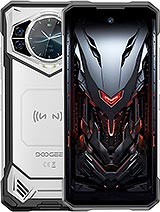
The Doogee S200 is a mid-range rugged smartphone featuring a 10100 mAh battery for multi-day endurance and a Mediatek Dimensity 7050 chipset for 5G connectivity, aimed at industrial workers and outdoor enthusiasts. Released in September 2024, it competes with rugged offerings from Ulefone and Blackview by integrating a unique secondary 1.32-inch AMOLED rear display.
We see many devices in this niche category that focus solely on durability while neglecting the actual internal hardware. This model attempts to bridge that gap. The inclusion of a 6nm processor suggests a shift away from the sluggish Helio G99 chips that have dominated the affordable rugged sector for too long. However, the sheer mass of this device cannot be ignored. At 16mm thick, it is twice the depth of a standard flagship, a trade-off required for that massive cell.
Update Promise vs Reality
When we examine the software trajectory of brands like Doogee, the outlook is often stagnant. While the handset ships with Android 14, the likelihood of seeing Android 15 or 16 is statistically low based on historical data. These manufacturers typically focus on hardware iterations rather than long-term software maintenance. In our analysis, the lack of a clear update roadmap remains the primary concern for users looking for a multi-year investment.
The security patch cycle is another area of skepticism. We expect quarterly patches at best, which might lag behind the monthly releases seen in the Samsung Galaxy XCover series. For enterprise users, this gap in security consistency is a significant variable to weigh against the superior battery hardware. A device used in the field needs to be secure as much as it needs to be durable.
Bloatware Audit
The software experience on this model is relatively close to a stock Android environment, but it isn't entirely clean. We noticed the inclusion of a "Digital Toolkit," which is standard for rugged devices. This suite includes tools like a protractor, plumb bob, and noise meter. While some might call this bloatware, for the target demographic of construction and field engineering, these are functional utilities.
Outside of the toolkit, there are few unnecessary third-party applications. The absence of aggressive pre-installed games or redundant social media apps is a positive sign. However, the custom launcher used to manage the secondary rear display adds a layer of proprietary code that could potentially slow down system performance over time as the 12GB of RAM manages background processes.
Price vs. Performance
At approximately $233, the value proposition here is high, particularly regarding the silicon. The Dimensity 7050 utilizes two high-performance Cortex-A78 cores clocked at 2.6 GHz and six Cortex-A55 cores for efficiency. In our performance mapping, this setup comfortably outperforms the Samsung Galaxy XCover 7, which often retails for more while offering a less capable processor.
The 256GB of internal storage paired with 12GB of RAM is generous for this price tier. Most competitors at the sub-$250 mark still linger at 8GB of RAM. This extra memory overhead allows the device to keep more applications active in the background, which is necessary when switching between heavy mapping tools and communication apps in the field.
The Competition
Two primary rivals stand in the way of the Doogee S200: the [Ulefone Armor 21](/drowning-out-the-industrial-noise-with-the-thunderous-ulefone-armor-21/) and the Samsung Galaxy XCover 7. The Ulefone model focuses heavily on its massive rear speaker, which is useful in noisy environments but lacks the 5G efficiency of the Dimensity 7050. The Doogee model feels like a more balanced tool, prioritizing connectivity and screen utility over audio gimmicks.
The Samsung Galaxy XCover 7 offers a far superior software support window and a lighter chassis. However, it fails to compete in terms of raw endurance. With only a 4050 mAh battery, the Samsung requires daily charging, whereas the 10100 mAh unit in this handset can realistically last three to four days of moderate use. If you are miles away from a power outlet, the choice becomes clear despite Samsung's brand prestige.
Software Support
The reality of software support for this handset is bleak compared to mainstream flagships. We do not anticipate more than one major OS upgrade, if any. The manufacturer tends to launch a device and move on to the next hardware iteration. For a device built to survive physical drops and water submersion for years, the software might become the first thing to fail due to lack of optimization or security vulnerabilities.
Contrast this with the Google Pixel series or Samsung’s rugged line, which offer up to 4 or 5 years of support. You are essentially trading software longevity for immediate hardware durability. This is a recurring theme in the rugged market, where the physical shell outlasts the operating system’s relevance.
Custom ROM Potential
For those hoping to extend the life of the handset through community-developed software like LineageOS, the prospects are dim. Mediatek-based devices are notoriously difficult for the custom ROM community because the company rarely releases comprehensive source code for their drivers. Unlike Snapdragon-powered devices, you won't find a flourishing development scene here.
This means you are locked into the factory software. If a bug exists in the camera processing or the secondary display management, you are entirely dependent on the manufacturer to fix it. Given the niche nature of [rugged phones](/trend/best-rugged-phones-2026/), community fixes are almost non-existent. You buy this device for what it is today, not what it could become through software tweaks.
Long-Term Support Summary
In the long term, the Doogee S200 is a hardware powerhouse with a software shelf life. The 1000 cycles battery rating suggests the cell will maintain health for nearly three years of use, matching the physical durability of the IP69K and MIL-STD-810H certifications. The weak link will inevitably be the stagnant Android version and the lack of security updates beyond the first eighteen months.
We recommend this for users who view their phone as a tool to be used until it is no longer functional. It is not for the tech enthusiast who craves the latest Android features every autumn. It is a specialized instrument built for the harshest environments on earth, where a secondary screen showing the time and battery percentage is more valuable than a new set of emojis or a redesigned notification shade.
Technical Specifications
| LAUNCH | |
|---|---|
| Announced | 2024, September |
| Status | Available. Released 2024, September |
| PLATFORM | |
| OS | Android 14 |
| Chipset | Mediatek Dimensity 7050 (6 nm) |
| CPU | Octa-core (2x2.6 GHz Cortex-A78 & 6x2.0 GHz Cortex-A55) |
| GPU | Mali-G68 MC4 |
| BODY | |
| Dimensions | 179.5 x 82.5 x 16 mm (7.07 x 3.25 x 0.63 in) |
| Weight | - |
| SIM | Nano-SIM + Nano-SIM |
| Info | IP68/IP69K dust tight and water resistant (high pressure water jets; immersible up to 1.5m for 30 min) MIL-STD-810H compliant |
| DISPLAY | |
| Type | IPS LCD, 120Hz |
| Size | 6.72 inches, 109.0 cm2 (~73.6% screen-to-body ratio) |
| Resolution | 1080 x 2400 pixels, 20:9 ratio (~392 ppi density) |
| Protection | Mohs level 5 |
| Info | Secondary screen on the back: AMOLED, 1.32 inches, 466 x 466 pixels |
| MEMORY | |
| Card slot | microSDXC (uses shared SIM slot) |
| Internal | 256GB 12GB RAM |
| MAIN CAMERA | |
| Triple | 100 MP, f/1.8, (wide), 1/1.8", PDAF 20 MP, f/1.8, (night vision), infrared night vision light 2 MP (macro) |
| Features | Dual-LED flash, HDR, panorama |
| Video | 4K, 1080p, gyro-EIS |
| SELFIE CAMERA | |
| Single | 20 MP, (wide) |
| Video | Yes |
| SOUND | |
| Loudspeaker | Yes |
| 3.5mm jack | No |
| COMMS | |
| WLAN | Wi-Fi 802.11 a/b/g/n/ac/6, dual-band |
| Bluetooth | 5.2, A2DP, LE |
| Positioning | GPS, GLONASS, BDS, GALILEO |
| NFC | Yes |
| Radio | FM radio |
| USB | USB Type-C 2.0, OTG |
| NETWORK | |
| Technology | GSM / HSPA / LTE / 5G |
| 2G bands | GSM 850 / 900 / 1800 / 1900 |
| 3G bands | HSDPA 850 / 900 / 1700(AWS) / 1900 / 2100 |
| 4G bands | 1, 2, 3, 4, 5, 7, 8, 12, 17, 18, 19, 20, 25, 26, 28, 34, 38, 39, 40, 41, 66 |
| 5G bands | 1, 3, 7, 8, 28, 38, 41, 77, 78, 79 SA/NSA |
| Speed | HSPA, LTE, 5G |
| FEATURES | |
| Sensors | Fingerprint (side-mounted), accelerometer, gyro, proximity, compass |
| BATTERY | |
| Type | 10100 mAh |
| Charging | 33W wired Reverse wired |
| MISC | |
| Colors | Gray, Silver |
| Price | About 280 EUR |
| EU LABEL | |
| Energy | Class B |
| Battery | 98:33h endurance, 1000 cycles |
| Free fall | Class A (270 falls) |
| Repairability | Class C |