Rugged Reality Checks and the Surprising Utility of the Tecno Pop X 4G
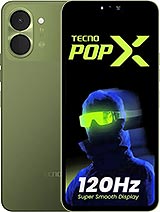
Overview
The Architecture of Affordable Durability
Tecno Pop X 4G is a budget-tier smartphone featuring a 120Hz IPS LCD for fluid navigation and an IP64 rating for dust and splash protection, aimed at families needing a resilient secondary device or a child's first handset. Released in early 2026, it competes in a market where durability often takes a backseat to flashy but fragile aesthetics. This model leans into its build quality to justify its place in a crowded entry-level landscape.
We observe a strategic shift in this device's construction. By utilizing a plastic frame and back, the manufacturer avoids the shattering risks inherent to the glass sandwiches dominating the premium market. The IP64 certification is a notable addition for the sub-₹10,000 category, providing a seal against dust and protection from water splashes. While it won't survive a swim, it handles a rainy commute or a spilled drink with more grace than most competitors. The 1.2m drop resistance rating implies a reinforced internal structure, a feature we value highly for long-term economic savings on repairs.
Navigation Efficiency and the HIOS 15 Environment
The software experience relies on Android 15 and HIOS 15, which have been optimized to run on the Unisoc T7250 chipset. This 12nm octa-core processor utilizes a cluster of two Cortex-A75 performance cores and six Cortex-A55 efficiency cores. In our analysis of system overhead, the Cortex-A55 cores handle background tasks with minimal power draw, while the A75 cores engage only when launching applications or processing the 120Hz refresh rate.
Navigating the interface feels surprisingly snappy due to that high refresh rate, but users must manage expectations. With only 4GB of RAM, multitasking is limited. The system will aggressively close background apps to maintain the fluidity of the active foreground task. We recommend utilizing the 'Simple Mode' found in HIOS 15 for less tech-savvy users, as it enlarges touch targets and simplifies the app drawer, reducing the cognitive load and accidental inputs that often plague larger screens.
The Out of Box Experience and Initial Setup
Opening the box reveals a device that prioritizes essentials. The inclusion of a USB Type-C cable and a basic charger is standard, but the physical setup reveals some friction. The 64GB of internal storage is remarkably tight for 2026 standards. After the Android 15 system files and initial security patches are installed, users are left with roughly 45GB of usable space. This makes the dedicated microSDXC slot an essential component rather than an optional luxury.
We suggest installing a high-speed memory card immediately to offload media storage. Setting up the device is straightforward, though the initial boot process requires several minutes to optimize the Mali-G57 MP1 GPU drivers for the UI animations. Once configured, the 120Hz toggle should be set to 'Auto' to balance visual smoothness with battery conservation, as forced 120Hz will drain the cell significantly faster during static tasks.
Biometric Reliability and Gesture Interaction
Security is handled by a side-mounted fingerprint sensor integrated into the power button. This placement is economically and ergonomically superior to the cheap in-display optical sensors often found in this price bracket. The tactile feedback allows users to unlock the device while it is still in a pocket, and the physical sensor proves more reliable for those with worn or calloused fingertips.
The 6.74-inch display is massive, making one-handed use a challenge. However, the software’s gesture navigation includes decent edge-rejection algorithms. This prevents the palm of the hand from triggering accidental 'back' commands while reaching across the screen. The 720 x 1600 resolution results in a pixel density of roughly 260 ppi. While individual pixels are visible if the handset is held close, the 120Hz motion clarity compensates for the lack of raw sharpness during scrolling and video playback.
Energy Management and Thermal Profiles
A 5000 mAh Li-Po battery serves as the endurance engine. Given the power-efficient 12nm architecture of the Unisoc chip and the 720p screen resolution, this handset is an easy two-day performer for moderate users. In sustained workloads, such as streaming video over LTE, the device remains cool to the touch. The plastic body doesn't conduct heat as quickly as metal, which prevents the 'hot pocket' sensation during extended use.
Charging is the primary bottleneck. At 15W wired charging, a full cycle from zero to 100% takes nearly two hours. This is an 'overnight' device. Those looking for quick mid-day top-ups will find the speed lacking compared to the 33W standards appearing elsewhere. However, slower charging typically results in less heat and better long-term battery health, which aligns with our focus on the 3-year ownership cycle.
The Community Perspective on Budget Hardware
In online forums, the debate surrounding this model centers on the 4G-only connectivity in a 2026 market. While 5G is widespread, the economic reality is that many budget plans still thrive on LTE. The inclusion of an Infrared port is a frequent point of praise in user communities, as it allows the phone to double as a universal remote for legacy home appliances, adding a layer of utility that many flagships have abandoned.
The 13MP main camera is another topic of discussion. It is a functional sensor for document scanning and casual snapshots in daylight, but it lacks the computational muscle for high-end photography. Enthusiasts note that the lack of NFC is a trade-off for the improved IP64 rating and drop resistance. It is a clear choice of 'toughness over toys.'
Practical Longevity and Value Assessment
Tecno Pop X 4G serves as a pragmatic solution for those who view a phone as a tool rather than a status symbol. Its combination of IP64 ingress protection, a smooth 120Hz display, and a massive battery makes it an ideal candidate for a child's first phone or a reliable backup for outdoor workers. It avoids the 'planned obsolescence' feel of many cheap phones by offering a build that can actually survive the physical world. While the 64GB storage and slow charging are clear compromises, the sub-₹10,000 price point makes these trade-offs mathematically sound for the value-conscious buyer.
Technical Specifications
| LAUNCH | |
|---|---|
| Announced | 2026, March 04 |
| Status | Available. Released 2026, March 06 |
| PLATFORM | |
| OS | Android 15, HIOS 15 |
| Chipset | Unisoc T7250 (12 nm) |
| CPU | Octa-core (2x1.8 GHz Cortex-A75 & 6x1.6 GHz Cortex-A55) |
| GPU | Mali-G57 MP1 |
| BODY | |
| Dimensions | 167.7 x 77.8 x 8.1 mm (6.60 x 3.06 x 0.32 in) |
| Weight | - |
| Build | Glass front, plastic back, plastic frame |
| SIM | Nano-SIM + Nano-SIM |
| Info | IP64 dust tight and water resistant (water splashes) Drop resistant up to 1.2m |
| DISPLAY | |
| Type | IPS LCD, 120Hz |
| Size | 6.74 inches, 109.7 cm2 (~84.1% screen-to-body ratio) |
| Resolution | 720 x 1600 pixels, 20:9 ratio (~260 ppi density) |
| MEMORY | |
| Card slot | microSDXC (dedicated slot) |
| Internal | 64GB 4GB RAM |
| MAIN CAMERA | |
| Single | 13 MP, f/1.9, (wide) |
| Features | Dual-LED |
| Video | Yes |
| SELFIE CAMERA | |
| Single | 8 MP |
| Video | Yes |
| SOUND | |
| Loudspeaker | Yes |
| 3.5mm jack | Yes |
| COMMS | |
| WLAN | Wi-Fi 802.11 a/b/g/n/ac, dual-band |
| Bluetooth | 5.2, A2DP, LE |
| Positioning | GPS |
| NFC | No |
| Infrared port | Yes |
| Radio | FM radio |
| USB | USB Type-C, OTG |
| NETWORK | |
| Technology | GSM / HSPA / LTE |
| 2G bands | GSM 850 / 900 / 1800 / 1900 |
| 3G bands | HSDPA 900 / 2100 |
| 4G bands | LTE |
| Speed | HSPA, LTE |
| FEATURES | |
| Sensors | Fingerprint (side-mounted), accelerometer |
| BATTERY | |
| Type | Li-Po 5000 mAh |
| Charging | 15W wired |
| MISC | |
| Display | 6.74-inch IPS LCD, 120Hz |
| Chipset | Unisoc T7250 (12 nm) |
| Memory | 4GB RAM, 64GB Storage |
| Main Camera | 13 MP, f/1.9 (wide) |
| Selfie Camera | 8 MP |
| Battery | 5000 mAh, 15W Wired Charging |
| Protection | IP64 Dust/Water Resistant, 1.2m Drop Resistant |
| OS | Android 15, HIOS 15 |
| Price | ₹9,499 |
| Colors | Flare White, Chilly Green |
| Price | ₹ 9,499 |