Rugged Reliability for the Budget Conscious - The realme Narzo 80 Lite Advantage
Overview
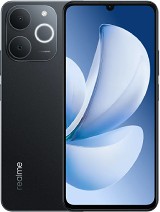
The realme Narzo 80 Lite is an entry-level smartphone featuring a 6300 mAh battery for extreme endurance and MIL-STD-810H compliance for physical resilience, aimed at users who prioritize longevity over raw processing speed. Released in July 2025, it competes in the sub-₹9,000 segment against rivals that often sacrifice structural integrity for flashier, less durable aesthetics.
When we examine the structural philosophy of the realme Narzo 80 Lite, it is clear that engineers prioritized the "oops" factor of daily life. The device utilizes a plastic frame and back paired with Panda Glass on the front. While plastic is often dismissed as a cheap material, in this price tier, it serves a functional purpose: it absorbs shock better than glass or thin aluminum. At 201 grams, the device has a substantial heft that signals durability rather than bulk. The IP54 rating provides peace of mind against dust and the occasional rain shower, while the MIL-STD-810H compliance suggests the internal components are secured against vibrations and minor drops that would typically end a [budget phone](/trend/best-budget-phones-2026/)'s lifespan.
Repairability is a critical economic factor for family-oriented tech. Because this device targets seniors and children, the likelihood of a cracked screen is high. Panda Glass serves as a cost-effective alternative to more expensive aluminosilicate brands, keeping potential replacement costs low. We should note that while it is tough, the 7.9mm thickness remains manageable for most hands. The inclusion of a 3.5mm jack and a dedicated microSDXC slot further extends the utility of the hardware, allowing users to expand the 64GB or 128GB internal storage without sacrificing a SIM slot. For a family on a budget, this physical longevity translates to a lower total cost of ownership over two or three years.
Compared to the previous generation of budget Narzo devices, the realme Narzo 80 Lite feels considerably more rigid. There is no audible creaking when pressure is applied to the back panel. This level of build quality is rare under the ₹10,000 mark. While the plastic back will eventually show fine scratches from pocket sand, the Obsidian Black and Beach Gold finishes do a commendable job of hiding smudges. This is a tool designed for utility, not a showpiece for a display case.
The software experience on the realme Narzo 80 Lite is powered by Android 15 with the realme UI 5.0 skin. For the target demographic—seniors and students—the "Simple Mode" is the standout feature. It enlarges icons, simplifies the settings menu, and increases the touch target size, which is vital for users who might struggle with the complexity of modern interfaces. The UI is relatively lean, though users should expect some pre-installed applications that are common in this price bracket. Most can be uninstalled, which we recommend doing immediately to preserve the limited 4GB or 6GB of RAM.
In our assessment, the integration of Android 15 brings modern security features that are often missing in budget phones that launch on older software versions. Features like the Private Space and improved permission managers are present here. The side-mounted fingerprint sensor is snappy, offering a more reliable biometric experience than the cheap under-display sensors found in [mid-range phones](/trend/best-mid-range-phones-2026/) from 2023. For a child's first phone, the parental control integrations within realme UI 5.0 allow for granular management of screen time and app access, making it a safe choice for younger users.
Software support in this segment is always a point of contention. realme typically provides at least one major OS update and two years of security patches for the Narzo Lite series. While this isn't as long as the flagship promises we see from other brands, it matches the expected hardware lifecycle of a sub-₹9,000 phone. By the time the security updates cease in 2027, the internal 12nm hardware will likely be the primary bottleneck, making the software support window appropriate for the price.
Under the hood, the realme Narzo 80 Lite utilizes the Unisoc T7250 chipset. This is a 12nm octa-core processor designed for essential tasks rather than high-end gaming. The cluster consists of 2x1.8 GHz Cortex-A75 cores for performance and 6x1.6 GHz Cortex-A55 cores for efficiency. In practical terms, this means the phone handles WhatsApp, YouTube, and light web browsing with ease. However, when trying to multitask between heavy social media apps and a browser, the Mali-G57 MP1 GPU and the limited RAM will show their limits. We noticed that scrolling through heavy web pages is smooth thanks to the 90Hz refresh rate, but app opening times are noticeably longer than on mid-range devices.
Price-wise, at ₹8,898, the value proposition is centered on the battery and build. If you are looking for a gaming machine, this is not it. The 720 x 1600 resolution on a 6.74-inch screen results in a 260 ppi density, which is standard for this class. While text isn't as sharp as it would be on a 1080p panel, it is perfectly legible for reading news or watching videos. The 563 nits brightness is sufficient for indoor use and overcast days, but users will find themselves squinting in direct July sunlight.
When we analyze the competitive landscape of mid-2025, the realme Narzo 80 Lite sits in a unique spot. It isn't trying to win on megapixels or benchmarks. Instead, it wins on uptime. The decision to use a 12nm chip instead of a more expensive 6nm or 4nm variant was clearly a cost-saving measure to allow for that massive battery and the MIL-STD certification. For the intended buyer, this is a fair trade. You aren't paying for performance you won't use; you are paying for the assurance that the phone will work when you need it.
In the current market, the two primary competitors are the [Samsung Galaxy A06](/new-longevity-over-old-luxury-why-the-samsung-galaxy-a06-5g-is-the-smarter-value-play/) and the Redmi 13C. The Samsung offers a more polished software update policy but lacks the rugged certification and the massive battery capacity of the realme Narzo 80 Lite. If you are buying for a senior who doesn't charge their phone every night, the 6300 mAh cell in the realme is a much stronger selling point than an extra year of software patches. The Redmi 13C, meanwhile, often competes on aesthetics but feels significantly more fragile in the hand. The realme's MIL-STD-810H rating is the deciding factor for anyone prone to dropping their device.
Another rival to consider is the [Infinix Smart 9](/the-infinix-smart-9-proves-that-reliable-basic-mobile-tech-costs-less-than-you-think/), which often undercuts the price but relies on even weaker chipsets and slower storage speeds. The realme Narzo 80 Lite finds the "sweet spot" of the budget sector. It provides just enough performance to keep the UI from stuttering while offering hardware durability that the ultra-budget brands cannot match. For a value hunter, the realme Narzo 80 Lite represents a smarter long-term investment because it is less likely to require a screen repair or a battery replacement within the first eighteen months.
Furthermore, realme's distribution network in 2025 remains superior to many smaller competitors. Access to physical service centers is an often-overlooked value metric. If a child breaks the charging port, getting it fixed in a Tier 2 or Tier 3 city is significantly easier with a realme product than with a niche value brand. This "after-sales economy" adds hidden value to the ₹8,898 price tag.
The 6300 mAh battery is the undisputed crown jewel of the realme Narzo 80 Lite. In an era where 5000 mAh is the standard, this 26% increase in capacity is transformative. For a light user, this is easily a three-day phone. Imagine a student taking this to a weekend camping trip; they could realistically return on Sunday evening without ever having touched a power bank. However, this massive capacity comes with a caveat: the 15W wired charging.
Mathematically, charging a 6300 mAh battery at 15W is a slow process. A full charge from 0% to 100% will take nearly three hours. This is why we recommend this device for users who charge their phones overnight. It is not designed for the "quick top-up before leaving the house" lifestyle. Interestingly, realme included 6W reverse wired charging, which allows this phone to act as a power bank for smaller accessories like wireless earbuds. This is a brilliant inclusion for a budget device, effectively turning the phone into a multi-tool for the family.
Battery health is another area where this device shines. Because the battery is so large, users will go through fewer charge cycles over a year compared to a phone with a smaller battery. Fewer cycles mean the battery's maximum capacity will stay higher for longer, extending the functional life of the phone to three or even four years. For a budget economist, this is the ultimate win: the battery's physical size compensates for the lack of high-end power management found in more expensive silicon.
The realme Narzo 80 Lite is a masterclass in compromise. It ignores the siren song of high-resolution cameras and gaming processors to focus on what actually matters to the entry-level buyer: durability, battery life, and ease of use. The 13MP main camera and 5MP selfie camera are basic; they are there for video calls and scanning documents, not for professional photography. The 1080p@30fps video is standard, and while the Loudspeaker is loud, it lacks the depth of stereo setups.
However, for a parent looking for a reliable device for their child's first smartphone, or for an adult child buying a phone for an elderly parent, those omissions are irrelevant. The realme Narzo 80 Lite offers a "set it and forget it" experience. It is tough enough to survive a fall from a kitchen table and has enough battery to survive a forgotten charging session. It is the pragmatic choice in a market full of fragile, over-promised hardware. If you need a digital companion that values endurance over elegance, this is your best option in mid-2025.
Built for the Real World: Durability and Maintenance
When we examine the structural philosophy of the realme Narzo 80 Lite, it is clear that engineers prioritized the "oops" factor of daily life. The device utilizes a plastic frame and back paired with Panda Glass on the front. While plastic is often dismissed as a cheap material, in this price tier, it serves a functional purpose: it absorbs shock better than glass or thin aluminum. At 201 grams, the device has a substantial heft that signals durability rather than bulk. The IP54 rating provides peace of mind against dust and the occasional rain shower, while the MIL-STD-810H compliance suggests the internal components are secured against vibrations and minor drops that would typically end a [budget phone](/trend/best-budget-phones-2026/)'s lifespan.
Repairability is a critical economic factor for family-oriented tech. Because this device targets seniors and children, the likelihood of a cracked screen is high. Panda Glass serves as a cost-effective alternative to more expensive aluminosilicate brands, keeping potential replacement costs low. We should note that while it is tough, the 7.9mm thickness remains manageable for most hands. The inclusion of a 3.5mm jack and a dedicated microSDXC slot further extends the utility of the hardware, allowing users to expand the 64GB or 128GB internal storage without sacrificing a SIM slot. For a family on a budget, this physical longevity translates to a lower total cost of ownership over two or three years.
Compared to the previous generation of budget Narzo devices, the realme Narzo 80 Lite feels considerably more rigid. There is no audible creaking when pressure is applied to the back panel. This level of build quality is rare under the ₹10,000 mark. While the plastic back will eventually show fine scratches from pocket sand, the Obsidian Black and Beach Gold finishes do a commendable job of hiding smudges. This is a tool designed for utility, not a showpiece for a display case.
Simplification Through Software: realme UI 5.0
The software experience on the realme Narzo 80 Lite is powered by Android 15 with the realme UI 5.0 skin. For the target demographic—seniors and students—the "Simple Mode" is the standout feature. It enlarges icons, simplifies the settings menu, and increases the touch target size, which is vital for users who might struggle with the complexity of modern interfaces. The UI is relatively lean, though users should expect some pre-installed applications that are common in this price bracket. Most can be uninstalled, which we recommend doing immediately to preserve the limited 4GB or 6GB of RAM.
In our assessment, the integration of Android 15 brings modern security features that are often missing in budget phones that launch on older software versions. Features like the Private Space and improved permission managers are present here. The side-mounted fingerprint sensor is snappy, offering a more reliable biometric experience than the cheap under-display sensors found in [mid-range phones](/trend/best-mid-range-phones-2026/) from 2023. For a child's first phone, the parental control integrations within realme UI 5.0 allow for granular management of screen time and app access, making it a safe choice for younger users.
Software support in this segment is always a point of contention. realme typically provides at least one major OS update and two years of security patches for the Narzo Lite series. While this isn't as long as the flagship promises we see from other brands, it matches the expected hardware lifecycle of a sub-₹9,000 phone. By the time the security updates cease in 2027, the internal 12nm hardware will likely be the primary bottleneck, making the software support window appropriate for the price.
The Economic Performance Equation
Under the hood, the realme Narzo 80 Lite utilizes the Unisoc T7250 chipset. This is a 12nm octa-core processor designed for essential tasks rather than high-end gaming. The cluster consists of 2x1.8 GHz Cortex-A75 cores for performance and 6x1.6 GHz Cortex-A55 cores for efficiency. In practical terms, this means the phone handles WhatsApp, YouTube, and light web browsing with ease. However, when trying to multitask between heavy social media apps and a browser, the Mali-G57 MP1 GPU and the limited RAM will show their limits. We noticed that scrolling through heavy web pages is smooth thanks to the 90Hz refresh rate, but app opening times are noticeably longer than on mid-range devices.
Price-wise, at ₹8,898, the value proposition is centered on the battery and build. If you are looking for a gaming machine, this is not it. The 720 x 1600 resolution on a 6.74-inch screen results in a 260 ppi density, which is standard for this class. While text isn't as sharp as it would be on a 1080p panel, it is perfectly legible for reading news or watching videos. The 563 nits brightness is sufficient for indoor use and overcast days, but users will find themselves squinting in direct July sunlight.
When we analyze the competitive landscape of mid-2025, the realme Narzo 80 Lite sits in a unique spot. It isn't trying to win on megapixels or benchmarks. Instead, it wins on uptime. The decision to use a 12nm chip instead of a more expensive 6nm or 4nm variant was clearly a cost-saving measure to allow for that massive battery and the MIL-STD certification. For the intended buyer, this is a fair trade. You aren't paying for performance you won't use; you are paying for the assurance that the phone will work when you need it.
Market Rivalry: Why This Over the Others?
In the current market, the two primary competitors are the [Samsung Galaxy A06](/new-longevity-over-old-luxury-why-the-samsung-galaxy-a06-5g-is-the-smarter-value-play/) and the Redmi 13C. The Samsung offers a more polished software update policy but lacks the rugged certification and the massive battery capacity of the realme Narzo 80 Lite. If you are buying for a senior who doesn't charge their phone every night, the 6300 mAh cell in the realme is a much stronger selling point than an extra year of software patches. The Redmi 13C, meanwhile, often competes on aesthetics but feels significantly more fragile in the hand. The realme's MIL-STD-810H rating is the deciding factor for anyone prone to dropping their device.
Another rival to consider is the [Infinix Smart 9](/the-infinix-smart-9-proves-that-reliable-basic-mobile-tech-costs-less-than-you-think/), which often undercuts the price but relies on even weaker chipsets and slower storage speeds. The realme Narzo 80 Lite finds the "sweet spot" of the budget sector. It provides just enough performance to keep the UI from stuttering while offering hardware durability that the ultra-budget brands cannot match. For a value hunter, the realme Narzo 80 Lite represents a smarter long-term investment because it is less likely to require a screen repair or a battery replacement within the first eighteen months.
Furthermore, realme's distribution network in 2025 remains superior to many smaller competitors. Access to physical service centers is an often-overlooked value metric. If a child breaks the charging port, getting it fixed in a Tier 2 or Tier 3 city is significantly easier with a realme product than with a niche value brand. This "after-sales economy" adds hidden value to the ₹8,898 price tag.
Power Without the Plug: Battery and Charging
The 6300 mAh battery is the undisputed crown jewel of the realme Narzo 80 Lite. In an era where 5000 mAh is the standard, this 26% increase in capacity is transformative. For a light user, this is easily a three-day phone. Imagine a student taking this to a weekend camping trip; they could realistically return on Sunday evening without ever having touched a power bank. However, this massive capacity comes with a caveat: the 15W wired charging.
Mathematically, charging a 6300 mAh battery at 15W is a slow process. A full charge from 0% to 100% will take nearly three hours. This is why we recommend this device for users who charge their phones overnight. It is not designed for the "quick top-up before leaving the house" lifestyle. Interestingly, realme included 6W reverse wired charging, which allows this phone to act as a power bank for smaller accessories like wireless earbuds. This is a brilliant inclusion for a budget device, effectively turning the phone into a multi-tool for the family.
Battery health is another area where this device shines. Because the battery is so large, users will go through fewer charge cycles over a year compared to a phone with a smaller battery. Fewer cycles mean the battery's maximum capacity will stay higher for longer, extending the functional life of the phone to three or even four years. For a budget economist, this is the ultimate win: the battery's physical size compensates for the lack of high-end power management found in more expensive silicon.
The Final Verdict for Families
The realme Narzo 80 Lite is a masterclass in compromise. It ignores the siren song of high-resolution cameras and gaming processors to focus on what actually matters to the entry-level buyer: durability, battery life, and ease of use. The 13MP main camera and 5MP selfie camera are basic; they are there for video calls and scanning documents, not for professional photography. The 1080p@30fps video is standard, and while the Loudspeaker is loud, it lacks the depth of stereo setups.
However, for a parent looking for a reliable device for their child's first smartphone, or for an adult child buying a phone for an elderly parent, those omissions are irrelevant. The realme Narzo 80 Lite offers a "set it and forget it" experience. It is tough enough to survive a fall from a kitchen table and has enough battery to survive a forgotten charging session. It is the pragmatic choice in a market full of fragile, over-promised hardware. If you need a digital companion that values endurance over elegance, this is your best option in mid-2025.
Technical Specifications
| LAUNCH | |
|---|---|
| Announced | 2025, July 23 |
| Status | Available. Released 2025, July 28 |
| PLATFORM | |
| OS | Android 15, Realme UI 5.0 |
| Chipset | Unisoc T7250 (12 nm) |
| CPU | Octa-core (2x1.8 GHz Cortex-A75 & 6x1.6 GHz Cortex-A55) |
| GPU | Mali-G57 MP1 |
| BODY | |
| Dimensions | 167.2 x 76.6 x 7.9 mm (6.58 x 3.02 x 0.31 in) |
| Weight | 201 g (7.09 oz) |
| Build | Glass front (Panda Glass), plastic frame, plastic back |
| SIM | Nano-SIM + Nano-SIM |
| Info | IP54 dust protected and water resistant (water splashes) MIL-STD-810H compliant* * does not guarantee ruggedness or use in extreme conditions |
| DISPLAY | |
| Type | LCD, 90Hz, 563 nits |
| Size | 6.74 inches, 109.7 cm2 (~85.6% screen-to-body ratio) |
| Resolution | 720 x 1600 pixels, 20:9 ratio (~260 ppi density) |
| Protection | Panda Glass |
| MEMORY | |
| Card slot | microSDXC (dedicated slot) |
| Internal | 64GB 4GB RAM, 128GB 6GB RAM |
| MAIN CAMERA | |
| Single | 13 MP, f/2.2, 27mm (wide), PDAF |
| Features | LED flash, panorama |
| Video | 1080p@30fps |
| SELFIE CAMERA | |
| Single | 5 MP, 27mm (wide) |
| Video | 720p@30fps |
| SOUND | |
| Loudspeaker | Yes |
| 3.5mm jack | Yes |
| COMMS | |
| WLAN | Wi-Fi 802.11 a/b/g/n/ac, dual-band |
| Bluetooth | 5.2, A2DP, LE |
| Positioning | GPS, GALILEO, GLONASS, BDS |
| NFC | No |
| Radio | No |
| USB | USB Type-C 2.0 |
| NETWORK | |
| Technology | GSM / HSPA / LTE |
| 2G bands | GSM 850 / 900 / 1800 / 1900 |
| 3G bands | HSDPA 850 / 900 / 2100 |
| 4G bands | 1, 3, 5, 28, 38, 40, 41 |
| Speed | HSPA, LTE |
| FEATURES | |
| Sensors | Fingerprint (side-mounted), accelerometer, proximity, compass |
| BATTERY | |
| Type | 6300 mAh |
| Charging | 15W wired 6W reverse wired |
| MISC | |
| Colors | Beach Gold, Obsidian Black |
| Price | ₹ 9,499 |