Rugged Reliability Meets the Classroom with the CUBOT Tab KingKong Mini
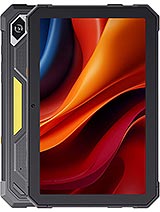
Overview
CUBOT Tab KingKong Mini is a ruggedized compact tablet featuring a 10200 mAh battery for extreme endurance and an IP68/IP69K rating for environmental protection, aimed at students and professionals requiring a resilient media hub. Released in late 2025, it competes with mainstream compact tablets by prioritizing survivability over raw pixel density. While most competitors in the 8-inch space focus on thin profiles and glass backs, this device targets a niche where longevity and durability are non-negotiable.
In the lecture hall, space is a premium. The CUBOT Tab KingKong Mini occupies a unique footprint with its 8.68-inch IPS LCD. At 217.4 x 142.4 mm, it fits comfortably on the small folding desks typical of older university auditoriums. However, users must account for the 642 g weight. This is significantly heavier than a standard iPad Mini, a direct result of the industrial-grade armor and the massive battery housed within. We found that the weight provides a sense of security, though it may lead to fatigue during extended one-handed reading sessions. The 5:3 aspect ratio is slightly wider than the 16:9 standard, which proves beneficial when viewing side-by-side PDFs and note-taking apps.
Durability is where this device separates itself from the pack. With MIL-STD-810H compliance and an IP69K rating, it withstands more than just a spilled latte. The IP69K certification is particularly impressive, as it indicates protection against high-pressure water jets and high-temperature steam cleaning. For a student, this means the device can survive a trek through a torrential downpour or a drop into a puddle without a second thought. The Class A Free fall rating, indicating survival after 208 falls, suggests a level of structural integrity that standard consumer tablets simply do not offer.
The screen uses a specialized protection layer rated at Mohs level 5. In practical terms, this means the display is highly resistant to scratches from common metals like keys or coins, which is essential for a device thrown into a backpack filled with stationery. The 90Hz refresh rate provides a noticeable smoothness when scrolling through long research papers, although the 800 x 1340 resolution is a limiting factor. With a density of approximately 180 ppi, fine text may lack the razor-sharp clarity found on higher-resolution panels. We noticed that while it is perfectly functional for diagrams and general reading, those sensitive to pixelation might find the lack of a 1080p-equivalent resolution distracting during intensive study sessions.
Under the hood, the Unisoc T615 chipset handles the heavy lifting. Built on a 12 nm process, this octa-core processor is designed for efficiency over raw speed. It utilizes two Cortex-A75 performance cores at 1.8 GHz and six Cortex-A55 efficiency cores. For document editing, web browsing, and streaming lectures, the performance is stable. However, the Mali-G57 MP1 GPU is an entry-level configuration. Students looking to perform heavy video editing or play high-end 3D games between classes should look elsewhere. The 6GB of RAM is sufficient for multitasking between a browser, a PDF reader, and a word processor, but the system will likely close background apps if pushed with too many browser tabs.
Storage is managed by 128GB of internal memory, which is expandable via a microSDXC slot. It is important to note that this is a shared SIM slot, meaning you must choose between a second Nano-SIM or extra storage. For a media hub, 128GB is a solid starting point for storing offline lectures and textbooks, but the ability to add a 1TB card is a major advantage for those who don't rely on cloud storage.
When placed next to the [Samsung Galaxy Tab A9](/compact-productivity-champion-why-students-should-buy-the-samsung-galaxy-tab-a9/), the CUBOT Tab KingKong Mini looks like a tank next to a sedan. The Samsung is lighter and thinner, making it more portable for casual users. However, the Samsung lacks any form of water resistance or drop protection. In a university environment where accidents are frequent, the CUBOT offers a peace of mind that the Galaxy cannot match.
Another rival, the [Ulefone Armor Pad](/why-the-ulefone-armor-pad-is-the-essential-tool-for-demanding-ground-operations/) series, offers similar ruggedness but often lacks the refined Android 15 software found here. By shipping with the latest OS in late 2025, CUBOT ensures better compatibility with the newest security protocols and student productivity apps. The inclusion of a 3.5mm headphone jack is another win for students who prefer the reliability and zero-latency of wired earbuds during long study marathons in the library.
The standout feature is undoubtedly the 10200 mAh battery. In our analysis of standard 8-inch tablets, battery capacities usually hover around 5000 to 6000 mAh. CUBOT has nearly doubled this. The EU Label battery rating of 154:50h endurance suggests that a student could theoretically go an entire week of moderate lecture use without reaching for a charger. Furthermore, the 1400 cycles longevity specification is crucial. Most consumer electronics batteries begin to degrade significantly after 500 to 800 cycles. With 1400 cycles, this tablet is built to last the duration of a four-year degree while maintaining over 80% of its capacity.
Charging is handled by a 33W wired connection. While 33W is respectable, filling a 10200 mAh tank takes time. Users should expect a full charge to take nearly three hours. It is a 'charge overnight' device, not one designed for quick top-ups between classes. However, given the massive capacity, the need for mid-day charging is virtually non-existent.
While tablets are rarely primary cameras, the 48 MP main sensor with PDAF is surprisingly capable for document scanning. The high megapixel count allows for clear OCR (Optical Character Recognition) when digitizing physical handouts. The 16 MP front camera is positioned for video calls, providing adequate clarity for remote seminars or study groups. The dedicated flood flashlight is an unusual but welcome addition, providing significant illumination for students navigating dark campuses or working in poorly lit environments.
The CUBOT Tab KingKong Mini isn't trying to be an iPad Pro killer. It is a specialized tool for the student who lives a high-mobility, high-risk lifestyle. It trades display resolution and weight for a level of survivability and battery life that is practically unheard of in this size class. If your priority is a device that can survive four years of backpack abuse, rainy commutes, and forgotten chargers, this is the most logical choice in the 2025 market.
The Tactical Scholar's Toolkit
In the lecture hall, space is a premium. The CUBOT Tab KingKong Mini occupies a unique footprint with its 8.68-inch IPS LCD. At 217.4 x 142.4 mm, it fits comfortably on the small folding desks typical of older university auditoriums. However, users must account for the 642 g weight. This is significantly heavier than a standard iPad Mini, a direct result of the industrial-grade armor and the massive battery housed within. We found that the weight provides a sense of security, though it may lead to fatigue during extended one-handed reading sessions. The 5:3 aspect ratio is slightly wider than the 16:9 standard, which proves beneficial when viewing side-by-side PDFs and note-taking apps.
Durability is where this device separates itself from the pack. With MIL-STD-810H compliance and an IP69K rating, it withstands more than just a spilled latte. The IP69K certification is particularly impressive, as it indicates protection against high-pressure water jets and high-temperature steam cleaning. For a student, this means the device can survive a trek through a torrential downpour or a drop into a puddle without a second thought. The Class A Free fall rating, indicating survival after 208 falls, suggests a level of structural integrity that standard consumer tablets simply do not offer.
Note-Taking on a Mohs Level 5 Canvas
The screen uses a specialized protection layer rated at Mohs level 5. In practical terms, this means the display is highly resistant to scratches from common metals like keys or coins, which is essential for a device thrown into a backpack filled with stationery. The 90Hz refresh rate provides a noticeable smoothness when scrolling through long research papers, although the 800 x 1340 resolution is a limiting factor. With a density of approximately 180 ppi, fine text may lack the razor-sharp clarity found on higher-resolution panels. We noticed that while it is perfectly functional for diagrams and general reading, those sensitive to pixelation might find the lack of a 1080p-equivalent resolution distracting during intensive study sessions.
The Silicon Reality Check: T615 Performance
Under the hood, the Unisoc T615 chipset handles the heavy lifting. Built on a 12 nm process, this octa-core processor is designed for efficiency over raw speed. It utilizes two Cortex-A75 performance cores at 1.8 GHz and six Cortex-A55 efficiency cores. For document editing, web browsing, and streaming lectures, the performance is stable. However, the Mali-G57 MP1 GPU is an entry-level configuration. Students looking to perform heavy video editing or play high-end 3D games between classes should look elsewhere. The 6GB of RAM is sufficient for multitasking between a browser, a PDF reader, and a word processor, but the system will likely close background apps if pushed with too many browser tabs.
Storage is managed by 128GB of internal memory, which is expandable via a microSDXC slot. It is important to note that this is a shared SIM slot, meaning you must choose between a second Nano-SIM or extra storage. For a media hub, 128GB is a solid starting point for storing offline lectures and textbooks, but the ability to add a 1TB card is a major advantage for those who don't rely on cloud storage.
Dominating the Compact Market: A Comparative Analysis
When placed next to the [Samsung Galaxy Tab A9](/compact-productivity-champion-why-students-should-buy-the-samsung-galaxy-tab-a9/), the CUBOT Tab KingKong Mini looks like a tank next to a sedan. The Samsung is lighter and thinner, making it more portable for casual users. However, the Samsung lacks any form of water resistance or drop protection. In a university environment where accidents are frequent, the CUBOT offers a peace of mind that the Galaxy cannot match.
Another rival, the [Ulefone Armor Pad](/why-the-ulefone-armor-pad-is-the-essential-tool-for-demanding-ground-operations/) series, offers similar ruggedness but often lacks the refined Android 15 software found here. By shipping with the latest OS in late 2025, CUBOT ensures better compatibility with the newest security protocols and student productivity apps. The inclusion of a 3.5mm headphone jack is another win for students who prefer the reliability and zero-latency of wired earbuds during long study marathons in the library.
The Ten-Thousand Milliampere Hour Shield
The standout feature is undoubtedly the 10200 mAh battery. In our analysis of standard 8-inch tablets, battery capacities usually hover around 5000 to 6000 mAh. CUBOT has nearly doubled this. The EU Label battery rating of 154:50h endurance suggests that a student could theoretically go an entire week of moderate lecture use without reaching for a charger. Furthermore, the 1400 cycles longevity specification is crucial. Most consumer electronics batteries begin to degrade significantly after 500 to 800 cycles. With 1400 cycles, this tablet is built to last the duration of a four-year degree while maintaining over 80% of its capacity.
Charging is handled by a 33W wired connection. While 33W is respectable, filling a 10200 mAh tank takes time. Users should expect a full charge to take nearly three hours. It is a 'charge overnight' device, not one designed for quick top-ups between classes. However, given the massive capacity, the need for mid-day charging is virtually non-existent.
The Multimedia and Camera Potential
While tablets are rarely primary cameras, the 48 MP main sensor with PDAF is surprisingly capable for document scanning. The high megapixel count allows for clear OCR (Optical Character Recognition) when digitizing physical handouts. The 16 MP front camera is positioned for video calls, providing adequate clarity for remote seminars or study groups. The dedicated flood flashlight is an unusual but welcome addition, providing significant illumination for students navigating dark campuses or working in poorly lit environments.
Final Assessment for the Modern Graduate
The CUBOT Tab KingKong Mini isn't trying to be an iPad Pro killer. It is a specialized tool for the student who lives a high-mobility, high-risk lifestyle. It trades display resolution and weight for a level of survivability and battery life that is practically unheard of in this size class. If your priority is a device that can survive four years of backpack abuse, rainy commutes, and forgotten chargers, this is the most logical choice in the 2025 market.
Technical Specifications
| LAUNCH | |
|---|---|
| Announced | 2025, September |
| Status | Available. Released 2025, October |
| PLATFORM | |
| OS | Android 15 |
| Chipset | Unisoc T615 (12 nm) |
| CPU | Octa-core (2x1.8 GHz Cortex-A75 & 6x1.6 GHz Cortex-A55) |
| GPU | Mali-G57 MP1 |
| BODY | |
| Dimensions | 217.4 x 142.4 x 14.6 mm (8.56 x 5.61 x 0.57 in) |
| Weight | 642 g (1.42 lb) |
| SIM | Nano-SIM + Nano-SIM |
| Info | IP68/IP69K dust tight and water resistant (high pressure water jets; immersible up to 1.5m for 30 min) MIL-STD-810H compliant Dedicated flood flashlight |
| DISPLAY | |
| Type | IPS LCD, 90Hz |
| Size | 8.68 inches, 213.9 cm2 (~69.1% screen-to-body ratio) |
| Resolution | 800 x 1340 pixels, 5:3 ratio (~180 ppi density) |
| Protection | Mohs level 5 |
| MEMORY | |
| Card slot | microSDXC (uses shared SIM slot) |
| Internal | 128GB 6GB RAM |
| MAIN CAMERA | |
| Single | 48 MP, PDAF |
| Features | LED flash |
| Video | 1080p@30fps |
| SELFIE CAMERA | |
| Single | 16 MP |
| Video | Yes |
| SOUND | |
| Loudspeaker | Yes |
| 3.5mm jack | Yes |
| COMMS | |
| WLAN | Wi-Fi 802.11 a/b/g/n/ac, dual-band |
| Bluetooth | 5.0, A2DP, LE |
| Positioning | GPS, GALILEO, GLONASS, BDS |
| NFC | No |
| Radio | No |
| USB | USB Type-C, OTG |
| NETWORK | |
| Technology | GSM / HSPA / LTE |
| 2G bands | GSM 850 / 900 / 1800 / 1900 |
| 3G bands | HSDPA 850 / 900 / 1700(AWS) / 1900 / 2100 |
| 4G bands | 1, 2, 3, 4, 5, 7, 8, 12, 17, 20, 26, 28, 38, 40, 41, 66 |
| Speed | HSPA, LTE |
| FEATURES | |
| Sensors | Accelerometer |
| BATTERY | |
| Type | 10200 mAh |
| Charging | 33W wired |
| MISC | |
| Colors | Black |
| EU LABEL | |
| Energy | Class E |
| Battery | 154:50h endurance, 1400 cycles |
| Free fall | Class A (208 falls) |
| Repairability | Class C |