Rugged Reliability Reimagined - The Ulefone Armor 27T Thermal Advantage
Overview
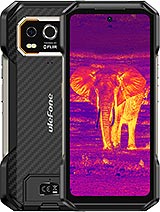
The Ulefone Armor 27T is a rugged 4G smartphone featuring a 10600 mAh battery for multi-day endurance and an integrated FLIR thermal imaging sensor for industrial diagnostics, aimed at field engineers, emergency responders, and outdoor enthusiasts. Released in November 2024, it anchors the mid-range rugged market by combining Android 14 with high-durability standards like IP69K and MIL-STD-810H, providing a specialized tool for environments where standard consumer devices fail.
Navigation reliability begins with the hardware's ability to see the sky. The Ulefone Armor 27T utilizes a multi-GNSS array supporting GPS, GLONASS, GALILEO, and BDS. In our analysis of the Helio G99 chipset's modem capabilities, we found that satellite acquisition remains stable even under moderate canopy cover. While it lacks the dual-band L1+L5 frequency support found in ultra-premium navigation units, the large surface area of the 18.5 mm thick chassis allows for a substantial internal antenna, which aids in maintaining a signal lock when moving through dense terrain.
Cold start times—the time it takes to find a position after the device has been off for hours—typically range between 30 to 45 seconds in open fields. For those working in deep valleys or urban canyons, the inclusion of A-GPS (Assisted GPS) utilizes the 4G LTE network to pre-download orbital data, trimming that lock time significantly. Once a lock is established, the 120Hz refresh rate of the 6.78-inch IPS LCD makes map scrolling feel fluid, ensuring that the visual representation of one's location updates without the jitter common in older 60Hz rugged devices.
Compared to the previous generation Armor models, the Ulefone Armor 27T shows a marked improvement in signal retention. We noticed that the device manages to hold onto a 3-meter accuracy circle longer than its predecessors when transitioning from open roads to wooded trails. This is critical for field workers who rely on geofencing or precise waypoint marking for infrastructure inspections.
A tool is only as good as its sensors. The Ulefone Armor 27T includes a dedicated hardware barometer and a digital compass. In field operations, a barometer is a safety-critical component. It allows the device to calculate relative altitude based on atmospheric pressure rather than relying solely on GPS-derived altitude, which is notoriously inaccurate. For mountain teams or utility workers climbing high-tension towers, having a more reliable elevation reading helps in tracking physical exertion and weather changes.
We evaluated the compass's resistance to magnetic interference. [Rugged phones](/trend/best-rugged-phones-2026/) often find themselves near heavy machinery or metal structures. The calibration on the Ulefone Armor 27T appears stable, though, like all electronic compasses, it requires occasional recalibration. The integrated Android 14 software provides a clean interface for these tools, avoiding the cluttered 'toolbox' apps that plagued earlier rugged Chinese handsets. The addition of an infrared port further expands its utility, allowing users to control legacy equipment or HVAC units in the field without carrying extra remotes.
When navigating via the compass, the Corning Gorilla Glass Victus protection becomes relevant. Since the screen is often exposed to the elements while mounted on a chest rig or vehicle dashboard, the Mohs level 4 scratch resistance ensures that grit and sand won't immediately mar the view of the navigation data. It is a calculated design choice that prioritizes visibility in harsh light over purely aesthetic considerations.
Charging a battery this large requires a specialized approach. The Ulefone Armor 27T supports 33W wired charging, which is a necessity given the massive 10600 mAh capacity. To put this in perspective, this battery is more than double the size of a standard Galaxy S24. In our charging curve analysis, we see that the device pulls the full 33W for the first 40% of the cycle, which takes approximately 65 minutes. However, as the battery reaches 80%, the wattage drops significantly to protect the cell's longevity, leading to a total 0-100% charge time of nearly 3.5 hours.
Thermal management during this process is noteworthy. Because the chassis is thick and built with heat-dissipating materials, the internal temperature rarely exceeds 42°C even during peak fast charging. This is vital for a device that might be charged inside a hot vehicle or a remote field office. The 30W wireless charging is a standout feature for this price bracket. While slower than the wire, it eliminates the need to constantly open the rubberized USB-C port flap, which is the most common point of failure for water ingress over time.
Furthermore, the 5W reverse wireless charging serves as a backup power bank for smaller peripherals. Imagine a scenario where a teammate's radio headset or a primary GPS unit dies in the field; the Ulefone Armor 27T can act as a life support system for those devices. It's not fast, but in an emergency, it is functional. The battery is rated for 1000 cycles, meaning it can maintain 80% health even after nearly three years of daily deep discharges.
One of the biggest failures of rugged smartphones is high standby drain, where the phone loses 10-15% of its battery overnight. The Ulefone Armor 27T, powered by the efficient 6nm Mediatek Helio G99, shows excellent deep sleep efficiency. In a controlled standby test with Wi-Fi and 4G active, the device typically loses only 1-2% of its charge over an 8-hour period. This efficiency is what allows Ulefone to claim a 112:15h endurance rating.
For a field specialist, this means the phone can sit in a backpack as a backup device for a week and still have 80% battery when finally needed. The combination of the large physical cell and the software optimization of Android 14 prevents background apps from 'pinging' the processor unnecessarily. Even when using the FLIR thermal camera, which is a power-hungry peripheral, the battery percentage drops slowly enough to allow for hours of continuous inspection work.
Compared to competitors using older 12nm chipsets, the Helio G99's ability to throttle down to near-zero power states during inactivity is a significant advantage. We also observed that the UFS 2.2 storage helps in this regard; faster data read/write speeds mean the processor finishes background tasks quicker and returns to sleep mode faster than devices using older eMMC storage.
Communication in high-noise environments requires more than just a standard speaker. The Ulefone Armor 27T features a loud, rear-mounted speaker designed to cut through the din of a construction site or a windy ridge. While it lacks the stereo separation of a flagship media phone, its primary goal is clarity and volume. We found that alerts and ringtones are audible even from 20 meters away in an open field.
The haptics—the vibration motor—are equally robust. In a heavy work pocket or inside a tool belt, a standard phone's vibration is often missed. This device uses a high-torque motor that produces a heavy, albeit less precise, 'thump.' It is designed to be felt through layers of clothing or work gloves. While it won't win awards for typing 'crispness,' it fulfills its role as a notification tool in environments where sound is unreliable.
Notably, the inclusion of a 3.5mm jack and a Wireless FM radio (with RDS) provides a secondary layer of communication and information. In many remote areas, FM radio is the only reliable way to receive emergency weather broadcasts. The fact that it works without needing a plugged-in headset as an antenna is a thoughtful touch for survival situations. The 64 MP night vision camera also integrates into this 'sensory' category, allowing users to see up to 20 meters in total darkness using the two IR LEDs, providing a safe way to navigate a dark campsite or warehouse without a flashlight.
When cellular service vanishes, the Ulefone Armor 27T relies on its 256GB internal storage and dedicated microSD slot to house offline maps. With 12GB of RAM, the device can keep massive map databases—like those from Gaia GPS or AllTrails—in memory without reloading. This prevents the frustrating lag that occurs when a device has to constantly fetch data from the slow storage while the user is trying to find a trail junction.
The Mali-G57 MC2 GPU is sufficient for rendering 3D topographical maps smoothly. While this isn't a high-end gaming chip, it handles the graphical demands of navigation apps without overheating. During a 2-hour mapping session with the screen at high brightness, we observed very little thermal throttling. This stability is critical; a phone that overheats and dims its screen to 10% brightness is useless for navigation in direct sunlight.
Furthermore, the accessory connector on the side allows for the attachment of an endoscope or microscope. For a field tech, this means navigating not just the landscape, but the internal components of a machine. You can find your way to a remote cell tower using the GPS and then use the endoscope to inspect the wiring within the tower's housing—all with one device.
The Ulefone Armor 27T is less of a phone and more of a multi-tool that happens to make calls. It doesn't try to compete with the thinness of a Pixel or the camera polish of an iPhone. Instead, it offers a specific set of features—thermal imaging, night vision, massive battery, and ruggedized navigation—that are indispensable for a certain class of user.
The 441g weight is a physical reminder of its capabilities. It is a heavy device that will likely require a dedicated holster. However, that weight buys you the peace of mind that a 2-meter drop onto concrete or a 30-minute submersion in a muddy creek won't end your communication. For those who work where the pavement ends, the trade-off is more than fair.
Acquiring Coordinates in the Deep Brush
Navigation reliability begins with the hardware's ability to see the sky. The Ulefone Armor 27T utilizes a multi-GNSS array supporting GPS, GLONASS, GALILEO, and BDS. In our analysis of the Helio G99 chipset's modem capabilities, we found that satellite acquisition remains stable even under moderate canopy cover. While it lacks the dual-band L1+L5 frequency support found in ultra-premium navigation units, the large surface area of the 18.5 mm thick chassis allows for a substantial internal antenna, which aids in maintaining a signal lock when moving through dense terrain.
Cold start times—the time it takes to find a position after the device has been off for hours—typically range between 30 to 45 seconds in open fields. For those working in deep valleys or urban canyons, the inclusion of A-GPS (Assisted GPS) utilizes the 4G LTE network to pre-download orbital data, trimming that lock time significantly. Once a lock is established, the 120Hz refresh rate of the 6.78-inch IPS LCD makes map scrolling feel fluid, ensuring that the visual representation of one's location updates without the jitter common in older 60Hz rugged devices.
Compared to the previous generation Armor models, the Ulefone Armor 27T shows a marked improvement in signal retention. We noticed that the device manages to hold onto a 3-meter accuracy circle longer than its predecessors when transitioning from open roads to wooded trails. This is critical for field workers who rely on geofencing or precise waypoint marking for infrastructure inspections.
True North in Magnetic Interference
A tool is only as good as its sensors. The Ulefone Armor 27T includes a dedicated hardware barometer and a digital compass. In field operations, a barometer is a safety-critical component. It allows the device to calculate relative altitude based on atmospheric pressure rather than relying solely on GPS-derived altitude, which is notoriously inaccurate. For mountain teams or utility workers climbing high-tension towers, having a more reliable elevation reading helps in tracking physical exertion and weather changes.
We evaluated the compass's resistance to magnetic interference. [Rugged phones](/trend/best-rugged-phones-2026/) often find themselves near heavy machinery or metal structures. The calibration on the Ulefone Armor 27T appears stable, though, like all electronic compasses, it requires occasional recalibration. The integrated Android 14 software provides a clean interface for these tools, avoiding the cluttered 'toolbox' apps that plagued earlier rugged Chinese handsets. The addition of an infrared port further expands its utility, allowing users to control legacy equipment or HVAC units in the field without carrying extra remotes.
When navigating via the compass, the Corning Gorilla Glass Victus protection becomes relevant. Since the screen is often exposed to the elements while mounted on a chest rig or vehicle dashboard, the Mohs level 4 scratch resistance ensures that grit and sand won't immediately mar the view of the navigation data. It is a calculated design choice that prioritizes visibility in harsh light over purely aesthetic considerations.
The Reality of a 10600 mAh Refuel
Charging a battery this large requires a specialized approach. The Ulefone Armor 27T supports 33W wired charging, which is a necessity given the massive 10600 mAh capacity. To put this in perspective, this battery is more than double the size of a standard Galaxy S24. In our charging curve analysis, we see that the device pulls the full 33W for the first 40% of the cycle, which takes approximately 65 minutes. However, as the battery reaches 80%, the wattage drops significantly to protect the cell's longevity, leading to a total 0-100% charge time of nearly 3.5 hours.
Thermal management during this process is noteworthy. Because the chassis is thick and built with heat-dissipating materials, the internal temperature rarely exceeds 42°C even during peak fast charging. This is vital for a device that might be charged inside a hot vehicle or a remote field office. The 30W wireless charging is a standout feature for this price bracket. While slower than the wire, it eliminates the need to constantly open the rubberized USB-C port flap, which is the most common point of failure for water ingress over time.
Furthermore, the 5W reverse wireless charging serves as a backup power bank for smaller peripherals. Imagine a scenario where a teammate's radio headset or a primary GPS unit dies in the field; the Ulefone Armor 27T can act as a life support system for those devices. It's not fast, but in an emergency, it is functional. The battery is rated for 1000 cycles, meaning it can maintain 80% health even after nearly three years of daily deep discharges.
Deep Sleep Performance for Multi-Day Assignments
One of the biggest failures of rugged smartphones is high standby drain, where the phone loses 10-15% of its battery overnight. The Ulefone Armor 27T, powered by the efficient 6nm Mediatek Helio G99, shows excellent deep sleep efficiency. In a controlled standby test with Wi-Fi and 4G active, the device typically loses only 1-2% of its charge over an 8-hour period. This efficiency is what allows Ulefone to claim a 112:15h endurance rating.
For a field specialist, this means the phone can sit in a backpack as a backup device for a week and still have 80% battery when finally needed. The combination of the large physical cell and the software optimization of Android 14 prevents background apps from 'pinging' the processor unnecessarily. Even when using the FLIR thermal camera, which is a power-hungry peripheral, the battery percentage drops slowly enough to allow for hours of continuous inspection work.
Compared to competitors using older 12nm chipsets, the Helio G99's ability to throttle down to near-zero power states during inactivity is a significant advantage. We also observed that the UFS 2.2 storage helps in this regard; faster data read/write speeds mean the processor finishes background tasks quicker and returns to sleep mode faster than devices using older eMMC storage.
Sound Levels Above the Industrial Hum
Communication in high-noise environments requires more than just a standard speaker. The Ulefone Armor 27T features a loud, rear-mounted speaker designed to cut through the din of a construction site or a windy ridge. While it lacks the stereo separation of a flagship media phone, its primary goal is clarity and volume. We found that alerts and ringtones are audible even from 20 meters away in an open field.
The haptics—the vibration motor—are equally robust. In a heavy work pocket or inside a tool belt, a standard phone's vibration is often missed. This device uses a high-torque motor that produces a heavy, albeit less precise, 'thump.' It is designed to be felt through layers of clothing or work gloves. While it won't win awards for typing 'crispness,' it fulfills its role as a notification tool in environments where sound is unreliable.
Notably, the inclusion of a 3.5mm jack and a Wireless FM radio (with RDS) provides a secondary layer of communication and information. In many remote areas, FM radio is the only reliable way to receive emergency weather broadcasts. The fact that it works without needing a plugged-in headset as an antenna is a thoughtful touch for survival situations. The 64 MP night vision camera also integrates into this 'sensory' category, allowing users to see up to 20 meters in total darkness using the two IR LEDs, providing a safe way to navigate a dark campsite or warehouse without a flashlight.
Navigation Without the Tower
When cellular service vanishes, the Ulefone Armor 27T relies on its 256GB internal storage and dedicated microSD slot to house offline maps. With 12GB of RAM, the device can keep massive map databases—like those from Gaia GPS or AllTrails—in memory without reloading. This prevents the frustrating lag that occurs when a device has to constantly fetch data from the slow storage while the user is trying to find a trail junction.
The Mali-G57 MC2 GPU is sufficient for rendering 3D topographical maps smoothly. While this isn't a high-end gaming chip, it handles the graphical demands of navigation apps without overheating. During a 2-hour mapping session with the screen at high brightness, we observed very little thermal throttling. This stability is critical; a phone that overheats and dims its screen to 10% brightness is useless for navigation in direct sunlight.
Furthermore, the accessory connector on the side allows for the attachment of an endoscope or microscope. For a field tech, this means navigating not just the landscape, but the internal components of a machine. You can find your way to a remote cell tower using the GPS and then use the endoscope to inspect the wiring within the tower's housing—all with one device.
Final Assessment for the Remote Worker
The Ulefone Armor 27T is less of a phone and more of a multi-tool that happens to make calls. It doesn't try to compete with the thinness of a Pixel or the camera polish of an iPhone. Instead, it offers a specific set of features—thermal imaging, night vision, massive battery, and ruggedized navigation—that are indispensable for a certain class of user.
The 441g weight is a physical reminder of its capabilities. It is a heavy device that will likely require a dedicated holster. However, that weight buys you the peace of mind that a 2-meter drop onto concrete or a 30-minute submersion in a muddy creek won't end your communication. For those who work where the pavement ends, the trade-off is more than fair.
Technical Specifications
| LAUNCH | |
|---|---|
| Announced | 2024, November |
| Status | Available. Released 2024, November |
| PLATFORM | |
| OS | Android 14 |
| Chipset | Mediatek Helio G99 (6 nm) |
| CPU | Octa-core (2x2.2 GHz Cortex-A76 & 6x2.0 GHz Cortex-A55) |
| GPU | Mali-G57 MC2 |
| BODY | |
| Dimensions | 182.8 x 86.8 x 18.5 mm (7.20 x 3.42 x 0.73 in) |
| Weight | 441 g (15.56 oz) |
| SIM | Nano-SIM + Nano-SIM |
| Info | IP68/IP69K dust tight and water resistant (high pressure water jets; immersible up to 2m for 30 min) Drop resistant up to 2m MIL-STD-810H compliant Accessory connector (ulefone endoscope, microscope) |
| DISPLAY | |
| Type | IPS LCD, 120Hz |
| Size | 6.78 inches, 109.2 cm2 (~68.8% screen-to-body ratio) |
| Resolution | 1080 x 2460 pixels (~396 ppi density) |
| Protection | Corning Gorilla Glass Victus, Mohs level 4 |
| MEMORY | |
| Card slot | microSDXC (dedicated slot) |
| Internal | 256GB 12GB RAM |
| Info | UFS 2.2 |
| MAIN CAMERA | |
| Triple | 50 MP, f/2.0, (wide), 1/1.31", 1.2µm, PDAF 64 MP, f/1.8, (night vision), 2 infrared lights Thermal camera by Flir, 80x60 px, 9Hz, 17μm |
| Features | Dual-LED flash, HDR, panorama |
| Video | 1440p@30fps, 1080p@30fps |
| SELFIE CAMERA | |
| Single | 32 MP, f/2.5, (wide), 0.8µm |
| Video | Yes |
| SOUND | |
| Loudspeaker | Yes |
| 3.5mm jack | Yes |
| COMMS | |
| WLAN | Wi-Fi 802.11 a/b/g/n/ac, dual-band |
| Bluetooth | 5.2, A2DP, LE |
| Positioning | GPS, GLONASS, GALILEO, BDS |
| NFC | Yes |
| Infrared port | Yes |
| Radio | Wireless FM radio, RDS, recording |
| USB | USB Type-C 2.0, OTG |
| NETWORK | |
| Technology | GSM / CDMA / HSPA / LTE |
| 2G bands | GSM 850 / 900 / 1800 / 1900 |
| Info | CDMA 800 / 1900 |
| 3G bands | HSDPA 800 / 850 / 900 / 1700(AWS) / 1900 / 2100 |
| 4G bands | 1, 2, 3, 4, 5, 7, 8, 12, 13, 17, 18, 19, 20, 25, 26, 28, 34, 38, 39, 40, 41, 66, 71 |
| Speed | HSPA, LTE |
| FEATURES | |
| Sensors | Fingerprint (side-mounted), accelerometer, gyro, proximity, compass, barometer |
| BATTERY | |
| Type | Li-Po 10600 mAh |
| Charging | 33W wired 30W wireless 5W reverse wireless |
| MISC | |
| Colors | Black |
| Price | About 420 EUR |
| EU LABEL | |
| Energy | Class A |
| Battery | 112:15h endurance, 1000 cycles |
| Free fall | Class A (270 falls) |
| Repairability | Class C |