Rugged Reliability - Why the Samsung Galaxy XCover7 Is a Smarter Investment Than a Used Flagship
Overview
The Samsung Galaxy XCover7 is a ruggedized budget smartphone featuring MIL-STD-810H compliance for extreme environmental resistance and a removable 4050 mAh battery for uninterrupted operation, aimed at enterprise field workers and value-conscious consumers who prioritize durability over raw processing power. Released in January 2024, it enters a market where it must justify its specialized hardware against the lure of discounted, three-year-old flagships.
When evaluating a budget of roughly $300, the temptation to buy a used flagship like an iPhone 12 or a Galaxy S21 is immense. These older premium devices offer superior displays and faster chips. However, the Samsung Galaxy XCover7 shifts the conversation from peak performance to Total Cost of Ownership (TCO). A refurbished flagship often carries a degraded battery and a fragile glass sandwich design that requires an expensive protective case. Our analysis suggests that by the time a user equips an old flagship for a high-risk environment, they have exceeded the price of this specialized handset without gaining its intrinsic structural integrity.
Unlike a standard consumer phone, this model avoids the hidden costs of repair. If the screen on a used S21 cracks, the repair can cost half the device's value. The Corning Gorilla Glass Victus+ utilized here, combined with the recessed screen design, significantly lowers the probability of such an expense. We view this not just as a phone, but as a three-year insurance policy against gravity. The value hunter recognizes that a phone that doesn't break is always cheaper than a fast phone that needs a replacement screen every twelve months.
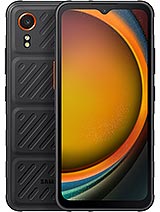
While flagships chase razor-thin bezels, the Samsung Galaxy XCover7 embraces a 10.2 mm thickness and a weight of 240 grams. This heft isn't accidental; it’s the physical manifestation of the IP68 rating and military-grade testing. The device feels like a tool rather than a toy. The textured back isn't just for aesthetics; it provides a high-friction grip that remains effective even when the handset is wet or used with work gloves. In our estimation, this design choice eliminates the need for a bulky third-party case, which often interferes with thermal management in standard phones.
Comparing this to a used flagship reveals a stark contrast in utility. An iPhone 13 might have a sleek stainless steel frame, but a single drop on a concrete warehouse floor usually ends in a trip to the repair shop. This handset is rated for drops up to 1.5 meters directly onto steel. For a professional or an outdoor enthusiast, that peace of mind is a utility that benchmarks like Geekbench cannot measure. The inclusion of the XCover Key—a programmable physical button—further enhances this utility, allowing users to trigger a flashlight or a specific app without fumbling with a touchscreen.
Under the hood, the Mediatek Dimensity 6100+ chipset serves as the engine. Built on a 6nm process, this octa-core processor prioritize thermal efficiency over sheer speed. With two Cortex-A76 cores clocked at 2.2 GHz, the device handles daily productivity tasks with ease. It won't win any mobile gaming championships, but it stays cool during extended GPS navigation or video calls—scenarios where older flagships often throttle due to aging thermal paste and less efficient architectures.
We must address the elephant in the room: 6GB of RAM. In early 2024, this is the bare minimum for a fluid Android experience. While a three-year-old flagship might offer 8GB or even 12GB, the One UI 6 optimization on this model ensures that background tasks are managed aggressively to maintain system responsiveness. The Mali-G57 MC2 GPU is adequate for UI animations and basic work-related 3D applications, but users should manage their expectations regarding high-end mobile gaming. This is a workstation, not a console.
One area where this model punches above its weight is connectivity. Supporting both SA/NSA 5G and a wide array of bands, the handset ensures reliable signal penetration in difficult environments. For those in the enterprise sector, the inclusion of charging connector pins (Pogo pins) is a significant advantage. This allows for drop-in charging docks, preventing the wear and tear on the USB-C port that often kills older phones in a high-intensity work setting.
Contrast this with a used flagship, which relies solely on its USB-C or Lightning port. Over three years, those ports often become loose or clogged with debris. By providing an alternative charging method, the Samsung Galaxy XCover7 extends its operational lifespan significantly. Furthermore, the inclusion of a dedicated microSDXC slot allows for easy storage expansion, a feature that has been systematically removed from the flagship market. This is critical for field workers who need to store large technical manuals or high-resolution logs without relying on a cloud connection.
A 6.6-inch PLS LCD is the primary interface. At 600 nits (HBM), it is bright enough for most outdoor scenarios, though it lacks the infinite contrast of the OLED panels found in the used flagship market. The 1080 x 2408 resolution yields a sharp 400 ppi, which is excellent for reading text-heavy documents or blueprints. However, the 60Hz refresh rate feels a bit dated compared to the 120Hz standards of 2024.
Why choose LCD? In professional environments, LCDs are often preferred for their lack of burn-in—a common issue with older OLED flagships that have spent years at high brightness. Moreover, the touch sensitivity has been tuned for use with gloves and in wet conditions. While you lose the deep blacks of a movie-watching experience, you gain a screen that works when your hands are covered in grease or rain. For the budget tech economist, this is a calculated compromise. We are trading visual flair for environmental reliability.
The most compelling argument for this device over a used flagship is the removable 4050 mAh battery. In 2024, a user-replaceable battery is a unicorn. When a used flagship's battery begins to fail, the owner must pay for a professional service to heat the glue, pry the glass, and replace the cell. With the Samsung Galaxy XCover7, the user simply pops the back cover and swaps in a fresh battery. This effectively gives the device an infinite runtime for long shifts away from a power outlet.
Though the 15W wired charging is painfully slow by modern standards, the ability to go from 0% to 100% in seconds via a swap makes charging speeds irrelevant for power users. This feature also future-proofs the handset. In three years, when the original battery loses its capacity, you won't need a new phone; you'll just need a $30 battery. This is the cornerstone of the value hunter's strategy: buying a device that doesn't have a planned obsolescence date triggered by a chemical battery's lifespan.
Comparing this to the Cat S62 or the [Nokia XR21](/the-rugged-evolution-why-the-nokia-xr21-is-more-than-just-a-tough-shell/), the Samsung offering holds a distinct advantage in software support. Samsung’s commitment to providing updates through Android 16 and One UI 8 ensures that this phone remains secure and functional long after its rivals have been abandoned. While the Cat S62 offers a thermal camera, it lacks the 5G capabilities and the modern 6nm efficiency of the Dimensity 6100+ found here.
Against a used iPhone 12, the XCover7 loses on camera quality and app ecosystem polish. However, the iPhone 12 will likely lose iOS support around the same time this Samsung reaches its end-of-life, and the iPhone's battery will almost certainly be near its 80% health threshold by now. For a business or a pragmatic individual, the brand-new battery and the rugged chassis of the Samsung Galaxy XCover7 provide a more predictable, lower-risk ownership experience than gambling on the used market.
We recognize that the Samsung Galaxy XCover7 isn't for everyone. It won't turn heads at a coffee shop, and it won't take gallery-quality photos with its single 50MP sensor. But for the user who views their phone as a tool—as essential as a hammer or a laptop—it is a masterclass in functional design. It prioritizes the things that matter in the real world: staying powered, staying connected, and staying in one piece.
By choosing this over a used flagship, you are opting for long-term stability over short-term prestige. You are buying a device that is ready for Android 16 and a decade of drops. In an era where tech is increasingly disposable, the Samsung Galaxy XCover7 stands as a rare example of a product built to endure. It is the definitive choice for the savvy buyer who values durability and utility above all else.
The Economic Reality of Rugged vs. Refurbished
When evaluating a budget of roughly $300, the temptation to buy a used flagship like an iPhone 12 or a Galaxy S21 is immense. These older premium devices offer superior displays and faster chips. However, the Samsung Galaxy XCover7 shifts the conversation from peak performance to Total Cost of Ownership (TCO). A refurbished flagship often carries a degraded battery and a fragile glass sandwich design that requires an expensive protective case. Our analysis suggests that by the time a user equips an old flagship for a high-risk environment, they have exceeded the price of this specialized handset without gaining its intrinsic structural integrity.
Unlike a standard consumer phone, this model avoids the hidden costs of repair. If the screen on a used S21 cracks, the repair can cost half the device's value. The Corning Gorilla Glass Victus+ utilized here, combined with the recessed screen design, significantly lowers the probability of such an expense. We view this not just as a phone, but as a three-year insurance policy against gravity. The value hunter recognizes that a phone that doesn't break is always cheaper than a fast phone that needs a replacement screen every twelve months.
Tank Construction Meets Modern Ergonomics
While flagships chase razor-thin bezels, the Samsung Galaxy XCover7 embraces a 10.2 mm thickness and a weight of 240 grams. This heft isn't accidental; it’s the physical manifestation of the IP68 rating and military-grade testing. The device feels like a tool rather than a toy. The textured back isn't just for aesthetics; it provides a high-friction grip that remains effective even when the handset is wet or used with work gloves. In our estimation, this design choice eliminates the need for a bulky third-party case, which often interferes with thermal management in standard phones.
Comparing this to a used flagship reveals a stark contrast in utility. An iPhone 13 might have a sleek stainless steel frame, but a single drop on a concrete warehouse floor usually ends in a trip to the repair shop. This handset is rated for drops up to 1.5 meters directly onto steel. For a professional or an outdoor enthusiast, that peace of mind is a utility that benchmarks like Geekbench cannot measure. The inclusion of the XCover Key—a programmable physical button—further enhances this utility, allowing users to trigger a flashlight or a specific app without fumbling with a touchscreen.
The Silicon Trade-off: Dimensity 6100+ Performance
Under the hood, the Mediatek Dimensity 6100+ chipset serves as the engine. Built on a 6nm process, this octa-core processor prioritize thermal efficiency over sheer speed. With two Cortex-A76 cores clocked at 2.2 GHz, the device handles daily productivity tasks with ease. It won't win any mobile gaming championships, but it stays cool during extended GPS navigation or video calls—scenarios where older flagships often throttle due to aging thermal paste and less efficient architectures.
We must address the elephant in the room: 6GB of RAM. In early 2024, this is the bare minimum for a fluid Android experience. While a three-year-old flagship might offer 8GB or even 12GB, the One UI 6 optimization on this model ensures that background tasks are managed aggressively to maintain system responsiveness. The Mali-G57 MC2 GPU is adequate for UI animations and basic work-related 3D applications, but users should manage their expectations regarding high-end mobile gaming. This is a workstation, not a console.
Connectivity and the Professional Edge
One area where this model punches above its weight is connectivity. Supporting both SA/NSA 5G and a wide array of bands, the handset ensures reliable signal penetration in difficult environments. For those in the enterprise sector, the inclusion of charging connector pins (Pogo pins) is a significant advantage. This allows for drop-in charging docks, preventing the wear and tear on the USB-C port that often kills older phones in a high-intensity work setting.
Contrast this with a used flagship, which relies solely on its USB-C or Lightning port. Over three years, those ports often become loose or clogged with debris. By providing an alternative charging method, the Samsung Galaxy XCover7 extends its operational lifespan significantly. Furthermore, the inclusion of a dedicated microSDXC slot allows for easy storage expansion, a feature that has been systematically removed from the flagship market. This is critical for field workers who need to store large technical manuals or high-resolution logs without relying on a cloud connection.
The Display Compromise: Utility Over Vibrancy
A 6.6-inch PLS LCD is the primary interface. At 600 nits (HBM), it is bright enough for most outdoor scenarios, though it lacks the infinite contrast of the OLED panels found in the used flagship market. The 1080 x 2408 resolution yields a sharp 400 ppi, which is excellent for reading text-heavy documents or blueprints. However, the 60Hz refresh rate feels a bit dated compared to the 120Hz standards of 2024.
Why choose LCD? In professional environments, LCDs are often preferred for their lack of burn-in—a common issue with older OLED flagships that have spent years at high brightness. Moreover, the touch sensitivity has been tuned for use with gloves and in wet conditions. While you lose the deep blacks of a movie-watching experience, you gain a screen that works when your hands are covered in grease or rain. For the budget tech economist, this is a calculated compromise. We are trading visual flair for environmental reliability.
Removable Power: The Ultimate Longevity Feature
The most compelling argument for this device over a used flagship is the removable 4050 mAh battery. In 2024, a user-replaceable battery is a unicorn. When a used flagship's battery begins to fail, the owner must pay for a professional service to heat the glue, pry the glass, and replace the cell. With the Samsung Galaxy XCover7, the user simply pops the back cover and swaps in a fresh battery. This effectively gives the device an infinite runtime for long shifts away from a power outlet.
Though the 15W wired charging is painfully slow by modern standards, the ability to go from 0% to 100% in seconds via a swap makes charging speeds irrelevant for power users. This feature also future-proofs the handset. In three years, when the original battery loses its capacity, you won't need a new phone; you'll just need a $30 battery. This is the cornerstone of the value hunter's strategy: buying a device that doesn't have a planned obsolescence date triggered by a chemical battery's lifespan.
Competitive Landscape: XCover7 vs. The World
Comparing this to the Cat S62 or the [Nokia XR21](/the-rugged-evolution-why-the-nokia-xr21-is-more-than-just-a-tough-shell/), the Samsung offering holds a distinct advantage in software support. Samsung’s commitment to providing updates through Android 16 and One UI 8 ensures that this phone remains secure and functional long after its rivals have been abandoned. While the Cat S62 offers a thermal camera, it lacks the 5G capabilities and the modern 6nm efficiency of the Dimensity 6100+ found here.
Against a used iPhone 12, the XCover7 loses on camera quality and app ecosystem polish. However, the iPhone 12 will likely lose iOS support around the same time this Samsung reaches its end-of-life, and the iPhone's battery will almost certainly be near its 80% health threshold by now. For a business or a pragmatic individual, the brand-new battery and the rugged chassis of the Samsung Galaxy XCover7 provide a more predictable, lower-risk ownership experience than gambling on the used market.
The Final Verdict on the Samsung Galaxy XCover7
We recognize that the Samsung Galaxy XCover7 isn't for everyone. It won't turn heads at a coffee shop, and it won't take gallery-quality photos with its single 50MP sensor. But for the user who views their phone as a tool—as essential as a hammer or a laptop—it is a masterclass in functional design. It prioritizes the things that matter in the real world: staying powered, staying connected, and staying in one piece.
By choosing this over a used flagship, you are opting for long-term stability over short-term prestige. You are buying a device that is ready for Android 16 and a decade of drops. In an era where tech is increasingly disposable, the Samsung Galaxy XCover7 stands as a rare example of a product built to endure. It is the definitive choice for the savvy buyer who values durability and utility above all else.
Technical Specifications
| LAUNCH | |
|---|---|
| Announced | 2024, January 10 |
| Status | Available. Released 2024, January 23 |
| PLATFORM | |
| OS | Android 14, upgradable to Android 16, One UI 8 |
| Chipset | Mediatek Dimensity 6100+ (6 nm) |
| CPU | Octa-core (2x2.2 GHz Cortex-A76 & 6x2.0 GHz Cortex-A55) |
| GPU | Mali-G57 MC2 |
| BODY | |
| Dimensions | 169 x 80.1 x 10.2 mm (6.65 x 3.15 x 0.40 in) |
| Weight | 240 g (8.47 oz) |
| SIM | · Nano-SIM + eSIM· Nano-SIM + Nano-SIM |
| Info | IP68 dust tight and water resistant (immersible up to 1.5m for 35 min) Drop resistant up to 1.5m MIL-STD-810H compliant* *does not guarantee ruggedness or use in extreme conditions |
| DISPLAY | |
| Type | PLS LCD, 600 nits (HBM) |
| Size | 6.6 inches, 104.9 cm2 (~77.5% screen-to-body ratio) |
| Resolution | 1080 x 2408 pixels, 20:9 ratio (~400 ppi density) |
| Protection | Corning Gorilla Glass Victus+ |
| MEMORY | |
| Card slot | microSDXC (dedicated slot) |
| Internal | 64GB 4GB RAM, 128GB 6GB RAM |
| MAIN CAMERA | |
| Single | 50 MP, f/1.8, (wide), 1/2.76", 0.64µm, PDAF |
| Features | Dual-LED flash, HDR, panorama |
| Video | 1080p@30fps |
| SELFIE CAMERA | |
| Single | 5 MP, f/2.0, (wide) |
| Video | Yes |
| SOUND | |
| Loudspeaker | Yes |
| 3.5mm jack | Yes |
| COMMS | |
| WLAN | Wi-Fi 802.11 a/b/g/n/ac, dual-band, Wi-Fi Direct |
| Bluetooth | 5.3, A2DP, LE |
| Positioning | GPS, GLONASS, BDS, GALILEO, QZSS |
| NFC | Yes |
| Radio | No |
| USB | USB Type-C 2.0, charging connector pins |
| NETWORK | |
| Technology | GSM / HSPA / LTE / 5G |
| 2G bands | GSM 850 / 900 / 1800 / 1900 |
| 3G bands | HSDPA 850 / 900 / 1700(AWS) / 1900 / 2100 |
| 4G bands | 1, 2, 3, 4, 5, 7, 8, 12, 13, 17, 20, 26, 28, 32, 38, 40, 41, 66 |
| 5G bands | 1, 3, 5, 7, 8, 20, 26, 28, 38, 40, 41, 66, 71, 77, 78 SA/NSA |
| Speed | HSPA, LTE, 5G |
| FEATURES | |
| Sensors | Accelerometer, gyro, proximity, compass |
| BATTERY | |
| Type | Li-Po 4050 mAh, removable |
| Charging | 15W wired |
| MISC | |
| Colors | Black |
| Models | SM-G556B, SM-G556BU1, SM-G556B/DS |
| SAR EU | 1.08 W/kg (head) 1.10 W/kg (body) |
| Price | $ 298.74 / € 228.99 |