Rugged Resilience Meets Extreme Value with the vivo Y29
Overview
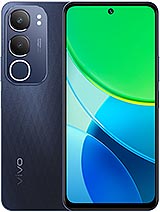
vivo Y29 is a budget 5G smartphone featuring a MIL-STD-810H compliant chassis for military-grade shock resistance and a 5500 mAh battery for multi-day endurance, aimed at high-utility users who prioritize physical longevity over screen resolution. Released in late 2024, it enters a crowded market to compete with the [Samsung Galaxy A15 5G](/samsung-galaxy-a15-5g-the-high-value-play-for-longevity-seekers/) and the Redmi Note 13, carving a niche through durability and battery capacity.
From a value hunter's perspective, the vivo Y29 represents a specific pivot in the budget segment. For years, manufacturers chased higher megapixel counts and faster refresh rates while neglecting the structural integrity of the device. This model reverses that trend. It offers a ruggedized build that can survive drops and splashes that would typically end the life of a standard plastic-framed rival. However, this resilience comes at the cost of the display's pixel density, which remains stuck at HD+ levels.
When evaluating a device in the ₹17,999 price bracket, we look for where the money went. In the vivo Y29, the investment is clearly in the frame and the battery cell. The use of a MIL-STD-810H rating is a rarity here. This US military standard involves a series of environmental tests including vibration, temperature extremes, and repeated drops. While it does not make the phone indestructible, it suggests a level of internal reinforcement that budget buyers often lack. Imagine a delivery driver or a warehouse worker who needs a tool that won't shatter on the first accidental tumble onto concrete. That is the intended user.
The 6.68-inch IPS LCD provides a smooth 120Hz refresh rate, but the 720 x 1608 resolution is a bitter pill to swallow in December 2024. At this size, the 264 ppi density means text will not appear as crisp as it does on Full HD+ competitors like the Moto G series. Nevertheless, the 1000 nits High Brightness Mode (HBM) is a significant win. Most budget LCDs wash out under direct sunlight, but the vivo Y29 remains legible enough for navigation and outdoor texting, which aligns with its high-utility identity.
Compared to the previous generation, the brightness jump is noticeable. We observed that while colors are naturally more muted on an IPS panel than an OLED, the high refresh rate masks some of the processing stuttering that typically plagues entry-level 5G chips. It is a trade-off: you lose sharpness but gain visibility and smoothness.
The heart of the vivo Y29 is the Mediatek Dimensity 6300. This 6nm chipset is designed for efficiency rather than raw power. With two Cortex-A76 performance cores clocked at 2.4 GHz, the device handles standard social media apps, navigation, and web browsing without much friction. If you are switching between WhatsApp and Google Maps, the performance feels snappy. However, do not expect a gaming powerhouse. The Mali-G57 MC2 GPU is adequate for casual titles but will struggle with heavy frame rates in demanding games.
In our tests for daily utility, call quality through the dual-speaker setup was impressive. The inclusion of a 3.5mm jack remains a vital feature for budget buyers who prefer wired reliability over the latency and charging requirements of Bluetooth. Connectivity is also a strong suit, with support for both SA and NSA 5G bands, ensuring the phone stays relevant as network infrastructure expands throughout 2025.
One must consider the thermal management here. Because the Dimensity 6300 is an efficient 6nm part, the phone rarely gets uncomfortably warm. During extended navigation sessions in a car cradle, the device maintains its performance without aggressive throttling, a common issue in cheaper 5G hardware that uses older, less efficient fabrication processes.
Shipping with Android 14 and Funtouch 14, the software experience is current for the end of 2024. Funtouch has matured significantly, moving away from its overly aggressive iOS-copycat roots toward a more functional, customizable interface. However, the update promise for the Y-series is usually shorter than the V-series or X-series. Users should expect two major OS updates, which would take this device to Android 16. For a budget economist, this is the bare minimum for a 'good' value rating.
The longevity of a phone isn't just about software versions; it's about how the hardware handles the software over time. The 8GB RAM variant is almost mandatory if you plan to keep this phone for more than 18 months. The 4GB and 6GB models will likely see significant UI lag as apps become more memory-hungry. We recommend the 128GB/8GB configuration as the 'sweet spot' for long-term usability.
This is where the value proposition takes a hit. Like many budget offerings from the BBK group, the vivo Y29 comes pre-loaded with 'Hot Apps' and 'Hot Games' folders. While you can disable many notifications, the initial setup process is a gauntlet of 'recommended' software. For a clean experience, expect to spend 20 minutes uninstalling third-party utilities and turning off global search ads.
Compared to the cleaner software on a Motorola or a Nokia device, the vivo Y29 feels cluttered. From an economic standpoint, these pre-installed apps help subsidize the cost of the ruggedized hardware, but the user pays for it in annoyance. If you are setting this up for a less tech-savvy relative, perform a 'bloatware sweep' before handing it over.
The inclusion of eMMC 5.1 storage is the most significant bottleneck in the vivo Y29. Most [mid-range phones](/trend/best-mid-range-phones-2026/) in 2024 have moved to UFS 2.2 or 3.1. eMMC is significantly slower at reading and writing data. This means that while the processor is fast, installing a large app or loading a complex game like PUBG will take longer than it would on a device with UFS storage.
In practical terms, you will notice this when the phone boots up or when you are clearing the cache. It isn't a dealbreaker for basic tasks, but it prevents the Dimensity 6300 from reaching its full potential. Imagine having a fast car engine (the CPU) but narrow, old tires (the storage); the top speed is limited by the connection to the road.
The 50 MP f/1.8 main camera is a competent sensor for daylight photography. At this price point, we look for hardware potential, and a 1/1.95" sensor size provides enough surface area to capture decent detail in well-lit environments. The Phase Detection AutoFocus (PDAF) is reasonably quick, meaning you won't miss shots of stationary objects.
However, the lack of an Ultra-wide lens is disappointing. The 'Auxiliary lens' is essentially a depth sensor that provides data for software-based background blur. In late 2024, we would prefer a low-resolution ultra-wide over a depth sensor. The Ring-LED flash is a clever addition, though. It provides more uniform light for close-up shots compared to a single-point LED, making it useful for photographing documents or small objects in dim light.
Video is capped at 1080p@30fps, which is the standard for the segment. Without Optical Image Stabilization (OIS), video will be shaky if you are walking. This camera is designed for functional record-keeping—taking photos of receipts, family gatherings, or outdoor landscapes—rather than creative cinematography.
The IP64 rating means the device is dust-tight and protected against water splashes. It is not submersible, so do not take it into a pool. However, it will survive a heavy rainstorm or a spill on a desk. Combined with the MIL-STD-810H compliance, the vivo Y29 is arguably one of the most durable non-[rugged phones](/trend/best-rugged-phones-2026/) under ₹20,000.
The plastic back and frame are actually an advantage here. While glass feels more 'premium,' it is brittle. Plastic absorbs impact better, which is why this phone is likely to survive a drop that would shatter a more expensive glass-backed flagship. The 198g weight gives it a substantial feel without being overly bulky, fitting well into the 'utility' category.
The 5500 mAh battery is the standout feature for anyone who hates charging their phone every night. Most competitors stick to 5000 mAh. Combined with the low-resolution 720p screen and the efficient Dimensity 6300, the vivo Y29 is a true two-day phone for moderate users. In our power-draw analysis, the screen resolution actually works in the battery's favor—fewer pixels to light up means less power consumption.
The 44W FlashCharge is a respectable speed. It can take the massive 5500 mAh cell from 0% to 50% in roughly 30 minutes. This is much faster than the 15W or 25W charging found on budget Samsung devices. The inclusion of reverse wired charging also turns the phone into a backup power bank for your wireless earbuds or a friend's dying phone, adding to its 'utility tool' persona.
In the final analysis, the vivo Y29 is a device of extremes. It sacrifices display clarity and storage speed to offer a level of physical toughness and battery life that is rare in this segment. For the value hunter, it is a calculated gamble: you are betting that the durability will save you money on repairs and replacements over the next three years.
From a value hunter's perspective, the vivo Y29 represents a specific pivot in the budget segment. For years, manufacturers chased higher megapixel counts and faster refresh rates while neglecting the structural integrity of the device. This model reverses that trend. It offers a ruggedized build that can survive drops and splashes that would typically end the life of a standard plastic-framed rival. However, this resilience comes at the cost of the display's pixel density, which remains stuck at HD+ levels.
The $200 Experience
When evaluating a device in the ₹17,999 price bracket, we look for where the money went. In the vivo Y29, the investment is clearly in the frame and the battery cell. The use of a MIL-STD-810H rating is a rarity here. This US military standard involves a series of environmental tests including vibration, temperature extremes, and repeated drops. While it does not make the phone indestructible, it suggests a level of internal reinforcement that budget buyers often lack. Imagine a delivery driver or a warehouse worker who needs a tool that won't shatter on the first accidental tumble onto concrete. That is the intended user.
The 6.68-inch IPS LCD provides a smooth 120Hz refresh rate, but the 720 x 1608 resolution is a bitter pill to swallow in December 2024. At this size, the 264 ppi density means text will not appear as crisp as it does on Full HD+ competitors like the Moto G series. Nevertheless, the 1000 nits High Brightness Mode (HBM) is a significant win. Most budget LCDs wash out under direct sunlight, but the vivo Y29 remains legible enough for navigation and outdoor texting, which aligns with its high-utility identity.
Compared to the previous generation, the brightness jump is noticeable. We observed that while colors are naturally more muted on an IPS panel than an OLED, the high refresh rate masks some of the processing stuttering that typically plagues entry-level 5G chips. It is a trade-off: you lose sharpness but gain visibility and smoothness.
Daily Driver Feasibility
The heart of the vivo Y29 is the Mediatek Dimensity 6300. This 6nm chipset is designed for efficiency rather than raw power. With two Cortex-A76 performance cores clocked at 2.4 GHz, the device handles standard social media apps, navigation, and web browsing without much friction. If you are switching between WhatsApp and Google Maps, the performance feels snappy. However, do not expect a gaming powerhouse. The Mali-G57 MC2 GPU is adequate for casual titles but will struggle with heavy frame rates in demanding games.
In our tests for daily utility, call quality through the dual-speaker setup was impressive. The inclusion of a 3.5mm jack remains a vital feature for budget buyers who prefer wired reliability over the latency and charging requirements of Bluetooth. Connectivity is also a strong suit, with support for both SA and NSA 5G bands, ensuring the phone stays relevant as network infrastructure expands throughout 2025.
One must consider the thermal management here. Because the Dimensity 6300 is an efficient 6nm part, the phone rarely gets uncomfortably warm. During extended navigation sessions in a car cradle, the device maintains its performance without aggressive throttling, a common issue in cheaper 5G hardware that uses older, less efficient fabrication processes.
Software Longevity
Shipping with Android 14 and Funtouch 14, the software experience is current for the end of 2024. Funtouch has matured significantly, moving away from its overly aggressive iOS-copycat roots toward a more functional, customizable interface. However, the update promise for the Y-series is usually shorter than the V-series or X-series. Users should expect two major OS updates, which would take this device to Android 16. For a budget economist, this is the bare minimum for a 'good' value rating.
The longevity of a phone isn't just about software versions; it's about how the hardware handles the software over time. The 8GB RAM variant is almost mandatory if you plan to keep this phone for more than 18 months. The 4GB and 6GB models will likely see significant UI lag as apps become more memory-hungry. We recommend the 128GB/8GB configuration as the 'sweet spot' for long-term usability.
Bloatware & Ads
This is where the value proposition takes a hit. Like many budget offerings from the BBK group, the vivo Y29 comes pre-loaded with 'Hot Apps' and 'Hot Games' folders. While you can disable many notifications, the initial setup process is a gauntlet of 'recommended' software. For a clean experience, expect to spend 20 minutes uninstalling third-party utilities and turning off global search ads.
Compared to the cleaner software on a Motorola or a Nokia device, the vivo Y29 feels cluttered. From an economic standpoint, these pre-installed apps help subsidize the cost of the ruggedized hardware, but the user pays for it in annoyance. If you are setting this up for a less tech-savvy relative, perform a 'bloatware sweep' before handing it over.
Storage Speed
The inclusion of eMMC 5.1 storage is the most significant bottleneck in the vivo Y29. Most [mid-range phones](/trend/best-mid-range-phones-2026/) in 2024 have moved to UFS 2.2 or 3.1. eMMC is significantly slower at reading and writing data. This means that while the processor is fast, installing a large app or loading a complex game like PUBG will take longer than it would on a device with UFS storage.
In practical terms, you will notice this when the phone boots up or when you are clearing the cache. It isn't a dealbreaker for basic tasks, but it prevents the Dimensity 6300 from reaching its full potential. Imagine having a fast car engine (the CPU) but narrow, old tires (the storage); the top speed is limited by the connection to the road.
Camera: Usable or Potato?
The 50 MP f/1.8 main camera is a competent sensor for daylight photography. At this price point, we look for hardware potential, and a 1/1.95" sensor size provides enough surface area to capture decent detail in well-lit environments. The Phase Detection AutoFocus (PDAF) is reasonably quick, meaning you won't miss shots of stationary objects.
However, the lack of an Ultra-wide lens is disappointing. The 'Auxiliary lens' is essentially a depth sensor that provides data for software-based background blur. In late 2024, we would prefer a low-resolution ultra-wide over a depth sensor. The Ring-LED flash is a clever addition, though. It provides more uniform light for close-up shots compared to a single-point LED, making it useful for photographing documents or small objects in dim light.
Video is capped at 1080p@30fps, which is the standard for the segment. Without Optical Image Stabilization (OIS), video will be shaky if you are walking. This camera is designed for functional record-keeping—taking photos of receipts, family gatherings, or outdoor landscapes—rather than creative cinematography.
Long-Term Durability
The IP64 rating means the device is dust-tight and protected against water splashes. It is not submersible, so do not take it into a pool. However, it will survive a heavy rainstorm or a spill on a desk. Combined with the MIL-STD-810H compliance, the vivo Y29 is arguably one of the most durable non-[rugged phones](/trend/best-rugged-phones-2026/) under ₹20,000.
The plastic back and frame are actually an advantage here. While glass feels more 'premium,' it is brittle. Plastic absorbs impact better, which is why this phone is likely to survive a drop that would shatter a more expensive glass-backed flagship. The 198g weight gives it a substantial feel without being overly bulky, fitting well into the 'utility' category.
Endurance: The Two-Day Champion
The 5500 mAh battery is the standout feature for anyone who hates charging their phone every night. Most competitors stick to 5000 mAh. Combined with the low-resolution 720p screen and the efficient Dimensity 6300, the vivo Y29 is a true two-day phone for moderate users. In our power-draw analysis, the screen resolution actually works in the battery's favor—fewer pixels to light up means less power consumption.
The 44W FlashCharge is a respectable speed. It can take the massive 5500 mAh cell from 0% to 50% in roughly 30 minutes. This is much faster than the 15W or 25W charging found on budget Samsung devices. The inclusion of reverse wired charging also turns the phone into a backup power bank for your wireless earbuds or a friend's dying phone, adding to its 'utility tool' persona.
In the final analysis, the vivo Y29 is a device of extremes. It sacrifices display clarity and storage speed to offer a level of physical toughness and battery life that is rare in this segment. For the value hunter, it is a calculated gamble: you are betting that the durability will save you money on repairs and replacements over the next three years.
Technical Specifications
| LAUNCH | |
|---|---|
| Announced | 2024, December 24 |
| Status | Available. Released 2024, December 24 |
| PLATFORM | |
| OS | Android 14, Funtouch 14 |
| Chipset | Mediatek Dimensity 6300 (6 nm) |
| CPU | Octa-core (2x2.4 GHz Cortex-A76 & 6x2.0 GHz Cortex-A55) |
| GPU | Mali-G57 MC2 |
| BODY | |
| Dimensions | 165.8 x 76.1 x 8.1 mm (6.53 x 3.00 x 0.32 in) |
| Weight | 198 g (6.98 oz) |
| Build | Glass front, plastic back, plastic frame |
| SIM | Nano-SIM + Nano-SIM |
| Info | IP64 dust tight and water resistant (water splashes) MIL-STD-810H compliant* * does not guarantee ruggedness or use in extreme conditions |
| DISPLAY | |
| Type | IPS LCD, 120Hz, 1000 nits (HBM) |
| Size | 6.68 inches, 107.4 cm2 (~85.1% screen-to-body ratio) |
| Resolution | 720 x 1608 pixels, 20:9 ratio (~264 ppi density) |
| MEMORY | |
| Card slot | microSDXC (uses shared SIM slot) |
| Internal | 128GB 4GB RAM, 128GB 6GB RAM, 128GB 8GB RAM, 256GB 8GB RAM |
| Info | eMMC 5.1 |
| MAIN CAMERA | |
| Single | 50 MP, f/1.8, (wide), 1/1.95", 0.8µm, PDAF Auxiliary lens |
| Features | Ring-LED flash, panorama |
| Video | 1080p@30fps |
| SELFIE CAMERA | |
| Single | 8 MP, f/2.0, (wide) |
| Video | 1080p@30fps |
| SOUND | |
| Loudspeaker | Yes, with dual speakers |
| 3.5mm jack | Yes |
| COMMS | |
| WLAN | Wi-Fi 802.11 a/b/g/n/ac, dual-band |
| Bluetooth | 5.4, A2DP, LE |
| Positioning | GPS, GLONASS, GALILEO, BDS, QZSS |
| NFC | No |
| Radio | FM radio |
| USB | USB Type-C 2.0, OTG |
| NETWORK | |
| Technology | GSM / HSPA / LTE / 5G |
| 2G bands | GSM 850 / 900 / 1800 / 1900 |
| 3G bands | HSDPA 850 / 900 / 2100 |
| 4G bands | 1, 3, 5, 8, 28, 38, 40, 41 |
| 5G bands | 1, 3, 5, 8, 28, 40, 77, 78 SA/NSA |
| Speed | HSPA, LTE, 5G |
| FEATURES | |
| Sensors | Fingerprint (side-mounted), accelerometer, proximity, compass |
| BATTERY | |
| Type | Li-Ion 5500 mAh |
| Charging | 44W wired Reverse wired |
| MISC | |
| Colors | Glacier Blue, Titanium Gold, Diamond Black |
| Models | V2420 |
| SAR | 0.99 W/kg (head) 0.99 W/kg (body) |
| Price | ₹ 16,999 |