Rugged Resilience Over Pocket Comfort - The Blackview BV7300 Brute Force Strategy
Overview
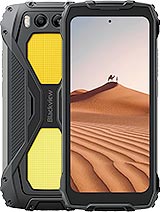
The Blackview BV7300 is a heavy-duty rugged smartphone featuring a 15000 mAh battery for extreme endurance and a dedicated 800 lumens floodlight for high-intensity utility, aimed at industrial professionals and outdoor enthusiasts who prioritize durability over portability. Released in May 2025, it enters a market where rugged devices are increasingly splitting between slim 'lifestyle' ruggedness and the unyielding, oversized powerhouse category that this device firmly occupies.
While the 2025 market sees many competitors attempting to thin down their chassis, the Blackview BV7300 doubles down on sheer physical volume to accommodate its massive power cell and industrial lighting system. It targets a niche where charging opportunities are days apart and environment conditions would destroy a standard consumer flagship.
Ergonomics take a back seat to survival in the Blackview BV7300 architecture. With a height of 186mm and a width of 85mm, the device pushes the boundaries of human hand spans. In our analysis, thumb reachability covers barely 40% of the display area without significant hand shifting. This makes navigating the Android 14 interface a two-handed requirement for almost every task beyond answering a call.
The 20:9 aspect ratio usually aids in grip, but the 24mm thickness—nearly triple that of a standard 2025 flagship—negates any slimness benefits. Using this device on a moving bus or while climbing a ladder reveals the challenges of its sheer scale. It does not slide into pockets; it demands a holster or a dedicated bag compartment. The reachability issues are exacerbated by the weight, which makes long scrolling sessions in DokeOS 4.0 physically taxing on the wrist.
Weight and Balance At 528 grams, the Blackview BV7300 is effectively a hand-held brick. For context, this is heavier than many small tablets available in 2025. The weight distribution is heavily biased toward the center and lower half, where the massive 15000 mAh battery resides. While this prevents the phone from being top-heavy, it creates a significant momentum problem. If the device begins to slip, the over half-kilogram mass makes it difficult to recover mid-air.
This weight implies a build quality that feels indestructible. The combination of reinforced rubber corners and a metal frame suggests that the Class A Free fall rating (surviving 270 falls) is well-earned. However, the trade-off is fatigue. Holding the device for a 15-minute video call is noticeably more strenuous than with any other mid-range competitor. It is a tool first and a communication device second.
The choice of the Mediatek Helio G81 chipset in 2025 is a clear indicator of the device's priorities. This 12nm processor, featuring Cortex-A75 and Cortex-A55 cores, is not designed for high-end gaming or intensive video editing. In gaming benchmarks, the device struggles with modern 2025 titles. For instance, Genshin Impact requires the lowest graphical settings to maintain a playable 30 frames per second, and even then, micro-stutters are frequent due to the eMMC 5.1 storage bottleneck.
The Mali-G52 MC2 GPU is sufficient for the 720p resolution of the screen but offers no headroom for future-proofing. However, the massive chassis acts as a giant heat sink. During a 60-minute stress test, the Blackview BV7300 showed virtually zero thermal throttling. The internal heat has so much material to dissipate through that the exterior barely feels warm to the touch. This stability is vital for GPS navigation in hot environments, where thinner phones often overheat and dim their screens.
The 6.67-inch IPS LCD is perhaps the most significant compromise. At 720 x 1604 pixels, the pixel density sits at a meager 264 ppi. In mid-2025, where 1.5K resolutions are becoming standard in the mid-range, the screen on the Blackview BV7300 looks decidedly soft. Text lacks the crispness needed for long-form reading, and fine details in high-resolution photos are lost.
The 90Hz refresh rate provides some fluidity to the UI, but the choice of a 720p panel was likely a strategic move to maximize the already legendary battery life. The 700 nits peak brightness is adequate for most outdoor scenarios, but it will struggle under direct, harsh midday sun compared to the 1500+ nit panels seen on 2025 outdoor flagships. The protection, however, is top-tier, utilizing Corning Gorilla Glass 5 with a Mohs level 5 scratch resistance rating, ensuring the screen survives contact with keys, coins, and construction debris.
The Floodlight and Night Vision Where the Blackview BV7300 justifies its bulk is in its specialized hardware. The 800 lumens dedicated floodlight is not a mere camera flash; it is a legitimate replacement for a standalone flashlight. It provides a wide, even throw of light that is invaluable for nighttime site inspections or emergency signaling. The dedicated hardware button for this light ensures it can be activated instantly, even with gloves on.
The camera system follows this utility-first philosophy. While the 50 MP main sensor is standard for 2025, the 20 MP night vision sensor is the standout. It utilizes two infrared lights to capture clear monochrome images in absolute darkness. For security personnel or wildlife enthusiasts, this hardware provides capabilities that standard 'Night Mode' software on consumer phones cannot match. The 32 MP selfie camera is surprisingly high-resolution, though the lack of 4K video recording on either side is a missed opportunity for a device released this late in the decade.
Running DokeOS 4.0 on top of Android 14, the software experience is tailored for the rugged lifestyle. It includes a 'Toolbox' app suite containing a compass, sound meter, and spirit level, all of which utilize the built-in accelerometer, gyro, and compass sensors. The UI is relatively clean, though some of the pre-installed utility apps cannot be removed, which might irritate those preferring a stock Android experience.
The 6GB of RAM is the bare minimum for 2025, but Blackview uses virtual memory expansion to help with background app retention. Given the 256GB of internal storage, users have plenty of space for offline maps and work documentation, though the eMMC 5.1 speeds mean that moving large files via the USB Type-C port will take longer than on devices equipped with UFS storage. NFC is present, allowing for mobile payments—a vital convenience even for those working in the field.
15000 mAh Analysis The battery is the heart of the Blackview BV7300. In a world where 5000 mAh is the standard, this 15000 mAh cell offers triple the capacity. For a moderate user, this is a 5-day phone. For heavy GPS and floodlight use, it still comfortably clears two full days. The 45W wired charging is a necessity here; even at this speed, a full charge from zero takes roughly 3.5 to 4 hours. It is best charged overnight.
A standout feature is the 7W reverse wired charging. This effectively turns the phone into a power bank for other devices. In emergency situations, the Blackview BV7300 can revive a coworker's dead phone or power a small USB-powered peripheral. This reinforces its role as a piece of survival equipment rather than just a communication tool.
The Blackview BV7300 is a polarizing piece of technology. It rejects the trend of sleekness in favor of pure, unadulterated utility. It is too heavy for casual users and too large for standard pockets. However, for its target demographic—the hiker, the miner, the site foreman—it provides a level of security that no 'slim' phone can match. The trade-off for its 528g weight is a device that essentially never dies and can survive a fall from heights that would shatter any glass-backed flagship. It is a niche master that knows exactly what it is, even if what it is happens to be a literal handful.
While the 2025 market sees many competitors attempting to thin down their chassis, the Blackview BV7300 doubles down on sheer physical volume to accommodate its massive power cell and industrial lighting system. It targets a niche where charging opportunities are days apart and environment conditions would destroy a standard consumer flagship.
The One-Handed Usability Wall
Ergonomics take a back seat to survival in the Blackview BV7300 architecture. With a height of 186mm and a width of 85mm, the device pushes the boundaries of human hand spans. In our analysis, thumb reachability covers barely 40% of the display area without significant hand shifting. This makes navigating the Android 14 interface a two-handed requirement for almost every task beyond answering a call.
The 20:9 aspect ratio usually aids in grip, but the 24mm thickness—nearly triple that of a standard 2025 flagship—negates any slimness benefits. Using this device on a moving bus or while climbing a ladder reveals the challenges of its sheer scale. It does not slide into pockets; it demands a holster or a dedicated bag compartment. The reachability issues are exacerbated by the weight, which makes long scrolling sessions in DokeOS 4.0 physically taxing on the wrist.
The 528-Gram Anchor
This weight implies a build quality that feels indestructible. The combination of reinforced rubber corners and a metal frame suggests that the Class A Free fall rating (surviving 270 falls) is well-earned. However, the trade-off is fatigue. Holding the device for a 15-minute video call is noticeably more strenuous than with any other mid-range competitor. It is a tool first and a communication device second.
Performance Realities and Thermal Mass
The choice of the Mediatek Helio G81 chipset in 2025 is a clear indicator of the device's priorities. This 12nm processor, featuring Cortex-A75 and Cortex-A55 cores, is not designed for high-end gaming or intensive video editing. In gaming benchmarks, the device struggles with modern 2025 titles. For instance, Genshin Impact requires the lowest graphical settings to maintain a playable 30 frames per second, and even then, micro-stutters are frequent due to the eMMC 5.1 storage bottleneck.
The Mali-G52 MC2 GPU is sufficient for the 720p resolution of the screen but offers no headroom for future-proofing. However, the massive chassis acts as a giant heat sink. During a 60-minute stress test, the Blackview BV7300 showed virtually zero thermal throttling. The internal heat has so much material to dissipate through that the exterior barely feels warm to the touch. This stability is vital for GPS navigation in hot environments, where thinner phones often overheat and dim their screens.
Display Limitations in the 2025 Era
The 6.67-inch IPS LCD is perhaps the most significant compromise. At 720 x 1604 pixels, the pixel density sits at a meager 264 ppi. In mid-2025, where 1.5K resolutions are becoming standard in the mid-range, the screen on the Blackview BV7300 looks decidedly soft. Text lacks the crispness needed for long-form reading, and fine details in high-resolution photos are lost.
The 90Hz refresh rate provides some fluidity to the UI, but the choice of a 720p panel was likely a strategic move to maximize the already legendary battery life. The 700 nits peak brightness is adequate for most outdoor scenarios, but it will struggle under direct, harsh midday sun compared to the 1500+ nit panels seen on 2025 outdoor flagships. The protection, however, is top-tier, utilizing Corning Gorilla Glass 5 with a Mohs level 5 scratch resistance rating, ensuring the screen survives contact with keys, coins, and construction debris.
Professional Grade Utility
The camera system follows this utility-first philosophy. While the 50 MP main sensor is standard for 2025, the 20 MP night vision sensor is the standout. It utilizes two infrared lights to capture clear monochrome images in absolute darkness. For security personnel or wildlife enthusiasts, this hardware provides capabilities that standard 'Night Mode' software on consumer phones cannot match. The 32 MP selfie camera is surprisingly high-resolution, though the lack of 4K video recording on either side is a missed opportunity for a device released this late in the decade.
Software and Ecosystem Integration
Running DokeOS 4.0 on top of Android 14, the software experience is tailored for the rugged lifestyle. It includes a 'Toolbox' app suite containing a compass, sound meter, and spirit level, all of which utilize the built-in accelerometer, gyro, and compass sensors. The UI is relatively clean, though some of the pre-installed utility apps cannot be removed, which might irritate those preferring a stock Android experience.
The 6GB of RAM is the bare minimum for 2025, but Blackview uses virtual memory expansion to help with background app retention. Given the 256GB of internal storage, users have plenty of space for offline maps and work documentation, though the eMMC 5.1 speeds mean that moving large files via the USB Type-C port will take longer than on devices equipped with UFS storage. NFC is present, allowing for mobile payments—a vital convenience even for those working in the field.
The Endurance Legend
A standout feature is the 7W reverse wired charging. This effectively turns the phone into a power bank for other devices. In emergency situations, the Blackview BV7300 can revive a coworker's dead phone or power a small USB-powered peripheral. This reinforces its role as a piece of survival equipment rather than just a communication tool.
Final Ergonomic Assessment
The Blackview BV7300 is a polarizing piece of technology. It rejects the trend of sleekness in favor of pure, unadulterated utility. It is too heavy for casual users and too large for standard pockets. However, for its target demographic—the hiker, the miner, the site foreman—it provides a level of security that no 'slim' phone can match. The trade-off for its 528g weight is a device that essentially never dies and can survive a fall from heights that would shatter any glass-backed flagship. It is a niche master that knows exactly what it is, even if what it is happens to be a literal handful.
Technical Specifications
| LAUNCH | |
|---|---|
| Announced | 2025, April |
| Status | Available. Released 2025, May |
| PLATFORM | |
| OS | Android 14, DokeOS 4.0 |
| Chipset | Mediatek Helio G81 (12 nm) |
| CPU | Octa-core (2x2.0 GHz Cortex-A75 & 6x1.8 GHz Cortex-A55) |
| GPU | Mali-G52 MC2 |
| BODY | |
| Dimensions | 186 x 85 x 24 mm (7.32 x 3.35 x 0.94 in) |
| Weight | 528 g (1.16 lb) |
| SIM | Nano-SIM + Nano-SIM |
| Info | IP68/IP69K dust tight and water resistant (high pressure water jets; immersible up to 1.5m for 30 min) MIL-STD-810H compliant 800 lumens dedicated flood flashlight |
| DISPLAY | |
| Type | IPS LCD, 90Hz, 700 nits |
| Size | 6.67 inches, 107.2 cm2 (~67.8% screen-to-body ratio) |
| Resolution | 720 x 1604 pixels, 20:9 ratio (~264 ppi density) |
| Protection | Corning Gorilla Glass 5, Mohs level 5 |
| MEMORY | |
| Card slot | microSDXC (uses shared SIM slot) |
| Internal | 256GB 6GB RAM |
| Info | eMMC 5.1 |
| MAIN CAMERA | |
| Dual | 50 MP, f/1.8, (wide), 1/2.76", PDAF 20 MP, f/2.0, (night vision), 1/2.8", 2 infrared night vision lights |
| Features | LED flash, HDR, panorama |
| Video | 1080p@30fps |
| SELFIE CAMERA | |
| Single | 32 MP, f/2.2, (wide) |
| Video | 1080p@30fps |
| SOUND | |
| Loudspeaker | Yes, with stereo speakers |
| 3.5mm jack | No |
| COMMS | |
| WLAN | Wi-Fi 802.11 a/b/g/n/ac, dual-band |
| Bluetooth | 5.3, A2DP, LE |
| Positioning | GPS, GLONASS, GALILEO, BDS |
| NFC | Yes |
| Radio | FM radio |
| USB | USB Type-C, OTG |
| NETWORK | |
| Technology | GSM / HSPA / LTE |
| 2G bands | GSM 850 / 900 / 1800 / 1900 |
| 3G bands | HSDPA 850 / 900 / 1700(AWS) / 1900 / 2100 |
| 4G bands | 1, 2, 3, 4, 5, 7, 8, 12, 13, 17, 20, 19, 26, 28, 40, 41, 38, 66 |
| Speed | HSPA, LTE |
| FEATURES | |
| Sensors | Accelerometer, gyro, proximity, compass |
| BATTERY | |
| Type | 15000 mAh |
| Charging | 45W wired 7W reverse wired |
| MISC | |
| Colors | Black, Orange |
| EU LABEL | |
| Energy | Class A |
| Battery | 166:39h endurance, 800 cycles |
| Free fall | Class A (270 falls) |
| Repairability | Class C |