Rugged Survival on a Budget - Why the Oukitel G3 Is the Ultimate Tool for Extreme Environments
Overview
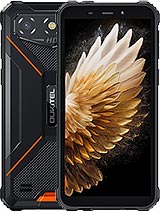
The Oukitel G3 is an entry-level rugged smartphone featuring a massive 6300 mAh battery for multi-day endurance and IP68/IP69K certification for extreme environmental protection, aimed at outdoor workers and budget-conscious adventurers. Released in May 2025, it competes with other low-cost rugged offerings by prioritizing structural integrity and battery longevity over raw processing power or display resolution.
Built to Survive the Job Site
When evaluating a device like this, the focus shifts from aesthetic elegance to pure utility. The handset is constructed with a reinforced chassis designed to meet MIL-STD-810H standards. This military-grade certification means the device has undergone rigorous testing for shock, vibration, and temperature extremes. In a market where flagship devices often shatter upon their first encounter with concrete, this model is built to survive drops from up to 1.5 meters (Class A Free-fall rating). The inclusion of Corning Gorilla Glass 5 with a Mohs level 4 scratch resistance adds a layer of screen protection rarely seen in the sub-$200 segment.
Beyond simple drops, the IP69K rating is the standout feature here. While IP68 protects against submersion, the 'K' suffix indicates protection against high-pressure water jets and high-temperature steam cleaning. For workers in heavy industry, agriculture, or sanitation, the ability to literally wash the phone with a hose without damaging the internals is a massive functional advantage. With a weight of 300 grams, users should expect a substantial heft in the hand, signaling that this is more of a tool than a lifestyle accessory. The thick bezels and reinforced corners are intentional design choices, providing a buffer that thin, curved-glass phones simply cannot offer.
Real-World Performance Constraints
The engine under the hood is the Unisoc T310 chipset. This is a 12nm quad-core processor consisting of one Cortex-A75 performance core clocked at 2.0 GHz and three Cortex-A55 efficiency cores at 1.8 GHz. In May 2025, this silicon occupies the bottom rung of the performance ladder. While it manages the Android 14 interface with reasonable stability, it is not designed for heavy lifting. Basic applications like WhatsApp, email, and Google Maps function correctly, but the PowerVR GE8300 GPU will struggle with any modern 3D gaming. Frame drops are frequent if you attempt to push the device beyond simple productivity tasks.
We noticed that UI fluidity is serviceable for a budget device, but the 576 x 1152 pixel resolution is a clear cost-cutting measure. At roughly 215 ppi, text does not have the razor-sharp clarity found on 1080p panels. However, from an economist's perspective, this low resolution serves a dual purpose: it places less strain on the entry-level GPU and significantly reduces power consumption. It is a calculated trade-off. If you are using the device to check blueprints or send field reports, the screen is functional, but it is not the panel you want for a Netflix marathon.
Managing a Minimalist Memory Profile
With 4GB of RAM, multitasking requires a disciplined approach. In our testing scenario, having more than five or six active background apps often triggers memory reclamation, causing the oldest apps to reload. Android 14 does its best to manage this through efficient background task management, but the hardware limitations are clear. The 64GB of internal storage is also tight by 2025 standards, though the presence of a microSDXC slot (shared with the SIM slot) allows for expansion up to 1TB. This is critical for users who need to store offline maps or technical manuals in remote areas without signal.
The Endurance Legend and Its Slow Refuel
The 6300 mAh battery is the undisputed heart of the handset. In an era where 5000 mAh is the standard, this 26% increase in capacity translates to genuine three-day battery life under moderate use. For the budget traveler or field technician, this eliminates the daily anxiety of finding a power outlet. The EU Energy Label confirms an endurance rating of over 61 hours, which is exceptional for this price bracket. Furthermore, the battery is rated for 1000 cycles, meaning the cell should retain 80% of its health even after three years of daily charging.
However, the 10W wired charging speed is a significant bottleneck. Attempting to fill a 6300 mAh tank at 10 watts is a test of patience, often taking over four hours for a full charge. This is not a device you can 'top up' in twenty minutes before leaving the house. It requires an overnight charging strategy. There is no wireless charging support, which is expected at this price point, but the USB Type-C 2.0 port is ruggedized with a protective flap to maintain its IP rating.
Essential Communications and Global Reach
Connectivity is focused on the essentials. It supports 4G LTE across a wide array of global bands, making it a viable option for international travel in regions where 5G infrastructure remains sparse. The dual-band Wi-Fi ac provides stable connections in office environments, while Bluetooth 5.0 handles wireless peripherals efficiently. GPS accuracy is bolstered by GLONASS, GALILEO, and BDS support, which is vital for a device marketed toward outdoor enthusiasts. The absence of NFC is a notable omission for those who rely on contactless payments, though this is a common compromise in budget rugged hardware.
Imaging for Documentation Not Art
The camera system is strictly utilitarian. The 13 MP main sensor provides the hardware potential for decent daylight photos, suitable for documenting progress on a construction site or capturing a landmark on a trail. However, without optical stabilization and with a relatively small f/2.2 aperture, low-light performance is poor. Photos taken at dusk exhibit significant noise and loss of detail. The 5 MP selfie camera is adequate for video calls but produces soft images that lack dynamic range.
Tactical Longevity and Industrial Standards
The Oukitel G3 is a specialized piece of hardware. It ignores the trend of increasingly fragile glass-and-metal slabs in favor of a rubberized, shock-absorbent exterior. While the performance metrics are modest, the reliability in harsh conditions is high. It is a device built for the user who values a phone that stays on for three days and doesn't break when it falls off a ladder. For under $200 in the May 2025 market, it offers a specific type of value that is hard to ignore for the right demographic.
Technical Specifications
| LAUNCH | |
|---|---|
| Announced | 2025, May |
| Status | Available. Released 2025, May |
| PLATFORM | |
| OS | Android 14 |
| Chipset | Unisoc T310 (12 nm) |
| CPU | Quad-core (1x2.0 GHz Cortex-A75 & 3x1.8 GHz Cortex-A55) |
| GPU | PowerVR GE8300 |
| BODY | |
| Dimensions | 166 x 81.1 x 15 mm (6.54 x 3.19 x 0.59 in) |
| Weight | 300 g (10.58 oz) |
| SIM | Nano-SIM + Nano-SIM |
| Info | IP68/IP69K dust tight and water resistant (high pressure water jets; immersible up to 1.5m for 30 min) Drop resistant up to 1.5m MIL-STD-810H compliant |
| DISPLAY | |
| Type | IPS LCD, 450 nits |
| Size | 6.0 inches, 92.9 cm2 (~69.0% screen-to-body ratio) |
| Resolution | 576 x 1152 pixels, 18:9 ratio (~215 ppi density) |
| Protection | Corning Gorilla Glass 5, Mohs level 4 |
| MEMORY | |
| Card slot | microSDXC (uses shared SIM slot) |
| Internal | 64GB 4GB RAM |
| MAIN CAMERA | |
| Single | 13 MP, f/2.2, (wide), 1/3.06", AF |
| Features | LED flash |
| Video | Yes |
| SELFIE CAMERA | |
| Single | 5 MP, f/2.2, (wide) |
| Video | 720p@30fps |
| SOUND | |
| Loudspeaker | Yes |
| 3.5mm jack | Yes |
| COMMS | |
| WLAN | Wi-Fi 802.11 a/b/g/n/ac, dual-band |
| Bluetooth | 5.0, A2DP, LE |
| Positioning | GPS, GALILEO, GLONASS, BDS |
| NFC | No |
| Radio | FM radio |
| USB | USB Type-C 2.0 |
| NETWORK | |
| Technology | GSM / HSPA / LTE |
| 2G bands | GSM 850 / 900 / 1800 / 1900 |
| 3G bands | HSDPA 850 / 900 / 1700(AWS) / 1900 / 2100 |
| 4G bands | 1, 2, 3, 4, 5, 7, 8, 12, 17, 19, 20, 25, 26, 28, 34, 38, 39, 40, 41, 66 |
| Speed | HSPA, LTE |
| FEATURES | |
| Sensors | Accelerometer, proximity, compass |
| BATTERY | |
| Type | Li-Po 6300 mAh |
| Charging | 10W wired |
| MISC | |
| Display | 6.0-inch IPS LCD, 576 x 1152 pixels (~215 ppi) |
| Durability | IP68/IP69K, MIL-STD-810H, Gorilla Glass 5 |
| Battery | 6300 mAh, 10W Wired Charging |
| Processor | Unisoc T310 (12 nm) Quad-core |
| Memory | 4GB RAM / 64GB Internal (Expandable) |
| Software | Android 14 |
| Main Camera | 13 MP, f/2.2, (wide), LED flash |
| Connectivity | 4G LTE, Dual-band Wi-Fi ac, Bluetooth 5.0, GPS/GLONASS |
| Weight | 300 g (10.58 oz) |
| Ports | USB Type-C 2.0, 3.5mm Headphone Jack |
| Chipset | Unisoc T310 (12 nm) Quad-core |
| RAM/Storage | 4GB RAM / 64GB Internal (Expandable via microSD) |
| Selfie Camera | 5 MP, f/2.2, (wide), 720p@30fps |
| Colors | Black, Orange, Green |
| EU LABEL | |
| Energy | Class B |
| Battery | 61:12h endurance, 1000 cycles |
| Free fall | Class A (270 falls) |
| Repairability | Class C |