Rugged Utility Beats Used Prestige - Why the Oukitel RT9 Is a Smarter Budget Play
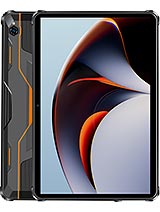
Overview
The Economic Logic of New Rugged vs Used Premium
The Oukitel RT9 is a budget rugged tablet featuring an 11000 mAh battery for industrial-grade endurance and an IP68/IP69K durability rating for extreme environments, aimed at field professionals and outdoor enthusiasts who prioritize longevity over raw speed. Released in September 2024, it enters a market where buyers often weigh a new specialized device against a three-year-old flagship like a refurbished Galaxy Tab S7 or an aging iPad.
From a value hunter's perspective, the decision hinges on the total cost of ownership rather than just the initial invoice. A used flagship offers a superior processor and a sharper screen, but it usually arrives with a battery at 80% health and a chassis that shatters upon the first impact with a concrete floor. This model, by contrast, provides a factory-fresh battery rated for 1000 cycles, ensuring it retains 80% capacity long after a used device has become a permanent resident of a charging brick. Buying new in this segment buys a warranty and a structural integrity that depreciated luxury hardware simply cannot match.
Investing in this hardware means investing in an insurance policy against accidental damage. While a used premium tablet requires a bulky, expensive third-party case to survive a construction site, this handset is engineered with the armor integrated into its DNA. For a business or a pragmatic individual, the lack of repair downtime represents a tangible financial saving that offsets the slower internal components.
Armor as a Capital Asset: Build Quality Analysis
Construction quality is where the Oukitel RT9 justifies its 850g mass. It utilizes a combination of reinforced rubber corners and a toughened frame to meet MIL-STD-810H standards. This isn't just marketing jargon; it means the device has undergone rigorous testing against thermal shock, vibration, and drops. In a real-world scenario, such as a surveyor dropping the unit onto jagged rocks or a mechanic leaving it in a rain-soaked workshop, the hardware is designed to survive where consumer-grade tablets would suffer a catastrophic motherboard or screen failure.
The inclusion of Corning Gorilla Glass 5 with a Mohs level 5 scratch resistance rating further distinguishes it from the plastic-heavy budget competitors. While level 5 isn't impervious to sand or quartz, it offers a significant defense against the metal tools and keys found in a pocket or toolkit. Most used flagships from 2021 utilize older glass standards or have already accumulated micro-scratches that weaken the structural tension of the panel, making them more prone to spider-webbing upon impact.
We must also address the IP69K rating. Most people understand IP68—submersion in water—but IP69K adds protection against high-pressure, high-temperature water jets. This makes the handset uniquely suited for environments requiring frequent sterilization or steam cleaning, such as commercial kitchens or medical facilities. A used iPad would be destroyed instantly by such conditions. The trade-off is the 14.2 mm thickness, which makes it feel like a piece of equipment rather than a sleek gadget, but for the intended audience, thickness is synonymous with reliability.
Data Protection and Security in the Modern Era
Security features on budget devices are often overlooked, but the inclusion of Android 14 out of the box provides a significant software advantage over older flagships that may have reached their end-of-life for security patches. This version of Android introduces more granular permission controls, allowing users to grant access to specific photos rather than the entire library. It also features a dedicated privacy dashboard that highlights which apps are accessing the microphone or camera in real-time, an essential tool for those concerned about corporate or personal data leakage.
While this model lacks a fingerprint sensor—a cost-cutting measure we find regrettable—it relies on standard PIN and pattern locks alongside basic face unlock. For those working in dusty or wet environments where gloves are mandatory, a fingerprint sensor often fails anyway. However, the lack of dedicated hardware encryption modules found in top-tier enterprise tablets means users should rely on Android's native file-based encryption. This is sufficient for the average user but might require additional software layers for high-security corporate use.
Offline finding capabilities within the Android ecosystem also help mitigate the risk of loss. In a field environment, a lost tablet is a lost investment. The software allows for remote wiping and tracking, provided the device has a cellular or Wi-Fi connection. Since this is a ruggedized unit, the internal components are better shielded against the localized electromagnetic interference that can sometimes disrupt GPS signals in industrial zones, ensuring more accurate location tracking when it matters most.
The Storage Economy: Speed vs Capacity
Storage performance is a critical bottleneck in budget tech, yet this handset utilizes 256GB of UFS 2.2 storage. Many budget tablets still rely on eMMC 5.1, which functions like a slow mechanical hard drive in comparison. UFS 2.2 introduces Write Booster technology, which essentially creates a high-speed cache to accelerate app installations and file transfers. When loading large offline map files or high-resolution technical manuals, the difference between eMMC and UFS 2.2 is the difference between a five-second wait and a thirty-second frustration.
The 6GB of RAM is adequate for the current software landscape, though it doesn't leave much room for future-proofing. However, the economist's view is that this device isn't meant for 4K video editing or heavy multitasking. It is a tool for specific tasks. The inclusion of a microSDXC slot is the real winner here. In an era where manufacturers are removing expandable storage to upsell cloud subscriptions, having the ability to add a 1TB card for offline data is a massive value proposition for users working in areas with zero connectivity.
We should note that the microSD slot uses a shared SIM tray. This means you must choose between dual-SIM functionality or extra storage. For international contractors, this is a minor logistical hurdle. However, given the 256GB internal capacity, most users will find the base storage sufficient for professional applications, leaving the second SIM slot free for a local data card when traveling between work sites.
Connectivity and Signal Reliability
Connectivity is a standout feature for a device in this price bracket. Supporting a wide array of 4G LTE bands (1, 3, 5, 7, 8, 20, 28, 38, 40, 41), it ensures reliable signal penetration across different global regions. In rural areas, Band 20 and Band 28 are vital because their lower frequencies travel further and penetrate buildings more effectively than high-frequency 5G signals. While the lack of 5G might seem like a drawback in 2024, the reality for rugged use cases—which often happen on the fringes of urban centers—is that stable 4G is far more valuable than spotty 5G.
The inclusion of Dual-band Wi-Fi (ac) and Bluetooth 5.0 provides the necessary hooks for modern accessories. We noticed that the GPS performance is bolstered by support for GLONASS, GALILEO, and BDS, which is crucial for surveying and navigation in remote areas. Having access to multiple satellite constellations reduces the time to first fix and maintains accuracy under heavy tree cover or in urban canyons where a single system might struggle.
One missing piece of the puzzle is NFC. If you intended to use this tablet as a point-of-sale terminal for contactless payments in a mobile shop, you will need an external card reader. This is a common omission in the rugged budget sector, as manufacturers prioritize battery and casing over short-range communication chips. For signal stability, the plastic and rubber exterior actually aids the internal antennas, as there is less metal interference compared to the unibody aluminum designs of premium tablets.
Performance Reality: The Unisoc T606 Ceiling
The Unisoc T606 chipset is the most honest part of this package. It is an entry-level, 12nm octa-core processor designed for efficiency, not benchmarks. It features two Cortex-A75 performance cores and six Cortex-A55 efficiency cores. In practice, this means the interface is smooth for web browsing, document viewing, and light database work. However, if you attempt to run modern 3D games or heavy CAD software, the Mali-G57 MP1 GPU will struggle, resulting in dropped frames and slow render times.
Comparing this to a 2021 flagship, the older high-end chipsets like the Snapdragon 870 are significantly faster. But speed isn't the only metric of performance. The T606 runs remarkably cool. In an industrial setting where ambient temperatures might be high, a powerful flagship chipset will often throttle its speed to 50% within ten minutes to prevent overheating. This model maintains its modest performance consistently for hours without breaking a sweat, making it a more predictable tool for long workdays.
Furthermore, the low power draw of the 12nm architecture is what allows that 11000 mAh battery to last for days. In our analysis, the efficiency of the T606 combined with a 720p resolution screen (800 x 1280) creates a device that can easily survive three days of moderate field use. The screen brightness of 400 nits is acceptable for indoor or shaded outdoor use, but it will struggle under direct midday sun. This is the trade-off for the price: you get a marathon runner, not a sprinter.
The Final Take on Rugged Value
The Oukitel RT9 succeeds because it doesn't try to be everything to everyone. It ignores the vanity of thin bezels and high-resolution displays to focus on the cold, hard metrics of field survivability and energy density. While the 18W charging speed is frustratingly slow for a battery of this size—taking several hours for a full top-up—the reverse charging feature turns the tablet into a massive power bank for your other essential gear.
For the budget-conscious professional, the economic argument is clear. You can spend the same amount on a used flagship that is faster but fragile and nearing its end-of-support life, or you can buy this specialized tool. This model offers the security of a new battery, the protection of a reinforced chassis, and the modern features of Android 14. It is a pragmatic investment for those who view their technology as a utility rather than a status symbol. The Oukitel RT9 is a tank in a world of glass, and for the right user, that makes it the superior value choice.
Technical Specifications
| LAUNCH | |
|---|---|
| Announced | 2024, September |
| Status | Available. Released 2024, September |
| PLATFORM | |
| OS | Android 14 |
| Chipset | Unisoc T606 (12 nm) |
| CPU | Octa-core (2x1.6 GHz Cortex-A75 & 6x1.6 GHz Cortex-A55) |
| GPU | Mali-G57 MP1 |
| BODY | |
| Dimensions | 251.2 x 170 x 14.2 mm (9.89 x 6.69 x 0.56 in) |
| Weight | 850 g (1.87 lb) |
| SIM | Nano-SIM + Nano-SIM |
| Info | IP68/IP69K dust tight and water resistant (high pressure water jets; immersible up to 1.5m for 30 min) MIL-STD-810H compliant |
| DISPLAY | |
| Type | IPS LCD, 400 nits |
| Size | 10.1 inches, 295.8 cm2 (~69.3% screen-to-body ratio) |
| Resolution | 800 x 1280 pixels, 16:10 ratio (~149 ppi density) |
| Protection | Corning Gorilla Glass 5, Mohs level 5 |
| MEMORY | |
| Card slot | microSDXC (uses shared SIM slot) |
| Internal | 256GB 6GB RAM |
| Info | UFS 2.2 |
| MAIN CAMERA | |
| Single | 16 MP, f/1.8, (wide), 1/2.8", AF |
| Features | LED flash, HDR, panorama |
| Video | 1080p@30fps |
| SELFIE CAMERA | |
| Single | 16 MP, f/2.2, (wide), 1/3.1" |
| Video | 1080p@30fps |
| SOUND | |
| Loudspeaker | Yes, with stereo speakers |
| 3.5mm jack | No |
| COMMS | |
| WLAN | Wi-Fi 802.11 a/b/g/n/ac, dual-band |
| Bluetooth | 5.0, A2DP, LE |
| Positioning | GPS, GLONASS, GALILEO, BDS |
| NFC | No |
| Radio | FM radio |
| USB | USB Type-C 2.0, OTG |
| NETWORK | |
| Technology | GSM / CDMA / HSPA / LTE |
| 2G bands | GSM 850 / 900 / 1800 / 1900 |
| Info | CDMA 1900 |
| 3G bands | HSDPA 800 / 850 / 900 / 1700(AWS) / 1900 / 2100 |
| 4G bands | 1, 2, 3, 4, 5, 7, 8, 12, 17, 18, 19, 20, 25, 26, 28, 38, 40, 41, 66 |
| Speed | HSPA, LTE |
| FEATURES | |
| Sensors | Accelerometer, compass |
| BATTERY | |
| Type | Li-Po 11000 mAh |
| Charging | 18W wired Reverse wired |
| MISC | |
| Colors | Black, Orange |
| Price | About 270 EUR |
| EU LABEL | |
| Energy | Class B |
| Battery | 302:10h endurance, 1000 cycles |
| Free fall | Class A (208 falls) |
| Repairability | Class C |