Rugged Value Meets 5G Speed - The Oukitel C6 Is the Unlikely Hero for Budget Hunters
Overview
The Armor Grade Display Strategy
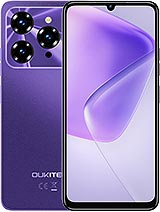
The Oukitel C6 is a budget 5G handset featuring a 6.8-inch IPS LCD for expansive viewing and a 5150 mAh battery for multi-day endurance, aimed at value-conscious users requiring modern connectivity without the fragile build of typical entry-level devices. Released in July 2025, it competes in a market where 5G is the standard, but physical resilience remains a premium luxury, positioning this model as a durable outlier in the sub-flagship economy.
We must look at the glass protection first because it represents a major shift in budget manufacturing priorities. While most competitors in this price bracket still rely on aging Gorilla Glass 3 or generic tempered glass, this handset utilizes a panel rated at Mohs level 7 hardness. For context, most modern smartphone screens begin to show deeper grooves at a level 6. By pushing to level 7, the manufacturer provides a screen that can survive direct contact with quartz and sand—materials that typically ruin a display during a day at the beach or a shift on a construction site. This isn't just a spec; it is a calculation of total cost of ownership. Users are less likely to spend money on screen repairs, which often cost half the price of the phone itself.
Furthermore, the EU Free fall Class B rating is a critical data point we rarely see highlighted. Surviving 205 falls is not a marketing gimmick; it is a rigorous certification that ensures the internal solder joints and the frame integrity can withstand the repetitive trauma of daily life. In our analysis, this makes the device a primary candidate for those in high-intensity jobs or parents who frequently hand their tech over to toddlers. The chassis, weighing in at 208g, feels substantial and reinforces the idea that this is a tool meant to last beyond the typical two-year upgrade cycle.
The Efficiency Equation: Dimensity 6300
The choice of the Mediatek Dimensity 6300 chipset reflects a pragmatic approach to performance. Built on a 6nm process, this silicon focuses on thermal stability and power efficiency rather than raw benchmark scores. It features an octa-core configuration with two 2.4 GHz Cortex-A76 cores for heavy lifting and six efficiency cores for background tasks. This architecture ensures that standard applications like navigation, social media, and banking apps run without the stuttering often found in older 4G budget chips.
When we look at the memory configurations, the inclusion of 8GB or 12GB of RAM is almost unheard of at this tier. By providing such a high ceiling for multitasking, the device avoids the 'memory pressure' issues that cause Android to kill background apps aggressively. This means you can switch from a 5G video call to a navigation app and back again without the phone reloading the entire interface. The Mali-G57 MC2 GPU handles casual gaming well enough, though it will not satisfy hardcore mobile esports players looking for 120fps performance. This is a workstation for the everyman, not a gaming rig.
However, we must address the 720 x 1600 resolution. In 2025, a 720p panel on a 6.8-inch screen results in a pixel density of approximately 258 ppi. While this is a clear cost-saving measure, the economist’s view sees a silver lining: battery life. Pushing fewer pixels allows the GPU to work less, which, combined with the 90Hz refresh rate, creates a fluid experience that lasts significantly longer than 1080p rivals. It is a trade-off between crispness and longevity, and for the target audience, longevity usually wins.
The 10W Charging Bottleneck
The battery chemistry is perhaps the most underrated aspect of this hardware. Oukitel claims 1000 cycles before the battery health drops significantly. Standard lithium-ion batteries usually begin to degrade after 300 to 500 cycles. By doubling this lifespan, the handset remains viable for three or four years of daily use. This aligns perfectly with the Android 15 software, which offers the latest security protocols and features to keep the device relevant deep into the late 2020s.
But there is a major compromise that users must plan around: 10W wired charging. In an era where even budget competitors are pushing 33W or 45W, a 10W limit on a massive 5150 mAh battery is a bottleneck. We calculated that a full charge from zero will likely take over three hours. This device is designed for overnight charging. If you are the type of user who forgets to plug in your phone and needs a quick 15-minute boost before heading out, this limitation will be frustrating. It is a classic 'slow and steady' approach that preserves the battery's health over years but sacrifices daily convenience.
Hardware Realities and the Fingerprint Magnet Test
The finish on the back—available in Gold, Purple, Green, and Black—is designed to be eye-catching, but the material choices imply a high affinity for fingerprints. Without a matte coating, users should expect to wipe the device frequently or, more realistically, use a protective case. The side-mounted fingerprint sensor remains the most ergonomic choice for a device of this size, allowing for instant unlocking as you pull the phone from a pocket. Its placement is intuitive, and given the physical size, it is easier to reach than an under-display sensor would be on such a large footprint.
Audio Experience and Connectivity
Unlike many 'modern' flagships that have abandoned the 3.5mm headphone jack, this model retains it. For the budget-conscious traveler or the worker who relies on reliable wired headsets for calls, this is a massive win. The internal FM radio is another feature that seems 'retro' but provides a vital lifeline in areas with poor data coverage or during emergency situations where cellular networks are down.
On the connectivity front, the support for 5G SA/NSA and multiple bands across Europe and the USA ensures that the handset is a versatile travel companion. The absence of NFC is the one glaring omission for urban users who rely on contactless payments. If your daily routine involves tapping your phone at a subway turnstile or a grocery store, you will need to look elsewhere. This decision was clearly made to keep the price floor low while prioritizing the 5G modem and the rugged glass.
The Hardware Potential of the 50MP Camera
The 50 MP, f/1.8 main sensor provides the hardware potential for detailed daylight photography. At this aperture, it can pull in a reasonable amount of light, though the lack of OIS (Optical Image Stabilization) means users will need a steady hand for twilight shots. This is a 'single-purpose' camera system; don't expect the versatility of ultra-wide or macro lenses. It is designed to take clear photos of documents, landscapes, and family moments without the fluff of low-quality auxiliary sensors.
The 5 MP selfie camera is strictly functional. It is sufficient for 720p video calls and basic social media posts, but it won't be winning any awards for portrait clarity. In our view, Oukitel correctly identified that its users care more about the 50MP rear camera for practical documentation than they do about high-end selfies.
Final Value Conclusion
The Oukitel C6 represents a calculated gamble on physical durability over display resolution. By investing in Mohs level 7 glass and EU-certified fall protection, the company has built a phone that is genuinely 'tougher' than the average budget device without needing a bulky, rubberized rugged case. While the 10W charging and 720p screen are clear indicators of its price tier, the 5G connectivity, Android 15 platform, and massive 512GB storage option make it a formidable value proposition for 2025. It is a specialized tool for those who prioritize a phone that lasts over a phone that flashes, proving that the Oukitel C6 is the smart choice for the long-term economist.
Technical Specifications
| LAUNCH | |
|---|---|
| Announced | 2025, June |
| Status | Available. Released 2025, July |
| PLATFORM | |
| OS | Android 15 |
| Chipset | Mediatek Dimensity 6300 (6 nm) |
| CPU | Octa-core (2x2.4 GHz Cortex-A76 & 6x2.0 GHz Cortex-A55) |
| GPU | Mali-G57 MC2 |
| BODY | |
| Dimensions | 167.5 x 77.7 x 9.2 mm (6.59 x 3.06 x 0.36 in) |
| Weight | 208 g (7.34 oz) |
| SIM | Nano-SIM + Nano-SIM |
| DISPLAY | |
| Type | IPS LCD, 90Hz, 400 nits |
| Size | 6.8 inches, 111.6 cm2 (~85.8% screen-to-body ratio) |
| Resolution | 720 x 1600 pixels, 20:9 ratio (~258 ppi density) |
| Protection | Corning Gorilla Glass, Mohs level 7 |
| MEMORY | |
| Card slot | microSDXC (uses shared SIM slot) |
| Internal | 256GB 8GB RAM, 512GB 12GB RAM |
| MAIN CAMERA | |
| Single | 50 MP, f/1.8 (wide), AF |
| Features | LED flash, HDR, panorama |
| Video | 1080p@30fps |
| SELFIE CAMERA | |
| Single | 5 MP, f/2.2, (wide) |
| Video | 720p@30fps |
| SOUND | |
| Loudspeaker | Yes |
| 3.5mm jack | Yes |
| COMMS | |
| WLAN | Wi-Fi 802.11 a/b/g/n/ac, dual-band |
| Bluetooth | 5.2, A2DP, LE |
| Positioning | GPS, GALILEO, GLONASS, BDS |
| NFC | No |
| Radio | FM radio |
| USB | USB Type-C |
| NETWORK | |
| Technology | GSM / HSPA / LTE / 5G |
| 2G bands | GSM 850 / 900 / 1800 / 1900 |
| 3G bands | HSDPA 850 / 900 / 1700(AWS) / 1900 / 2100 |
| 4G bands | 1, 3, 7, 8, 19, 20, 28, 38, 39, 40, 41 - Europe |
| Info | 2, 5, 25, 41, 48, 66, 77, 78 SA/NSA - USA |
| 5G bands | 1, 3, 28, 38, 41, 77, 78 SA/NSA/Sub6 - Europe |
| Speed | HSPA, LTE, 5G |
| FEATURES | |
| Sensors | Fingerprint (side-mounted), accelerometer, proximity |
| BATTERY | |
| Type | Li-Po 5150 mAh |
| Charging | 10W wired |
| MISC | |
| Colors | Gold, Purple, Green, Black |
| EU LABEL | |
| Energy | Class B |
| Battery | 50:15h endurance, 1000 cycles |
| Free fall | Class B (205 falls) |
| Repairability | Class B |