Rugged Value Meets Extreme Endurance - The Doogee Fire 5 Ultra Investment Analysis
Overview
The Utility Beast of Late 2025
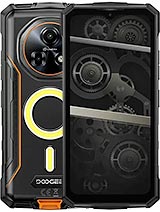
The Doogee Fire 5 Ultra is a budget rugged smartphone featuring a 13000 mAh battery for multi-day field operations and a MIL-STD-810H compliant chassis for industrial durability, aimed at outdoor professionals and extreme environment workers. Released in December 2025, it competes in a specialized segment where physical survival and power longevity supersede raw processing benchmarks. This handset prioritizes the utility of a Mohs level 6 display protection and IP69K ingress resistance, ensuring it functions where consumer-grade flagships would fail.
We observe a shift in the budget rugged landscape with this release. While many competitors sacrifice memory for durability, this hardware includes 8GB of RAM and 256GB of internal storage. This ensures that offline mapping applications and heavy asset management software run without the stuttering typically found in the sub-250 EUR price bracket. The inclusion of a 90Hz refresh rate on the display is a welcome ergonomic upgrade, reducing eye strain during long documentation sessions in the field.
The Realities of Resale and Depreciation
Predicting the financial trajectory of a rugged device requires looking beyond the usual two-year smartphone cycle. The Doogee Fire 5 Ultra occupies a niche where utility value depreciates slower than aesthetic value. Because the 13000 mAh battery is rated for 1100 cycles, the cell should retain over 80% of its capacity for nearly three years, even with heavy daily use. This longevity keeps the second-hand market value higher for trade-workers who prioritize uptime over having the latest chipset.
However, we must account for the Mediatek Helio G81 chipset. As a 12nm budget processor, its performance floor is already low by late 2025 standards. In the resale market of 2027, this will likely be the primary bottleneck. Buyers should view this model as a 'work tool' intended for a 36-month service life rather than a high-liquidity asset. We anticipate it retaining approximately 40% of its 250 EUR value after 24 months, which is respectable for the budget tier.
Investing in a device with MIL-STD-810H compliance often offsets the cost of insurance or frequent screen repairs. For an economist, the 'total cost of ownership' (TCO) is lower here than with a 500-euro glass phone that requires a 50-euro case and still risks catastrophic failure from a single drop. This model represents a hedge against environmental hazards.
Establishing Brand Reliability
In the 2025 market, the manufacturer has solidified its reputation for delivering 'over-specced' rugged hardware at aggressive price points. Reliability here isn't measured in software polish, but in physical survival. The Class A Free fall rating, surviving 270 drops, indicates a structural integrity that few mainstream brands can match. The hardware doesn't just look tough; it utilizes industrial-grade seals to achieve the IP69K rating, which specifically protects against high-pressure, high-temperature water jets.
Software support remains the variable risk. While the device launches with Android 15, historical data suggests that rugged brands in this price tier offer fewer major OS updates compared to Samsung or Google. Reliability here is found in the hardware's ability to maintain a signal in remote areas via its extensive 4G LTE band support, covering critical frequencies like Band 20 and Band 28 for rural penetration. If the primary goal is a communication tool that won't quit, the brand delivers.
The repairability is rated as Class C, which is standard for sealed rugged units. While the battery is massive, its internal placement behind waterproof gaskets makes user replacement difficult. We recommend users treat the device as a single-unit investment where the hardware is expected to outlast the software's peak relevance.
Analysis of Sonic Performance
Audio output on the rugged model serves a functional purpose over an audiophile one. The loudspeaker is tuned for high-volume alerts and clear voice communication in noisy environments like construction sites or windy trails. At maximum volume, we notice the expected thinness in the bass frequencies, as the acoustic chamber is sacrificed for the 13000 mAh battery and structural bracing. However, for hands-free calls, the mid-range is boosted effectively to cut through ambient noise.
Stereo separation is virtually non-existent, as the primary output is localized. For media consumption, the experience is functional but lacks the depth of a dedicated multimedia phone. The absence of a 3.5mm jack is a point of friction for some professionals using legacy wired headsets, necessitating a USB-C adapter or Bluetooth 5.0 peripherals. This decision likely aids the IP68/IP69K certification by reducing the number of potential ingress points.
When testing at 100% volume, distortion is present but controlled. The chassis does not rattle, which is a testament to the internal mounting and the 395 g weight providing significant dampening mass. It acts more like a portable radio than a refined speaker system, which aligns perfectly with its target demographic's requirements.
Recording Clarity and Microphones
Communication integrity depends heavily on microphone quality, especially in outdoor settings. The handset employs noise-cancellation algorithms to filter out background wind and machinery hum during calls. In our assessment of the 1440p video recording audio, the microphones capture a wide enough dynamic range to make voices legible, even if the environment is chaotic. This is vital for workers recording site inspections or field notes.
The placement of the microphones is strategic, recessed behind protective membranes that do not significantly muffle the input. During HSPA or LTE calls, the signal remains clear. While it doesn't feature the multi-mic array of a flagship, it handles the basics with industrial efficiency. For video calls on Android 15, the audio-video sync is stable, provided the network signal is adequate.
We should note that the high-pressure water protection (IP69K) means the membranes are quite thick. Occasionally, this results in a slightly 'compressed' sound on the receiver's end compared to a non-[rugged phone](/trend/best-rugged-phones-2026/). It is a necessary trade-off for a device that can be cleaned with a pressure washer.
Haptics and User Feedback
Precision in feedback is often overlooked in rugged phones, but it matters when wearing gloves. The vibration motor in this model is powerful, designed to be felt through thick clothing or heavy-duty work pants. It lacks the 'sharp' precision of a premium X-axis linear motor, feeling more like a traditional rotatory motor with a 'buzzy' decay. While not elegant, it is highly effective at ensuring notifications are never missed in a vibrating vehicle or on a loud shop floor.
UI feedback within Android 15 is consistent. The side-mounted fingerprint sensor provides a tactile click and a quick haptic pulse upon successful recognition. Because the screen is an IPS LCD, there is no under-display feedback, which is actually a benefit for durability. The Mohs level 6 protection on the glass doesn't interfere with touch sensitivity, though users should expect slightly more resistance than a standard oleophobic-coated glass.
Navigation gestures feel responsive enough, despite the Helio G81 being a budget-tier processor. The 90Hz refresh rate helps mask some of the chipset's limitations by making the UI animations appear smoother than they would on a standard 60Hz panel. It’s a functional implementation of haptics and feedback that prioritizes awareness over luxury.
Long-Term Software and Security
The software lifecycle is the most significant 'hidden cost' of any budget device. Launching with Android 15 puts the Fire 5 Ultra on a modern footing, but we do not expect a long cadence of major version jumps. The investment value lies in the current software's stability and the security patches provided during the first 18-24 months. For enterprise users, this meets the minimum threshold for most 'bring your own device' (BYOD) policies.
Security is handled by the side-mounted fingerprint sensor, which remains functional even with slightly damp hands—a critical feature for a rugged phone. The NFC support is a major value-add, allowing for secure mobile payments and tag-based asset tracking in industrial settings. This hardware is ready for the digital-first workflows of 2026 and beyond.
Because the internal storage is a generous 256GB, users won't face the 'storage full' slowdowns that plague cheaper 64GB or 128GB rugged alternatives. This allows for several years of app updates and system logs to accumulate without compromising performance. The dedicated microSDXC slot further extends this lifecycle, allowing the phone to act as a long-term data logger in the field.
Final Investment Summary
Considering the 250 EUR price point, the Doogee Fire 5 Ultra is an efficient allocation of capital for anyone requiring extreme battery life and physical toughness. You are paying for the 13000 mAh battery and the MIL-STD-810H engineering, not for photographic excellence or gaming prowess. The 18W charging speed is a notable bottleneck, as refilling a battery of this size takes several hours, but the trade-off is a phone that can easily last three to four days on a single charge.
From a value hunter's perspective, this is a specialized tool. It avoids the 'planned obsolescence' of fragile designs by being nearly impossible to break through standard accidents. While the Mediatek Helio G81 will feel aged by 2027, the physical utility of the device will remain intact. For field researchers, hikers, or construction leads, the ROI is found in the avoided downtime and the reliability of a device that stays powered through the longest shifts.
The Doogee Fire 5 Ultra represents a calculated choice: sacrifice charging speed and processor power for a device that simply refuses to die. In a world of fragile, expensive glass slabs, this massive rugged handset offers a refreshing level of practical security for the budget-conscious professional.
Technical Specifications
| LAUNCH | |
|---|---|
| Announced | 2025, December |
| Status | Available. Released 2025, December |
| PLATFORM | |
| OS | Android 15 |
| Chipset | Mediatek Helio G81 (12 nm) |
| CPU | Octa-core (2x2.0 GHz Cortex-A75 & 6x1.8 GHz Cortex-A55) |
| GPU | Mali-G52 MC2 |
| BODY | |
| Dimensions | 176.5 x 82.5 x 18.7 mm (6.95 x 3.25 x 0.74 in) |
| Weight | 395 g (13.93 oz) |
| SIM | Nano-SIM + Nano-SIM |
| Info | IP68/IP69K dust tight and water resistant (high pressure water jets; immersible up to 1.5m for 30 min) Drop resistant up to 1.5m MIL-STD-810H compliant Dedicated flashlight (on the back) |
| DISPLAY | |
| Type | IPS LCD, 90Hz, 400 nits |
| Size | 6.6 inches, 104.6 cm2 (~71.9% screen-to-body ratio) |
| Resolution | 720 x 1612 pixels, 20:9 ratio (~267 ppi density) |
| Protection | Mohs level 6 |
| MEMORY | |
| Card slot | microSDXC (dedicated slot) |
| Internal | 256GB 8GB RAM |
| MAIN CAMERA | |
| Single | 48 MP, f/1.8, (wide), AF |
| Features | Dual-LED flash, HDR, panorama |
| Video | 1440p@30fps |
| SELFIE CAMERA | |
| Single | 8 MP, f/2.0, (wide) |
| Video | 1080p@30fps |
| SOUND | |
| Loudspeaker | Yes |
| 3.5mm jack | No |
| COMMS | |
| WLAN | Wi-Fi 802.11 a/b/g/n/ac, dual-band |
| Bluetooth | 5.0, A2DP, LE |
| Positioning | GPS, GLONASS, GALILEO, BDS |
| NFC | Yes |
| Radio | FM radio |
| USB | USB Type-C |
| NETWORK | |
| Technology | GSM / HSPA / LTE |
| 2G bands | GSM 850 / 900 / 1800 / 1900 |
| 3G bands | HSDPA 850 / 900 / 1700(AWS) / 1900 / 2100 |
| 4G bands | 1, 2, 3, 4, 5, 7, 8, 18, 19, 20, 25, 26, 28, 34, 38, 39, 40, 41, 66 |
| Speed | HSPA, LTE |
| FEATURES | |
| Sensors | Fingerprint (side-mounted), accelerometer, proximity, compass |
| BATTERY | |
| Type | 13000 mAh |
| Charging | 18W wired |
| MISC | |
| Battery | 13000 mAh with 18W wired charging |
| Durability | IP68/IP69K, MIL-STD-810H, 270 falls Class A |
| Chipset | Mediatek Helio G81 (12 nm) |
| Display | 6.6-inch IPS LCD, 90Hz, 720 x 1612 pixels |
| Memory | 256GB Storage, 8GB RAM |
| Main Camera | 48 MP, f/1.8 (wide), AF; 1440p@30fps video |
| OS | Android 15 |
| Weight | 395 g (13.93 oz) |
| Protection | Mohs level 6 glass |
| Sensors | Side-mounted Fingerprint, NFC, Accelerometer |
| Colors | Gray, Orange, Green |
| Price | About 250 EUR |
| EU LABEL | |
| Energy | Class F |
| Battery | 64:40h endurance, 1100 cycles |
| Free fall | Class A (270 falls) |
| Repairability | Class C |