Signal Where Cell Towers Fail - Why the Ulefone Power Armor 20WT Is the Ultimate Tool for the Wild
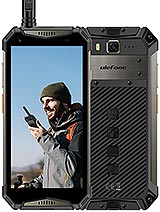
Overview
The Ulefone Power Armor 20WT is a rugged mid-range communication specialist featuring a detachable walkie-talkie antenna for off-grid coordination and a massive 10850 mAh battery for multi-day endurance, aimed at industrial professionals and extreme explorers. Released in March 2023, it occupies a unique niche between standard rugged handsets and dedicated tactical hardware by integrating dual-mode radio capabilities directly into the mobile chassis.
GPS and Mapping Capabilities When standard devices lose sight of the horizon, this model relies on a quad-constellation satellite suite. It pulls data from GPS, GLONASS, GALILEO, and BDS simultaneously. For field teams operating in deep canyons or dense forest canopies, this multi-system approach is vital. It reduces the time-to-first-fix and maintains a lock when half the sky is obscured. Beyond just latitude and longitude, the inclusion of a dedicated hardware barometer allows for accurate altitude tracking, which is essential for topographical mapping and search-and-rescue operations where verticality matters as much as horizontal distance.
Software-wise, the Android 12 environment supports high-accuracy mapping overlays without the stuttering often seen in cheaper rugged units. The 5.65-inch display features a resolution of 1080 x 2160 pixels, providing a high pixel density of ~427 ppi. This clarity ensures that small topographical lines and trail markers are legible even in direct sunlight. While the screen-to-body ratio is a modest 63.1%, the thick bezels serve as a buffer against lateral impacts that would shatter a modern curved display. In practice, using offline maps with the GPS active for eight hours barely dents the massive power reserves, a feat impossible for the mainstream flagship competitors of early 2023.
Thermal Management and Build Construction quality follows a strict utility-first philosophy. The handset is built to MIL-STD-810H standards, meaning it has survived rigorous vibration, shock, and temperature tests that would cause a standard consumer phone to delaminate. The IP68/IP69K certification is the real highlight for field work. While IP68 covers standard immersion, the IP69K rating specifically validates protection against high-pressure, high-temperature water jets. We see this as a necessity for workers who need to pressure-wash their gear after a day in mud or industrial chemicals.
The device utilizes a combination of reinforced polycarbonate and metal side-rails to absorb kinetic energy. With a weight of 382 grams, it feels like a piece of industrial equipment rather than a handheld toy. This mass is a physical manifestation of the 10850 mAh Li-Po battery and the internal structural bracing. Thermal management is handled efficiently by the 6nm Mediatek Helio G99 chipset. Because this processor is built on a highly efficient node, it generates significantly less heat during sustained GPS or radio use than the older 12nm chips found in previous rugged generations. This efficiency prevents thermal throttling when the device is sitting on a hot dashboard or strapped to a backpack in the desert sun.
12GB RAM and the Helio G99 Performance in the rugged sector often takes a backseat to durability, but the internal configuration here is surprisingly robust for March 2023. The 12GB of RAM is the standout specification. In field operations, professionals often need to run heavy background processes—radio management software, GPS tracking, and perhaps a specialized database—simultaneously. This massive memory overhead ensures that the OS doesn't kill critical background apps. We found that switching between a tactical radio app and a high-resolution map happens instantly without the dreaded 'app reload' screen.
The Helio G99 features an octa-core CPU with two Cortex-A76 cores clocked at 2.2 GHz. These 'performance' cores handle the heavy lifting of data processing, while the six Cortex-A55 cores manage background tasks to save power. While it lacks 5G connectivity, the 4G LTE performance is stable across a wide range of global bands. For those working in remote areas where 5G hasn't even been proposed, the stability of a mature 4G modem is often more valuable than the theoretical speeds of 5G that drain battery looking for a non-existent tower.
Charging and 10850 mAh Battery Power management is the core appeal of the handset. A 10850 mAh battery is roughly double the size of the battery found in a typical [Samsung Galaxy S23 Ultra](/cinematic-dominance-why-the-samsung-galaxy-s23-ultra-rewrites-the-creator-playbook/). In a field scenario, this translates to three to four days of moderate use without touching a charger. For a long weekend trek or a multi-shift emergency response, this removes 'battery anxiety' from the equation. The device also supports OTG reverse charging, allowing it to act as a power bank for smaller devices like headlamps or a colleague's depleted phone.
Charging this behemoth is done via 33W wired charging. While 33W is fast for a standard phone, it still takes a significant amount of time to fill over 10,000 mAh of capacity. Expect a full charge to take well over two hours. However, the trade-off is longevity; the slower charging speed compared to some 65W or 100W consumer devices likely helps preserve the health of the large Li-Po cell over hundreds of cycles. The absence of wireless charging is a missed opportunity for convenience, but the physical USB-C port is protected by a thick rubber flap to maintain the waterproof seal.
Radio Waves and Wireless Standards The 'WT' in the name stands for Walkie-Talkie, and this is where the device differentiates itself. It includes a physical, detachable antenna that connects to the top of the frame. This hardware allows for DMR (Digital Mobile Radio) and analog communication. Unlike software-based push-to-talk (PTT) apps that rely on cellular data, this is a true radio. If the cell towers are down due to a natural disaster or simply non-existent in the mountains, the handset still allows for direct voice communication with other radio-equipped units.
On the standard connectivity side, it supports Wi-Fi 6 (802.11ax), which is a rare and welcome addition in the rugged mid-range market of early 2023. This allows for faster data syncing when back at a base camp or office. Bluetooth 5.2 ensures a stable connection to wireless headsets or industrial sensors. The inclusion of NFC is also critical for modern field workers who use mobile payments or secure access badges to enter job sites. Signal penetration is bolstered by a wide array of LTE bands, ensuring the phone stays connected to whatever infrastructure is available.
Ulefone has integrated several safety-focused features that elevate the device beyond a basic smartphone. A side-mounted fingerprint sensor provides quick access, but there is also a customizable side key. We recommend programming this key for SOS functions or to trigger the walkie-talkie PTT. In an emergency, being able to send a signal or start a broadcast without fumbling with a touchscreen—especially when wearing gloves—is a literal lifesaver.
The 'Digital Toolbox' software suite includes a range of sensors utilized for field work, such as a gyroscope and compass. The 50 MP main camera uses a high-resolution sensor capable of capturing detailed evidence or site documentation. While it lacks the fancy zoom lenses of consumer flagships, the f/2.2 aperture and PDAF (Phase Detection Autofocus) provide the hardware potential for sharp, clear photos of serial numbers, damage reports, or landscape markers. The Dual-LED flash is also exceptionally bright, doubling as a powerful emergency flashlight.
The Ulefone Power Armor 20WT is not a device for the average city dweller. It is a specialized instrument built for environments where fragility is a liability. It effectively combines a rugged smartphone, a power bank, and a professional walkie-talkie into a single, albeit heavy, package. While the weight and the lack of a 3.5mm jack might deter some, the sheer utility for remote field operations is undeniable.
For those who spend their lives in the mud, on construction sites, or atop mountains, the Ulefone Power Armor 20WT offers a level of communication redundancy that standard smartphones simply cannot match. It represents a peak for the rugged category in March 2023, providing modern efficiency through the Helio G99 and massive multitasking headroom with its 12GB of RAM. It is a tool that demands to be used, not just carried.
Navigating the Uncharted
Software-wise, the Android 12 environment supports high-accuracy mapping overlays without the stuttering often seen in cheaper rugged units. The 5.65-inch display features a resolution of 1080 x 2160 pixels, providing a high pixel density of ~427 ppi. This clarity ensures that small topographical lines and trail markers are legible even in direct sunlight. While the screen-to-body ratio is a modest 63.1%, the thick bezels serve as a buffer against lateral impacts that would shatter a modern curved display. In practice, using offline maps with the GPS active for eight hours barely dents the massive power reserves, a feat impossible for the mainstream flagship competitors of early 2023.
Survival in the Extremes
The device utilizes a combination of reinforced polycarbonate and metal side-rails to absorb kinetic energy. With a weight of 382 grams, it feels like a piece of industrial equipment rather than a handheld toy. This mass is a physical manifestation of the 10850 mAh Li-Po battery and the internal structural bracing. Thermal management is handled efficiently by the 6nm Mediatek Helio G99 chipset. Because this processor is built on a highly efficient node, it generates significantly less heat during sustained GPS or radio use than the older 12nm chips found in previous rugged generations. This efficiency prevents thermal throttling when the device is sitting on a hot dashboard or strapped to a backpack in the desert sun.
Heavy Duty Processing
The Helio G99 features an octa-core CPU with two Cortex-A76 cores clocked at 2.2 GHz. These 'performance' cores handle the heavy lifting of data processing, while the six Cortex-A55 cores manage background tasks to save power. While it lacks 5G connectivity, the 4G LTE performance is stable across a wide range of global bands. For those working in remote areas where 5G hasn't even been proposed, the stability of a mature 4G modem is often more valuable than the theoretical speeds of 5G that drain battery looking for a non-existent tower.
The Power Station
Charging this behemoth is done via 33W wired charging. While 33W is fast for a standard phone, it still takes a significant amount of time to fill over 10,000 mAh of capacity. Expect a full charge to take well over two hours. However, the trade-off is longevity; the slower charging speed compared to some 65W or 100W consumer devices likely helps preserve the health of the large Li-Po cell over hundreds of cycles. The absence of wireless charging is a missed opportunity for convenience, but the physical USB-C port is protected by a thick rubber flap to maintain the waterproof seal.
Connectivity Suite
On the standard connectivity side, it supports Wi-Fi 6 (802.11ax), which is a rare and welcome addition in the rugged mid-range market of early 2023. This allows for faster data syncing when back at a base camp or office. Bluetooth 5.2 ensures a stable connection to wireless headsets or industrial sensors. The inclusion of NFC is also critical for modern field workers who use mobile payments or secure access badges to enter job sites. Signal penetration is bolstered by a wide array of LTE bands, ensuring the phone stays connected to whatever infrastructure is available.
Critical Safety and Emergency Tools
Ulefone has integrated several safety-focused features that elevate the device beyond a basic smartphone. A side-mounted fingerprint sensor provides quick access, but there is also a customizable side key. We recommend programming this key for SOS functions or to trigger the walkie-talkie PTT. In an emergency, being able to send a signal or start a broadcast without fumbling with a touchscreen—especially when wearing gloves—is a literal lifesaver.
The 'Digital Toolbox' software suite includes a range of sensors utilized for field work, such as a gyroscope and compass. The 50 MP main camera uses a high-resolution sensor capable of capturing detailed evidence or site documentation. While it lacks the fancy zoom lenses of consumer flagships, the f/2.2 aperture and PDAF (Phase Detection Autofocus) provide the hardware potential for sharp, clear photos of serial numbers, damage reports, or landscape markers. The Dual-LED flash is also exceptionally bright, doubling as a powerful emergency flashlight.
The Hiker's Summary
The Ulefone Power Armor 20WT is not a device for the average city dweller. It is a specialized instrument built for environments where fragility is a liability. It effectively combines a rugged smartphone, a power bank, and a professional walkie-talkie into a single, albeit heavy, package. While the weight and the lack of a 3.5mm jack might deter some, the sheer utility for remote field operations is undeniable.
For those who spend their lives in the mud, on construction sites, or atop mountains, the Ulefone Power Armor 20WT offers a level of communication redundancy that standard smartphones simply cannot match. It represents a peak for the rugged category in March 2023, providing modern efficiency through the Helio G99 and massive multitasking headroom with its 12GB of RAM. It is a tool that demands to be used, not just carried.
Technical Specifications
| LAUNCH | |
|---|---|
| Announced | 2023, March 08 |
| Status | Available. Released 2023, March 08 |
| PLATFORM | |
| OS | Android 12 |
| Chipset | Mediatek Helio G99 (6 nm) |
| CPU | Octa-core (2x2.2 GHz Cortex-A76 & 6x2.0 GHz Cortex-A55) |
| GPU | Mali-G57 MC2 |
| BODY | |
| Dimensions | 164.8 x 79.2 x 18.1 mm (6.49 x 3.12 x 0.71 in) |
| Weight | 382 g (13.47 oz) |
| SIM | Nano-SIM + Nano-SIM |
| Info | IP68/IP69K dust tight and water resistant (high pressure water jets; immersible up to 1.5m for 30 min) Drop resistant up to 1.5m MIL-STD-810H compliant |
| DISPLAY | |
| Type | IPS LCD |
| Size | 5.65 inches, 82.4 cm2 (~63.1% screen-to-body ratio) |
| Resolution | 1080 x 2160 pixels, 18:9 ratio (~427 ppi density) |
| Protection | Corning Gorilla Glass 5 |
| MEMORY | |
| Card slot | microSDXC (dedicated slot) |
| Internal | 256GB 12GB RAM |
| MAIN CAMERA | |
| Single | 50 MP, f/2.2, (wide), 1.0µm, PDAF |
| Features | Dual-LED flash, HDR, panorama |
| Video | 1080p@30fps |
| SELFIE CAMERA | |
| Single | 16 MP, f/2.2, (wide), 1.0µm |
| Video | 1080p@30fps |
| SOUND | |
| Loudspeaker | Yes |
| 3.5mm jack | No |
| COMMS | |
| WLAN | Wi-Fi 802.11 a/b/g/n/ac/6, dual-band |
| Bluetooth | 5.2, A2DP, LE |
| Positioning | GPS, GLONASS, GALILEO, BDS |
| NFC | Yes |
| Radio | Wireless FM radio, RDS, recording |
| USB | USB Type-C 2.0, OTG |
| NETWORK | |
| Technology | GSM / CDMA / HSPA / CDMA2000 / LTE |
| 2G bands | GSM 850 / 900 / 1800 / 1900 |
| Info | CDMA2000 1x |
| 3G bands | HSDPA 800 / 850 / 900 / 1700(AWS) / 1900 / 2100 |
| 4G bands | 1, 2, 3, 4, 5, 7, 8, 12, 13, 17, 18, 19, 20, 25, 26, 28, 34, 38, 39, 40, 41, 66 |
| Speed | HSPA, LTE |
| FEATURES | |
| Sensors | Fingerprint (side-mounted), accelerometer, proximity, compass, gyro, barometer |
| BATTERY | |
| Type | Li-Po 10850 mAh |
| Charging | 33W wired |
| MISC | |
| Dimensions | 164.8 x 79.2 x 18.1 mm |
| Weight | 382 g |
| Battery | 10850 mAh with 33W Fast Charging |
| Durability | IP68/IP69K, MIL-STD-810H, Drop-resistant (1.5m) |
| Chipset | MediaTek Helio G99 (6nm) |
| Memory | 12GB RAM, 256GB Storage (Dedicated MicroSD slot) |
| Display | 5.65-inch IPS LCD, 1080 x 2160 pixels |
| Main Camera | 50 MP, f/2.2, PDAF, 1080p@30fps video |
| Selfie Camera | 16 MP, f/2.2 |
| Walkie-Talkie | Dual-mode (Digital/Analog) with detachable antenna |
| Colors | Black |
| Price | About 330 EUR |