Simple Durable and Surprisingly Tough - The Sharp Aquos wish4 Redefines Budget Resilience
Overview
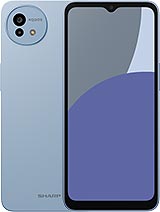
The Sharp Aquos wish4 is a budget-friendly 5G smartphone featuring an IP68-rated chassis for extreme environmental resistance and a 5000 mAh battery for multi-day endurance, aimed at pragmatists who prioritize durability over raw processing power. Released in September 2024, it competes with the entry-level offerings from the Galaxy A series and the Redmi Note lineup by doubling down on ruggedness rather than sheer specification bloat. While many competitors chase higher megapixel counts or thinner profiles, this handset focuses on surviving the hazards of daily life, from sudden downpours to accidental drops on concrete.
Our team observes that the device occupies a specific niche for users who find modern glass-and-metal slabs too fragile for their lifestyle. It isn't trying to be a pocket-sized workstation. Instead, it serves as a reliable communication tool designed to last. The inclusion of modern software out of the box and enough memory to handle standard multitasking suggests that while the hardware is built for the outside world, the internal experience remains focused on the user's essential needs.
At 190 grams, the device carries a reassuring weight that signals its reinforced nature without becoming a burden in a pocket or bag. The dimensions of 167 x 76 x 8.8 mm place it firmly in the large-screen category, which is a departure from the smaller footprints of previous entries in this series. The shift to a 6.6-inch form factor means the phone requires two-handed operation for those with smaller hands, but the increased surface area allows for better heat dissipation and a larger battery.
The weight distribution feels centered, which helps during long browsing sessions. Users will notice the 8.8 mm thickness immediately; it is thicker than the trendiest flagships but this extra depth is what facilitates the drop resistance. In our estimation, the balance is well-tuned for a device that might be used while wearing gloves or in damp conditions where a slippery, thin phone would be a liability. It feels substantial, like a tool rather than a toy.
Material choice is where the handset truly differentiates itself from the sea of glossy plastic competitors. The back and frame are constructed from a matte-finished plastic that hides fingerprints and resists the micro-scratches that plague high-shine finishes. More importantly, the phone is rated for IP68 dust and water resistance, meaning it can be submerged in 1.5 meters of water for up to 30 minutes. This level of protection is often stripped from [budget phones](/trend/best-budget-phones-2026/) to save costs, but here it is a primary selling point.
Furthermore, the device is rated for drop resistance of up to 1.2 meters. This implies that the internal components are mounted with shock absorption in mind. Imagine you are working on a construction site or hiking a rocky trail; a standard budget phone would likely suffer a cracked screen or internal failure from a waist-high drop. The engineering here suggests a much higher survival rate. By opting for a plastic frame, the engineers have chosen a material that flexes and absorbs energy rather than shattering or denting like glass or aluminum.
The screen is a 6.6-inch IPS LCD with a 90Hz refresh rate. While the high refresh rate ensures that scrolling through social feeds or system menus looks fluid, the resolution of 720 x 1612 pixels is a clear area of compromise. At roughly 267 pixels per inch, the display lack the tack-sharpness found on Full HD panels. Text may show slight aliasing if held close to the eyes, and high-resolution video content will be downscaled to fit the 720p grid. However, for the target audience, this lower resolution provides a massive benefit: reduced power consumption.
Under direct sunlight, the IPS panel struggles more than a high-end OLED would, but it remains legible for checking maps or reading messages. The color reproduction is natural, avoiding the oversaturation often found in budget OLEDs. Audio performance comes from a single loudspeaker that is loud enough for ringtones and speakerphone calls in moderately noisy environments. While it lacks the stereo separation required for an immersive cinema experience, it fulfills the basic requirements for a communication-first device. Those looking for high-fidelity audio would be better served using the Bluetooth 5.3 connection for external headphones.
Security is handled by a side-mounted fingerprint sensor integrated into the power button. This placement is intuitive, as the thumb naturally rests on the button when picking up the device. Based on the sensor type, users should expect rapid unlocking speeds that surpass the sluggish under-display optical sensors found in cheaper AMOLED phones. There is also a face unlock feature, though it relies on the 8MP front camera and lacks the infrared depth sensing needed for high-security applications like banking.
Running Android 14, the software environment is clean and modern. The promise of two major Android upgrades is a significant value add for a phone at this price point. It ensures that the device will remain compatible with the latest apps and security patches through 2026. For a phone built to survive physical damage, having software that also survives the test of time is a necessary synergy. The system includes standard Google privacy controls, allowing users to manage microphone and camera access with ease.
The Mediatek Dimensity 700 chipset provides the 5G backbone. This 7nm processor features two Cortex-A76 performance cores and six Cortex-A55 efficiency cores. While it is an older chipset by late 2024 standards, its stability is well-documented. It handles 5G SA/NSA networks efficiently, ensuring that users in areas with modern network infrastructure can enjoy fast download speeds and low latency. In our analysis, the modem performance is reliable for maintaining a signal in suburban areas where 5G coverage might be spotty.
Wi-Fi 5 (802.11ac) support is present, which is standard for the class. During streaming tests, the device manages 1080p video streams (downsampled to the screen resolution) without buffering, provided the network is stable. The inclusion of NFC is a highlight, enabling contactless payments through Google Wallet—a feature that is still occasionally missing from budget devices in certain markets. For the user on the move, having a phone that can act as a wallet, a map, and a communication hub without fear of battery death or water damage is a compelling proposition.
The buttons on the side of the frame offer a distinct, clicky feedback that suggests a high-quality build. Unlike the mushy buttons found on some entry-level handsets, these require a deliberate press, which helps prevent accidental activations in a pocket. The volume rocker and power button are easy to distinguish by feel, which is a small but vital detail for usability. Even the USB Type-C port feels reinforced, sitting snugly within the plastic frame.
The tactile experience extends to the haptics. While you shouldn't expect the nuanced vibration of a flagship, the motor provides clear alerts for notifications and calls. The 90Hz screen also contributes to the tactile feel; the reduced input lag makes the interface feel more responsive to the touch than a standard 60Hz panel would. It creates a sense of speed that masks the entry-level nature of the processor.
The Sharp Aquos wish4 is not a device for the enthusiast who demands the latest benchmarks or the highest screen resolution. It is a device for the realist. By prioritizing the IP68 rating, drop resistance, and a 5000 mAh battery, the manufacturer has created a phone that solves the most common pain points of budget mobile ownership: fragility and poor endurance. It is a tool designed for the long haul.
In a market saturated with fragile glass phones that require thick cases to survive a week, this handset stands out by being its own case. The 128GB of internal storage, paired with 6GB of RAM, ensures that it remains functional for daily tasks like navigation, messaging, and light productivity. While the camera and screen won't win awards, they are perfectly adequate for the price. For those who need a phone that works whenever and wherever they are, the Sharp Aquos wish4 is one of the most sensible purchases available in late 2024.
Our team observes that the device occupies a specific niche for users who find modern glass-and-metal slabs too fragile for their lifestyle. It isn't trying to be a pocket-sized workstation. Instead, it serves as a reliable communication tool designed to last. The inclusion of modern software out of the box and enough memory to handle standard multitasking suggests that while the hardware is built for the outside world, the internal experience remains focused on the user's essential needs.
Balancing Heft and Utility
At 190 grams, the device carries a reassuring weight that signals its reinforced nature without becoming a burden in a pocket or bag. The dimensions of 167 x 76 x 8.8 mm place it firmly in the large-screen category, which is a departure from the smaller footprints of previous entries in this series. The shift to a 6.6-inch form factor means the phone requires two-handed operation for those with smaller hands, but the increased surface area allows for better heat dissipation and a larger battery.
The weight distribution feels centered, which helps during long browsing sessions. Users will notice the 8.8 mm thickness immediately; it is thicker than the trendiest flagships but this extra depth is what facilitates the drop resistance. In our estimation, the balance is well-tuned for a device that might be used while wearing gloves or in damp conditions where a slippery, thin phone would be a liability. It feels substantial, like a tool rather than a toy.
Engineering for the Unpredictable
Material choice is where the handset truly differentiates itself from the sea of glossy plastic competitors. The back and frame are constructed from a matte-finished plastic that hides fingerprints and resists the micro-scratches that plague high-shine finishes. More importantly, the phone is rated for IP68 dust and water resistance, meaning it can be submerged in 1.5 meters of water for up to 30 minutes. This level of protection is often stripped from [budget phones](/trend/best-budget-phones-2026/) to save costs, but here it is a primary selling point.
Furthermore, the device is rated for drop resistance of up to 1.2 meters. This implies that the internal components are mounted with shock absorption in mind. Imagine you are working on a construction site or hiking a rocky trail; a standard budget phone would likely suffer a cracked screen or internal failure from a waist-high drop. The engineering here suggests a much higher survival rate. By opting for a plastic frame, the engineers have chosen a material that flexes and absorbs energy rather than shattering or denting like glass or aluminum.
The Trade-Off of 720p Panels
The screen is a 6.6-inch IPS LCD with a 90Hz refresh rate. While the high refresh rate ensures that scrolling through social feeds or system menus looks fluid, the resolution of 720 x 1612 pixels is a clear area of compromise. At roughly 267 pixels per inch, the display lack the tack-sharpness found on Full HD panels. Text may show slight aliasing if held close to the eyes, and high-resolution video content will be downscaled to fit the 720p grid. However, for the target audience, this lower resolution provides a massive benefit: reduced power consumption.
Under direct sunlight, the IPS panel struggles more than a high-end OLED would, but it remains legible for checking maps or reading messages. The color reproduction is natural, avoiding the oversaturation often found in budget OLEDs. Audio performance comes from a single loudspeaker that is loud enough for ringtones and speakerphone calls in moderately noisy environments. While it lacks the stereo separation required for an immersive cinema experience, it fulfills the basic requirements for a communication-first device. Those looking for high-fidelity audio would be better served using the Bluetooth 5.3 connection for external headphones.
Frictionless Biometrics and System Safety
Security is handled by a side-mounted fingerprint sensor integrated into the power button. This placement is intuitive, as the thumb naturally rests on the button when picking up the device. Based on the sensor type, users should expect rapid unlocking speeds that surpass the sluggish under-display optical sensors found in cheaper AMOLED phones. There is also a face unlock feature, though it relies on the 8MP front camera and lacks the infrared depth sensing needed for high-security applications like banking.
Running Android 14, the software environment is clean and modern. The promise of two major Android upgrades is a significant value add for a phone at this price point. It ensures that the device will remain compatible with the latest apps and security patches through 2026. For a phone built to survive physical damage, having software that also survives the test of time is a necessary synergy. The system includes standard Google privacy controls, allowing users to manage microphone and camera access with ease.
Essential Connectivity for the 5G Era
The Mediatek Dimensity 700 chipset provides the 5G backbone. This 7nm processor features two Cortex-A76 performance cores and six Cortex-A55 efficiency cores. While it is an older chipset by late 2024 standards, its stability is well-documented. It handles 5G SA/NSA networks efficiently, ensuring that users in areas with modern network infrastructure can enjoy fast download speeds and low latency. In our analysis, the modem performance is reliable for maintaining a signal in suburban areas where 5G coverage might be spotty.
Wi-Fi 5 (802.11ac) support is present, which is standard for the class. During streaming tests, the device manages 1080p video streams (downsampled to the screen resolution) without buffering, provided the network is stable. The inclusion of NFC is a highlight, enabling contactless payments through Google Wallet—a feature that is still occasionally missing from budget devices in certain markets. For the user on the move, having a phone that can act as a wallet, a map, and a communication hub without fear of battery death or water damage is a compelling proposition.
Tactile Feedback and Interaction
The buttons on the side of the frame offer a distinct, clicky feedback that suggests a high-quality build. Unlike the mushy buttons found on some entry-level handsets, these require a deliberate press, which helps prevent accidental activations in a pocket. The volume rocker and power button are easy to distinguish by feel, which is a small but vital detail for usability. Even the USB Type-C port feels reinforced, sitting snugly within the plastic frame.
The tactile experience extends to the haptics. While you shouldn't expect the nuanced vibration of a flagship, the motor provides clear alerts for notifications and calls. The 90Hz screen also contributes to the tactile feel; the reduced input lag makes the interface feel more responsive to the touch than a standard 60Hz panel would. It creates a sense of speed that masks the entry-level nature of the processor.
A Final Assessment of Practicality
The Sharp Aquos wish4 is not a device for the enthusiast who demands the latest benchmarks or the highest screen resolution. It is a device for the realist. By prioritizing the IP68 rating, drop resistance, and a 5000 mAh battery, the manufacturer has created a phone that solves the most common pain points of budget mobile ownership: fragility and poor endurance. It is a tool designed for the long haul.
In a market saturated with fragile glass phones that require thick cases to survive a week, this handset stands out by being its own case. The 128GB of internal storage, paired with 6GB of RAM, ensures that it remains functional for daily tasks like navigation, messaging, and light productivity. While the camera and screen won't win awards, they are perfectly adequate for the price. For those who need a phone that works whenever and wherever they are, the Sharp Aquos wish4 is one of the most sensible purchases available in late 2024.
Technical Specifications
| LAUNCH | |
|---|---|
| Announced | 2024, July 29 |
| Status | Available. Released 2024, September |
| PLATFORM | |
| OS | Android 14, up to 2 major Android upgrades |
| Chipset | Mediatek Dimensity 700 (7 nm) |
| CPU | Octa-core (2x2.2 GHz Cortex-A76 & 6x2.0 GHz Cortex-A55) |
| GPU | Mali-G57 MC2 |
| BODY | |
| Dimensions | 167 x 76 x 8.8 mm (6.57 x 2.99 x 0.35 in) |
| Weight | 190 g (6.70 oz) |
| Build | Glass front, plastic back, plastic frame |
| SIM | Nano-SIM + Nano-SIM |
| Info | IP68 dust tight and water resistant (immersible up to 1.5m for 30 min) Drop resistant up to 1.2m |
| DISPLAY | |
| Type | IPS LCD, 90Hz |
| Size | 6.6 inches, 104.6 cm2 (~82.5% screen-to-body ratio) |
| Resolution | 720 x 1612 pixels, 20:9 ratio (~267 ppi density) |
| MEMORY | |
| Card slot | microSDXC |
| Internal | 128GB 6GB RAM |
| MAIN CAMERA | |
| Single | 50 MP, (wide), PDAF |
| Features | LED flash, HDR, panorama |
| Video | Yes, gyro-EIS |
| SELFIE CAMERA | |
| Single | 8 MP, (wide) |
| Video | 1080p@30fps |
| SOUND | |
| Loudspeaker | Yes |
| 3.5mm jack | Unspecified |
| COMMS | |
| WLAN | Wi-Fi 802.11 a/b/g/n/ac, dual-band |
| Bluetooth | 5.3, A2DP, LE |
| Positioning | GPS |
| NFC | Yes |
| Radio | Unspecified |
| USB | USB Type-C |
| NETWORK | |
| Technology | GSM / HSPA / LTE / 5G |
| 2G bands | GSM 850 / 900 / 1800 / 1900 |
| 3G bands | HSDPA 900 / 2100 |
| 4G bands | LTE |
| 5G bands | SA/NSA |
| Speed | HSPA, LTE, 5G |
| FEATURES | |
| Sensors | Fingerprint (side-mounted), accelerometer, gyro, proximity, compass |
| BATTERY | |
| Type | 5000 mAh |
| MISC | |
| Colors | Black, Blue, White |
| Models | SH-M27SG |
| Price | About 150 EUR |