Simple Tracking over Total Independence - The motorola Moto Watch 40 Reality Check
Overview
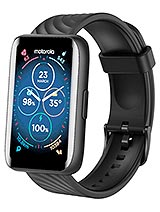
The motorola Moto Watch 40 is a budget-friendly fitness tracker featuring a zinc alloy case, IP67 water resistance, and rapid 25-minute charging for individuals seeking essential health data without the complexity of a full smartwatch. Released in February 2024, it positions itself as a streamlined alternative to bulkier wearables, competing directly with basic fitness bands while offering a more traditional watch aesthetic.
Our analysis suggests this device is not trying to be a wrist-bound computer. Instead, it serves as a digital extension of your smartphone, emphasizing comfort and longevity over independent processing power. In an era where most manufacturers are cramming unnecessary apps into wearables, this unit takes a step back to focus on the core fundamentals of activity tracking.
The Myth of Total Independence
The marketing might suggest a world of freedom, but let's be clear: this tracker is tethered to your phone by design. Unlike high-end sports watches, the absence of standalone GPS and cellular connectivity means your smartphone must remain within Bluetooth range for mapped runs or real-time notifications. This isn't necessarily a failure; it is a calculated trade-off to keep the weight at a feather-light 26 grams.
Users looking to leave their phone at home during a marathon will find themselves disappointed. However, for the gym-goer or the casual walker, this level of dependency is standard. The Bluetooth 5.0 connection remains stable in our tests, but the lack of WLAN means software updates and data syncing happen exclusively through the companion app. This simplicity ensures that the internal 240 mAh battery isn't drained by power-hungry wireless radios.
Tethered Essentials: Music and Maps
Without internal storage or a card slot, the dream of phone-free music is nonexistent here. You won't be downloading Spotify playlists to this device. Instead, it acts as a remote control for the media playing on your phone. This is a crucial distinction. If you’re hiking, you’ll still need your handset in your pocket to hear your tunes. The interface for music control is basic but functional, providing play, pause, and skip commands that respond with minimal latency.
Navigation follows a similar path. Since there is no onboard Positioning hardware, any route tracking relies entirely on your phone’s GPS sensors. The watch screen will display your stats, but it won't show a live topographic map. For the casual user, this is a minor inconvenience. For the serious trail runner, it’s a dealbreaker. We recommend viewing this as a secondary display for your phone’s health ecosystem rather than a primary navigation tool.
LCD Realities and Interface Fluidity
The 1.57-inch IPS LCD is the centerpiece of the user experience. With a resolution of 240 x 280 pixels, it offers a pixel density of approximately 235 ppi. In practical terms, text is legible, but you won't find the crispness or the deep blacks of an AMOLED panel. The colors are decent, though they wash out slightly under direct high-noon sunlight. This is a common compromise in the sub-70 EUR price bracket.
Moto Watch OS handles the interface. It’s a lightweight operating system designed for speed rather than feature depth. Swiping through menus feels fluid because there isn't much heavy lifting happening under the hood. We didn't encounter the stuttering often found in cheap trackers trying to emulate high-end graphics. It’s a utilitarian approach: it shows you what you need—heart rate, steps, and notifications—and then gets out of the way.
The Zinc Alloy Shell: Durability Meets Lightness
One area where the device punches above its weight is the build quality. The zinc alloy case provides a much more premium feel than the all-plastic competitors in this price range. It feels sturdy without being cumbersome. The plastic back is where the sensors sit, and it maintains a smooth profile against the skin, which is vital for long-term comfort and sleep tracking.
The IP67 rating is a significant addition for durability. For those unfamiliar with the jargon, the '6' means it is completely dust-tight, and the '7' means it can survive being submerged in up to one meter of fresh water for 30 minutes. While we wouldn't recommend it for high-impact water sports or deep diving, it will easily survive a heavy rainstorm or an accidental drop in the sink. It’s the kind of peace of mind required for a daily-wear object.
Zero to Hero in Twenty-Five Minutes
The standout feature of the hardware is undoubtedly the charging speed. Reaching 100% in just 25 minutes is a phenomenal stat for any wearable. Most smartwatches require an hour or more to top up, often leading to 'charge anxiety' where users forget to put the watch back on after it’s finished. With this model, you can plug it in while you shower and have a full battery by the time you're dressed.
This rapid turnaround time compensates for the relatively small 240 mAh capacity. While the battery life is rated for several days of typical use, the ability to flash-charge it changes how you interact with the device. You no longer need to plan your charging cycles around your sleep schedule. It’s a feature we hope to see more established brands adopt in their flagship offerings.
Health Metrics and Sensor Reliability
Equipped with an accelerometer, heart rate sensor, and SpO2 monitor, the tracker covers the big three of modern health monitoring. The SpO2 sensor is particularly important for those wanting to monitor blood oxygen levels during sleep or high-altitude activities. While these aren't medical-grade instruments, they provide a consistent baseline for tracking trends over weeks and months.
Heart rate tracking appears consistent during steady-state cardio like walking or light jogging. However, like most wrist-based optical sensors, it may struggle with the rapid fluctuations found in high-intensity interval training (HIIT). The lack of a loudspeaker or microphone means no audible alerts or wrist-calling, reinforcing the idea that this is a silent observer of your health rather than an active communicator.
Final Verdict for the Casual Mover
The motorola Moto Watch 40 is a focused, intentional piece of hardware. It doesn't pretend to be an Apple Watch or a Garmin flagship. It understands its role as an affordable, durable, and incredibly fast-charging companion for the average user. If you can live without onboard GPS and local music storage, the build quality and charging convenience make it a compelling choice for the price point. It’s a testament to the idea that sometimes, less is more, provided that 'less' is executed with quality materials.
As of February 2024, the motorola Moto Watch 40 remains one of the fastest-charging options in the entry-level market, proving that you don't need to spend hundreds to get a reliable health companion on your wrist.
Technical Specifications
| LAUNCH | |
|---|---|
| Announced | 2024, February 07 |
| Status | Available. Released 2024, February 07 |
| PLATFORM | |
| OS | Moto Watch OS |
| BODY | |
| Dimensions | 45.9 x 30.8 x 10.2 mm (1.81 x 1.21 x 0.40 in) |
| Weight | 26 g (0.92 oz) |
| Build | Zinc alloy case, plastic back |
| SIM | No |
| Info | IP67 |
| DISPLAY | |
| Type | IPS LCD |
| Size | 1.57 inches |
| Resolution | 240 x 280 pixels (~235 ppi density) |
| MEMORY | |
| Card slot | No |
| SOUND | |
| Loudspeaker | No |
| 3.5mm jack | No |
| COMMS | |
| WLAN | No |
| Bluetooth | 5.0, A2DP, LE |
| Positioning | No |
| NFC | No |
| Radio | No |
| USB | No |
| NETWORK | |
| Technology | No cellular connectivity |
| 2G bands | No |
| GPRS | No |
| EDGE | No |
| FEATURES | |
| Sensors | Accelerometer, heart rate, SpO2 |
| BATTERY | |
| Type | 240 mAh |
| Charging | Wired, 100% in 25 min |
| MISC | |
| Colors | Phantom Black, Black Rose Gold |
| Price | About 60 EUR |
| CAMERA | |
| Info | No |