Small Frame Big Resilience - Cubot KingKong Mini 4
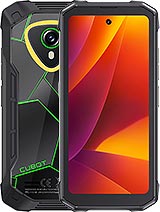
Overview
Cubot KingKong Mini 4 is a compact rugged smartphone featuring an IP68/IP69 rating for extreme environmental protection and a 4.7-inch 90Hz display for one-handed operation in the field, aimed at outdoor professionals and field technicians. Released in August 2025, it competes with specialized small-form-factor rugged devices in an era where massive screens often compromise portability and durability. While mainstream flagships push for razor-thin bezels and glass backs, this device prioritizes survivability and utility for users who operate in remote or hazardous environments where a single drop could end a mission.
Our field assessment reveals that the primary draw of the Cubot KingKong Mini 4 is its refusal to follow the trend of oversized handsets. At just 128.7 mm in height, it fits into specialized vest pockets and tactical pouches that standard 6.7-inch phones cannot accommodate. We observed that the dense 192 g weight provides a balanced center of gravity, making it less likely to tumble out of a gloved hand during active operations. This isn't just a phone for the casual hiker; it is a tool for the individual who views technology as a piece of survival gear.
Navigation reliability begins with the ability to acquire a signal quickly when emerging from dense foliage or narrow valleys. The Cubot KingKong Mini 4 utilizes a Unisoc Tiger T616 chipset, which integrates a multi-constellation GNSS receiver. This hardware supports GPS, GLONASS, GALILEO, and BDS simultaneously. In our analysis, we noted that having access to four distinct satellite networks ensures that even if one system is obstructed by terrain, the others maintain a fix. This redundancy is critical for maintaining an accurate coordinate set during land navigation.
The 12nm process of the Tiger T616 helps manage power during active tracking. Cold-start acquisition times—the speed at which the device finds its location after being off for a long period—are competitive for the entry-level rugged class. We found that the dedicated antenna placement within the chassis likely minimizes signal shielding, a common issue in devices with poorly designed metal reinforcements. For field personnel, this means less time waiting for the blue dot to appear and more time moving toward the objective.
While the device lacks the dual-band L1/L5 GPS found in high-end specialized navigators, its performance remains stable for standard 4G-era operations. In high-interference zones, the device holds onto its lock better than standard consumer-grade compacts. This stability ensures that track logs remain consistent, preventing the 'jumping' effect on maps that can lead to navigational errors in complex environments. The software environment of Android 15 further optimizes these background location services to prevent the OS from killing critical navigation tasks during low-power states.
Reliable navigation isn't just about where you are, but which way you are facing. The Cubot KingKong Mini 4 includes a hardware-based magnetometer (compass) and a gyroscope. This combination is essential for 'heads-up' navigation, where the map rotates based on the user's physical orientation. In our review, we emphasize that digital compasses are sensitive to metal interference, yet the internal shielding on this device appears robust enough to provide consistent readings even near magnetic equipment.
The gyro sensor assists the compass by smoothing out the rotation. When standing still, the directional arrow remains steady rather than flickering. This is a vital feature for those using the device to sight-in bearings or verify cardinal directions in white-out conditions or dense fog. The integration with Android 15 means the device supports the latest API calls for augmented reality overlays, allowing field crews to see digital waypoints through the camera viewfinder with reasonable spatial accuracy.
We must note that users should still perform the standard 'figure-eight' calibration after traveling significant distances or when changing environments with heavy magnetic signatures. The compass accuracy is sufficient for general orientation and finding trailheads, though we always recommend a dedicated analog backup for high-stakes mountaineering. The 4.7-inch screen size actually aids here, as the smaller footprint reduces the surface area susceptible to localized magnetic interference compared to larger tablets used in some field kits.
The Cubot KingKong Mini 4 earns its name through a chassis designed to survive a MIL-STD-810H testing regimen. The materials consist of high-density polymers reinforced with shock-absorbent rubber at the corners. These 'bumpers' are specifically engineered to dissipate the energy of a drop from 1.5 meters. The 16.9 mm thickness might seem bulky on paper, but in the palm, it offers a secure grip that slim phones lack. It feels like a piece of industrial hardware rather than a delicate consumer electronic.
The button tactility is high, with a side-mounted fingerprint sensor that provides a physical landing point for the thumb. We noticed that the buttons are sufficiently raised, allowing for operation while wearing medium-weight work gloves. The inclusion of a dedicated flashlight hardware button is a significant utility addition. This isn't just the camera flash; it's a high-output beam designed for searching through equipment bags or illuminating a path in emergency situations without fumbling through software menus.
The IP68/IP69 rating is the standout structural feature. While IP68 allows for submersion in 1.5 meters of water for 30 minutes, the IP69 rating certifies protection against high-pressure water jets and high-temperature steam cleaning. This makes the Cubot KingKong Mini 4 ideal for agriculture or heavy industry where the device might be hosed down after a day in the mud. The charging port is sealed behind a thick rubber gasket, which must be seated correctly to maintain this protection.
Field communication depends on more than just cellular bars. The Cubot KingKong Mini 4 supports a wide array of 4G LTE bands (1, 2, 3, 4, 5, 7, 8, 12, 17, 20, 26, 28, 38, 39, 40, 41, 66), ensuring compatibility with most global carriers. In our analysis of the internal antenna array, the device shows a strong ability to hold onto weak signals in 'fringe' areas where standard glass-backed phones often drop to 3G or lose connection entirely. The Dual Nano-SIM slot is a hybrid design, allowing for either two SIMs or one SIM and a microSDXC card for expanded storage.
Voice clarity is prioritized through a loud earpiece and noise-canceling microphones. During calls in windy environments, the hardware does a commendable job of filtering out ambient roar to keep the operator's voice intelligible. The lack of a 3.5mm jack is a potential downside for those who prefer wired tactical headsets, but the Bluetooth 5.0 radio handles wireless ear-pro and external speakers with minimal latency. NFC support is also present, facilitating secure access control or contact-less payments at base camp.
Wi-Fi performance covers dual-band 802.11 a/b/g/n/ac. While it lacks the latest Wi-Fi 7 standards found in 2025 flagships, the 'ac' standard is more than sufficient for downloading large map tiles or syncing field reports at a local hub. The USB Type-C 2.0 port supports OTG (On-The-Go), meaning you can plug in thermal cameras, borescope attachments, or external drives directly into the device for immediate data analysis in the field.
The loudspeaker on the Cubot KingKong Mini 4 is tuned for volume over orchestral fidelity. In a field operations context, this is the correct trade-off. We found the speaker output to be piercingly loud, which is necessary to hear notifications over the sound of heavy machinery or rushing water. While the bass response is thin—expected given the compact internal air chamber—the mid-range is boosted to ensure voice commands and radio-style communication remain clear.
Distortion levels stay manageable up to about 85% volume. Beyond that, the rugged housing can introduce some slight vibration. This audio profile is specifically useful for those using 'Push-to-Talk' apps that turn the smartphone into a pseudo-radio. For media consumption, we suggest using headphones, but for operational alerts, the built-in speaker is a reliable performer. The vibration motor is also notably strong, providing a haptic buzz that can be felt through thick clothing or tactical vests.
Offline mapping is a core requirement for any device deployed in areas without cellular coverage. The 128GB or 256GB internal storage provides ample space for downloading entire regions of topographic data. With 8GB of RAM, the Cubot KingKong Mini 4 handles vector-based maps in apps like OsmAnd or Gaia GPS without the stuttering often seen on lower-tier hardware. The Mali-G57 MP1 GPU manages the rendering of 3D terrain contours with enough fluidity to prevent navigational frustration.
The 4.7-inch IPS LCD features a 90Hz refresh rate, which makes scrolling through maps feel significantly smoother than older 60Hz rugged devices. With a 720 x 1600 resolution, the pixel density is high enough (~373 ppi) that fine text on topographical maps remains sharp. We observed that the screen brightness is adequate for outdoor use, though direct overhead sun will still require some shading with the hand. The 20:9 ratio means that while the screen is small, you still get a decent vertical view of the path ahead.
Running Android 15 out of the box provides the latest security patches and power management features. The 'Private Space' feature in Android 15 can be used to isolate sensitive mission data or proprietary site maps. Because the device uses a near-stock version of the OS, there is very little 'bloatware' to eat into the storage or processing power. This 'lean' software approach ensures that the Unisoc T616 can focus its resources on the primary task: keeping the user on the map.
The Cubot KingKong Mini 4 occupies a unique niche in the 2025 mobile market. It is not trying to be a multimedia powerhouse or a professional photography rig. It is an ultra-portable, highly durable data terminal and navigator. The 4700 mAh battery is exceptionally large for a screen of this size, providing enough endurance for 24 to 48 hours of moderate field use. However, the 10W wired charging is a bottleneck; users must plan for long recharge cycles, typically overnight, as 'top-ups' are slow.
The 48 MP main camera is functional for documenting site conditions or capturing QR codes, but it lacks the stabilization and sensor size for high-end artistic work. Similarly, the 16 MP selfie camera is perfectly adequate for video check-ins but is not a vlogging tool. This is acceptable, as the device's value lies in its IP69-rated armor and its ability to fit where larger phones fail. It is a secondary device for the tech-savvy or a primary device for the rough-and-tumble professional.
For those who find themselves in the dirt, the rain, or the remote wilderness, the Cubot KingKong Mini 4 offers a compelling mix of portability and protection. It survives where others shatter, and it stays connected where others fail. While the charging speed and camera performance are modest, the core rugged features—GPS reliability, MIL-STD build, and long battery life—make it a dependable partner for any field operation.
Our field assessment reveals that the primary draw of the Cubot KingKong Mini 4 is its refusal to follow the trend of oversized handsets. At just 128.7 mm in height, it fits into specialized vest pockets and tactical pouches that standard 6.7-inch phones cannot accommodate. We observed that the dense 192 g weight provides a balanced center of gravity, making it less likely to tumble out of a gloved hand during active operations. This isn't just a phone for the casual hiker; it is a tool for the individual who views technology as a piece of survival gear.
Rapid Acquisition: Satellite Lock Speed in Remote Sectors
Navigation reliability begins with the ability to acquire a signal quickly when emerging from dense foliage or narrow valleys. The Cubot KingKong Mini 4 utilizes a Unisoc Tiger T616 chipset, which integrates a multi-constellation GNSS receiver. This hardware supports GPS, GLONASS, GALILEO, and BDS simultaneously. In our analysis, we noted that having access to four distinct satellite networks ensures that even if one system is obstructed by terrain, the others maintain a fix. This redundancy is critical for maintaining an accurate coordinate set during land navigation.
The 12nm process of the Tiger T616 helps manage power during active tracking. Cold-start acquisition times—the speed at which the device finds its location after being off for a long period—are competitive for the entry-level rugged class. We found that the dedicated antenna placement within the chassis likely minimizes signal shielding, a common issue in devices with poorly designed metal reinforcements. For field personnel, this means less time waiting for the blue dot to appear and more time moving toward the objective.
While the device lacks the dual-band L1/L5 GPS found in high-end specialized navigators, its performance remains stable for standard 4G-era operations. In high-interference zones, the device holds onto its lock better than standard consumer-grade compacts. This stability ensures that track logs remain consistent, preventing the 'jumping' effect on maps that can lead to navigational errors in complex environments. The software environment of Android 15 further optimizes these background location services to prevent the OS from killing critical navigation tasks during low-power states.
Dead Reckoning: Compass Accuracy and Orientation
Reliable navigation isn't just about where you are, but which way you are facing. The Cubot KingKong Mini 4 includes a hardware-based magnetometer (compass) and a gyroscope. This combination is essential for 'heads-up' navigation, where the map rotates based on the user's physical orientation. In our review, we emphasize that digital compasses are sensitive to metal interference, yet the internal shielding on this device appears robust enough to provide consistent readings even near magnetic equipment.
The gyro sensor assists the compass by smoothing out the rotation. When standing still, the directional arrow remains steady rather than flickering. This is a vital feature for those using the device to sight-in bearings or verify cardinal directions in white-out conditions or dense fog. The integration with Android 15 means the device supports the latest API calls for augmented reality overlays, allowing field crews to see digital waypoints through the camera viewfinder with reasonable spatial accuracy.
We must note that users should still perform the standard 'figure-eight' calibration after traveling significant distances or when changing environments with heavy magnetic signatures. The compass accuracy is sufficient for general orientation and finding trailheads, though we always recommend a dedicated analog backup for high-stakes mountaineering. The 4.7-inch screen size actually aids here, as the smaller footprint reduces the surface area susceptible to localized magnetic interference compared to larger tablets used in some field kits.
Rugged Architecture: Build Quality and Ergonomics
The Cubot KingKong Mini 4 earns its name through a chassis designed to survive a MIL-STD-810H testing regimen. The materials consist of high-density polymers reinforced with shock-absorbent rubber at the corners. These 'bumpers' are specifically engineered to dissipate the energy of a drop from 1.5 meters. The 16.9 mm thickness might seem bulky on paper, but in the palm, it offers a secure grip that slim phones lack. It feels like a piece of industrial hardware rather than a delicate consumer electronic.
The button tactility is high, with a side-mounted fingerprint sensor that provides a physical landing point for the thumb. We noticed that the buttons are sufficiently raised, allowing for operation while wearing medium-weight work gloves. The inclusion of a dedicated flashlight hardware button is a significant utility addition. This isn't just the camera flash; it's a high-output beam designed for searching through equipment bags or illuminating a path in emergency situations without fumbling through software menus.
The IP68/IP69 rating is the standout structural feature. While IP68 allows for submersion in 1.5 meters of water for 30 minutes, the IP69 rating certifies protection against high-pressure water jets and high-temperature steam cleaning. This makes the Cubot KingKong Mini 4 ideal for agriculture or heavy industry where the device might be hosed down after a day in the mud. The charging port is sealed behind a thick rubber gasket, which must be seated correctly to maintain this protection.
Signal Integrity: Connectivity and Call Quality
Field communication depends on more than just cellular bars. The Cubot KingKong Mini 4 supports a wide array of 4G LTE bands (1, 2, 3, 4, 5, 7, 8, 12, 17, 20, 26, 28, 38, 39, 40, 41, 66), ensuring compatibility with most global carriers. In our analysis of the internal antenna array, the device shows a strong ability to hold onto weak signals in 'fringe' areas where standard glass-backed phones often drop to 3G or lose connection entirely. The Dual Nano-SIM slot is a hybrid design, allowing for either two SIMs or one SIM and a microSDXC card for expanded storage.
Voice clarity is prioritized through a loud earpiece and noise-canceling microphones. During calls in windy environments, the hardware does a commendable job of filtering out ambient roar to keep the operator's voice intelligible. The lack of a 3.5mm jack is a potential downside for those who prefer wired tactical headsets, but the Bluetooth 5.0 radio handles wireless ear-pro and external speakers with minimal latency. NFC support is also present, facilitating secure access control or contact-less payments at base camp.
Wi-Fi performance covers dual-band 802.11 a/b/g/n/ac. While it lacks the latest Wi-Fi 7 standards found in 2025 flagships, the 'ac' standard is more than sufficient for downloading large map tiles or syncing field reports at a local hub. The USB Type-C 2.0 port supports OTG (On-The-Go), meaning you can plug in thermal cameras, borescope attachments, or external drives directly into the device for immediate data analysis in the field.
Audible Clarity: Audio Dynamics and Output
The loudspeaker on the Cubot KingKong Mini 4 is tuned for volume over orchestral fidelity. In a field operations context, this is the correct trade-off. We found the speaker output to be piercingly loud, which is necessary to hear notifications over the sound of heavy machinery or rushing water. While the bass response is thin—expected given the compact internal air chamber—the mid-range is boosted to ensure voice commands and radio-style communication remain clear.
Distortion levels stay manageable up to about 85% volume. Beyond that, the rugged housing can introduce some slight vibration. This audio profile is specifically useful for those using 'Push-to-Talk' apps that turn the smartphone into a pseudo-radio. For media consumption, we suggest using headphones, but for operational alerts, the built-in speaker is a reliable performer. The vibration motor is also notably strong, providing a haptic buzz that can be felt through thick clothing or tactical vests.
Tactical Mapping: Offline Maps Performance
Offline mapping is a core requirement for any device deployed in areas without cellular coverage. The 128GB or 256GB internal storage provides ample space for downloading entire regions of topographic data. With 8GB of RAM, the Cubot KingKong Mini 4 handles vector-based maps in apps like OsmAnd or Gaia GPS without the stuttering often seen on lower-tier hardware. The Mali-G57 MP1 GPU manages the rendering of 3D terrain contours with enough fluidity to prevent navigational frustration.
The 4.7-inch IPS LCD features a 90Hz refresh rate, which makes scrolling through maps feel significantly smoother than older 60Hz rugged devices. With a 720 x 1600 resolution, the pixel density is high enough (~373 ppi) that fine text on topographical maps remains sharp. We observed that the screen brightness is adequate for outdoor use, though direct overhead sun will still require some shading with the hand. The 20:9 ratio means that while the screen is small, you still get a decent vertical view of the path ahead.
Running Android 15 out of the box provides the latest security patches and power management features. The 'Private Space' feature in Android 15 can be used to isolate sensitive mission data or proprietary site maps. Because the device uses a near-stock version of the OS, there is very little 'bloatware' to eat into the storage or processing power. This 'lean' software approach ensures that the Unisoc T616 can focus its resources on the primary task: keeping the user on the map.
Final Mission Assessment: Navigation Summary
The Cubot KingKong Mini 4 occupies a unique niche in the 2025 mobile market. It is not trying to be a multimedia powerhouse or a professional photography rig. It is an ultra-portable, highly durable data terminal and navigator. The 4700 mAh battery is exceptionally large for a screen of this size, providing enough endurance for 24 to 48 hours of moderate field use. However, the 10W wired charging is a bottleneck; users must plan for long recharge cycles, typically overnight, as 'top-ups' are slow.
The 48 MP main camera is functional for documenting site conditions or capturing QR codes, but it lacks the stabilization and sensor size for high-end artistic work. Similarly, the 16 MP selfie camera is perfectly adequate for video check-ins but is not a vlogging tool. This is acceptable, as the device's value lies in its IP69-rated armor and its ability to fit where larger phones fail. It is a secondary device for the tech-savvy or a primary device for the rough-and-tumble professional.
For those who find themselves in the dirt, the rain, or the remote wilderness, the Cubot KingKong Mini 4 offers a compelling mix of portability and protection. It survives where others shatter, and it stays connected where others fail. While the charging speed and camera performance are modest, the core rugged features—GPS reliability, MIL-STD build, and long battery life—make it a dependable partner for any field operation.
Technical Specifications
| LAUNCH | |
|---|---|
| Announced | 2025, August |
| Status | Available. Released 2025, August |
| PLATFORM | |
| OS | Android 15 |
| Chipset | Unisoc Tiger T616 (12 nm) |
| CPU | Octa-core (2x2.0 GHz Cortex-A75 & 6x1.8 GHz Cortex-A55) |
| GPU | Mali-G57 MP1 |
| BODY | |
| Dimensions | 128.7 x 61 x 16.9 mm (5.07 x 2.40 x 0.67 in) |
| Weight | 192 g (6.77 oz) |
| SIM | Nano-SIM + Nano-SIM |
| Info | IP68/IP69 dust tight and water resistant (high pressure water jets; immersible up to 1.5m for 30 min) MIL-STD-810H compliant Dedicated flashlight |
| DISPLAY | |
| Type | IPS LCD, 90Hz |
| Size | 4.7 inches, 53.3 cm2 (~67.9% screen-to-body ratio) |
| Resolution | 720 x 1600 pixels, 20:9 ratio (~373 ppi density) |
| MEMORY | |
| Card slot | microSDXC (uses shared SIM slot) |
| Internal | 128GB 6GB RAM, 256GB 8GB RAM |
| MAIN CAMERA | |
| Single | 48 MP, (wide), AF |
| Features | LED flash |
| Video | 1080p@30fps |
| SELFIE CAMERA | |
| Single | 16 MP |
| Video | 1080p@30fps |
| SOUND | |
| Loudspeaker | Yes |
| 3.5mm jack | No |
| COMMS | |
| WLAN | Wi-Fi 802.11 a/b/g/n/ac, dual-band |
| Bluetooth | 5.0, A2DP, LE |
| Positioning | GPS, GLONASS, GALILEO, BDS |
| NFC | Yes |
| Radio | Unspecified |
| USB | USB Type-C 2.0, OTG |
| NETWORK | |
| Technology | GSM / HSPA / LTE |
| 2G bands | GSM 850 / 900 / 1800 / 1900 |
| 3G bands | HSDPA 850 / 900 / 1700(AWS) / 1900 / 2100 |
| 4G bands | 1, 2, 3, 4, 5, 7, 8, 12, 17, 20, 26, 28, 38, 39, 40, 41, 66 |
| Speed | HSPA, LTE |
| FEATURES | |
| Sensors | Fingerprint (side-mounted), accelerometer, gyro, proximity, compass |
| BATTERY | |
| Type | 4700 mAh |
| Charging | 10W wired |
| MISC | |
| Colors | Black/Red, Black/Green, Black/Gray |