Small Screen Big Potential - Why the Xiaomi Redmi Pad SE 8.7 Is the Ultimate Portable Hub
Overview
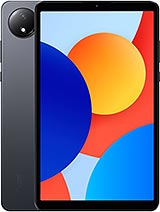
The Xiaomi Redmi Pad SE 8.7 is a budget-friendly compact tablet featuring an 8.7-inch 90Hz IPS LCD for portable media consumption and a Mediatek Helio G85 chipset for light productivity, aimed at students and mobile professionals. Released in August 2024, it enters a market hungry for small-form-factor devices that don't compromise on build quality or essential connectivity options.
Attempting to use a sub-9-inch device as a primary workstation is an exercise in extreme minimalism. The Xiaomi Redmi Pad SE 8.7 challenges the notion that productivity requires a 13-inch canvas. Measuring 211.6 x 125.5 mm, this device fits comfortably in one hand, making it a superior choice for field workers or commuters who find a standard laptop or even a 10-inch tablet too cumbersome. However, replacing a laptop is not just about physical dimensions; it is about the ability to interface with professional tools.
In our evaluation, the lack of a dedicated magnetic keyboard connector is a significant hurdle. To transform this into a workstation, users must rely on the Bluetooth 5.3 stack to connect peripherals. While the connection is stable, it adds a layer of setup friction that integrated solutions avoid. The 5:3 aspect ratio is a double-edged sword. It offers slightly more vertical space in landscape mode than a standard 16:9 screen, which is helpful for reading PDFs or editing spreadsheets. Yet, the 800 x 1340 resolution provides a pixel density of only 179 ppi. This means text can appear slightly soft if held close to the eyes, potentially causing fatigue during long typing sessions.
We must also consider the Mediatek Helio G85 at the heart of the experience. This 12nm octa-core processor, featuring two 2.0 GHz Cortex-A75 performance cores and six 1.8 GHz Cortex-A55 efficiency cores, is designed for efficiency rather than raw power. In a laptop-replacement scenario, this chipset handles a single Word document and a few Chrome tabs adequately. However, attempting to run complex macros in Excel or managing heavy video exports will quickly push the Mali-G52 MC2 GPU to its limits. It is a digital companion, not a desktop substitute.
HyperOS, Xiaomi's latest software layer based on Android 14, is surprisingly well-optimized for this compact hardware. The 90Hz refresh rate plays a crucial role here, making system animations and window transitions feel more responsive than the underlying processor might suggest. The multitasking suite includes split-screen and floating windows, allowing users to keep a calculator open over a textbook or a Slack channel next to a notepad.
Memory management is where the hardware constraints become visible. The base model comes with 4GB of RAM, which we find insufficient for heavy multitasking in 2024. The 6GB RAM variant is the only logical choice for anyone intending to switch between apps without constant reloads. Furthermore, the storage uses eMMC 5.1 technology. Unlike the UFS storage found in higher-end tablets, eMMC 5.1 provides slower data transfer speeds. This results in longer wait times for app installations and a slight delay when opening large files from the 128GB internal storage.
Comparing this to the competition available in August 2024, such as the [Samsung Galaxy Tab A9](/compact-productivity-champion-why-students-should-buy-the-samsung-galaxy-tab-a9/), the software experience here feels more modern but carries more pre-installed bloatware. HyperOS offers deep integration with other Xiaomi devices, which is a major plus if you are already in that ecosystem. The inclusion of an Infrared port (IR Blaster) also turns this tablet into a universal remote—a niche but highly functional productivity feature for managing office projectors or home media setups.
Setting up the Xiaomi Redmi Pad SE 8.7 is a journey through modern software conveniences and minor hardware frustrations. Upon unboxing, users are greeted by a surprisingly premium-feeling device despite its budget price. The Gorilla Glass 3 front and IP53 dust and water resistance (protecting against vertical water sprays) give the tablet a durability profile that exceeds its price point. However, the initial software setup is heavy on data permissions and Mi Account prompts.
One immediate point of contention is the charging speed. The international model supports 18W wired charging, while the battery capacity is a substantial 6650 mAh. In practice, charging from 0% to 100% takes over two hours. For a device aimed at portability, this slow turnaround is a bottleneck. We also noted that the initial system update, typically required on day one, was roughly 1.4GB in size. Users with limited data plans should initiate the setup on Wi-Fi to avoid early complications.
In terms of accessories, the package is minimal. You receive the tablet, a USB-C cable, and a charger. There is no pre-applied screen protector, and while the Gorilla Glass 3 offers decent scratch resistance, we recommend an aftermarket film to preserve the display's clarity. The virtual proximity sensing—a software-based solution—is active from the first boot, though its effectiveness is mostly relevant for those using the cellular model for calls.
Navigating HyperOS on an 8.7-inch screen feels natural. The gestures for 'Back', 'Home', and 'Recent Apps' are fluid, and the 90Hz panel ensures that the UI follows your finger with minimal lag. We did notice that the ~80.9% screen-to-body ratio leaves enough bezel for a secure grip, which actually helps prevent accidental touches on the screen edges—a common issue with bezel-less designs.
False touch rejection is generally good, but the software occasionally struggles when the tablet is held in landscape mode. If your thumb rests too far into the display area while watching a video or reading, the UI may fail to register a deliberate tap from your other hand. This is an area where software refinements are still needed. The inclusion of a 3.5mm jack is a major win for navigation and media, as it allows for wired headphones that don't suffer from the latency or pairing issues of Bluetooth alternatives.
Security is a basic affair on this handset. There is no fingerprint sensor, which is a disappointing omission for a device meant for productivity. Users are forced to rely on AI face unlock or traditional PIN/Pattern codes. In our testing, the 5 MP front camera handles face unlock quickly in bright lighting. However, accuracy drops significantly in low-light environments, such as a dimly lit airplane cabin or a late-night study session.
Because this is a 2D optical face unlock system, it is not as secure as 3D mapping or fingerprint biometrics. We advise against using face unlock for sensitive applications like banking or password managers. For students or home users, it provides a convenient way to bypass the lock screen, but professional users should stick to a complex PIN to protect their data.
Small tablets live or die by their screens, and the Xiaomi Redmi Pad SE 8.7 offers a respectable, if not ground-breaking, panel. The IPS LCD supports 1 billion colors, which provides a richer visual experience than the 16-million color panels usually found at this price. With 600 nits (HBM), the screen is bright enough to be used outdoors in shaded areas, though direct August sunlight will still cause some visibility issues.
For media consumption, the stereo speakers provide clear audio with decent separation, although they lack the bass response of the larger Pad 6. The 800 x 1340 resolution is the biggest compromise. While fine for YouTube and social media, the pixelation is visible when reading small text or high-resolution digital comics. However, the TÜV Rheinland Low Blue Light certification is a legitimate benefit for students who plan on using the device for long-form reading.
For students, the Xiaomi Redmi Pad SE 8.7 is perhaps the most compelling budget tablet of mid-2024. Its portability means it can live in a backpack without adding noticeable weight, and the dedicated microSDXC slot allows for easy storage of lecture recordings and massive PDF libraries. The 6650 mAh battery easily lasts a full school day of note-taking and web browsing.
While it doesn't support an active stylus with pressure sensitivity, it is an excellent tool for annotating documents with a basic capacitive pen or for managing schedules. The inclusion of FM radio and a 3.5mm jack also makes it a versatile entertainment device that doesn't rely on expensive data plans or battery-draining Bluetooth. At approximately 120 EUR, it provides a high-value entry point for those who need more than a phone but less than a full laptop.
In our final assessment, the Xiaomi Redmi Pad SE 8.7 stands as a robust, albeit modest, addition to the compact tablet market. It balances durability and portability with a software experience that punches above its weight class. While it isn't a powerhouse, it is a highly competent media hub and a focused productivity companion for the mobile user.
The Laptop Replacement Test
Attempting to use a sub-9-inch device as a primary workstation is an exercise in extreme minimalism. The Xiaomi Redmi Pad SE 8.7 challenges the notion that productivity requires a 13-inch canvas. Measuring 211.6 x 125.5 mm, this device fits comfortably in one hand, making it a superior choice for field workers or commuters who find a standard laptop or even a 10-inch tablet too cumbersome. However, replacing a laptop is not just about physical dimensions; it is about the ability to interface with professional tools.
In our evaluation, the lack of a dedicated magnetic keyboard connector is a significant hurdle. To transform this into a workstation, users must rely on the Bluetooth 5.3 stack to connect peripherals. While the connection is stable, it adds a layer of setup friction that integrated solutions avoid. The 5:3 aspect ratio is a double-edged sword. It offers slightly more vertical space in landscape mode than a standard 16:9 screen, which is helpful for reading PDFs or editing spreadsheets. Yet, the 800 x 1340 resolution provides a pixel density of only 179 ppi. This means text can appear slightly soft if held close to the eyes, potentially causing fatigue during long typing sessions.
We must also consider the Mediatek Helio G85 at the heart of the experience. This 12nm octa-core processor, featuring two 2.0 GHz Cortex-A75 performance cores and six 1.8 GHz Cortex-A55 efficiency cores, is designed for efficiency rather than raw power. In a laptop-replacement scenario, this chipset handles a single Word document and a few Chrome tabs adequately. However, attempting to run complex macros in Excel or managing heavy video exports will quickly push the Mali-G52 MC2 GPU to its limits. It is a digital companion, not a desktop substitute.
Multitasking & Software
HyperOS, Xiaomi's latest software layer based on Android 14, is surprisingly well-optimized for this compact hardware. The 90Hz refresh rate plays a crucial role here, making system animations and window transitions feel more responsive than the underlying processor might suggest. The multitasking suite includes split-screen and floating windows, allowing users to keep a calculator open over a textbook or a Slack channel next to a notepad.
Memory management is where the hardware constraints become visible. The base model comes with 4GB of RAM, which we find insufficient for heavy multitasking in 2024. The 6GB RAM variant is the only logical choice for anyone intending to switch between apps without constant reloads. Furthermore, the storage uses eMMC 5.1 technology. Unlike the UFS storage found in higher-end tablets, eMMC 5.1 provides slower data transfer speeds. This results in longer wait times for app installations and a slight delay when opening large files from the 128GB internal storage.
Comparing this to the competition available in August 2024, such as the [Samsung Galaxy Tab A9](/compact-productivity-champion-why-students-should-buy-the-samsung-galaxy-tab-a9/), the software experience here feels more modern but carries more pre-installed bloatware. HyperOS offers deep integration with other Xiaomi devices, which is a major plus if you are already in that ecosystem. The inclusion of an Infrared port (IR Blaster) also turns this tablet into a universal remote—a niche but highly functional productivity feature for managing office projectors or home media setups.
The "Out of Box" Experience
Setting up the Xiaomi Redmi Pad SE 8.7 is a journey through modern software conveniences and minor hardware frustrations. Upon unboxing, users are greeted by a surprisingly premium-feeling device despite its budget price. The Gorilla Glass 3 front and IP53 dust and water resistance (protecting against vertical water sprays) give the tablet a durability profile that exceeds its price point. However, the initial software setup is heavy on data permissions and Mi Account prompts.
One immediate point of contention is the charging speed. The international model supports 18W wired charging, while the battery capacity is a substantial 6650 mAh. In practice, charging from 0% to 100% takes over two hours. For a device aimed at portability, this slow turnaround is a bottleneck. We also noted that the initial system update, typically required on day one, was roughly 1.4GB in size. Users with limited data plans should initiate the setup on Wi-Fi to avoid early complications.
In terms of accessories, the package is minimal. You receive the tablet, a USB-C cable, and a charger. There is no pre-applied screen protector, and while the Gorilla Glass 3 offers decent scratch resistance, we recommend an aftermarket film to preserve the display's clarity. The virtual proximity sensing—a software-based solution—is active from the first boot, though its effectiveness is mostly relevant for those using the cellular model for calls.
Navigation & Gestures
Navigating HyperOS on an 8.7-inch screen feels natural. The gestures for 'Back', 'Home', and 'Recent Apps' are fluid, and the 90Hz panel ensures that the UI follows your finger with minimal lag. We did notice that the ~80.9% screen-to-body ratio leaves enough bezel for a secure grip, which actually helps prevent accidental touches on the screen edges—a common issue with bezel-less designs.
False touch rejection is generally good, but the software occasionally struggles when the tablet is held in landscape mode. If your thumb rests too far into the display area while watching a video or reading, the UI may fail to register a deliberate tap from your other hand. This is an area where software refinements are still needed. The inclusion of a 3.5mm jack is a major win for navigation and media, as it allows for wired headphones that don't suffer from the latency or pairing issues of Bluetooth alternatives.
Biometrics
Security is a basic affair on this handset. There is no fingerprint sensor, which is a disappointing omission for a device meant for productivity. Users are forced to rely on AI face unlock or traditional PIN/Pattern codes. In our testing, the 5 MP front camera handles face unlock quickly in bright lighting. However, accuracy drops significantly in low-light environments, such as a dimly lit airplane cabin or a late-night study session.
Because this is a 2D optical face unlock system, it is not as secure as 3D mapping or fingerprint biometrics. We advise against using face unlock for sensitive applications like banking or password managers. For students or home users, it provides a convenient way to bypass the lock screen, but professional users should stick to a complex PIN to protect their data.
Display for Work & Play
Small tablets live or die by their screens, and the Xiaomi Redmi Pad SE 8.7 offers a respectable, if not ground-breaking, panel. The IPS LCD supports 1 billion colors, which provides a richer visual experience than the 16-million color panels usually found at this price. With 600 nits (HBM), the screen is bright enough to be used outdoors in shaded areas, though direct August sunlight will still cause some visibility issues.
For media consumption, the stereo speakers provide clear audio with decent separation, although they lack the bass response of the larger Pad 6. The 800 x 1340 resolution is the biggest compromise. While fine for YouTube and social media, the pixelation is visible when reading small text or high-resolution digital comics. However, the TÜV Rheinland Low Blue Light certification is a legitimate benefit for students who plan on using the device for long-form reading.
Student Takeaway
For students, the Xiaomi Redmi Pad SE 8.7 is perhaps the most compelling budget tablet of mid-2024. Its portability means it can live in a backpack without adding noticeable weight, and the dedicated microSDXC slot allows for easy storage of lecture recordings and massive PDF libraries. The 6650 mAh battery easily lasts a full school day of note-taking and web browsing.
While it doesn't support an active stylus with pressure sensitivity, it is an excellent tool for annotating documents with a basic capacitive pen or for managing schedules. The inclusion of FM radio and a 3.5mm jack also makes it a versatile entertainment device that doesn't rely on expensive data plans or battery-draining Bluetooth. At approximately 120 EUR, it provides a high-value entry point for those who need more than a phone but less than a full laptop.
In our final assessment, the Xiaomi Redmi Pad SE 8.7 stands as a robust, albeit modest, addition to the compact tablet market. It balances durability and portability with a software experience that punches above its weight class. While it isn't a powerhouse, it is a highly competent media hub and a focused productivity companion for the mobile user.
Technical Specifications
| LAUNCH | |
|---|---|
| Announced | 2024, July 29 |
| Status | Available. Released 2024, August 08 |
| PLATFORM | |
| OS | Android 14, HyperOS |
| Chipset | Mediatek Helio G85 (12 nm) |
| CPU | Octa-core (2x2.0 GHz Cortex-A75 & 6x1.8 GHz Cortex-A55) |
| GPU | Mali-G52 MC2 |
| BODY | |
| Dimensions | 211.6 x 125.5 x 8.8 mm (8.33 x 4.94 x 0.35 in) |
| Weight | 370 / 373 / 375 g (13.05 oz) |
| Build | Glass front (Gorilla Glass 3) |
| SIM | Nano-SIM + Nano-SIM (cellular model only) |
| Info | IP53 dust protected and water resistant (vertical water sprays) |
| DISPLAY | |
| Type | IPS LCD, 1B colors, 90Hz, 600 nits (HBM) |
| Size | 8.7 inches, 214.9 cm2 (~80.9% screen-to-body ratio) |
| Resolution | 800 x 1340 pixels, 5:3 ratio (~179 ppi density) |
| Protection | Corning Gorilla Glass 3 |
| MEMORY | |
| Card slot | microSDXC (dedicated slot) |
| Internal | 64GB 4GB RAM, 128GB 4GB RAM, 128GB 6GB RAM |
| Info | eMMC 5.1 |
| MAIN CAMERA | |
| Single | 8 MP, f/2.0, (wide), 1/4.0", 1.12µm |
| Features | LED flash |
| Video | 1080p@30fps |
| SELFIE CAMERA | |
| Single | 5 MP, f/2.2, (wide), 1/5.0", 1.12µm |
| Video | 1080p@30fps |
| SOUND | |
| Loudspeaker | Yes, with stereo speakers |
| 3.5mm jack | Yes |
| COMMS | |
| WLAN | Wi-Fi 802.11 a/b/g/n/ac, dual-band |
| Bluetooth | 5.3, A2DP, LE |
| Positioning | GPS, GALILEO, GLONASS, BDS - cellular model only |
| NFC | No |
| Infrared port | Yes |
| Radio | FM radio |
| USB | USB Type-C 2.0 |
| NETWORK | |
| Technology | GSM / HSPA / LTE |
| 2G bands | GSM 850 / 900 / 1800 / 1900 |
| 3G bands | HSDPA 800 / 850 / 900 / 1700(AWS) / 1900 / 2100 |
| 4G bands | 1, 2, 3, 4, 5, 7, 8, 13, 18, 19, 20, 26, 28, 38, 40, 41, 66 |
| Speed | HSPA, LTE - cellular model only |
| FEATURES | |
| Sensors | Accelerometer, proximity (accessories only), compass |
| Info | Virtual proximity sensing |
| BATTERY | |
| Type | 6650 mAh |
| Charging | 18W wired (Int'l) 10W wired (India) |
| MISC | |
| Display | 8.7" IPS LCD, 1B colors, 90Hz, 600 nits |
| Processor | Mediatek Helio G85 (12 nm) |
| Memory | 4GB/6GB RAM, up to 128GB eMMC 5.1 Storage |
| Battery | 6650 mAh with 18W Wired Charging |
| Main Camera | 8 MP, f/2.0, 1080p@30fps |
| Selfie Camera | 5 MP, f/2.2, 1080p@30fps |
| Durability | IP53 dust and water resistant, Gorilla Glass 3 |
| OS | Android 14, HyperOS |
| Audio | Stereo speakers, 3.5mm headphone jack |
| Colors | Aurora Green (Forest Green), Sky Blue (Ocean Blue), Graphite Gray (Urban Grey) |
| Models | 220233L2G |
| SAR | 0.90 W/kg (head) 0.65 W/kg (body) |
| SAR EU | 0.40 W/kg (head) 0.99 W/kg (body) |
| Price | About 120 EUR |