Smart Money Or Shiny Plastic - The Truth About The vivo Y18 (India)
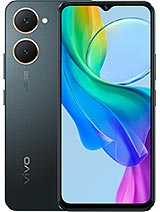
Overview
The vivo Y18 (India) is a budget-tier smartphone featuring a 90Hz IPS LCD for fluid navigation and a 5000 mAh battery for long-term endurance, aimed at first-time smartphone buyers and price-sensitive consumers in the Indian market. Released in May 2024, it competes in an incredibly crowded entry-level segment where value for money is the ultimate deciding factor. While the external aesthetics suggest a premium build, the internal components reveal a series of calculated compromises designed to keep the price point near the 100 EUR or 9,000 INR mark.
In the Indian retail market, the handset is frequently marketed through finance schemes from non-banking financial companies (NBFCs). You might see advertisements promising the device for a zero down payment or minimal monthly installments. We urge caution here. While getting a new phone with no upfront cost seems like a win, the hidden reality often involves processing fees, insurance add-ons, and interest rates that inflate the total cost of ownership well beyond the sticker price. Buying this handset unlocked and upfront is almost always the smarter economic choice. Furthermore, being locked into a 4G-only contract in 2024, as 5G networks expand rapidly across India, could leave users feeling left behind within just a few months.
Under the hood, the MediaTek Helio G85 manages the operations. This chipset uses a 12nm process, which is considered aged by today's standards where 6nm and 4nm are common in mid-range devices. It consists of two Cortex-A75 performance cores and six Cortex-A55 efficiency cores. In our analysis, this setup is adequate for basic social media, messaging, and light productivity, but it struggles with heavy multitasking.
The presence of eMMC 5.1 storage is a notable bottleneck. Unlike the faster UFS standards found in slightly more expensive competitors, eMMC 5.1 has slower read and write speeds. This results in longer app installation times and occasional stutters when the system is under heavy load. The RAM options—4GB or 6GB—are barely sufficient for Android 14. We recommend the 6GB variant to avoid aggressive background app killing by the Funtouch OS 14 software.
The construction consists of a glass front, a plastic frame, and a plastic back. While plastic lacks the prestige of metal or glass, it offers superior impact resistance during accidental drops. The device carries an IP54 rating, providing essential protection against dust and water splashes. This is vital for commuters dealing with the unpredictable Indian monsoon.
From a repair standpoint, the plastic unibody design is easier to service than modern glass-sandwich flagships. The battery is held by standard pull-tabs, and the internal components are secured with standard Phillips screws, making third-party repairs more affordable once the warranty expires. The screen is a flat IPS LCD, which is significantly cheaper to replace than curved OLED panels.
Because the Helio G85 is a relatively low-power chip, thermal throttling isn't a major concern during daily use. However, the 12nm architecture is less efficient than newer chips, meaning it generates more heat per unit of performance. During extended navigation sessions using GPS under direct sunlight, the device will likely warm up. The plastic back does not dissipate heat as effectively as metal, but the handset manages to stay within safe temperature limits.
The audio department is a mix of old-school convenience and budget limitations. The inclusion of a 3.5mm headphone jack is a significant advantage for users who prefer wired reliability over the cost and charging needs of wireless earbuds. The earpiece provides clear audio for voice calls, which is essential for business and personal communication. However, the single bottom-firing loudspeaker lacks bass and can sound distorted at maximum volume. It is functional for YouTube videos but won't satisfy those looking for a cinematic media experience.
Running Funtouch 14 based on Android 14 out of the box is a strength, ensuring compatibility with the latest app versions. However, vivo’s track record with long-term updates for the Y-series is modest. Users should expect at least one major Android update and two years of security patches. The bootloader is typically locked, which limits the potential for custom ROMs or long-term community support once official updates cease.
When comparing this to the Redmi 13C or the Moto G24 Power, the vivo Y18 (India) stands out primarily for its high-brightness 840-nit screen. If you spend most of your day outdoors, this display clarity is a game-changer. However, if you have access to an extra 2,000 INR, 5G-capable alternatives offer much better future-proofing.
Buy this if: You need a bright screen for outdoor use, you require a dedicated microSD slot, and your budget is strictly limited to the sub-10k segment. Skip this if: You live in a 5G-covered city, you play demanding games like Genshin Impact, or you cannot tolerate slow 15W charging speeds.
The vivo Y18 (India) is a reliable, if unexciting, workhorse that prioritizes screen visibility and battery life over raw speed and connectivity.
The 'Free' Trap
In the Indian retail market, the handset is frequently marketed through finance schemes from non-banking financial companies (NBFCs). You might see advertisements promising the device for a zero down payment or minimal monthly installments. We urge caution here. While getting a new phone with no upfront cost seems like a win, the hidden reality often involves processing fees, insurance add-ons, and interest rates that inflate the total cost of ownership well beyond the sticker price. Buying this handset unlocked and upfront is almost always the smarter economic choice. Furthermore, being locked into a 4G-only contract in 2024, as 5G networks expand rapidly across India, could leave users feeling left behind within just a few months.
Hardware Quality and the 12nm Trade-off
Under the hood, the MediaTek Helio G85 manages the operations. This chipset uses a 12nm process, which is considered aged by today's standards where 6nm and 4nm are common in mid-range devices. It consists of two Cortex-A75 performance cores and six Cortex-A55 efficiency cores. In our analysis, this setup is adequate for basic social media, messaging, and light productivity, but it struggles with heavy multitasking.
The presence of eMMC 5.1 storage is a notable bottleneck. Unlike the faster UFS standards found in slightly more expensive competitors, eMMC 5.1 has slower read and write speeds. This results in longer app installation times and occasional stutters when the system is under heavy load. The RAM options—4GB or 6GB—are barely sufficient for Android 14. We recommend the 6GB variant to avoid aggressive background app killing by the Funtouch OS 14 software.
Repairability & Durability Analysis
The construction consists of a glass front, a plastic frame, and a plastic back. While plastic lacks the prestige of metal or glass, it offers superior impact resistance during accidental drops. The device carries an IP54 rating, providing essential protection against dust and water splashes. This is vital for commuters dealing with the unpredictable Indian monsoon.
From a repair standpoint, the plastic unibody design is easier to service than modern glass-sandwich flagships. The battery is held by standard pull-tabs, and the internal components are secured with standard Phillips screws, making third-party repairs more affordable once the warranty expires. The screen is a flat IPS LCD, which is significantly cheaper to replace than curved OLED panels.
Thermal Management and Efficiency
Because the Helio G85 is a relatively low-power chip, thermal throttling isn't a major concern during daily use. However, the 12nm architecture is less efficient than newer chips, meaning it generates more heat per unit of performance. During extended navigation sessions using GPS under direct sunlight, the device will likely warm up. The plastic back does not dissipate heat as effectively as metal, but the handset manages to stay within safe temperature limits.
Audio Components and the 3.5mm Win
The audio department is a mix of old-school convenience and budget limitations. The inclusion of a 3.5mm headphone jack is a significant advantage for users who prefer wired reliability over the cost and charging needs of wireless earbuds. The earpiece provides clear audio for voice calls, which is essential for business and personal communication. However, the single bottom-firing loudspeaker lacks bass and can sound distorted at maximum volume. It is functional for YouTube videos but won't satisfy those looking for a cinematic media experience.
Unlockability and Software Longevity
Running Funtouch 14 based on Android 14 out of the box is a strength, ensuring compatibility with the latest app versions. However, vivo’s track record with long-term updates for the Y-series is modest. Users should expect at least one major Android update and two years of security patches. The bootloader is typically locked, which limits the potential for custom ROMs or long-term community support once official updates cease.
Buying Advice
When comparing this to the Redmi 13C or the Moto G24 Power, the vivo Y18 (India) stands out primarily for its high-brightness 840-nit screen. If you spend most of your day outdoors, this display clarity is a game-changer. However, if you have access to an extra 2,000 INR, 5G-capable alternatives offer much better future-proofing.
The vivo Y18 (India) is a reliable, if unexciting, workhorse that prioritizes screen visibility and battery life over raw speed and connectivity.
Technical Specifications
| LAUNCH | |
|---|---|
| Announced | 2024, May 03 |
| Status | Available. Released 2024, May 03 |
| PLATFORM | |
| OS | Android 14, Funtouch 14 |
| Chipset | Mediatek Helio G85 (12 nm) |
| CPU | Octa-core (2x2.0 GHz Cortex-A75 & 6x1.8 GHz Cortex-A55) |
| GPU | Mali-G52 MC2 |
| BODY | |
| Dimensions | 163.6 x 75.6 x 8.4 mm (6.44 x 2.98 x 0.33 in) |
| Weight | 185 g (6.53 oz) |
| Build | Glass front, plastic frame, plastic back |
| SIM | Nano-SIM + Nano-SIM |
| Info | IP54 dust protected and water resistant (water splashes) |
| DISPLAY | |
| Type | IPS LCD, 90Hz, 840 nits (HBM) |
| Size | 6.56 inches, 103.4 cm2 (~83.6% screen-to-body ratio) |
| Resolution | 720 x 1612 pixels, 20:9 ratio (~269 ppi density) |
| MEMORY | |
| Card slot | microSDXC (dedicated slot) |
| Internal | 64GB 4GB RAM, 128GB 4GB RAM, 128GB 6GB RAM |
| Info | eMMC 5.1 |
| MAIN CAMERA | |
| Single | 50 MP, f/1.8, (wide), PDAF Auxiliary lens |
| Features | LED flash, panorama |
| Video | 1080p@30fps |
| SELFIE CAMERA | |
| Single | 8 MP, f/2.0, (wide) |
| Video | Yes |
| SOUND | |
| Loudspeaker | Yes |
| 3.5mm jack | Yes |
| COMMS | |
| WLAN | Wi-Fi 802.11 a/b/g/n/ac, dual-band |
| Bluetooth | 5.0, A2DP, LE |
| Positioning | GPS, GALILEO, GLONASS, BDS, QZSS |
| NFC | No |
| Radio | FM radio |
| USB | USB Type-C 2.0, OTG |
| NETWORK | |
| Technology | GSM / HSPA / LTE |
| 2G bands | GSM 850 / 900 / 1800 / 1900 |
| 3G bands | HSDPA 850 / 900 / 2100 |
| 4G bands | 1, 3, 5, 8, 38, 40, 41 |
| Speed | HSPA, LTE |
| FEATURES | |
| Sensors | Fingerprint (side-mounted), accelerometer, proximity, compass |
| BATTERY | |
| Type | Li-Ion 5000 mAh |
| Charging | 15W wired |
| MISC | |
| Display | 6.56-inch IPS LCD, 90Hz, 840 nits (HBM), 720 x 1612 pixels |
| Chipset | MediaTek Helio G85 (12nm) |
| Memory | 4GB/6GB RAM, 64GB/128GB eMMC 5.1 storage |
| Rear Camera | 50 MP, f/1.8 (wide) + Auxiliary lens |
| Front Camera | 8 MP, f/2.0 |
| Battery | 5000 mAh, 15W Wired Charging |
| OS | Android 14, Funtouch 14 |
| Durability | IP54 dust and water resistant |
| Connectivity | 4G LTE, Wi-Fi 5, Bluetooth 5.0, 3.5mm jack |
| Weight | 185 g |
| Colors | Space Black, Gem Green |
| Models | V2333, V2345 |
| SAR | 0.98 W/kg (head) 0.84 W/kg (body) |
| Price | About 100 EUR |