Smart Savings - Choosing the Motorola Moto G Power (2024) Over Used Flagship Risks
Overview
Motorola Moto G Power (2024) is a budget-tier smartphone featuring a 6.7-inch 120Hz IPS LCD for fluid navigation and a 5000 mAh battery with 15W wireless charging for versatile power management, aimed at pragmatic users seeking modern 5G connectivity without premium costs. Released in early 2024, it competes directly with entry-level offerings from Samsung and older refurbished flagship devices.
When evaluating the budget landscape in early 2024, the primary competition for a $300 handset isn't just other entry-level phones; it is the three-year-old flagship. Choosing the Motorola Moto G Power (2024) offers a clear economic advantage over a refurbished Galaxy S21 or iPhone 11. While those older devices might boast slightly faster peak processing, they suffer from degraded lithium-ion cells and nearing ends of software support cycles. This handset arrives with Android 14 out of the box, ensuring that security patches and app compatibility remain relevant for the foreseeable future.
Fresh hardware means a fresh battery. Our analysis suggests that a new 5000 mAh cell consistently outperforms a degraded flagship battery that has undergone hundreds of charge cycles. Furthermore, the inclusion of 5G Standalone and Non-Standalone (SA/NSA) support ensures this device taps into the most modern network architectures, something older LTE-heavy flagships struggle to match in terms of signal consistency and data throughput.
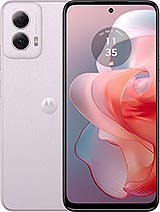
This model moves away from the slippery, fragile glass backs found on premium handsets in favor of a silicone polymer back, often marketed as eco leather. From a value hunter's perspective, this is a superior choice. Glass shatters and requires a case, which adds bulk. The textured silicone polymer provides a high-grip surface that resists fingerprints and masks micro-abrasions that usually accumulate on plastic or glass surfaces. It makes the device feel substantial without the anxiety of a catastrophic drop.
At 201 grams, the handset carries significant heft, signaling a dense internal build. The plastic frame is a cost-saving measure, yet it integrates well with the water-repellent design. While it lacks a full IP68 rating, the water-repellent coating protects against the occasional rain shower or accidental splash, a feature often omitted in the sub-$300 category. The Pale Lilac and Midnight Blue finishes offer a sophisticated aesthetic that avoids the garish gradients common in budget hardware.
Charging technology is where this handset separates itself from the pack. It supports 30W wired charging, which is a significant step up from the 10W or 15W standard found in many budget competitors. During a charging cycle, the 30W TurboPower system pushes energy rapidly between 0% and 50%, typically reaching the halfway mark in approximately 30 to 35 minutes. After 80%, the charging curve flattens significantly to protect the battery's longevity, a process known as trickle charging. This prevents excessive heat generation, which is the primary killer of long-term battery health.
Surprisingly, the inclusion of 15W wireless charging is the standout feature here. In March 2024, finding wireless charging in this price bracket is rare. It allows users to utilize existing Qi-compatible pads at desks or in vehicles, reducing wear on the USB Type-C 2.0 port. While 15W is not fast by flagship standards, it serves as an excellent "maintenance charge" tool throughout the workday, ensuring the phone stays topped off without the clutter of cables.
The Mediatek Dimensity 7020 chipset, built on a 6nm process, prioritizes efficiency over raw power. This architecture includes two high-performance Cortex-A78 cores and six energy-efficient Cortex-A55 cores. This big.LITTLE configuration allows the phone to handle background tasks—like syncing emails or updating weather widgets—using the low-power cores, preserving the battery for more demanding applications. In standby mode, users should expect minimal drain, often losing less than 3% to 4% over an eight-hour sleep period.
The 8GB of RAM is a generous allocation for this price point. Many competitors still ship with 4GB or 6GB, which leads to aggressive background app closing. With 8GB, the device maintains more active processes in memory, resulting in faster app switching and a smoother overall experience during multi-tasking. While the IMG BXM-8-256 GPU won't satisfy hardcore mobile gamers at high settings, it handles casual titles and social media feeds with 120Hz fluidity.
Multimedia performance benefits greatly from the inclusion of stereo speakers. Most [budget phones](/trend/best-budget-phones-2026/) utilize a single bottom-firing speaker that is easily muffled by a palm. This model uses the earpiece as a secondary channel, creating a wider soundstage for video consumption. While it lacks deep bass, the clarity for podcasts and YouTube videos is commendable. Furthermore, the 3.5mm headphone jack remains a vital feature for those who prefer zero-latency wired audio or who haven't yet moved to Bluetooth-only ecosystems.
Haptic feedback is basic but functional. It provides a tactile click for typing, though it lacks the sophisticated vibration motors found in the $800+ tier. The side-mounted fingerprint sensor is a pragmatic choice, offering faster and more reliable biometric unlocking than the cheap under-display optical sensors often found in mid-range devices. It doubles as a power button, making the wake-and-unlock gesture a single, fluid motion.
The camera system revolves around a 50 MP main sensor that features Optical Image Stabilization (OIS). In the world of budget photography, OIS is a rarity and a major win for the consumer. It physically moves the lens to compensate for hand-shake, which is critical for two reasons: low-light performance and video stability. Without OIS, budget phones often produce blurry photos indoors; here, the hardware potential for sharp images is significantly higher.
An 8 MP ultrawide sensor with autofocus accompanies the main lens. Unlike the useless 2 MP macro sensors found on many cheap phones, this ultrawide lens actually adds value by allowing for expansive landscape shots and group photos. The selfie camera is a standard 16 MP unit that handles video calls and basic portraits adequately. Both front and rear systems are capped at 1080p@30fps for video, which is the primary hardware limitation of the Dimensity 7020 platform. While 4K is missing, gyro-EIS helps keep that 1080p footage looking professional and steady.
The Motorola Moto G Power (2024) represents a calculated shift toward features that actually matter in daily use rather than chasing empty spec-sheet numbers. By including 15W wireless charging and OIS on the main camera, the manufacturer has addressed the two biggest complaints about budget phones. The 128GB of internal storage, combined with a dedicated microSDXC slot, ensures that users won't run out of space for photos and offline media.
For the value hunter, this device is a highly competitive package. It avoids the pitfalls of used hardware—like battery anxiety and lack of software support—while offering a tactile, grippy design that doesn't feel cheap. As of March 2024, it stands as one of the most balanced 5G options for those who want a reliable, long-lasting device without a flagship price tag. The Motorola Moto G Power (2024) proves that you don't need to break the bank to get a modern smartphone experience.
New Hardware Versus the Used Market Gamble
When evaluating the budget landscape in early 2024, the primary competition for a $300 handset isn't just other entry-level phones; it is the three-year-old flagship. Choosing the Motorola Moto G Power (2024) offers a clear economic advantage over a refurbished Galaxy S21 or iPhone 11. While those older devices might boast slightly faster peak processing, they suffer from degraded lithium-ion cells and nearing ends of software support cycles. This handset arrives with Android 14 out of the box, ensuring that security patches and app compatibility remain relevant for the foreseeable future.
Fresh hardware means a fresh battery. Our analysis suggests that a new 5000 mAh cell consistently outperforms a degraded flagship battery that has undergone hundreds of charge cycles. Furthermore, the inclusion of 5G Standalone and Non-Standalone (SA/NSA) support ensures this device taps into the most modern network architectures, something older LTE-heavy flagships struggle to match in terms of signal consistency and data throughput.
Silicone Polymer and Practical Ergonomics
This model moves away from the slippery, fragile glass backs found on premium handsets in favor of a silicone polymer back, often marketed as eco leather. From a value hunter's perspective, this is a superior choice. Glass shatters and requires a case, which adds bulk. The textured silicone polymer provides a high-grip surface that resists fingerprints and masks micro-abrasions that usually accumulate on plastic or glass surfaces. It makes the device feel substantial without the anxiety of a catastrophic drop.
At 201 grams, the handset carries significant heft, signaling a dense internal build. The plastic frame is a cost-saving measure, yet it integrates well with the water-repellent design. While it lacks a full IP68 rating, the water-repellent coating protects against the occasional rain shower or accidental splash, a feature often omitted in the sub-$300 category. The Pale Lilac and Midnight Blue finishes offer a sophisticated aesthetic that avoids the garish gradients common in budget hardware.
The 30W Wired and 15W Wireless Power Math
Charging technology is where this handset separates itself from the pack. It supports 30W wired charging, which is a significant step up from the 10W or 15W standard found in many budget competitors. During a charging cycle, the 30W TurboPower system pushes energy rapidly between 0% and 50%, typically reaching the halfway mark in approximately 30 to 35 minutes. After 80%, the charging curve flattens significantly to protect the battery's longevity, a process known as trickle charging. This prevents excessive heat generation, which is the primary killer of long-term battery health.
Surprisingly, the inclusion of 15W wireless charging is the standout feature here. In March 2024, finding wireless charging in this price bracket is rare. It allows users to utilize existing Qi-compatible pads at desks or in vehicles, reducing wear on the USB Type-C 2.0 port. While 15W is not fast by flagship standards, it serves as an excellent "maintenance charge" tool throughout the workday, ensuring the phone stays topped off without the clutter of cables.
Dimensity 7020 Efficiency and Overnight Recovery
The Mediatek Dimensity 7020 chipset, built on a 6nm process, prioritizes efficiency over raw power. This architecture includes two high-performance Cortex-A78 cores and six energy-efficient Cortex-A55 cores. This big.LITTLE configuration allows the phone to handle background tasks—like syncing emails or updating weather widgets—using the low-power cores, preserving the battery for more demanding applications. In standby mode, users should expect minimal drain, often losing less than 3% to 4% over an eight-hour sleep period.
The 8GB of RAM is a generous allocation for this price point. Many competitors still ship with 4GB or 6GB, which leads to aggressive background app closing. With 8GB, the device maintains more active processes in memory, resulting in faster app switching and a smoother overall experience during multi-tasking. While the IMG BXM-8-256 GPU won't satisfy hardcore mobile gamers at high settings, it handles casual titles and social media feeds with 120Hz fluidity.
Stereo Sound and the Return of the 3.5mm Jack
Multimedia performance benefits greatly from the inclusion of stereo speakers. Most [budget phones](/trend/best-budget-phones-2026/) utilize a single bottom-firing speaker that is easily muffled by a palm. This model uses the earpiece as a secondary channel, creating a wider soundstage for video consumption. While it lacks deep bass, the clarity for podcasts and YouTube videos is commendable. Furthermore, the 3.5mm headphone jack remains a vital feature for those who prefer zero-latency wired audio or who haven't yet moved to Bluetooth-only ecosystems.
Haptic feedback is basic but functional. It provides a tactile click for typing, though it lacks the sophisticated vibration motors found in the $800+ tier. The side-mounted fingerprint sensor is a pragmatic choice, offering faster and more reliable biometric unlocking than the cheap under-display optical sensors often found in mid-range devices. It doubles as a power button, making the wake-and-unlock gesture a single, fluid motion.
Optical Stabilization in the Budget Tier
The camera system revolves around a 50 MP main sensor that features Optical Image Stabilization (OIS). In the world of budget photography, OIS is a rarity and a major win for the consumer. It physically moves the lens to compensate for hand-shake, which is critical for two reasons: low-light performance and video stability. Without OIS, budget phones often produce blurry photos indoors; here, the hardware potential for sharp images is significantly higher.
An 8 MP ultrawide sensor with autofocus accompanies the main lens. Unlike the useless 2 MP macro sensors found on many cheap phones, this ultrawide lens actually adds value by allowing for expansive landscape shots and group photos. The selfie camera is a standard 16 MP unit that handles video calls and basic portraits adequately. Both front and rear systems are capped at 1080p@30fps for video, which is the primary hardware limitation of the Dimensity 7020 platform. While 4K is missing, gyro-EIS helps keep that 1080p footage looking professional and steady.
The Final Economic Evaluation
The Motorola Moto G Power (2024) represents a calculated shift toward features that actually matter in daily use rather than chasing empty spec-sheet numbers. By including 15W wireless charging and OIS on the main camera, the manufacturer has addressed the two biggest complaints about budget phones. The 128GB of internal storage, combined with a dedicated microSDXC slot, ensures that users won't run out of space for photos and offline media.
For the value hunter, this device is a highly competitive package. It avoids the pitfalls of used hardware—like battery anxiety and lack of software support—while offering a tactile, grippy design that doesn't feel cheap. As of March 2024, it stands as one of the most balanced 5G options for those who want a reliable, long-lasting device without a flagship price tag. The Motorola Moto G Power (2024) proves that you don't need to break the bank to get a modern smartphone experience.
Technical Specifications
| LAUNCH | |
|---|---|
| Announced | 2024, March 12 |
| Status | Available. Released 2024, March 22 |
| PLATFORM | |
| OS | Android 14 |
| Chipset | Mediatek Dimensity 7020 (6 nm) |
| CPU | Octa-core (2x2.2 GHz Cortex-A78 & 6x2.0 GHz Cortex-A55) |
| GPU | IMG BXM-8-256 |
| BODY | |
| Dimensions | 167.2 x 76.4 x 8.5 mm (6.58 x 3.01 x 0.33 in) |
| Weight | 201 g (7.09 oz) |
| Build | Glass front, silicone polymer back (eco leather), plastic frame |
| SIM | Nano-SIM + eSIM |
| Info | Water-repellent design |
| DISPLAY | |
| Type | IPS LCD, 120Hz |
| Size | 6.7 inches, 108.4 cm2 (~84.8% screen-to-body ratio) |
| Resolution | 1080 x 2400 pixels, 20:9 ratio (~393 ppi density) |
| MEMORY | |
| Card slot | microSDXC (dedicated slot) |
| Internal | 128GB 8GB RAM |
| MAIN CAMERA | |
| Dual | 50 MP, f/1.8, (wide), 0.64µm, PDAF, OIS 8 MP, f/2.2, 118˚ (ultrawide), 1.12µm, AF |
| Features | LED flash, HDR, panorama |
| Video | 1080p@30fps, gyro-EIS |
| SELFIE CAMERA | |
| Single | 16 MP, f/2.4, (wide), 1.0µm |
| Features | HDR |
| Video | 1080p@30fps |
| SOUND | |
| Loudspeaker | Yes, with stereo speakers |
| 3.5mm jack | Yes |
| COMMS | |
| WLAN | Wi-Fi 802.11 a/b/g/n/ac, dual-band |
| Bluetooth | 5.3, A2DP, LE |
| Positioning | GPS, GLONASS, GALILEO |
| NFC | Yes |
| Radio | No |
| USB | USB Type-C 2.0 |
| NETWORK | |
| Technology | GSM / HSPA / LTE / 5G |
| 2G bands | GSM 850 / 900 / 1800 / 1900 |
| 3G bands | HSDPA 850 / 900 / 1700(AWS) / 1900 / 2100 |
| 4G bands | 1, 2, 3, 4, 5, 7, 8, 12, 13, 14, 17, 18, 20, 25, 26, 28, 29, 30, 38, 39, 40, 41, 48, 66, 71 |
| 5G bands | 2, 5, 7, 12, 14, 25, 26, 29, 30, 41, 48, 66, 70, 71, 77, 78 SA/NSA |
| Speed | HSPA, LTE, 5G |
| FEATURES | |
| Sensors | Fingerprint (side-mounted), accelerometer, gyro, proximity, compass, barometer |
| BATTERY | |
| Type | 5000 mAh |
| Charging | 30W wired 15W wireless |
| MISC | |
| Display | 6.7-inch IPS LCD, 120Hz, 1080 x 2400 pixels |
| Processor | Mediatek Dimensity 7020 (6 nm) |
| RAM | 8GB |
| Storage | 128GB (expandable via microSDXC) |
| Main Camera | 50 MP (f/1.8, OIS) + 8 MP (Ultrawide, AF) |
| Selfie Camera | 16 MP, f/2.4 |
| Battery | 5000 mAh, 30W Wired, 15W Wireless Charging |
| Connectivity | 5G (SA/NSA), Wi-Fi ac, Bluetooth 5.3, NFC |
| Body | Silicone polymer back, water-repellent design, 201g |
| Colors | Midnight Blue, Pale Lilac |
| Models | XT2415-3, XT2415V |
| Price | $ 59.99 / C$ 186.00 |