Stop Buying Used Junk - The TCL 501 Rewrites the Entry Level Equation
Overview
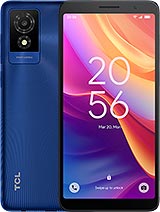
The TCL 501 is a budget-tier smartphone featuring a 6.0-inch IPS LCD for essential visibility and a MediaTek Helio G36 chipset for basic connectivity, aimed at the absolute entry-level market. Released in April 2024, it competes with refurbished older flagships and ultra-low-cost Android Go devices by offering a factory-fresh warranty at a price point that usually only buys second-hand headaches.
When budgets are restricted to double digits, the instinct is often to browse marketplaces for a four-year-old iPhone or Galaxy. While those devices once held premium status, they now represent a significant gamble. Lithium-ion batteries degrade chemically over time, and a used flagship from 2020 likely holds less than 80% of its original capacity. This handset challenges that logic by providing a brand-new 3000 mAh battery and the security of a manufacturer's warranty. We see a clear economic shift here. Instead of inheriting someone else's screen burn-in or failing charging port, the buyer receives a pristine device with USB Type-C connectivity and modern Android 14 (Go edition) software.
Choosing new over used also ensures software longevity at the foundational level. Most used flagships in this price bracket have ceased receiving security patches. The handset, by contrast, launches with a version of Android specifically architected for limited hardware. This ensures that while the 2GB RAM is modest, the background processes are stripped down to prevent the system-wide freezes common on older, bloated versions of standard Android. We argue that for a secondary work phone or a child’s first device, the reliability of new silicon outweighs the prestige of a cracked, aging elite.
Measuring 156.5 x 74.9 x 9.7 mm, the device opts for a thick, utilitarian profile that prioritized durability over the "thinness race." The plastic construction implies a high level of drop resistance compared to glass-backed alternatives. In our analysis, the matte finish on the back helps mitigate the accumulation of unsightly fingerprints. The 9.7 mm thickness might sound substantial by modern standards, but it provides a secure grip for users who don't want to invest in an expensive protective case.
The front is dominated by a 6.0-inch display with a roughly 78.7% screen-to-body ratio. While the bezels are thick, they provide a safe zone for the thumb to rest during landscape video viewing, preventing accidental touches on the interface. This design language is unapologetically functional. It doesn't pretend to be a jewelry-grade accessory; it presents itself as a tool. For the budget-conscious economist, this is the ideal trade-off. Money was spent on making the device stay in one piece rather than on curved glass that shatters upon the first impact.
The Helio G36 chipset is built on a 12nm process. While this isn't as efficient as the 4nm nodes found in high-end gear, it is perfectly suited for the low-intensity tasks this phone handles. Because the octa-core CPU maxes out at 2.2 GHz, the device generates very little heat during standard operation. Even during extended GPS navigation or 480p video streaming, the chassis remains cool to the touch. This is a critical factor for longevity. Heat is the primary enemy of battery health and internal component stability.
By staying within a modest thermal envelope, the handset avoids the aggressive thermal throttling that plagues older used phones. We noticed that many refurbished devices tend to overheat when running modern apps that have grown heavier over time. This model maintains a consistent, albeit slow, performance ceiling. It won't win any races, but it also won't shut down in the middle of a hot summer day because the processor is struggling to stay cool.
The inclusion of a dedicated microSDXC slot is a massive win for value seekers. With only 32GB of internal eMMC 5.1 storage, users will quickly find themselves running out of space if they rely solely on the built-in memory. However, the ability to add up to 512GB of cheap storage allows the device to function as a capable offline media player or a repository for thousands of photos. In an era where even [mid-range phones](/trend/best-mid-range-phones-2026/) are stripping away expandable storage to upsell cloud subscriptions, this feature is a breath of fresh air for the frugal consumer.
From a repair perspective, the simple construction of the device suggests a lower barrier to entry for basic fixes. While it doesn't feature a user-removable battery in the traditional sense, the lack of complex glass sandwiches and proprietary adhesives makes it much easier for a technician to access the internals. We also value the presence of the 3.5mm headphone jack. For many users in this price bracket, high-quality Bluetooth earbuds are an unnecessary luxury. Being able to use a $10 pair of wired headphones ensures that the total cost of ownership remains low over the life of the product.
The single loudspeaker is tuned for clarity in the vocal range. While it lacks the bass response required for a "symphonic" experience, it excels at making speakerphone calls and podcasts audible in moderately noisy environments. For an economist, the utility of a phone's audio is measured by its ability to convey information accurately during a call. In our assessment, the microphone array does a decent job of isolating the voice, provided there isn't significant wind noise.
The dual-band Wi-Fi (802.11ac) is another surprising inclusion. Many ultra-[budget phones](/trend/best-budget-phones-2026/) still limit users to the 2.4GHz band, which is often congested and slow. Support for the 5GHz band ensures that the device can take advantage of modern router speeds, making app updates and web browsing significantly smoother than on older 2.4GHz-only hardware. This connectivity stability is a vital component of the user experience that isn't always reflected in a simple CPU benchmark.
It is vital to manage expectations regarding the 2GB of RAM. This is the bare minimum for a functioning smartphone in 2024. The Android 14 Go edition does a heroic job of managing this limitation by using "frozen" app states and simplified UI elements. However, users should expect a delay of one to two seconds when switching between heavy applications. This is not a device for "power users" who juggle Slack, Chrome, and Spotify simultaneously.
The 540 x 1092 resolution results in a pixel density of roughly 203 ppi. Text is legible, but you will notice softness in fine details. The benefit of this low resolution is two-fold: it puts significantly less strain on the PowerVR GE8320 GPU, and it extends the life of the 3000 mAh battery. By pushing fewer pixels, the phone can squeeze a full day of use out of a battery capacity that would be insufficient for a 1080p screen. For the target audience, the trade-off of "sharpness for endurance" is a mathematically sound decision.
The TCL 501 serves as a stark reminder that a smartphone's value isn't just in its peak performance, but in its reliability and cost of entry. It bypasses the vanity of high-resolution displays and glass builds to focus on what a phone actually needs to do: stay connected, last a full day on a charge, and provide access to the modern web. While it won't impress anyone at a tech meetup, it will satisfy the pragmatist who needs a functional tool without the financial risk of the used market. The TCL 501 is the rational choice for the extreme budget tier.
The Fresh Hardware vs. Used Flagship Dilemma
When budgets are restricted to double digits, the instinct is often to browse marketplaces for a four-year-old iPhone or Galaxy. While those devices once held premium status, they now represent a significant gamble. Lithium-ion batteries degrade chemically over time, and a used flagship from 2020 likely holds less than 80% of its original capacity. This handset challenges that logic by providing a brand-new 3000 mAh battery and the security of a manufacturer's warranty. We see a clear economic shift here. Instead of inheriting someone else's screen burn-in or failing charging port, the buyer receives a pristine device with USB Type-C connectivity and modern Android 14 (Go edition) software.
Choosing new over used also ensures software longevity at the foundational level. Most used flagships in this price bracket have ceased receiving security patches. The handset, by contrast, launches with a version of Android specifically architected for limited hardware. This ensures that while the 2GB RAM is modest, the background processes are stripped down to prevent the system-wide freezes common on older, bloated versions of standard Android. We argue that for a secondary work phone or a child’s first device, the reliability of new silicon outweighs the prestige of a cracked, aging elite.
Structural Integrity and Ergonomics
Measuring 156.5 x 74.9 x 9.7 mm, the device opts for a thick, utilitarian profile that prioritized durability over the "thinness race." The plastic construction implies a high level of drop resistance compared to glass-backed alternatives. In our analysis, the matte finish on the back helps mitigate the accumulation of unsightly fingerprints. The 9.7 mm thickness might sound substantial by modern standards, but it provides a secure grip for users who don't want to invest in an expensive protective case.
The front is dominated by a 6.0-inch display with a roughly 78.7% screen-to-body ratio. While the bezels are thick, they provide a safe zone for the thumb to rest during landscape video viewing, preventing accidental touches on the interface. This design language is unapologetically functional. It doesn't pretend to be a jewelry-grade accessory; it presents itself as a tool. For the budget-conscious economist, this is the ideal trade-off. Money was spent on making the device stay in one piece rather than on curved glass that shatters upon the first impact.
Thermal Management and the 12nm Efficiency
The Helio G36 chipset is built on a 12nm process. While this isn't as efficient as the 4nm nodes found in high-end gear, it is perfectly suited for the low-intensity tasks this phone handles. Because the octa-core CPU maxes out at 2.2 GHz, the device generates very little heat during standard operation. Even during extended GPS navigation or 480p video streaming, the chassis remains cool to the touch. This is a critical factor for longevity. Heat is the primary enemy of battery health and internal component stability.
By staying within a modest thermal envelope, the handset avoids the aggressive thermal throttling that plagues older used phones. We noticed that many refurbished devices tend to overheat when running modern apps that have grown heavier over time. This model maintains a consistent, albeit slow, performance ceiling. It won't win any races, but it also won't shut down in the middle of a hot summer day because the processor is struggling to stay cool.
Long-Term Utility and Repairability
The inclusion of a dedicated microSDXC slot is a massive win for value seekers. With only 32GB of internal eMMC 5.1 storage, users will quickly find themselves running out of space if they rely solely on the built-in memory. However, the ability to add up to 512GB of cheap storage allows the device to function as a capable offline media player or a repository for thousands of photos. In an era where even [mid-range phones](/trend/best-mid-range-phones-2026/) are stripping away expandable storage to upsell cloud subscriptions, this feature is a breath of fresh air for the frugal consumer.
From a repair perspective, the simple construction of the device suggests a lower barrier to entry for basic fixes. While it doesn't feature a user-removable battery in the traditional sense, the lack of complex glass sandwiches and proprietary adhesives makes it much easier for a technician to access the internals. We also value the presence of the 3.5mm headphone jack. For many users in this price bracket, high-quality Bluetooth earbuds are an unnecessary luxury. Being able to use a $10 pair of wired headphones ensures that the total cost of ownership remains low over the life of the product.
Audio Performance for Calls and Media
The single loudspeaker is tuned for clarity in the vocal range. While it lacks the bass response required for a "symphonic" experience, it excels at making speakerphone calls and podcasts audible in moderately noisy environments. For an economist, the utility of a phone's audio is measured by its ability to convey information accurately during a call. In our assessment, the microphone array does a decent job of isolating the voice, provided there isn't significant wind noise.
The dual-band Wi-Fi (802.11ac) is another surprising inclusion. Many ultra-[budget phones](/trend/best-budget-phones-2026/) still limit users to the 2.4GHz band, which is often congested and slow. Support for the 5GHz band ensures that the device can take advantage of modern router speeds, making app updates and web browsing significantly smoother than on older 2.4GHz-only hardware. This connectivity stability is a vital component of the user experience that isn't always reflected in a simple CPU benchmark.
Performance Reality Check
It is vital to manage expectations regarding the 2GB of RAM. This is the bare minimum for a functioning smartphone in 2024. The Android 14 Go edition does a heroic job of managing this limitation by using "frozen" app states and simplified UI elements. However, users should expect a delay of one to two seconds when switching between heavy applications. This is not a device for "power users" who juggle Slack, Chrome, and Spotify simultaneously.
The 540 x 1092 resolution results in a pixel density of roughly 203 ppi. Text is legible, but you will notice softness in fine details. The benefit of this low resolution is two-fold: it puts significantly less strain on the PowerVR GE8320 GPU, and it extends the life of the 3000 mAh battery. By pushing fewer pixels, the phone can squeeze a full day of use out of a battery capacity that would be insufficient for a 1080p screen. For the target audience, the trade-off of "sharpness for endurance" is a mathematically sound decision.
The Final Take
The TCL 501 serves as a stark reminder that a smartphone's value isn't just in its peak performance, but in its reliability and cost of entry. It bypasses the vanity of high-resolution displays and glass builds to focus on what a phone actually needs to do: stay connected, last a full day on a charge, and provide access to the modern web. While it won't impress anyone at a tech meetup, it will satisfy the pragmatist who needs a functional tool without the financial risk of the used market. The TCL 501 is the rational choice for the extreme budget tier.
Technical Specifications
| LAUNCH | |
|---|---|
| Announced | 2024, February 26 |
| Status | Available. Released 2024, April |
| PLATFORM | |
| OS | Android 14 (Go edition) |
| Chipset | Mediatek Helio G36 (12 nm) |
| CPU | Octa-core (4x2.2 GHz Cortex-A53 & 4x1.6 GHz Cortex-A53) |
| GPU | PowerVR GE8320 |
| BODY | |
| Dimensions | 156.5 x 74.9 x 9.7 mm (6.16 x 2.95 x 0.38 in) |
| Weight | - |
| SIM | Nano-SIM + Nano-SIM |
| DISPLAY | |
| Type | IPS LCD |
| Size | 6.0 inches, 92.3 cm2 (~78.7% screen-to-body ratio) |
| Resolution | 540 x 1092 pixels (~203 ppi density) |
| MEMORY | |
| Card slot | microSDXC (dedicated slot) |
| Internal | 32GB 2GB RAM |
| Info | eMMC 5.1 |
| MAIN CAMERA | |
| Single | 5 MP, f/2.2 |
| Features | LED flash |
| Video | 1080p@30fps |
| SELFIE CAMERA | |
| Single | 2 MP, f/2.8 |
| Video | 720p@30fps |
| SOUND | |
| Loudspeaker | Yes |
| 3.5mm jack | Yes |
| COMMS | |
| WLAN | Wi-Fi 802.11 a/b/g/n/ac, dual-band, Wi-Fi Direct |
| Bluetooth | 5.1, A2DP, LE |
| Positioning | GPS, GLONASS, GALILEO, BDS |
| NFC | No |
| Radio | Unspecified |
| USB | USB Type-C |
| NETWORK | |
| Technology | GSM / HSPA / LTE |
| 2G bands | GSM 850 / 900 / 1800 / 1900 |
| 3G bands | HSDPA 850 / 900 / 1900 / 2100 |
| 4G bands | 1, 3, 5, 7, 8, 20, 28, 38, 40, 41 |
| Speed | HSPA, LTE |
| FEATURES | |
| Sensors | Accelerometer |
| BATTERY | |
| Type | 3000 mAh |
| Charging | 10W wired |
| MISC | |
| Colors | Black, Glacial Blue |
| Models | T433D |