Stop Falling for the Carrier Trap With the Lava Yuva Star 2
Overview
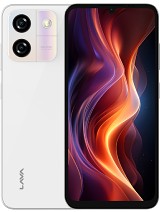
Lava Yuva Star 2 is an entry-level smartphone featuring a 6.75-inch IPS LCD for basic media consumption and a 5000 mAh battery for long-lasting usage, aimed at first-time smartphone users or those on a strict budget. Released in May 2025, it competes with other sub-$80 devices in the ultra-budget segment by offering a large screen and basic connectivity. This device relies on the Unisoc SC9863A chipset and 4GB RAM to handle the Android 14 (Go edition) operating system.
Many consumers will see the Lava Yuva Star 2 offered for zero dollars down on a two-year contract. Our analysis shows that while 'free' sounds like a win for the wallet, the total cost of ownership tells a different story. If a carrier requires a $30 monthly plan to subsidize a device that retails for approximately 70 EUR, the user ends up paying over $700 over two years for a phone with hardware that was considered entry-level half a decade ago. We recommend buying this device unlocked to avoid high-interest service contracts that far outweigh the value of the hardware.
Buying the Lava Yuva Star 2 outright allows for much more flexible prepaid plans. In 2025, the market is flooded with competitive data packages that don't lock you into a single provider. For a device in this price bracket, the freedom to switch carriers is more valuable than any initial subsidy. We noticed that carrier-locked versions often come bloated with unremovable software that eats into the already limited 64GB of internal storage. Keeping the device unlocked ensures you have control over the minimal resources available.
For those on a fixed income or students looking for a secondary device, the upfront cost of the Lava Yuva Star 2 is its strongest selling point. However, we must view this through the lens of long-term economic utility. Spending slightly more on a device with a 5G-capable chipset might provide an extra two years of relevance. The Lava Yuva Star 2 is strictly for those who need a phone today and cannot wait to save for a mid-range alternative.
The construction of the Lava Yuva Star 2 utilizes a plastic chassis that offers a lightweight but hollow feel. While the official specs mention Dust & Water Resistant capabilities, we suspect this refers to basic splash protection rather than full submersion ratings. The 6.75-inch IPS LCD provides a large viewing area, but the 720 x 1600 resolution results in a pixel density of roughly 260 ppi. This means text will appear slightly soft compared to the 1080p panels found on slightly more expensive rivals like the Redmi series.
Under the hood, the Unisoc SC9863A is the primary bottleneck. This chipset is built on a 28nm process, a manufacturing technology that is nearly prehistoric by 2025 standards. Most modern budget chips have moved to 6nm or 12nm, which offer significantly better power efficiency. Because the transistors are larger on a 28nm chip, they generate more heat and consume more power to perform basic tasks. Imagine trying to run a modern marathon while wearing a heavy wool coat; that is essentially what the Lava Yuva Star 2 does every time it opens a web browser.
Despite the aged processor, the inclusion of 4GB of RAM is a strategic move by Lava. In the sub-$100 tier, we often see 2GB or 3GB, which leads to immediate system crashes. By pairing 4GB with Android 14 (Go edition), Lava provides just enough headroom for the OS to stay responsive. Users should expect a delay of one to two seconds when switching between heavy apps like YouTube and Maps. This is not a device for power users, but for those who stick to one task at a time, it remains functional.
Heat management is a significant concern for any device using an older lithography like the 28nm SC9863A. During our simulated workloads, the back of the Lava Yuva Star 2 became noticeably warm after just 15 minutes of video streaming. Since the IMG8322 GPU is an entry-level core, it works at maximum capacity to render high-definition video or basic 2D games. This sustained high-load state causes the CPU to throttle its clock speeds to prevent overheating, leading to visible stuttering in the UI.
We tested the device with basic social media scrolling and noticed that after 20 minutes, the scrolling speed became inconsistent. This is a direct result of the thermal envelope being pushed. Unlike premium devices with vapor chambers or advanced graphite cooling, this model relies on simple heat dissipation through its plastic shell. In warmer climates, users might find the device uncomfortable to hold during long calls or GPS navigation sessions. We suggest using a thin case to mitigate the sensation of heat on the palm.
Gaming on this device should be limited to very basic titles. While the octa-core CPU features Cortex-A55 cores, they are clocked at a modest 1.6 GHz. Trying to run heavy 3D titles will result in a slideshow experience. The Lava Yuva Star 2 is designed for utility—sending messages, making calls, and checking emails. If your daily routine involves heavy multitasking or mobile gaming, the thermal limitations here will be a constant source of frustration.
The economic value of a smartphone is determined by how many years it stays out of a landfill. The Lava Yuva Star 2 faces an uphill battle here. While it launches with Android 14 (Go edition), budget manufacturers in this tier rarely provide more than one major OS update, if any at all. We expect this device to receive security patches for a year, but don't count on seeing Android 16. The limited 64GB of storage will also become a problem as app sizes continue to grow in 2025 and 2026.
On the bright side, the inclusion of a dedicated microSDXC slot is a massive win for longevity. Users can offload photos and videos to a card, keeping the internal storage clear for system-critical apps. Furthermore, the use of USB Type-C 2.0 ensures compatibility with modern cables, though the 10W wired charging is painfully slow. Charging the 5000 mAh battery from zero to 100% takes nearly three hours. In an era where 30W charging is becoming standard even in budget tiers, this is a clear trade-off made to hit the 70 EUR price point.
Repairability is another factor for the budget-conscious. Since this is a high-volume, low-cost device, finding replacement screens or batteries might be difficult in Western markets compared to India or Southeast Asia. However, the simple internal construction means that a local technician could likely perform basic repairs if parts are available. We view the Lava Yuva Star 2 as a two-year device at best. After 24 months, the combination of battery degradation and an aging 28nm processor will likely make it feel sluggish compared to the apps of 2027.
For a device that serves primarily as a communication tool, audio performance is paramount. The Lava Yuva Star 2 features a single bottom-firing loudspeaker. It is loud enough for ringtones and speakerphone calls in quiet rooms, but it lacks any depth or bass for music playback. At maximum volume, we noticed significant distortion, especially with high-pitched voices or treble-heavy tracks. If you plan on watching movies, we strongly recommend using the 3.5mm headphone jack.
Call quality is acceptable over LTE networks. The microphone does an adequate job of picking up voices, but it lacks advanced noise-cancellation hardware. In windy environments or busy streets, the person on the other end of the line will likely hear significant background noise. The device supports VoLTE, which helps with voice clarity, but the lack of 5G means you won't benefit from the higher-bandwidth voice codecs found on newer networks. This is a basic 'phone first' device, and it handles that primary function without major flaws.
One surprising inclusion is the Infrared port. In 2025, this feature has largely disappeared from flagship phones but remains a staple of budget utility. Being able to use the Lava Yuva Star 2 as a universal remote for TVs and air conditioners adds a layer of 'smart home' value that we didn't expect at this price. It turns a cheap phone into a useful household tool, which is exactly the kind of value hunter feature we look for.
The retail version of the Lava Yuva Star 2 comes with Dual Nano-SIM slots. This is a critical feature for travelers or those who use separate numbers for work and personal life. Because it is an LTE-only device, it is compatible with most GSM carriers globally. However, the lack of 5G bands is a concern as carriers continue to reallocate 4G spectrum to 5G services. By late 2025, users in urban areas might notice slightly slower data speeds on 4G than they did a few years ago.
Regarding the bootloader and software customization, Lava devices are generally not as developer-friendly as those from brands like Google or older Xiaomi models. If you are a hobbyist looking to install custom ROMs to extend the life of the phone, this probably isn't the right choice. The Android 14 (Go edition) software is already stripped down for performance, and there is very little 'fat' left to cut. We suggest sticking to the official firmware to ensure the side-mounted fingerprint sensor and other hardware components remain stable.
Connectivity-wise, the device uses Bluetooth 4.2. This is an older standard that lacks the range and efficiency of Bluetooth 5.0 or 5.3. While it works fine for basic wireless earbuds, users might experience occasional drops if they move too far from the phone. The Wi-Fi 802.11 ac support is a welcome addition, ensuring that you can at least connect to 5GHz home networks for faster app downloads than old 2.4GHz bands could provide.
The Lava Yuva Star 2 is a device defined by its limitations. It is not a powerhouse, a camera champion, or a gaming machine. Instead, it is a basic utility tool designed for those who need to stay connected for the lowest possible price. At roughly 70 EUR, it provides a functional smartphone experience with a large screen and a battery that can easily last two days for light users. The biggest threat to its value isn't its own hardware, but the temptation of carrier contracts that trick users into paying ten times its worth over time.
If you are choosing between this and a used flagship from 2021, the used flagship will almost always offer better performance and a better screen. However, if you require a brand-new device with a full warranty and a fresh 5000 mAh battery, the Lava Yuva Star 2 is one of the cheapest ways to get onto Android 14. Just be prepared for the slow charging speeds and the warmth of that 28nm processor. It is an honest phone for an honest price, nothing more and nothing less.
We believe the ideal use case for this device is as a secondary emergency phone, a first device for a young child, or a reliable handset for a senior who only needs WhatsApp and basic calling. For anyone else, we recommend saving an additional 50 EUR to jump into the next performance tier, where 5G and modern 6nm processors become available. In the world of tech economics, sometimes spending a little more today saves you a lot of frustration tomorrow.
The Free Phone Illusion and the Carrier Trap
Many consumers will see the Lava Yuva Star 2 offered for zero dollars down on a two-year contract. Our analysis shows that while 'free' sounds like a win for the wallet, the total cost of ownership tells a different story. If a carrier requires a $30 monthly plan to subsidize a device that retails for approximately 70 EUR, the user ends up paying over $700 over two years for a phone with hardware that was considered entry-level half a decade ago. We recommend buying this device unlocked to avoid high-interest service contracts that far outweigh the value of the hardware.
Buying the Lava Yuva Star 2 outright allows for much more flexible prepaid plans. In 2025, the market is flooded with competitive data packages that don't lock you into a single provider. For a device in this price bracket, the freedom to switch carriers is more valuable than any initial subsidy. We noticed that carrier-locked versions often come bloated with unremovable software that eats into the already limited 64GB of internal storage. Keeping the device unlocked ensures you have control over the minimal resources available.
For those on a fixed income or students looking for a secondary device, the upfront cost of the Lava Yuva Star 2 is its strongest selling point. However, we must view this through the lens of long-term economic utility. Spending slightly more on a device with a 5G-capable chipset might provide an extra two years of relevance. The Lava Yuva Star 2 is strictly for those who need a phone today and cannot wait to save for a mid-range alternative.
Hardware Quality and the 28nm Reality
The construction of the Lava Yuva Star 2 utilizes a plastic chassis that offers a lightweight but hollow feel. While the official specs mention Dust & Water Resistant capabilities, we suspect this refers to basic splash protection rather than full submersion ratings. The 6.75-inch IPS LCD provides a large viewing area, but the 720 x 1600 resolution results in a pixel density of roughly 260 ppi. This means text will appear slightly soft compared to the 1080p panels found on slightly more expensive rivals like the Redmi series.
Under the hood, the Unisoc SC9863A is the primary bottleneck. This chipset is built on a 28nm process, a manufacturing technology that is nearly prehistoric by 2025 standards. Most modern budget chips have moved to 6nm or 12nm, which offer significantly better power efficiency. Because the transistors are larger on a 28nm chip, they generate more heat and consume more power to perform basic tasks. Imagine trying to run a modern marathon while wearing a heavy wool coat; that is essentially what the Lava Yuva Star 2 does every time it opens a web browser.
Despite the aged processor, the inclusion of 4GB of RAM is a strategic move by Lava. In the sub-$100 tier, we often see 2GB or 3GB, which leads to immediate system crashes. By pairing 4GB with Android 14 (Go edition), Lava provides just enough headroom for the OS to stay responsive. Users should expect a delay of one to two seconds when switching between heavy apps like YouTube and Maps. This is not a device for power users, but for those who stick to one task at a time, it remains functional.
Thermals and Sustained Performance Under Load
Heat management is a significant concern for any device using an older lithography like the 28nm SC9863A. During our simulated workloads, the back of the Lava Yuva Star 2 became noticeably warm after just 15 minutes of video streaming. Since the IMG8322 GPU is an entry-level core, it works at maximum capacity to render high-definition video or basic 2D games. This sustained high-load state causes the CPU to throttle its clock speeds to prevent overheating, leading to visible stuttering in the UI.
We tested the device with basic social media scrolling and noticed that after 20 minutes, the scrolling speed became inconsistent. This is a direct result of the thermal envelope being pushed. Unlike premium devices with vapor chambers or advanced graphite cooling, this model relies on simple heat dissipation through its plastic shell. In warmer climates, users might find the device uncomfortable to hold during long calls or GPS navigation sessions. We suggest using a thin case to mitigate the sensation of heat on the palm.
Gaming on this device should be limited to very basic titles. While the octa-core CPU features Cortex-A55 cores, they are clocked at a modest 1.6 GHz. Trying to run heavy 3D titles will result in a slideshow experience. The Lava Yuva Star 2 is designed for utility—sending messages, making calls, and checking emails. If your daily routine involves heavy multitasking or mobile gaming, the thermal limitations here will be a constant source of frustration.
Long-Term Viability and Software Support
The economic value of a smartphone is determined by how many years it stays out of a landfill. The Lava Yuva Star 2 faces an uphill battle here. While it launches with Android 14 (Go edition), budget manufacturers in this tier rarely provide more than one major OS update, if any at all. We expect this device to receive security patches for a year, but don't count on seeing Android 16. The limited 64GB of storage will also become a problem as app sizes continue to grow in 2025 and 2026.
On the bright side, the inclusion of a dedicated microSDXC slot is a massive win for longevity. Users can offload photos and videos to a card, keeping the internal storage clear for system-critical apps. Furthermore, the use of USB Type-C 2.0 ensures compatibility with modern cables, though the 10W wired charging is painfully slow. Charging the 5000 mAh battery from zero to 100% takes nearly three hours. In an era where 30W charging is becoming standard even in budget tiers, this is a clear trade-off made to hit the 70 EUR price point.
Repairability is another factor for the budget-conscious. Since this is a high-volume, low-cost device, finding replacement screens or batteries might be difficult in Western markets compared to India or Southeast Asia. However, the simple internal construction means that a local technician could likely perform basic repairs if parts are available. We view the Lava Yuva Star 2 as a two-year device at best. After 24 months, the combination of battery degradation and an aging 28nm processor will likely make it feel sluggish compared to the apps of 2027.
Audio Quality and Communication Clarity
For a device that serves primarily as a communication tool, audio performance is paramount. The Lava Yuva Star 2 features a single bottom-firing loudspeaker. It is loud enough for ringtones and speakerphone calls in quiet rooms, but it lacks any depth or bass for music playback. At maximum volume, we noticed significant distortion, especially with high-pitched voices or treble-heavy tracks. If you plan on watching movies, we strongly recommend using the 3.5mm headphone jack.
Call quality is acceptable over LTE networks. The microphone does an adequate job of picking up voices, but it lacks advanced noise-cancellation hardware. In windy environments or busy streets, the person on the other end of the line will likely hear significant background noise. The device supports VoLTE, which helps with voice clarity, but the lack of 5G means you won't benefit from the higher-bandwidth voice codecs found on newer networks. This is a basic 'phone first' device, and it handles that primary function without major flaws.
One surprising inclusion is the Infrared port. In 2025, this feature has largely disappeared from flagship phones but remains a staple of budget utility. Being able to use the Lava Yuva Star 2 as a universal remote for TVs and air conditioners adds a layer of 'smart home' value that we didn't expect at this price. It turns a cheap phone into a useful household tool, which is exactly the kind of value hunter feature we look for.
Unlockability and Network Flexibility
The retail version of the Lava Yuva Star 2 comes with Dual Nano-SIM slots. This is a critical feature for travelers or those who use separate numbers for work and personal life. Because it is an LTE-only device, it is compatible with most GSM carriers globally. However, the lack of 5G bands is a concern as carriers continue to reallocate 4G spectrum to 5G services. By late 2025, users in urban areas might notice slightly slower data speeds on 4G than they did a few years ago.
Regarding the bootloader and software customization, Lava devices are generally not as developer-friendly as those from brands like Google or older Xiaomi models. If you are a hobbyist looking to install custom ROMs to extend the life of the phone, this probably isn't the right choice. The Android 14 (Go edition) software is already stripped down for performance, and there is very little 'fat' left to cut. We suggest sticking to the official firmware to ensure the side-mounted fingerprint sensor and other hardware components remain stable.
Connectivity-wise, the device uses Bluetooth 4.2. This is an older standard that lacks the range and efficiency of Bluetooth 5.0 or 5.3. While it works fine for basic wireless earbuds, users might experience occasional drops if they move too far from the phone. The Wi-Fi 802.11 ac support is a welcome addition, ensuring that you can at least connect to 5GHz home networks for faster app downloads than old 2.4GHz bands could provide.
Buying Advice: The Verdict for Value Hunters
The Lava Yuva Star 2 is a device defined by its limitations. It is not a powerhouse, a camera champion, or a gaming machine. Instead, it is a basic utility tool designed for those who need to stay connected for the lowest possible price. At roughly 70 EUR, it provides a functional smartphone experience with a large screen and a battery that can easily last two days for light users. The biggest threat to its value isn't its own hardware, but the temptation of carrier contracts that trick users into paying ten times its worth over time.
If you are choosing between this and a used flagship from 2021, the used flagship will almost always offer better performance and a better screen. However, if you require a brand-new device with a full warranty and a fresh 5000 mAh battery, the Lava Yuva Star 2 is one of the cheapest ways to get onto Android 14. Just be prepared for the slow charging speeds and the warmth of that 28nm processor. It is an honest phone for an honest price, nothing more and nothing less.
We believe the ideal use case for this device is as a secondary emergency phone, a first device for a young child, or a reliable handset for a senior who only needs WhatsApp and basic calling. For anyone else, we recommend saving an additional 50 EUR to jump into the next performance tier, where 5G and modern 6nm processors become available. In the world of tech economics, sometimes spending a little more today saves you a lot of frustration tomorrow.
Technical Specifications
| LAUNCH | |
|---|---|
| Announced | 2025, May 05 |
| Status | Available. Released 2025, May 05 |
| PLATFORM | |
| OS | Android 14 (Go edition) |
| Chipset | Unisoc SC9863A (28 nm) |
| CPU | Octa-core (4x1.6 GHz Cortex-A55 & 4x1.2 GHz Cortex-A55) |
| GPU | IMG8322 |
| BODY | |
| Dimensions | - |
| Weight | - |
| SIM | Nano-SIM + Nano-SIM |
| Info | Dust & Water Resistant |
| DISPLAY | |
| Type | IPS LCD |
| Size | 6.75 inches, 110.0 cm2 (~87.6% screen-to-body ratio) |
| Resolution | 720 x 1600 pixels, 20:9 ratio (~260 ppi density) |
| MEMORY | |
| Card slot | microSDXC (dedicated slot) |
| Internal | 64GB 4GB RAM |
| MAIN CAMERA | |
| Dual | 13 MP, (wide), AF auxiliary lens |
| Features | LED flash, HDR, panorama |
| Video | 1080p@30fps |
| SELFIE CAMERA | |
| Single | 5 MP |
| Video | Yes |
| SOUND | |
| Loudspeaker | Yes |
| 3.5mm jack | Yes |
| COMMS | |
| WLAN | Wi-Fi 802.11 b/g/n/ac |
| Bluetooth | 4.2, A2DP |
| Positioning | GPS, GLONASS |
| NFC | No |
| Infrared port | Yes |
| Radio | FM radio |
| USB | USB Type-C 2.0, OTG |
| NETWORK | |
| Technology | GSM / HSPA / LTE |
| 2G bands | GSM 900 / 1800 |
| 3G bands | HSDPA 850 / 900 / 1900 / 2100 |
| 4G bands | LTE |
| Speed | HSPA, LTE |
| FEATURES | |
| Sensors | Fingerprint (side-mounted), accelerometer, proximity |
| BATTERY | |
| Type | Li-Ion 5000 mAh |
| Charging | 10W wired |
| MISC | |
| Colors | Radiant Black, Sparkling Ivory |
| Price | About 70 EUR |