Stop Hunting for Used Flags - The Xiaomi Poco C61 Is the New King of Entry Level Value
Overview
Xiaomi Poco C61 is an entry-level smartphone featuring a 90Hz IPS LCD for smoother navigation and a 5000 mAh battery for long-lasting daily use, aimed at users who prioritize modern aesthetics and battery life on a strict budget. Released in late March 2024, it competes directly with devices like the [Samsung Galaxy A05](/the-ultimate-hand-me-down-champion-why-the-samsung-galaxy-a05-wins-for-families/) and the Moto G04 by offering a high refresh rate and the latest Android 14 software out of the box.
Many consumers face a dilemma: do you buy a three-year-old flagship like a used iPhone 11 or Galaxy S20, or do you opt for a brand-new device like this budget champion? From a value perspective, the Xiaomi Poco C61 presents a compelling case. Old flagships often suffer from degraded lithium-ion batteries that barely hold a charge for half a day. This handset arrives with a fresh 5000 mAh cell that hasn't seen a single charge cycle. In our analysis, the peace of mind offered by a manufacturer's warranty and a pristine battery often outweighs the raw power of an aging, out-of-warranty premium phone.
Software longevity is another factor that cannot be ignored. While a 2020 flagship might be reaching the end of its security patch lifecycle, this model launches with Android 14. This ensures compatibility with the latest banking apps and social media platforms for several years. For the economist, the total cost of ownership is lower here because you won't be paying for an expensive screen or battery replacement six months down the line. It is a pragmatic choice for those who need a tool that works today, tomorrow, and two years from now.
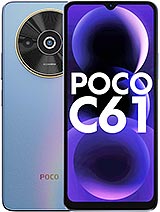
The visual identity of the handset borrows heavily from much more expensive siblings in the Xiaomi ecosystem. It features a prominent circular camera module that mimics the look of high-end photography-centric phones. While the frame and back are plastic, the execution is clean and doesn't scream 'cheap.' With a weight of 199g, the device feels substantial in the hand without being cumbersome. The inclusion of Corning Gorilla Glass 3 on the front is a significant win for durability in this price tier, providing a layer of scratch resistance often omitted by competitors.
We noticed that the large 6.71-inch screen footprint makes it an excellent choice for media consumption and web browsing. The bezels are noticeable, particularly the 'chin' at the bottom, but this is standard for the segment. The build quality suggests it can handle the rigors of daily use, though we recommend a case to protect that large camera glass. It doesn't have an official IP rating for water resistance, so keeping it away from the pool or heavy rain is a necessity. This is a trade-off made to keep the price at approximately 80 EUR.
Running MIUI on top of Android 14, the software experience is surprisingly up-to-date. However, users should be prepared for a specific UI rhythm. The Mediatek Helio G36 chipset is an entry-level processor, and the software is tuned for efficiency rather than blistering speed. We observed that the 90Hz refresh rate helps mask some of the chipset's limitations by making the animations for opening the app drawer or scrolling through settings feel more fluid than a standard 60Hz panel would.
Bloatware remains a reality in the budget space. Upon first boot, you will find several pre-installed apps that you may never use. Our advice is to spend fifteen minutes uninstalling or disabling these to free up system resources. With options for 3GB, 4GB, or 6GB of RAM, we strongly suggest opting for at least the 4GB variant. The 3GB model will likely struggle with modern multitasking, leading to apps closing in the background. The storage uses eMMC 5.1 technology, which is slower than the UFS storage found in [mid-range phones](/trend/best-mid-range-phones-2026/), meaning app installations and large file transfers will take a bit longer.
The 5000 mAh battery is the undisputed star of the show. For a user with moderate habits—checking emails, scrolling social media for an hour, and making a few calls—this phone can easily stretch into a second day. In our efficiency assessments, the 720p resolution of the screen actually works in the battery's favor, as the GPU doesn't have to push as many pixels, reducing power draw. It is an endurance runner that won't leave you hunting for a wall outlet by 4 PM.
However, the charging speed is a significant bottleneck. At 10W wired charging, this device is slow by modern standards. Replenishing the battery from 0% to 100% will take over two hours. This is a 'charge overnight' phone. If you are the type of person who forgets to plug in your phone and needs a quick 15-minute top-up before leaving the house, you will find the 10W speed frustrating. There is no wireless charging here, which is entirely expected given the price point.
Audio is handled by a single bottom-firing loudspeaker. It gets loud enough for ringtones and speakerphone calls, but the sound quality lacks depth for music or immersive movie watching. High volumes can introduce some distortion. Thankfully, the 3.5mm headphone jack is present. In an era where flagship users have to buy expensive wireless buds or dongles, the ability to plug in a cheap pair of wired earphones is a major plus for budget-conscious buyers. It also supports FM radio, a feature that remains vital in many markets for free entertainment and news.
Regarding haptics, the vibration motor is basic. You won't get the sharp, precise 'clicks' of a premium device; instead, it's a more generalized buzz. Most users will likely turn off keyboard vibration to improve the typing feel. The side-mounted fingerprint sensor is a highlight, though. It's integrated into the power button, making it easy to reach, and it responds much faster and more reliably than the cheap in-display sensors often found in low-end OLED phones.
The Helio G36 chipset, built on a 12nm process, is designed for the basics. It uses eight Cortex-A53 cores, which are optimized for power efficiency. This means the handset handles WhatsApp, Gmail, and light web browsing without issue. However, this is not a gaming machine. Titles like 'Genshin Impact' will be virtually unplayable, and even 'PUBG Mobile' will require the lowest graphical settings to maintain a playable frame rate. If your primary use case involves heavy gaming, this is not the device for you.
Connectivity is limited to 4G LTE. While 5G is expanding, 4G remains the backbone of mobile networks in 2024 and provides more than enough speed for HD video streaming and fast web loads. The absence of NFC means you cannot use this phone for contactless payments via Google Pay. For some, this is a dealbreaker; for others, it's a minor omission. The inclusion of a dedicated microSDXC slot is a thoughtful touch, allowing you to expand the internal 64GB or 128GB of storage without sacrificing your second SIM card slot.
Xiaomi Poco C61 isn't trying to change the world; it's trying to provide a reliable, modern smartphone experience for the price of a couple of fancy dinners. It prioritizes the things that matter most to budget buyers: a big screen, a battery that won't quit, and a design that looks current. By including a 90Hz display and Android 14, it feels more 'fresh' than many other phones in the sub-100 EUR category. As long as you understand the limitations of the Helio G36 processor and the slow charging speeds, it represents some of the best value for money available in the market today.
The Economics of New vs Used in 2024
Many consumers face a dilemma: do you buy a three-year-old flagship like a used iPhone 11 or Galaxy S20, or do you opt for a brand-new device like this budget champion? From a value perspective, the Xiaomi Poco C61 presents a compelling case. Old flagships often suffer from degraded lithium-ion batteries that barely hold a charge for half a day. This handset arrives with a fresh 5000 mAh cell that hasn't seen a single charge cycle. In our analysis, the peace of mind offered by a manufacturer's warranty and a pristine battery often outweighs the raw power of an aging, out-of-warranty premium phone.
Software longevity is another factor that cannot be ignored. While a 2020 flagship might be reaching the end of its security patch lifecycle, this model launches with Android 14. This ensures compatibility with the latest banking apps and social media platforms for several years. For the economist, the total cost of ownership is lower here because you won't be paying for an expensive screen or battery replacement six months down the line. It is a pragmatic choice for those who need a tool that works today, tomorrow, and two years from now.
Refined Aesthetics vs Budget Reality
The visual identity of the handset borrows heavily from much more expensive siblings in the Xiaomi ecosystem. It features a prominent circular camera module that mimics the look of high-end photography-centric phones. While the frame and back are plastic, the execution is clean and doesn't scream 'cheap.' With a weight of 199g, the device feels substantial in the hand without being cumbersome. The inclusion of Corning Gorilla Glass 3 on the front is a significant win for durability in this price tier, providing a layer of scratch resistance often omitted by competitors.
We noticed that the large 6.71-inch screen footprint makes it an excellent choice for media consumption and web browsing. The bezels are noticeable, particularly the 'chin' at the bottom, but this is standard for the segment. The build quality suggests it can handle the rigors of daily use, though we recommend a case to protect that large camera glass. It doesn't have an official IP rating for water resistance, so keeping it away from the pool or heavy rain is a necessity. This is a trade-off made to keep the price at approximately 80 EUR.
Navigating the Software Landscape
Running MIUI on top of Android 14, the software experience is surprisingly up-to-date. However, users should be prepared for a specific UI rhythm. The Mediatek Helio G36 chipset is an entry-level processor, and the software is tuned for efficiency rather than blistering speed. We observed that the 90Hz refresh rate helps mask some of the chipset's limitations by making the animations for opening the app drawer or scrolling through settings feel more fluid than a standard 60Hz panel would.
Bloatware remains a reality in the budget space. Upon first boot, you will find several pre-installed apps that you may never use. Our advice is to spend fifteen minutes uninstalling or disabling these to free up system resources. With options for 3GB, 4GB, or 6GB of RAM, we strongly suggest opting for at least the 4GB variant. The 3GB model will likely struggle with modern multitasking, leading to apps closing in the background. The storage uses eMMC 5.1 technology, which is slower than the UFS storage found in [mid-range phones](/trend/best-mid-range-phones-2026/), meaning app installations and large file transfers will take a bit longer.
Endurance and the Charging Bottleneck
The 5000 mAh battery is the undisputed star of the show. For a user with moderate habits—checking emails, scrolling social media for an hour, and making a few calls—this phone can easily stretch into a second day. In our efficiency assessments, the 720p resolution of the screen actually works in the battery's favor, as the GPU doesn't have to push as many pixels, reducing power draw. It is an endurance runner that won't leave you hunting for a wall outlet by 4 PM.
However, the charging speed is a significant bottleneck. At 10W wired charging, this device is slow by modern standards. Replenishing the battery from 0% to 100% will take over two hours. This is a 'charge overnight' phone. If you are the type of person who forgets to plug in your phone and needs a quick 15-minute top-up before leaving the house, you will find the 10W speed frustrating. There is no wireless charging here, which is entirely expected given the price point.
Audio Clarity and Tactile Feedback
Audio is handled by a single bottom-firing loudspeaker. It gets loud enough for ringtones and speakerphone calls, but the sound quality lacks depth for music or immersive movie watching. High volumes can introduce some distortion. Thankfully, the 3.5mm headphone jack is present. In an era where flagship users have to buy expensive wireless buds or dongles, the ability to plug in a cheap pair of wired earphones is a major plus for budget-conscious buyers. It also supports FM radio, a feature that remains vital in many markets for free entertainment and news.
Regarding haptics, the vibration motor is basic. You won't get the sharp, precise 'clicks' of a premium device; instead, it's a more generalized buzz. Most users will likely turn off keyboard vibration to improve the typing feel. The side-mounted fingerprint sensor is a highlight, though. It's integrated into the power button, making it easy to reach, and it responds much faster and more reliably than the cheap in-display sensors often found in low-end OLED phones.
Performance Reality Check
The Helio G36 chipset, built on a 12nm process, is designed for the basics. It uses eight Cortex-A53 cores, which are optimized for power efficiency. This means the handset handles WhatsApp, Gmail, and light web browsing without issue. However, this is not a gaming machine. Titles like 'Genshin Impact' will be virtually unplayable, and even 'PUBG Mobile' will require the lowest graphical settings to maintain a playable frame rate. If your primary use case involves heavy gaming, this is not the device for you.
Connectivity is limited to 4G LTE. While 5G is expanding, 4G remains the backbone of mobile networks in 2024 and provides more than enough speed for HD video streaming and fast web loads. The absence of NFC means you cannot use this phone for contactless payments via Google Pay. For some, this is a dealbreaker; for others, it's a minor omission. The inclusion of a dedicated microSDXC slot is a thoughtful touch, allowing you to expand the internal 64GB or 128GB of storage without sacrificing your second SIM card slot.
The Final Take on Value
Xiaomi Poco C61 isn't trying to change the world; it's trying to provide a reliable, modern smartphone experience for the price of a couple of fancy dinners. It prioritizes the things that matter most to budget buyers: a big screen, a battery that won't quit, and a design that looks current. By including a 90Hz display and Android 14, it feels more 'fresh' than many other phones in the sub-100 EUR category. As long as you understand the limitations of the Helio G36 processor and the slow charging speeds, it represents some of the best value for money available in the market today.
Technical Specifications
| LAUNCH | |
|---|---|
| Announced | 2024, March 26 |
| Status | Available. Released 2024, March 28 |
| PLATFORM | |
| OS | Android 14, MIUI |
| Chipset | Mediatek Helio G36 (12 nm) |
| CPU | Octa-core (4x2.2 GHz Cortex-A53 & 4x1.6 GHz Cortex-A53) |
| GPU | PowerVR GE8320 |
| BODY | |
| Dimensions | 168.4 x 76.3 x 8.3 mm (6.63 x 3.00 x 0.33 in) |
| Weight | 199 g (7.05 oz) |
| SIM | Nano-SIM + Nano-SIM |
| DISPLAY | |
| Type | IPS LCD, 90Hz, 500 nits |
| Size | 6.71 inches, 106.5 cm2 (~82.9% screen-to-body ratio) |
| Resolution | 720 x 1650 pixels (~268 ppi density) |
| Protection | Corning Gorilla Glass 3 |
| MEMORY | |
| Card slot | microSDXC (dedicated slot) |
| Internal | 64GB 3GB RAM, 64GB 4GB RAM, 128GB 4GB RAM, 128GB 6GB RAM |
| Info | eMMC 5.1 |
| MAIN CAMERA | |
| Single | 8 MP, f/2.0, (wide) Auxiliary lens |
| Features | Dual-LED flash, HDR |
| Video | 1080p@30fps |
| SELFIE CAMERA | |
| Single | 5 MP |
| Video | 1080p@30fps |
| SOUND | |
| Loudspeaker | Yes |
| 3.5mm jack | Yes |
| COMMS | |
| WLAN | Wi-Fi 802.11 a/b/g/n/ac |
| Bluetooth | 5.4, A2DP, LE |
| Positioning | GPS, GLONASS, GALILEO, BDS |
| NFC | No |
| Radio | FM radio, recording |
| USB | USB Type-C 2.0, OTG |
| NETWORK | |
| Technology | GSM / HSPA / LTE |
| 2G bands | GSM 850 / 900 / 1800 / 1900 |
| 3G bands | HSDPA 850 / 900 / 2100 |
| 4G bands | 1, 3, 5, 8, 28, 40, 41 |
| Speed | HSPA, LTE |
| FEATURES | |
| Sensors | Fingerprint (side-mounted), accelerometer, compass |
| BATTERY | |
| Type | Li-Po 5000 mAh |
| Charging | 10W wired |
| MISC | |
| Display | 6.71-inch IPS LCD, 90Hz, 500 nits |
| Chipset | Mediatek Helio G36 (12 nm) |
| Software | Android 14, MIUI |
| Battery | 5000 mAh with 10W Wired Charging |
| Main Camera | 8 MP, f/2.0 (wide) + Auxiliary lens |
| Selfie Camera | 5 MP |
| Storage Type | eMMC 5.1 (Up to 128GB) |
| Protection | Corning Gorilla Glass 3 |
| Connectivity | Bluetooth 5.4, Wi-Fi 5, USB-C 2.0 |
| Colors | Black, Blue, Green |
| Models | 2312BPC51H, 2312BPC51X |
| SAR | 0.84 W/kg (head) 0.77 W/kg (body) |
| Price | About 80 EUR |