Stop Hunting for Used Flagships - The New Samsung Galaxy M15 Is the Value Champion
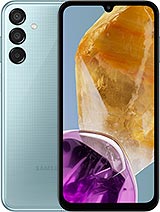
Overview
The Samsung Galaxy M15 is a budget-tier smartphone featuring a 6000 mAh battery for multi-day endurance and a 90Hz Super AMOLED display for fluid visuals, aimed at pragmatic users prioritizing long-term software support and battery longevity. Released in April 2024, it competes with aging flagship hardware and contemporary entry-level offerings by providing a specific balance of modern connectivity and endurance that few can match at this price point.
In the current April 2024 market, we see a recurring dilemma for the savvy buyer: Do you pick up a three-year-old flagship like a used Galaxy S21 or an iPhone 12, or do you opt for a brand-new Samsung Galaxy M15? From an economic perspective, the choice often boils down to the 'hidden costs' of ownership. A used flagship typically arrives with a battery health sitting at 80% or lower. In practical terms, that means a device designed for 10 hours of screen time is now struggling to hit seven. This model, however, enters the arena with a massive 6000 mAh cell that isn't just large—it is fresh.
We also need to consider the software horizon. A 2021 flagship is likely approaching its final major OS update. This handset, running Android 14 out of the box with One UI 6, comes with a promise of four major Android upgrades. This extends its functional life until 2028. For those calculating the cost-per-year of a device, the new budget option often wins simply because it won't be obsolete in 18 months. While you trade away the raw power of a Snapdragon 888, you gain a modern 6nm Mediatek Dimensity 6100+ chipset. This processor uses Cortex-A76 cores for performance and Cortex-A55 cores for efficiency, ensuring it handles daily social media scrolling and banking apps without the thermal throttling issues that plagued 2021-era high-end chips.
The construction of this model tells a clear story of functional compromise. We are looking at a glass front paired with a plastic back and a plastic frame. This isn't the premium sandwich of metal and Gorilla Glass Victus found on higher tiers, but there is a structural benefit to plastic: it doesn't shatter on the first drop. However, with a thickness of 9.3 mm and a weight of 217 g, users should expect substantial heft. This is the direct trade-off for that massive battery. It is a thick device that feels dense in the hand, almost reminiscent of [rugged phones](/trend/best-rugged-phones-2026/) without the rubber cladding.
Compared to a used flagship, which usually aims for a slim, 7.5mm profile, this handset is a tank. The 19.5:9 aspect ratio helps with grip, making the 6.5-inch screen manageable for one-handed use, but the weight is always present. The design language follows the 2024 Samsung aesthetic—minimalist, with three distinct camera rings on the back. It looks modern from a distance, but the plastic finish does lack the depth and premium sheen of glass. It is a tool, not a fashion statement, and for the value-conscious buyer, that is perfectly acceptable.
One of the most significant advantages this model holds over modern flagships is the inclusion of the 3.5mm headphone jack. In an era where manufacturers force expensive wireless earbuds onto consumers, having a dedicated analog port is a massive win for reliability. We also noticed the microSDXC support. While it uses a shared SIM slot, the ability to expand storage by up to 1TB is a feature that has vanished from the premium segment. For users who store large offline map files, music libraries, or video content, this is a critical utility.
Another hardware quirk worth mentioning is the side-mounted fingerprint sensor. In our experience, these physical sensors are often faster and more reliable than the under-display optical sensors found in mid-range competitors. It provides an immediate tactile target that works even with slightly damp fingers. Additionally, the NFC support (region dependent) ensures that mobile payments remain an option—a feature sometimes stripped from 'budget' phones in various markets but retained here to maintain its 'utility champion' status.
The glossy plastic finish on the back is, as expected, a magnet for skin oils. Within minutes of handling, the surface will show visible smudges, particularly on the 'Dark Blue' and 'Gray' variants. We highly recommend using a case, not just for protection, but to maintain a clean appearance. Because it lacks an official IP rating for water and dust resistance, a protective shell becomes even more vital to prevent moisture ingress through the ports.
In terms of handling, the device feels sturdy. There is no flex in the chassis when pressure is applied, which is a common failure point in cheaper plastic phones. The buttons offer a standard tactile click, though they don't feel as premium as the milled aluminum toggles on an S-series device. The Virtual Proximity Sensing is a software-based solution used to turn off the screen during calls. While it saves space and cost, users should be aware that it relies on the accelerometer to detect the phone's orientation rather than a physical infrared beam, so it may occasionally fail if you are lying down during a call.
The audio setup on this handset is functional rather than immersive. You get a single bottom-firing loudspeaker which provides enough volume for podcasts and navigation cues but lacks any semblance of bass or stereo separation for cinematic content. If you are watching movies, you will want to utilize that 3.5mm jack or Bluetooth 5.3. Speaking of Bluetooth, the support for A2DP and LE ensures a stable connection with modern wearables and speakers.
The microphone quality is standard for the price tier. It handles voice calls well in quiet environments, but the lack of aggressive noise-canceling hardware means that wind noise or heavy traffic will be audible to the person on the other end. It is another area where the 'Value Hunter' must accept a 'good enough' standard rather than the studio-quality arrays found in $800 devices.
Powering this device is the Mediatek Dimensity 6100+, a 6nm chipset that is essentially a refined version of older mid-range silicon. It isn't a gaming powerhouse. If you are looking to play Genshin Impact on high settings, look elsewhere. However, for the target audience—those who jump between WhatsApp, YouTube, and Chrome—it is surprisingly snappy. The inclusion of 5G connectivity (Sub6) ensures that you are future-proofed for the next several years of network upgrades.
The Mali-G57 MC2 GPU handles casual titles like Subway Surfers or Candy Crush without issue. The 90Hz refresh rate on the Super AMOLED panel makes the UI feel much smoother than the 60Hz panels of yesteryear. Because it is an AMOLED screen, you get deep blacks and infinite contrast, which makes a massive difference when reading in dark mode. The 800 nits (HBM) peak brightness is a notable spec here; it allows the screen to remain legible even under the harsh April sun, outperforming many older flagship LCDs that lose clarity in high-ambient light.
Ultimately, the Samsung Galaxy M15 is about reducing the total cost of ownership. You aren't paying for titanium frames or periscope zoom lenses. You are paying for a device that will last three days on a single charge and receive security patches for half a decade. In the battle against used flagships, the peace of mind provided by a manufacturer warranty and a fresh battery often outweighs the allure of a slightly faster processor from three years ago. It is a calculated purchase for the user who values utility, longevity, and endurance above all else.
The Pragmatic War: New Budget vs. Used Flagship
In the current April 2024 market, we see a recurring dilemma for the savvy buyer: Do you pick up a three-year-old flagship like a used Galaxy S21 or an iPhone 12, or do you opt for a brand-new Samsung Galaxy M15? From an economic perspective, the choice often boils down to the 'hidden costs' of ownership. A used flagship typically arrives with a battery health sitting at 80% or lower. In practical terms, that means a device designed for 10 hours of screen time is now struggling to hit seven. This model, however, enters the arena with a massive 6000 mAh cell that isn't just large—it is fresh.
We also need to consider the software horizon. A 2021 flagship is likely approaching its final major OS update. This handset, running Android 14 out of the box with One UI 6, comes with a promise of four major Android upgrades. This extends its functional life until 2028. For those calculating the cost-per-year of a device, the new budget option often wins simply because it won't be obsolete in 18 months. While you trade away the raw power of a Snapdragon 888, you gain a modern 6nm Mediatek Dimensity 6100+ chipset. This processor uses Cortex-A76 cores for performance and Cortex-A55 cores for efficiency, ensuring it handles daily social media scrolling and banking apps without the thermal throttling issues that plagued 2021-era high-end chips.
Build Quality and the Ergonomics of Mass
The construction of this model tells a clear story of functional compromise. We are looking at a glass front paired with a plastic back and a plastic frame. This isn't the premium sandwich of metal and Gorilla Glass Victus found on higher tiers, but there is a structural benefit to plastic: it doesn't shatter on the first drop. However, with a thickness of 9.3 mm and a weight of 217 g, users should expect substantial heft. This is the direct trade-off for that massive battery. It is a thick device that feels dense in the hand, almost reminiscent of [rugged phones](/trend/best-rugged-phones-2026/) without the rubber cladding.
Compared to a used flagship, which usually aims for a slim, 7.5mm profile, this handset is a tank. The 19.5:9 aspect ratio helps with grip, making the 6.5-inch screen manageable for one-handed use, but the weight is always present. The design language follows the 2024 Samsung aesthetic—minimalist, with three distinct camera rings on the back. It looks modern from a distance, but the plastic finish does lack the depth and premium sheen of glass. It is a tool, not a fashion statement, and for the value-conscious buyer, that is perfectly acceptable.
Underrated Features: The Legacy and the Modern
One of the most significant advantages this model holds over modern flagships is the inclusion of the 3.5mm headphone jack. In an era where manufacturers force expensive wireless earbuds onto consumers, having a dedicated analog port is a massive win for reliability. We also noticed the microSDXC support. While it uses a shared SIM slot, the ability to expand storage by up to 1TB is a feature that has vanished from the premium segment. For users who store large offline map files, music libraries, or video content, this is a critical utility.
Another hardware quirk worth mentioning is the side-mounted fingerprint sensor. In our experience, these physical sensors are often faster and more reliable than the under-display optical sensors found in mid-range competitors. It provides an immediate tactile target that works even with slightly damp fingers. Additionally, the NFC support (region dependent) ensures that mobile payments remain an option—a feature sometimes stripped from 'budget' phones in various markets but retained here to maintain its 'utility champion' status.
The Fingerprint Magnet Test and Durability
The glossy plastic finish on the back is, as expected, a magnet for skin oils. Within minutes of handling, the surface will show visible smudges, particularly on the 'Dark Blue' and 'Gray' variants. We highly recommend using a case, not just for protection, but to maintain a clean appearance. Because it lacks an official IP rating for water and dust resistance, a protective shell becomes even more vital to prevent moisture ingress through the ports.
In terms of handling, the device feels sturdy. There is no flex in the chassis when pressure is applied, which is a common failure point in cheaper plastic phones. The buttons offer a standard tactile click, though they don't feel as premium as the milled aluminum toggles on an S-series device. The Virtual Proximity Sensing is a software-based solution used to turn off the screen during calls. While it saves space and cost, users should be aware that it relies on the accelerometer to detect the phone's orientation rather than a physical infrared beam, so it may occasionally fail if you are lying down during a call.
Audio Experience: Clarity vs. Power
The audio setup on this handset is functional rather than immersive. You get a single bottom-firing loudspeaker which provides enough volume for podcasts and navigation cues but lacks any semblance of bass or stereo separation for cinematic content. If you are watching movies, you will want to utilize that 3.5mm jack or Bluetooth 5.3. Speaking of Bluetooth, the support for A2DP and LE ensures a stable connection with modern wearables and speakers.
The microphone quality is standard for the price tier. It handles voice calls well in quiet environments, but the lack of aggressive noise-canceling hardware means that wind noise or heavy traffic will be audible to the person on the other end. It is another area where the 'Value Hunter' must accept a 'good enough' standard rather than the studio-quality arrays found in $800 devices.
Performance Reality: The Dimensity 6100+ Factor
Powering this device is the Mediatek Dimensity 6100+, a 6nm chipset that is essentially a refined version of older mid-range silicon. It isn't a gaming powerhouse. If you are looking to play Genshin Impact on high settings, look elsewhere. However, for the target audience—those who jump between WhatsApp, YouTube, and Chrome—it is surprisingly snappy. The inclusion of 5G connectivity (Sub6) ensures that you are future-proofed for the next several years of network upgrades.
The Mali-G57 MC2 GPU handles casual titles like Subway Surfers or Candy Crush without issue. The 90Hz refresh rate on the Super AMOLED panel makes the UI feel much smoother than the 60Hz panels of yesteryear. Because it is an AMOLED screen, you get deep blacks and infinite contrast, which makes a massive difference when reading in dark mode. The 800 nits (HBM) peak brightness is a notable spec here; it allows the screen to remain legible even under the harsh April sun, outperforming many older flagship LCDs that lose clarity in high-ambient light.
The Final Take: Longevity Over Luxury
Ultimately, the Samsung Galaxy M15 is about reducing the total cost of ownership. You aren't paying for titanium frames or periscope zoom lenses. You are paying for a device that will last three days on a single charge and receive security patches for half a decade. In the battle against used flagships, the peace of mind provided by a manufacturer warranty and a fresh battery often outweighs the allure of a slightly faster processor from three years ago. It is a calculated purchase for the user who values utility, longevity, and endurance above all else.
Technical Specifications
| LAUNCH | |
|---|---|
| Announced | 2024, March 09 |
| Status | Available. Released 2024, April 05 |
| PLATFORM | |
| OS | Android 14, up to 4 major Android upgrades, One UI 6 |
| Chipset | Mediatek Dimensity 6100+ (6 nm) |
| CPU | Octa-core (2x2.2 GHz Cortex-A76 & 6x2.0 GHz Cortex-A55) |
| GPU | Mali-G57 MC2 |
| BODY | |
| Dimensions | 160.1 x 76.8 x 9.3 mm (6.30 x 3.02 x 0.37 in) |
| Weight | 217 g (7.65 oz) |
| Build | Glass front, plastic back, plastic frame |
| SIM | Nano-SIM + Nano-SIM |
| DISPLAY | |
| Type | Super AMOLED, 90Hz, 800 nits (HBM) |
| Size | 6.5 inches, 103.7 cm2 (~84.3% screen-to-body ratio) |
| Resolution | 1080 x 2340 pixels, 19.5:9 ratio (~396 ppi density) |
| MEMORY | |
| Card slot | microSDXC (uses shared SIM slot) |
| Internal | 128GB 4GB RAM, 128GB 6GB RAM, 128GB 8GB RAM, 256GB 8GB RAM |
| MAIN CAMERA | |
| Triple | 50 MP, f/1.8, (wide), AF 5 MP, f/2.2, (ultrawide) 2 MP (macro) |
| Features | LED flash, panorama, HDR |
| Video | 1080p@30fps, gyro-EIS |
| SELFIE CAMERA | |
| Single | 13 MP, f/2.0, (wide) |
| Video | 1080p@30fps |
| SOUND | |
| Loudspeaker | Yes |
| 3.5mm jack | Yes |
| COMMS | |
| WLAN | Wi-Fi 802.11 a/b/g/n/ac, dual-band, Wi-Fi Direct |
| Bluetooth | 5.3, A2DP, LE |
| Positioning | GPS, GALILEO, GLONASS, BDS, QZSS |
| NFC | Yes (market/region dependent) |
| Radio | No |
| USB | USB Type-C 2.0 |
| NETWORK | |
| Technology | GSM / HSPA / LTE / 5G |
| 2G bands | GSM 850 / 900 / 1800 / 1900 |
| 3G bands | HSDPA 850 / 900 / 1700(AWS) / 1900 / 2100 |
| 4G bands | 1, 2, 3, 4, 5, 7, 8, 12, 17, 20, 26, 28, 38, 40, 41, 66 |
| 5G bands | 1, 3, 5, 7, 8, 20, 28, 38, 40, 41, 66, 77, 78 SA/NSA/Sub6 |
| Speed | HSPA, LTE, 5G |
| FEATURES | |
| Sensors | Fingerprint (side-mounted), accelerometer, gyro, compass |
| Info | Virtual proximity sensing |
| BATTERY | |
| Type | 6000 mAh |
| Charging | 25W wired |
| MISC | |
| Colors | Light Blue, Dark Blue, Gray |
| Models | SM-M156B, SM-M156B/DS, SM-M156B/DSN |
| SAR | 0.71 W/kg (head) |
| SAR EU | 0.78 W/kg (head) 1.19 W/kg (body) |
| Price | € 187.99 / ₹ 15,999 |