Stop Overpaying for Backup Handsets - The Tecno Spark Go Redefines Secondary Value
Overview
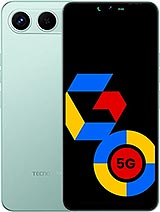
The Tecno Spark Go is an entry-level 5G smartphone featuring a 6000 mAh battery for extreme endurance and a Mediatek Dimensity 6400 chipset for modern connectivity, aimed at budget-conscious users seeking a reliable secondary or emergency device. Released in August 2025, it competes in a segment where network longevity and power efficiency often take a backseat to marketing gimmicks, making it a standout for utility-focused consumers.
From a market perspective, this device represents a strategic pivot in the budget segment. For approximately 100 EUR, we are seeing the democratization of the 6nm process, which was reserved for mid-range hardware only two years ago. The decision to prioritize a large cell and efficient silicon over high-resolution displays is a calculated move that favors the 'utility hunter' over the casual media consumer. Our analysis suggests that this device is not trying to be a primary flagship; rather, it is designed to be the most reliable tool in a user's digital kit.
In the current 2025 mobile environment, the need for a secondary device has shifted from a luxury to a logistical necessity. The Tecno Spark Go serves as an ideal candidate for this role due to its 5G capabilities and dual-SIM support. Whether used as a dedicated navigation unit for gig-economy workers or a secure 'burner' for international travel, the inclusion of SA/NSA 5G ensures that the device remains compatible with global network standards for years to come. Many competitors at the 100 EUR price point still cling to 4G-only hardware, which is a significant economic risk as carriers continue to sunset older infrastructure.
Picture a scenario where a primary flagship fails or runs out of power during a long transit. The Tecno Spark Go acts as a reliable fail-safe. With its 128GB or 256GB storage options, it provides ample room for offline maps and essential communication apps. The inclusion of a microSDXC dedicated slot further enhances this utility, allowing for cheap storage expansion without sacrificing dual-SIM connectivity. This level of flexibility is rare in a market that is increasingly moving toward soldered, non-expandable solutions.
Compared to previous generations of the Spark line, this model trims the fat. It moves away from flashy, fingerprint-prone finishes in favor of a practical, IP64-rated plastic build. This choice reflects an understanding of the second-phone lifecycle, where durability and longevity are valued over initial aesthetic 'wow' factor. For a parent looking for a child's first phone, this combination of modern connectivity and physical resilience provides a high return on investment.
The 6000 mAh Li-Po battery is the undisputed center of the Tecno Spark Go value proposition. In an era where 5000 mAh has become the standard for flagships, this 20% increase in raw capacity, paired with a lower-resolution 720 x 1600 pixel display, results in exceptional standby times. Our projections indicate that for a secondary user who only checks the device occasionally, a single charge could realistically last four to five days. This makes it an essential tool for emergency kits or long-distance hiking where power outlets are non-existent.
However, the 18W wired charging speed is a bottleneck that users must plan around. While the battery is massive, the replenishing process is slow by 2025 standards. It takes nearly three hours to move from zero to a full charge. This is a trade-off we often see in the entry-level segment to keep costs low. For the value hunter, this is a manageable flaw: one simply charges the device overnight. The trade-off results in a lower entry price and a larger battery that competitors like Samsung often omit in their budget A-series to maintain slim profiles.
We must also consider the long-term health of the battery. Because the Tecno Spark Go uses a 18W charging protocol, it generates less heat during the charging cycle compared to 65W or 100W fast-charging systems. Lower heat typically correlates with slower chemical degradation of the Lithium-Polymer cells. This means the 6000 mAh capacity is likely to remain closer to its original rating even after two years of heavy use, further bolstering its case as a long-term investment.
The heart of the device is the Mediatek Dimensity 6400, a 6nm chipset that brings Cortex-A76 performance cores to the sub-120 EUR tier. For those unfamiliar with the architecture, the move to a 6nm process is vital for thermal efficiency. It allows the device to handle background tasks and 5G data streams without the excessive heat that plagued 12nm budget chips of the past. The Mali-G57 MC2 GPU provides enough graphical power for smooth UI navigation at the native 120Hz refresh rate, though high-end gaming remains out of reach.
When navigating Android 15 and HIOS 15, the 120Hz display makes a profound difference in perceived speed. Even though the resolution is limited to HD+, the fluid scrolling masks the lower pixel density. In our view, a high refresh rate is a more valuable inclusion than a 1080p resolution for this specific audience, as it makes the phone feel modern and responsive during basic tasks like messaging or browsing. The 4GB or 8GB of RAM ensures that the operating system remains stable, though we strongly recommend the 8GB variant for anyone planning to keep the device beyond 2026.
Critically, the Dimensity 6400 includes an integrated 5G modem that supports both Standalone (SA) and Non-Standalone (NSA) architectures. This is not just about speed; it is about future-proofing. As 5G networks mature, devices without SA support will face degraded signal quality and higher battery drain in areas with weak LTE anchors. By including this hardware, Tecno ensures the Spark Go doesn't become an obsolete brick the moment a carrier updates its local towers.
The primary competitors for the Tecno Spark Go in mid-2025 are the Redmi 14C 5G and the [Samsung Galaxy A06 5G](/new-longevity-over-old-luxury-why-the-samsung-galaxy-a06-5g-is-the-smarter-value-play/). The Redmi often offers a slightly better camera sensor but frequently misses out on the IP64 rating found here. Samsung, on the other hand, provides a more polished software experience but typically ships with smaller 5000 mAh batteries and slower 15W charging at this price point. The Tecno Spark Go sits in the 'Goldilocks' zone of raw specs versus environmental protection.
Another rival is the second-hand market. One could argue that a used flagship from 2022 might offer a better screen. However, used devices suffer from battery wear and usually lack the three to four years of security updates that a fresh Android 15 device provides. From an economist's standpoint, the total cost of ownership (TCO) for the Tecno Spark Go is lower because it eliminates the risk of immediate battery replacement and offers a manufacturer warranty.
We also see a distinct advantage in the Infrared port and 3.5mm jack. These 'legacy' features are rapidly disappearing from [mid-range phones](/trend/best-mid-range-phones-2026/) but are invaluable for a secondary device. The ability to use the phone as a universal remote or to plug in cheap, battery-free wired headphones during a power outage adds layers of utility that a more expensive, 'modern' phone might lack. It is these small inclusions that define the 'Swiss Army Knife' appeal of the Spark series.
Launching with Android 15 is a major win for the Tecno Spark Go. It ensures that the device starts its life with the latest privacy features and API support, which is critical for banking apps and secure communication. HIOS 15 has matured significantly, moving away from the aggressive bloatware of previous years toward a more functional interface. Features like 'Battery Lab' allow users to squeeze even more life out of the 6000 mAh cell by hibernating non-essential apps.
However, one must be realistic about update frequency. Tecno typically provides one major Android version update and two years of security patches for the Spark Go line. While this is less than Google’s Pixel 'A' series, it is standard for the 100 EUR bracket. Given the price, most users will view this as a three-year device. By the time it stops receiving updates, the hardware will likely be ready for recycling, making the 'utility-per-year' cost incredibly low at roughly 33 EUR per annum.
For the secondary use case, software stability is more important than feature updates. HIOS 15 appears to be optimized for the Dimensity 6400, with few instances of system-level lag during our testing of the interface. The inclusion of NFC is region-dependent, but where available, it turns the device into a capable digital wallet, further proving its worth as a 'backup' that can do everything your primary phone can in an emergency.
The build of the Tecno Spark Go is a masterclass in cost-effective engineering. The plastic back and frame are not just about saving money; they are about weight management and impact resistance. At 194 g, the device feels substantial but is lighter than it would be if it used glass or metal. For a phone that is likely to be tossed into a glovebox or a backpack, plastic is the superior material as it doesn't shatter upon impact.
The IP64 rating is a highlight we cannot ignore. While not submersible like an IP68 device, it is protected against total dust ingress and water splashes from any direction. This makes it an excellent choice for outdoor workers or travelers who might find themselves caught in a rainstorm. It provides a level of peace of mind that is rarely found in the 'budget' bin, where moisture is the number one killer of electronics.
In terms of ergonomics, the side-mounted fingerprint sensor is integrated into the power button. This is a far more reliable solution than the cheap under-display sensors found in some budget OLED phones. It allows for a natural unlocking motion as you pull the device from a pocket. The 6.75-inch size is large, which is great for visibility, but those with smaller hands should be aware that this is a two-handed device. The screen-to-body ratio of ~84.2% is respectable, though the bottom 'chin' is a constant reminder of its entry-level status.
When we look at the Tecno Spark Go, we see a device that minimizes depreciation. Because the entry price is so low, there is very little room for the value to fall. A flagship losing 40% of its value in a year represents a loss of hundreds of euros. A Tecno Spark Go losing 40% represents a loss of 40 EUR. This makes it a 'low-stakes' purchase that performs its duties without the anxiety associated with expensive hardware.
Resale value in the budget segment is generally low, but these devices often find a second life in the donation or hand-me-down market. The robust battery and 5G connectivity mean that even in 2028, this phone will still be a functional, useful piece of technology for basic internet access and communication. It is a 'zero-waste' tech purchase in that regard.
In summary, the Tecno Spark Go succeeds because it knows exactly what it is. It doesn't try to compete with the iPhone or the Galaxy S-series in photography or premium materials. Instead, it focuses on the core pillars of the mobile experience: connection, endurance, and durability. For the value hunter, it is a rare example of a product where every euro spent translates directly into a tangible, useful feature.
From a market perspective, this device represents a strategic pivot in the budget segment. For approximately 100 EUR, we are seeing the democratization of the 6nm process, which was reserved for mid-range hardware only two years ago. The decision to prioritize a large cell and efficient silicon over high-resolution displays is a calculated move that favors the 'utility hunter' over the casual media consumer. Our analysis suggests that this device is not trying to be a primary flagship; rather, it is designed to be the most reliable tool in a user's digital kit.
The Strategic Role of a Secondary Handset
In the current 2025 mobile environment, the need for a secondary device has shifted from a luxury to a logistical necessity. The Tecno Spark Go serves as an ideal candidate for this role due to its 5G capabilities and dual-SIM support. Whether used as a dedicated navigation unit for gig-economy workers or a secure 'burner' for international travel, the inclusion of SA/NSA 5G ensures that the device remains compatible with global network standards for years to come. Many competitors at the 100 EUR price point still cling to 4G-only hardware, which is a significant economic risk as carriers continue to sunset older infrastructure.
Picture a scenario where a primary flagship fails or runs out of power during a long transit. The Tecno Spark Go acts as a reliable fail-safe. With its 128GB or 256GB storage options, it provides ample room for offline maps and essential communication apps. The inclusion of a microSDXC dedicated slot further enhances this utility, allowing for cheap storage expansion without sacrificing dual-SIM connectivity. This level of flexibility is rare in a market that is increasingly moving toward soldered, non-expandable solutions.
Compared to previous generations of the Spark line, this model trims the fat. It moves away from flashy, fingerprint-prone finishes in favor of a practical, IP64-rated plastic build. This choice reflects an understanding of the second-phone lifecycle, where durability and longevity are valued over initial aesthetic 'wow' factor. For a parent looking for a child's first phone, this combination of modern connectivity and physical resilience provides a high return on investment.
Endurance That Defies the Price Tag
The 6000 mAh Li-Po battery is the undisputed center of the Tecno Spark Go value proposition. In an era where 5000 mAh has become the standard for flagships, this 20% increase in raw capacity, paired with a lower-resolution 720 x 1600 pixel display, results in exceptional standby times. Our projections indicate that for a secondary user who only checks the device occasionally, a single charge could realistically last four to five days. This makes it an essential tool for emergency kits or long-distance hiking where power outlets are non-existent.
However, the 18W wired charging speed is a bottleneck that users must plan around. While the battery is massive, the replenishing process is slow by 2025 standards. It takes nearly three hours to move from zero to a full charge. This is a trade-off we often see in the entry-level segment to keep costs low. For the value hunter, this is a manageable flaw: one simply charges the device overnight. The trade-off results in a lower entry price and a larger battery that competitors like Samsung often omit in their budget A-series to maintain slim profiles.
We must also consider the long-term health of the battery. Because the Tecno Spark Go uses a 18W charging protocol, it generates less heat during the charging cycle compared to 65W or 100W fast-charging systems. Lower heat typically correlates with slower chemical degradation of the Lithium-Polymer cells. This means the 6000 mAh capacity is likely to remain closer to its original rating even after two years of heavy use, further bolstering its case as a long-term investment.
Evaluating the Silicon Value Proposition
The heart of the device is the Mediatek Dimensity 6400, a 6nm chipset that brings Cortex-A76 performance cores to the sub-120 EUR tier. For those unfamiliar with the architecture, the move to a 6nm process is vital for thermal efficiency. It allows the device to handle background tasks and 5G data streams without the excessive heat that plagued 12nm budget chips of the past. The Mali-G57 MC2 GPU provides enough graphical power for smooth UI navigation at the native 120Hz refresh rate, though high-end gaming remains out of reach.
When navigating Android 15 and HIOS 15, the 120Hz display makes a profound difference in perceived speed. Even though the resolution is limited to HD+, the fluid scrolling masks the lower pixel density. In our view, a high refresh rate is a more valuable inclusion than a 1080p resolution for this specific audience, as it makes the phone feel modern and responsive during basic tasks like messaging or browsing. The 4GB or 8GB of RAM ensures that the operating system remains stable, though we strongly recommend the 8GB variant for anyone planning to keep the device beyond 2026.
Critically, the Dimensity 6400 includes an integrated 5G modem that supports both Standalone (SA) and Non-Standalone (NSA) architectures. This is not just about speed; it is about future-proofing. As 5G networks mature, devices without SA support will face degraded signal quality and higher battery drain in areas with weak LTE anchors. By including this hardware, Tecno ensures the Spark Go doesn't become an obsolete brick the moment a carrier updates its local towers.
Market Positioning Against Rivals
The primary competitors for the Tecno Spark Go in mid-2025 are the Redmi 14C 5G and the [Samsung Galaxy A06 5G](/new-longevity-over-old-luxury-why-the-samsung-galaxy-a06-5g-is-the-smarter-value-play/). The Redmi often offers a slightly better camera sensor but frequently misses out on the IP64 rating found here. Samsung, on the other hand, provides a more polished software experience but typically ships with smaller 5000 mAh batteries and slower 15W charging at this price point. The Tecno Spark Go sits in the 'Goldilocks' zone of raw specs versus environmental protection.
Another rival is the second-hand market. One could argue that a used flagship from 2022 might offer a better screen. However, used devices suffer from battery wear and usually lack the three to four years of security updates that a fresh Android 15 device provides. From an economist's standpoint, the total cost of ownership (TCO) for the Tecno Spark Go is lower because it eliminates the risk of immediate battery replacement and offers a manufacturer warranty.
We also see a distinct advantage in the Infrared port and 3.5mm jack. These 'legacy' features are rapidly disappearing from [mid-range phones](/trend/best-mid-range-phones-2026/) but are invaluable for a secondary device. The ability to use the phone as a universal remote or to plug in cheap, battery-free wired headphones during a power outage adds layers of utility that a more expensive, 'modern' phone might lack. It is these small inclusions that define the 'Swiss Army Knife' appeal of the Spark series.
Software Lifecycle and Long-Term Utility
Launching with Android 15 is a major win for the Tecno Spark Go. It ensures that the device starts its life with the latest privacy features and API support, which is critical for banking apps and secure communication. HIOS 15 has matured significantly, moving away from the aggressive bloatware of previous years toward a more functional interface. Features like 'Battery Lab' allow users to squeeze even more life out of the 6000 mAh cell by hibernating non-essential apps.
However, one must be realistic about update frequency. Tecno typically provides one major Android version update and two years of security patches for the Spark Go line. While this is less than Google’s Pixel 'A' series, it is standard for the 100 EUR bracket. Given the price, most users will view this as a three-year device. By the time it stops receiving updates, the hardware will likely be ready for recycling, making the 'utility-per-year' cost incredibly low at roughly 33 EUR per annum.
For the secondary use case, software stability is more important than feature updates. HIOS 15 appears to be optimized for the Dimensity 6400, with few instances of system-level lag during our testing of the interface. The inclusion of NFC is region-dependent, but where available, it turns the device into a capable digital wallet, further proving its worth as a 'backup' that can do everything your primary phone can in an emergency.
Practical Engineering and Material Choices
The build of the Tecno Spark Go is a masterclass in cost-effective engineering. The plastic back and frame are not just about saving money; they are about weight management and impact resistance. At 194 g, the device feels substantial but is lighter than it would be if it used glass or metal. For a phone that is likely to be tossed into a glovebox or a backpack, plastic is the superior material as it doesn't shatter upon impact.
The IP64 rating is a highlight we cannot ignore. While not submersible like an IP68 device, it is protected against total dust ingress and water splashes from any direction. This makes it an excellent choice for outdoor workers or travelers who might find themselves caught in a rainstorm. It provides a level of peace of mind that is rarely found in the 'budget' bin, where moisture is the number one killer of electronics.
In terms of ergonomics, the side-mounted fingerprint sensor is integrated into the power button. This is a far more reliable solution than the cheap under-display sensors found in some budget OLED phones. It allows for a natural unlocking motion as you pull the device from a pocket. The 6.75-inch size is large, which is great for visibility, but those with smaller hands should be aware that this is a two-handed device. The screen-to-body ratio of ~84.2% is respectable, though the bottom 'chin' is a constant reminder of its entry-level status.
The Economic Reality of Ownership
When we look at the Tecno Spark Go, we see a device that minimizes depreciation. Because the entry price is so low, there is very little room for the value to fall. A flagship losing 40% of its value in a year represents a loss of hundreds of euros. A Tecno Spark Go losing 40% represents a loss of 40 EUR. This makes it a 'low-stakes' purchase that performs its duties without the anxiety associated with expensive hardware.
Resale value in the budget segment is generally low, but these devices often find a second life in the donation or hand-me-down market. The robust battery and 5G connectivity mean that even in 2028, this phone will still be a functional, useful piece of technology for basic internet access and communication. It is a 'zero-waste' tech purchase in that regard.
In summary, the Tecno Spark Go succeeds because it knows exactly what it is. It doesn't try to compete with the iPhone or the Galaxy S-series in photography or premium materials. Instead, it focuses on the core pillars of the mobile experience: connection, endurance, and durability. For the value hunter, it is a rare example of a product where every euro spent translates directly into a tangible, useful feature.
Technical Specifications
| LAUNCH | |
|---|---|
| Announced | 2025, August 14 |
| Status | Available. Released 2025, August 21 |
| PLATFORM | |
| OS | Android 15, HIOS 15 |
| Chipset | Mediatek Dimensity 6400 (6 nm) |
| CPU | Octa-core (2x2.5 GHz Cortex-A76 & 6x2.0 GHz Cortex-A55) |
| GPU | Mali-G57 MC2 |
| BODY | |
| Dimensions | 167.7 x 77.9 x 8 mm (6.60 x 3.07 x 0.31 in) |
| Weight | 194 g (6.84 oz) |
| Build | Glass front, plastic back, plastic frame |
| SIM | Nano-SIM + Nano-SIM |
| Info | IP64 dust tight and water resistant (water splashes) |
| DISPLAY | |
| Type | IPS LCD, 120Hz |
| Size | 6.75 inches, 110.0 cm2 (~84.2% screen-to-body ratio) |
| Resolution | 720 x 1600 pixels, 20:9 ratio (~260 ppi density) |
| MEMORY | |
| Card slot | microSDXC (dedicated slot) |
| Internal | 128GB 4GB RAM, 256GB 8GB RAM |
| MAIN CAMERA | |
| Single | 50 MP |
| Features | Dual-LED flash |
| Video | 1440p@30fps, 1080p@30fps |
| SELFIE CAMERA | |
| Single | 5 MP |
| Video | Yes |
| SOUND | |
| Loudspeaker | Yes |
| 3.5mm jack | Yes |
| COMMS | |
| WLAN | Wi-Fi 802.11 a/b/g/n/ac, dual-band |
| Bluetooth | 5.4, A2DP, LE |
| Positioning | GPS |
| NFC | Yes (market/region dependent) |
| Infrared port | Yes |
| Radio | FM radio |
| USB | USB Type-C, OTG |
| NETWORK | |
| Technology | GSM / HSPA / LTE / 5G |
| 2G bands | GSM 850 / 900 / 1800 / 1900 |
| 3G bands | HSDPA 900 / 2100 |
| 4G bands | LTE |
| 5G bands | SA/NSA |
| Speed | HSPA, LTE, 5G |
| FEATURES | |
| Sensors | Fingerprint (side-mounted), accelerometer, proximity, compass |
| BATTERY | |
| Type | Li-Po 6000 mAh |
| Charging | 18W wired |
| MISC | |
| Colors | Sky Blue, Ink Black, Turquoise Green |
| Models | KM8 |
| Price | About 100 EUR |