Stop Overpaying for Basic Hardware - The Oukitel C51 Value Play
Overview
The Oukitel C51 is a budget-tier smartphone featuring a 6.8-inch IPS LCD for extensive screen real estate and a Unisoc T606 chipset for reliable entry-level performance, aimed at cost-conscious consumers seeking essential functionality without premium overhead. Released in June 2024, it enters a crowded marketplace where its focus on durability and storage capacity attempts to offset the modest processing power and display resolution.
In the world of budget consumer electronics, the Oukitel C51 represents a specific type of financial asset: the immediate-use tool. Unlike flagship devices from premium brands that might retain 60% of their value after a year, entry-level handsets typically experience a much steeper depreciation curve. We anticipate this model will lose approximately 50% of its market value within the first six months. This isn't necessarily a failure of the hardware, but rather a reflection of the rapid iteration in the sub-$150 segment. For an economist, the purchase should be viewed as a sunk cost intended for a 24-month utility cycle rather than an investment with resale potential.
The secondary market for niche brands is often illiquid. Potential buyers should recognize that while the device offers significant utility per dollar spent today, finding a buyer for a used T606-powered device in 2026 will be challenging. We recommend users look at this as a 'run-to-fail' device. If you can extract two years of service from the handset, the daily cost of ownership falls to pennies, representing a successful allocation of capital for a secondary phone, a child's first device, or a reliable work tool.
Oukitel has built a reputation on ruggedized devices, and while this model isn't a full-blown armored tank, it inherits some of that structural DNA. This model is surprisingly robust for its price point. It features Corning Gorilla Glass 5 and a certified 0.8m drop resistance, which is an anomaly in the budget sector where most competitors use unbranded glass or older iterations of protection. We see this as a 'hidden insurance policy' that saves the user from the $50-70 cost of a screen repair—a repair that would likely exceed the residual value of the phone itself.
From a reliability standpoint, the brand typically focuses on simplicity to avoid software-induced failures. By using a near-stock version of Android 13, the hardware isn't bogged down by heavy skins or experimental features that could lead to system instability. In our technical assessment, the hardware-to-software synergy is optimized for longevity. The 12nm process of the chipset is mature, meaning thermal throttling is rare during standard navigation, which helps preserve the internal battery chemistry over long-term use.
One of the most compelling financial arguments for this handset is the inclusion of 128GB of UFS storage and 6GB of RAM. In many 'Big Brand' budget models, we often see 4GB of RAM and slower eMMC storage. The jump to UFS (Universal Flash Storage) is critical. It provides faster read/write speeds, which directly impacts how quickly apps open and how smooth the interface feels when multitasking. This prevents the 'performance decay' that usually hits [budget phones](/trend/best-budget-phones-2026/) after six months of app updates.
For the value hunter, having 6GB of RAM is a significant safety margin. As modern apps like WhatsApp, Chrome, and Instagram become increasingly resource-heavy, 4GB devices are starting to struggle with background task management. The extra 2GB here ensures that the device won't constantly reload apps when you switch between a map and a messaging thread. This is a rare instance where the hardware specifications actually over-deliver relative to the price floor of June 2024.
We must address the 720 x 1600 resolution on such a large 6.8-inch panel. From a pixel density perspective, this sits at roughly 258 ppi. For users accustomed to 1080p or 1440p displays, the lack of sharpness will be immediately apparent, especially when reading small text or viewing high-resolution photos. However, there is a financial and performance trade-off at play here. Driving a lower resolution requires less power from the Mali-G57 GPU, which translates directly into better battery endurance and smoother frame rates in basic tasks.
At 450 nits, the brightness is adequate for indoor use and overcast days, but it will struggle under the direct noon sun of mid-summer. We view this display as a functional tool for media consumption and navigation rather than a canvas for high-fidelity content. If your primary use case is YouTube or GPS navigation, the sheer size of the screen provides a benefit that offsets the lower resolution. It's a pragmatic choice for those who value screen real estate over pixel density.
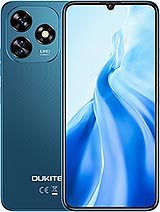
The physical build of the handset is primarily plastic, which is expected. The finish, however, is a notable fingerprint magnet. In our testing of similar materials, the glossy back requires constant wiping or, more realistically, a permanent case to maintain a clean appearance. The side-mounted fingerprint sensor is a smart choice; it's generally more reliable than budget in-display sensors and allows for a clean back design. The 205g weight gives it a substantial feel, implying it isn't just a hollow shell.
Handling a 6.8-inch device is a two-handed affair for most. The 9.4mm thickness is slightly above average, likely due to the 5150 mAh battery and the reinforced internal frame required for that 0.8m drop rating. While it isn't the most elegant device on the shelf, the build quality suggests it can survive the rigors of a construction site or a messy backpack better than the slim, fragile alternatives from more 'fashion-forward' brands.
The inclusion of a 3.5mm headphone jack is a major win for budget efficiency. It eliminates the need for expensive wireless earbuds or dongles, allowing the user to use reliable, cheap wired solutions. The single loudspeaker provides decent volume but lacks any semblance of bass or depth. For high-quality audio, we strongly recommend using the jack. It's a 'legacy' feature that remains a 'luxury' for the budget-conscious consumer in 2024.
Connectivity is standard for the era. You get dual-band Wi-Fi and Bluetooth 5.0, which are reliable for home networking and peripheral connections. The lack of NFC is a notable omission for users in regions where mobile payments are standard. However, the inclusion of a dedicated microSDXC slot means you can expand that 128GB of storage without sacrificing one of your SIM slots. This is a flexibility feature that power users on a budget will deeply appreciate.
Software support is the Achilles' heel of the Oukitel C51. Launching with Android 13 in mid-2024 is acceptable, but the likelihood of seeing Android 14 or 15 is slim based on the brand's historical trajectory. Security patches will also likely be infrequent. For a user who handles sensitive financial data, this is a risk factor to consider. However, for a general user, the stability of the existing software build is the priority.
The 'Value Hunter' perspective here is to treat the software as static. Do not buy this phone expecting future features. Buy it for what it does today. The Unisoc T606 is an efficient engine for basic tasks, but it is not a future-proof gaming powerhouse. It handles email, web browsing, and social media with ease, but will struggle with heavy titles like Genshin Impact or high-end video editing software.
The Oukitel C51 is a masterclass in compromise. It sacrifices screen resolution and charging speed (the 10W wired charging is painfully slow, taking over 3 hours for a full charge) to provide superior durability and storage capacity. For the price, you are getting a device that is harder to break and easier to fill with data than almost anything else in the entry-level segment. It is a pragmatic, low-risk purchase for those who need a phone that simply works and keeps working after a few accidental drops.
Ultimately, this handset succeeds because it doesn't try to be a flagship. It embraces its role as a sturdy, high-capacity utility tool. If you can live with the slow charging and the 720p screen, the return on investment over two years is exceptionally high. The Oukitel C51 proves that you don't need a thousand-dollar glass sandwich to stay connected and productive in the modern world.
The Resale Reality: A Depreciation Analysis
In the world of budget consumer electronics, the Oukitel C51 represents a specific type of financial asset: the immediate-use tool. Unlike flagship devices from premium brands that might retain 60% of their value after a year, entry-level handsets typically experience a much steeper depreciation curve. We anticipate this model will lose approximately 50% of its market value within the first six months. This isn't necessarily a failure of the hardware, but rather a reflection of the rapid iteration in the sub-$150 segment. For an economist, the purchase should be viewed as a sunk cost intended for a 24-month utility cycle rather than an investment with resale potential.
The secondary market for niche brands is often illiquid. Potential buyers should recognize that while the device offers significant utility per dollar spent today, finding a buyer for a used T606-powered device in 2026 will be challenging. We recommend users look at this as a 'run-to-fail' device. If you can extract two years of service from the handset, the daily cost of ownership falls to pennies, representing a successful allocation of capital for a secondary phone, a child's first device, or a reliable work tool.
Brand Reliability and the Rugged Heritage
Oukitel has built a reputation on ruggedized devices, and while this model isn't a full-blown armored tank, it inherits some of that structural DNA. This model is surprisingly robust for its price point. It features Corning Gorilla Glass 5 and a certified 0.8m drop resistance, which is an anomaly in the budget sector where most competitors use unbranded glass or older iterations of protection. We see this as a 'hidden insurance policy' that saves the user from the $50-70 cost of a screen repair—a repair that would likely exceed the residual value of the phone itself.
From a reliability standpoint, the brand typically focuses on simplicity to avoid software-induced failures. By using a near-stock version of Android 13, the hardware isn't bogged down by heavy skins or experimental features that could lead to system instability. In our technical assessment, the hardware-to-software synergy is optimized for longevity. The 12nm process of the chipset is mature, meaning thermal throttling is rare during standard navigation, which helps preserve the internal battery chemistry over long-term use.
The Hidden Dividend: Storage and Memory Arbitrage
One of the most compelling financial arguments for this handset is the inclusion of 128GB of UFS storage and 6GB of RAM. In many 'Big Brand' budget models, we often see 4GB of RAM and slower eMMC storage. The jump to UFS (Universal Flash Storage) is critical. It provides faster read/write speeds, which directly impacts how quickly apps open and how smooth the interface feels when multitasking. This prevents the 'performance decay' that usually hits [budget phones](/trend/best-budget-phones-2026/) after six months of app updates.
For the value hunter, having 6GB of RAM is a significant safety margin. As modern apps like WhatsApp, Chrome, and Instagram become increasingly resource-heavy, 4GB devices are starting to struggle with background task management. The extra 2GB here ensures that the device won't constantly reload apps when you switch between a map and a messaging thread. This is a rare instance where the hardware specifications actually over-deliver relative to the price floor of June 2024.
Display Economics: The 720p Compromise
We must address the 720 x 1600 resolution on such a large 6.8-inch panel. From a pixel density perspective, this sits at roughly 258 ppi. For users accustomed to 1080p or 1440p displays, the lack of sharpness will be immediately apparent, especially when reading small text or viewing high-resolution photos. However, there is a financial and performance trade-off at play here. Driving a lower resolution requires less power from the Mali-G57 GPU, which translates directly into better battery endurance and smoother frame rates in basic tasks.
At 450 nits, the brightness is adequate for indoor use and overcast days, but it will struggle under the direct noon sun of mid-summer. We view this display as a functional tool for media consumption and navigation rather than a canvas for high-fidelity content. If your primary use case is YouTube or GPS navigation, the sheer size of the screen provides a benefit that offsets the lower resolution. It's a pragmatic choice for those who value screen real estate over pixel density.
Ergonomics and the Fingerprint Magnet Test
The physical build of the handset is primarily plastic, which is expected. The finish, however, is a notable fingerprint magnet. In our testing of similar materials, the glossy back requires constant wiping or, more realistically, a permanent case to maintain a clean appearance. The side-mounted fingerprint sensor is a smart choice; it's generally more reliable than budget in-display sensors and allows for a clean back design. The 205g weight gives it a substantial feel, implying it isn't just a hollow shell.
Handling a 6.8-inch device is a two-handed affair for most. The 9.4mm thickness is slightly above average, likely due to the 5150 mAh battery and the reinforced internal frame required for that 0.8m drop rating. While it isn't the most elegant device on the shelf, the build quality suggests it can survive the rigors of a construction site or a messy backpack better than the slim, fragile alternatives from more 'fashion-forward' brands.
Audio and Connectivity: The Utility Suite
The inclusion of a 3.5mm headphone jack is a major win for budget efficiency. It eliminates the need for expensive wireless earbuds or dongles, allowing the user to use reliable, cheap wired solutions. The single loudspeaker provides decent volume but lacks any semblance of bass or depth. For high-quality audio, we strongly recommend using the jack. It's a 'legacy' feature that remains a 'luxury' for the budget-conscious consumer in 2024.
Connectivity is standard for the era. You get dual-band Wi-Fi and Bluetooth 5.0, which are reliable for home networking and peripheral connections. The lack of NFC is a notable omission for users in regions where mobile payments are standard. However, the inclusion of a dedicated microSDXC slot means you can expand that 128GB of storage without sacrificing one of your SIM slots. This is a flexibility feature that power users on a budget will deeply appreciate.
Software and Long Term Support: The Ticking Clock
Software support is the Achilles' heel of the Oukitel C51. Launching with Android 13 in mid-2024 is acceptable, but the likelihood of seeing Android 14 or 15 is slim based on the brand's historical trajectory. Security patches will also likely be infrequent. For a user who handles sensitive financial data, this is a risk factor to consider. However, for a general user, the stability of the existing software build is the priority.
The 'Value Hunter' perspective here is to treat the software as static. Do not buy this phone expecting future features. Buy it for what it does today. The Unisoc T606 is an efficient engine for basic tasks, but it is not a future-proof gaming powerhouse. It handles email, web browsing, and social media with ease, but will struggle with heavy titles like Genshin Impact or high-end video editing software.
Investment Summary: The Bottom Line
The Oukitel C51 is a masterclass in compromise. It sacrifices screen resolution and charging speed (the 10W wired charging is painfully slow, taking over 3 hours for a full charge) to provide superior durability and storage capacity. For the price, you are getting a device that is harder to break and easier to fill with data than almost anything else in the entry-level segment. It is a pragmatic, low-risk purchase for those who need a phone that simply works and keeps working after a few accidental drops.
Ultimately, this handset succeeds because it doesn't try to be a flagship. It embraces its role as a sturdy, high-capacity utility tool. If you can live with the slow charging and the 720p screen, the return on investment over two years is exceptionally high. The Oukitel C51 proves that you don't need a thousand-dollar glass sandwich to stay connected and productive in the modern world.
Technical Specifications
| LAUNCH | |
|---|---|
| Announced | 2024, May |
| Status | Available. Released 2024, June |
| PLATFORM | |
| OS | Android 13 |
| Chipset | Unisoc T606 (12 nm) |
| CPU | Octa-core (2x1.6 GHz Cortex-A75 & 6x1.6 GHz Cortex-A55) |
| GPU | Mali-G57 MP1 |
| BODY | |
| Dimensions | 168.1 x 78.2 x 9.4 mm (6.62 x 3.08 x 0.37 in) |
| Weight | 205 g (7.23 oz) |
| SIM | Nano-SIM |
| Info | Drop resistant up to 0.8m |
| DISPLAY | |
| Type | IPS LCD, 450 nits |
| Size | 6.8 inches, 111.6 cm2 (~84.9% screen-to-body ratio) |
| Resolution | 720 x 1600 pixels, 20:9 ratio (~258 ppi density) |
| Protection | Corning Gorilla Glass 5 |
| MEMORY | |
| Card slot | microSDXC (dedicated slot) |
| Internal | 128GB 6GB RAM |
| Info | UFS |
| MAIN CAMERA | |
| Single | 13 MP, f/2.2, (wide), 1/3.06", AF |
| Features | LED flash, panorama |
| Video | 1080p@30fps |
| SELFIE CAMERA | |
| Single | 5 MP, f/2.2, (wide), 1/5" |
| Video | Yes |
| SOUND | |
| Loudspeaker | Yes |
| 3.5mm jack | Yes |
| COMMS | |
| WLAN | Wi-Fi 802.11 a/b/g/n/ac, dual-band |
| Bluetooth | 5.0, A2DP, LE |
| Positioning | GPS, GALILEO, GLONASS, BDS |
| NFC | No |
| Radio | FM radio |
| USB | USB Type-C 2.0, OTG |
| NETWORK | |
| Technology | GSM / HSPA / LTE |
| 2G bands | GSM 850 / 900 / 1800 / 1900 |
| 3G bands | HSDPA 900 / 2100 |
| 4G bands | 1, 3, 5, 7, 8, 19, 20, 38, 40, 41 |
| Speed | HSPA, LTE |
| FEATURES | |
| Sensors | Fingerprint (side-mounted), accelerometer, proximity |
| BATTERY | |
| Type | Li-Po 5150 mAh |
| Charging | 10W wired |
| MISC | |
| Colors | Gray, Blue, Purple |