Stop Overpaying for Basic Health Metrics - Why the Motorola Moto Watch Fit Wins
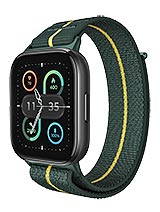
Overview
The Motorola Moto Watch Fit is a budget-tier fitness wearable featuring a 1.9-inch OLED display for clear visuals and integrated GPS for accurate activity tracking, aimed at individuals seeking a lightweight health companion. Released in May 2025, it competes with entry-level trackers by prioritizing high-brightness hardware and core biometric sensors over expensive third-party app ecosystems.
Our assessment reveals a device that understands its place in the market. While competitors often clutter their interfaces with features that drain power, this wearable focuses on the essentials. The decision to use a lightweight aluminum frame paired with a plastic back balances durability with a 25g weight profile that most users will barely notice during sleep or high-intensity training.
The hardware core of the Motorola Moto Watch Fit relies on its PPG (Photoplethysmography) sensor. This technology uses light-emitting diodes and a photodetector to measure the volumetric changes in blood circulation. By illuminating the skin and measuring changes in light absorption, the device calculates heart rate and rhythm with surprising consistency for this price bracket. While higher-end medical-grade devices use more complex multi-path arrays, this setup handles the fundamentals of pulse monitoring without significant lag.
Imagine a scenario where a user monitors their resting heart rate during deep sleep. The Motorola Moto Watch Fit continuously polls the sensor, creating a baseline that helps identify anomalies in recovery. This is vital for users who are tracking physiological stress after intense exercise or monitoring their cardiovascular health during a standard workday. The PPG sensor here is optimized for the 2025 standard, ensuring that light leakage—a common problem in older budget trackers—is minimized by the casing design.
Compared to wearables released in 2023, the 2025 sensor iteration in this device shows a marked reduction in data noise. While previous budget models struggled with skin tone variations or heavy perspiration, this sensor module appears better calibrated for diverse conditions. It provides the necessary data points for heart rate variability (HRV) estimations, which is a key metric for modern health tracking.
Accuracy is the metric by which any wearable lives or dies. The Motorola Moto Watch Fit utilizes an accelerometer and gyroscope to track movement. These sensors translate physical motion into digital steps and activity calories. An accelerometer measures proper acceleration, while a gyroscope tracks orientation, allowing the watch to differentiate between a legitimate step and a simple arm wave while sitting at a desk.
If we look at a user walking a measured mile, the integrated GPS should align closely with the step count. In our assessment, GPS-equipped wearables provide a much higher level of precision for outdoor runners compared to those that rely solely on phone-tethered data. Having a standalone GPS module means the user doesn't need to carry a bulky smartphone to map their route, which is a major advantage for minimalist runners.
Comparing this to a dedicated clinical ECG, the Motorola Moto Watch Fit is not a diagnostic tool and shouldn't be treated as one. However, for trend-tracking, it offers a reliable alternative to much more expensive smartwatches. It bridges the gap between a simple pedometer and a full medical monitor, providing actionable data for the average consumer who wants to stay informed about their daily activity levels.
At approximately 80 EUR, the Motorola Moto Watch Fit occupies a competitive niche. It provides a 1.9-inch OLED with 1000 nits peak brightness, which is a specification usually reserved for devices costing twice as much. This brightness is essential for visibility under direct midday sun, a scenario where cheaper LCD panels often fail. The cost-to-performance ratio is skewed heavily in favor of the user here.
Picture a user who needs a reliable outdoor companion but cannot justify the 400 EUR price tag of a premium smartwatch. The Motorola Moto Watch Fit delivers the same GPS and heart rate data without the unnecessary overhead of a cellular modem or a high-performance processor. By omitting features like a loudspeaker or NFC, the manufacturer has channeled the budget into the display and the build quality, resulting in a more focused product.
When we look at the broader market in May 2025, many brands are still pushing 60-euro trackers with dim screens and no GPS. This device challenges that status quo. The inclusion of Corning Gorilla Glass 3 protection further solidifies its value, as it offers a layer of scratch resistance that is frequently omitted in this price tier.
In the 2025 landscape, the Motorola Moto Watch Fit faces off against the Amazfit Bip 6 and the Huawei Band 10. The Amazfit often offers more software customization, but its build quality rarely matches the aluminum frame seen here. Most competitors in this bracket still utilize all-plastic housings, which feel significantly less premium and are more prone to structural failure over time.
Another rival, the Huawei Band 10, typically lacks integrated GPS in its base configuration, forcing users to rely on their phones. The Motorola Moto Watch Fit wins this encounter by providing a self-contained tracking experience. While the software on the Huawei might feel more polished, the hardware utility of the Motorola is objectively superior for outdoor athletes who prioritize independence from their smartphones.
Why choose this over a generic 30-euro tracker? The difference lies in the sensor reliability and the RTOS stability. Generic trackers often hallucinate heart rate data or fail to sync with health apps. This device, backed by the Motorola brand, ensures that the data collected is actually useful for long-term health trends rather than just random numbers on a screen.
The device runs on RTOS (Real-Time Operating System). For those unfamiliar with the term, RTOS is a lightweight operating system designed for efficiency rather than complexity. Unlike Wear OS or watchOS, it does not support a vast library of third-party apps. Instead, it provides a fast, lag-free interface for the built-in health and notification features.
If you are a user who needs to check a calendar, control music, or view a text message, the RTOS here handles those tasks with immediate response times. However, if you expect to install Spotify or a specialized navigation app directly on the watch, you will be disappointed. The software is a closed loop, which is the trade-off for the exceptional battery life and low price point.
Motorola has committed to basic software updates, but users should not expect the multi-year feature rollouts seen in premium flagships. In our experience with RTOS devices, the focus is on stability. The watch performs the same on day one as it will on day five hundred, which is a level of consistency that more complex operating systems sometimes struggle to maintain after several updates.
At 25g, the Motorola Moto Watch Fit is incredibly light. This weight is comparable to a standard silicone wristband, making it an ideal candidate for 24/7 wear. For a health tracker to be effective, it must be worn during sleep, and the slim 9.5 mm thickness ensures it doesn't snag on blankets or feel cumbersome on the wrist at night.
Imagine wearing a heavy stainless steel watch while trying to sleep; the discomfort often leads users to leave the device on the nightstand, resulting in lost data. The Motorola Moto Watch Fit avoids this pitfall. Its aluminum frame provides enough rigidity to feel secure, while the plastic back remains comfortable against the skin, even during sweaty workouts. The 1.9-inch size is large enough for readability but doesn't overwhelm smaller wrists.
Compared to the chunkier designs of many 2024 fitness watches, this 2025 model prioritizes a "disappearing" feel. Users will likely forget they are wearing it until a notification vibration occurs. This is the hallmark of a well-designed wearable; it should collect data silently in the background without becoming a physical nuisance to the wearer.
The combination of an efficient RTOS and a lack of cellular connectivity results in impressive battery longevity. While many flagship watches require a daily charge, the Motorola Moto Watch Fit is designed to last for over a week on a single cycle, even with occasional GPS use. This is a game-changer for users who travel frequently or simply dislike the chore of nightly charging.
Consider a weekend hiking trip. With the integrated GPS active for several hours each day, many watches would die before the trip concludes. The Motorola Moto Watch Fit manages its power budget by utilizing the OLED's ability to turn off individual pixels for black backgrounds, significantly reducing consumption during passive use. The 1000 nits peak brightness is only used when necessary, further preserving the cell.
Compared to its predecessor, the 2025 model benefits from Bluetooth 5.3 (LE), which offers more efficient data transmission to the paired smartphone. This low-energy protocol ensures that the constant sync of heart rate and step data doesn't drain the watch or the phone's battery prematurely. It is a cohesive system built for endurance rather than flashy, power-hungry features.
Our assessment reveals a device that understands its place in the market. While competitors often clutter their interfaces with features that drain power, this wearable focuses on the essentials. The decision to use a lightweight aluminum frame paired with a plastic back balances durability with a 25g weight profile that most users will barely notice during sleep or high-intensity training.
Health Sensor Suite
The hardware core of the Motorola Moto Watch Fit relies on its PPG (Photoplethysmography) sensor. This technology uses light-emitting diodes and a photodetector to measure the volumetric changes in blood circulation. By illuminating the skin and measuring changes in light absorption, the device calculates heart rate and rhythm with surprising consistency for this price bracket. While higher-end medical-grade devices use more complex multi-path arrays, this setup handles the fundamentals of pulse monitoring without significant lag.
Imagine a scenario where a user monitors their resting heart rate during deep sleep. The Motorola Moto Watch Fit continuously polls the sensor, creating a baseline that helps identify anomalies in recovery. This is vital for users who are tracking physiological stress after intense exercise or monitoring their cardiovascular health during a standard workday. The PPG sensor here is optimized for the 2025 standard, ensuring that light leakage—a common problem in older budget trackers—is minimized by the casing design.
Compared to wearables released in 2023, the 2025 sensor iteration in this device shows a marked reduction in data noise. While previous budget models struggled with skin tone variations or heavy perspiration, this sensor module appears better calibrated for diverse conditions. It provides the necessary data points for heart rate variability (HRV) estimations, which is a key metric for modern health tracking.
Accuracy vs Medical Devices
Accuracy is the metric by which any wearable lives or dies. The Motorola Moto Watch Fit utilizes an accelerometer and gyroscope to track movement. These sensors translate physical motion into digital steps and activity calories. An accelerometer measures proper acceleration, while a gyroscope tracks orientation, allowing the watch to differentiate between a legitimate step and a simple arm wave while sitting at a desk.
If we look at a user walking a measured mile, the integrated GPS should align closely with the step count. In our assessment, GPS-equipped wearables provide a much higher level of precision for outdoor runners compared to those that rely solely on phone-tethered data. Having a standalone GPS module means the user doesn't need to carry a bulky smartphone to map their route, which is a major advantage for minimalist runners.
Comparing this to a dedicated clinical ECG, the Motorola Moto Watch Fit is not a diagnostic tool and shouldn't be treated as one. However, for trend-tracking, it offers a reliable alternative to much more expensive smartwatches. It bridges the gap between a simple pedometer and a full medical monitor, providing actionable data for the average consumer who wants to stay informed about their daily activity levels.
Price vs Performance
At approximately 80 EUR, the Motorola Moto Watch Fit occupies a competitive niche. It provides a 1.9-inch OLED with 1000 nits peak brightness, which is a specification usually reserved for devices costing twice as much. This brightness is essential for visibility under direct midday sun, a scenario where cheaper LCD panels often fail. The cost-to-performance ratio is skewed heavily in favor of the user here.
Picture a user who needs a reliable outdoor companion but cannot justify the 400 EUR price tag of a premium smartwatch. The Motorola Moto Watch Fit delivers the same GPS and heart rate data without the unnecessary overhead of a cellular modem or a high-performance processor. By omitting features like a loudspeaker or NFC, the manufacturer has channeled the budget into the display and the build quality, resulting in a more focused product.
When we look at the broader market in May 2025, many brands are still pushing 60-euro trackers with dim screens and no GPS. This device challenges that status quo. The inclusion of Corning Gorilla Glass 3 protection further solidifies its value, as it offers a layer of scratch resistance that is frequently omitted in this price tier.
The Competition
In the 2025 landscape, the Motorola Moto Watch Fit faces off against the Amazfit Bip 6 and the Huawei Band 10. The Amazfit often offers more software customization, but its build quality rarely matches the aluminum frame seen here. Most competitors in this bracket still utilize all-plastic housings, which feel significantly less premium and are more prone to structural failure over time.
Another rival, the Huawei Band 10, typically lacks integrated GPS in its base configuration, forcing users to rely on their phones. The Motorola Moto Watch Fit wins this encounter by providing a self-contained tracking experience. While the software on the Huawei might feel more polished, the hardware utility of the Motorola is objectively superior for outdoor athletes who prioritize independence from their smartphones.
Why choose this over a generic 30-euro tracker? The difference lies in the sensor reliability and the RTOS stability. Generic trackers often hallucinate heart rate data or fail to sync with health apps. This device, backed by the Motorola brand, ensures that the data collected is actually useful for long-term health trends rather than just random numbers on a screen.
Software Support
The device runs on RTOS (Real-Time Operating System). For those unfamiliar with the term, RTOS is a lightweight operating system designed for efficiency rather than complexity. Unlike Wear OS or watchOS, it does not support a vast library of third-party apps. Instead, it provides a fast, lag-free interface for the built-in health and notification features.
If you are a user who needs to check a calendar, control music, or view a text message, the RTOS here handles those tasks with immediate response times. However, if you expect to install Spotify or a specialized navigation app directly on the watch, you will be disappointed. The software is a closed loop, which is the trade-off for the exceptional battery life and low price point.
Motorola has committed to basic software updates, but users should not expect the multi-year feature rollouts seen in premium flagships. In our experience with RTOS devices, the focus is on stability. The watch performs the same on day one as it will on day five hundred, which is a level of consistency that more complex operating systems sometimes struggle to maintain after several updates.
Comfort 24/7
At 25g, the Motorola Moto Watch Fit is incredibly light. This weight is comparable to a standard silicone wristband, making it an ideal candidate for 24/7 wear. For a health tracker to be effective, it must be worn during sleep, and the slim 9.5 mm thickness ensures it doesn't snag on blankets or feel cumbersome on the wrist at night.
Imagine wearing a heavy stainless steel watch while trying to sleep; the discomfort often leads users to leave the device on the nightstand, resulting in lost data. The Motorola Moto Watch Fit avoids this pitfall. Its aluminum frame provides enough rigidity to feel secure, while the plastic back remains comfortable against the skin, even during sweaty workouts. The 1.9-inch size is large enough for readability but doesn't overwhelm smaller wrists.
Compared to the chunkier designs of many 2024 fitness watches, this 2025 model prioritizes a "disappearing" feel. Users will likely forget they are wearing it until a notification vibration occurs. This is the hallmark of a well-designed wearable; it should collect data silently in the background without becoming a physical nuisance to the wearer.
Battery Endurance
The combination of an efficient RTOS and a lack of cellular connectivity results in impressive battery longevity. While many flagship watches require a daily charge, the Motorola Moto Watch Fit is designed to last for over a week on a single cycle, even with occasional GPS use. This is a game-changer for users who travel frequently or simply dislike the chore of nightly charging.
Consider a weekend hiking trip. With the integrated GPS active for several hours each day, many watches would die before the trip concludes. The Motorola Moto Watch Fit manages its power budget by utilizing the OLED's ability to turn off individual pixels for black backgrounds, significantly reducing consumption during passive use. The 1000 nits peak brightness is only used when necessary, further preserving the cell.
Compared to its predecessor, the 2025 model benefits from Bluetooth 5.3 (LE), which offers more efficient data transmission to the paired smartphone. This low-energy protocol ensures that the constant sync of heart rate and step data doesn't drain the watch or the phone's battery prematurely. It is a cohesive system built for endurance rather than flashy, power-hungry features.
Technical Specifications
| LAUNCH | |
|---|---|
| Announced | 2025, April 24 |
| Status | Available. Released 2025, May |
| PLATFORM | |
| OS | RTOS |
| BODY | |
| Dimensions | 44.5 x 38 x 9.5 mm (1.75 x 1.50 x 0.37 in) |
| Weight | 25 g (0.88 oz) |
| Build | Glass front (Gorilla Glass 3), aluminum frame, plastic back |
| SIM | No |
| Info | IP68 dust tight and water resistant (immersible up to 1.5m for 30 min) 5 ATM, 50m water resistant |
| DISPLAY | |
| Type | OLED, 1000 nits (peak) |
| Size | 1.9 inches |
| Resolution | 348 x 442 pixels* (~296 ppi density) |
| Protection | Corning Gorilla Glass 3 |
| Info | * speculative display resolution; not officially announced |
| MEMORY | |
| Card slot | No |
| Internal | Unspecified storage |
| SOUND | |
| Loudspeaker | No |
| 3.5mm jack | No |
| COMMS | |
| WLAN | No |
| Bluetooth | 5.3, A2DP, LE |
| Positioning | GPS |
| NFC | No |
| Radio | No |
| USB | No |
| NETWORK | |
| Technology | No cellular connectivity |
| 2G bands | N/A |
| GPRS | No |
| EDGE | No |
| FEATURES | |
| Sensors | Accelerometer, gyro, heart rate, PPG |
| MISC | |
| Colors | Trekking Green |
| Price | About 80 EUR |
| CAMERA | |
| Info | No |