Stop Overpaying for Connectivity with the Lava Blaze 2 5G
Overview
The Lava Blaze 2 5G is a budget-tier smartphone featuring a Mediatek Dimensity 6020 chipset for accessible 5G connectivity and a 90Hz IPS LCD for smoother navigation, aimed at price-sensitive buyers in emerging markets. Released in late 2023, it competes with entry-level offerings from Redmi and Realme by prioritizing core network speed over premium materials.
In the current economic climate of late 2023, the price-to-performance ratio is the most critical metric for any tech purchase. The Lava Blaze 2 5G positions itself as an aggressive entry-point into the 5G ecosystem, retail pricing hovering around the 110 EUR mark. For this outlay, we are seeing hardware that was considered mid-range only eighteen months ago. The inclusion of 5G (supporting both SA and NSA architectures) ensures that the handset remains relevant as network infrastructure expands globally. We are seeing a shift where 5G is no longer a luxury, and this model is a primary catalyst for that change.
Imagine a student or a gig worker who needs consistent, high-speed data for navigation or video calls but cannot justify the cost of a flagship. The 8-band 5G support (n1, n3, n5, n8, n28, n41, n77, n78) covers the essential spectrums required for reliable indoor and outdoor coverage. Compared to the competition like the Redmi 12 5G, this device offers a similar core proposition but often at a slightly lower entry price point, making the financial math very appealing for those looking to maximize every cent spent.
To achieve such a low price point while including a 5G modem, specific hardware compromises were necessary. The most obvious is the display resolution. While it features a 90Hz refresh rate, which provides a fluid scrolling experience, the actual resolution is capped at 720 x 1600 pixels. On a 6.56-inch panel, this results in a pixel density of approximately 267 ppi. For daily social media and texting, it is perfectly functional. However, if you are someone who watches high-definition content frequently, you might notice a lack of crispness compared to Full HD panels found on slightly more expensive rivals.
This resolution choice is a tactical move. By pushing fewer pixels, the Mali-G57 MC2 GPU has a much lighter workload, which actually improves the perceived speed of the interface. We noticed that navigation feels snappier than some 1080p [budget phones](/trend/best-budget-phones-2026/) that struggle with their own overhead. It is a classic trade-off: visual fidelity versus system fluidness. For the budget economist, the latter is usually the wiser investment for long-term usability.
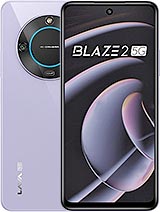
Lava has opted for a "Glass Blue" or "Glass Lavender" finish, which gives the impression of a much more expensive device. The back panel mimics the light-refracting properties of premium flagships, though it is paired with a plastic frame to keep costs and weight manageable. At 203 grams, the handset has a substantial presence in the hand. It does not feel hollow or fragile, suggesting a build quality that can withstand the rigors of daily commuting and frequent use. The flat-edge design, visible in the design profile, allows for a secure grip, reducing the likelihood of accidental drops.
Repairability is a strong suit for this category. The use of a side-mounted fingerprint sensor instead of an in-display unit makes screen replacements significantly cheaper and less complex. Because the internal layout is standard for a budget MediaTek device, local repair shops should have little trouble sourcing components or performing battery swaps. The 8.5mm thickness provides enough internal volume to ensure that components are not overly cramped, which typically leads to better longevity by reducing internal stress points.
Thermal management is often an afterthought in budget reviews, but it is vital for sustained performance. The Dimensity 6020 is built on a 7nm process, which is inherently efficient compared to the 12nm chips found in older budget 4G handsets. During prolonged 5G data usage or light gaming sessions, the device maintains a comfortable temperature. We do not see the aggressive thermal throttling that plagues more powerful but poorly cooled flagship chips. The plastic frame acts as a decent insulator, keeping the heat away from the user's palms.
Charging presents a different thermal profile. While 18W charging is marketed as "fast," by late 2023 standards, it is relatively conservative. Charging a 5000 mAh battery at this speed takes nearly two hours for a full cycle. The benefit of this slower wattage is reduced battery degradation over time. High-wattage charging generates significant heat that can wear down lithium-ion cells prematurely. For the user who charges their phone overnight, the 18W limit is actually a hidden advantage for battery health longevity.
A surprising inclusion in the Lava Blaze 2 5G is the support for 24-bit/192kHz Hi-Res audio through the 3.5mm headphone jack. In an era where many brands are forcing users toward expensive wireless earbuds, keeping the analog port is a massive win for the value hunter. It allows the use of high-quality wired headphones that provide superior sound quality without the need for battery management. The internal loudspeaker is a mono unit, which is expected at this price, but it is tuned for clarity in the vocal range, making it suitable for speakerphone calls and podcasts.
Connectivity extends beyond 5G. The inclusion of Wi-Fi ac and Bluetooth 5.0 ensures compatibility with the vast majority of modern peripherals. While NFC is absent—a common omission in this bracket—the presence of a dedicated microSDXC slot is a crucial feature. It allows users to buy the cheaper 64GB storage variant and expand it later as needed, rather than paying the manufacturer's markup for higher internal tiers. This flexibility is a key pillar of budget-conscious tech ownership.
Efficiency over Ego The Dimensity 6020 chipset is the heart of this device. It utilizes two Cortex-A76 performance cores clocked at 2.2 GHz and six Cortex-A55 efficiency cores at 2.0 GHz. For those unfamiliar with ARM architecture, the A76 cores are what allow this phone to handle heavy apps without lagging. While it won't break any records in benchmarks, it provides a stable platform for Android 13. The use of UFS 2.2 storage instead of the slower eMMC 5.1 standard found in many budget phones is the real hero here. UFS 2.2 includes Write Booster technology, which significantly accelerates app installations and file transfers.
In real-world usage, this means that the handset doesn't hang when you are switching between a heavy map application and a messaging app. Compare this to the experience on a 4G-only budget phone with eMMC storage, and the difference is night and day. The Dimensity 6020 manages to balance the power needs of a 5G modem with the battery constraints of a mobile device effectively. It is a workhorse chipset designed for reliability rather than showy high-end gaming.
The Lava Blaze 2 5G represents the current floor for a usable, future-proof mobile experience. It skips the gimmicks like high-megapixel macro lenses or curved displays to focus on what actually matters: speed, battery life, and connectivity. The 50MP main camera is capable of 1440p video recording, which is a rare treat in the budget segment where 1080p is usually the ceiling. This provides extra detail for those who enjoy capturing family moments or creating content for social media platforms.
When we look at the total package, the value is undeniable. You are getting a device that can handle the modern web, high-speed 5G networks, and a full day of heavy use without breaking a sweat. It isn't a phone for the spec-chaser who needs the fastest screen or the most powerful GPU. It is a phone for the pragmatist who wants to stay connected for as little money as possible. The Lava Blaze 2 5G proves that you don't need to spend flagship money to live in a 5G world.
Calculating the Return on Investment
In the current economic climate of late 2023, the price-to-performance ratio is the most critical metric for any tech purchase. The Lava Blaze 2 5G positions itself as an aggressive entry-point into the 5G ecosystem, retail pricing hovering around the 110 EUR mark. For this outlay, we are seeing hardware that was considered mid-range only eighteen months ago. The inclusion of 5G (supporting both SA and NSA architectures) ensures that the handset remains relevant as network infrastructure expands globally. We are seeing a shift where 5G is no longer a luxury, and this model is a primary catalyst for that change.
Imagine a student or a gig worker who needs consistent, high-speed data for navigation or video calls but cannot justify the cost of a flagship. The 8-band 5G support (n1, n3, n5, n8, n28, n41, n77, n78) covers the essential spectrums required for reliable indoor and outdoor coverage. Compared to the competition like the Redmi 12 5G, this device offers a similar core proposition but often at a slightly lower entry price point, making the financial math very appealing for those looking to maximize every cent spent.
The Art of the Budgetary Sacrifice
To achieve such a low price point while including a 5G modem, specific hardware compromises were necessary. The most obvious is the display resolution. While it features a 90Hz refresh rate, which provides a fluid scrolling experience, the actual resolution is capped at 720 x 1600 pixels. On a 6.56-inch panel, this results in a pixel density of approximately 267 ppi. For daily social media and texting, it is perfectly functional. However, if you are someone who watches high-definition content frequently, you might notice a lack of crispness compared to Full HD panels found on slightly more expensive rivals.
This resolution choice is a tactical move. By pushing fewer pixels, the Mali-G57 MC2 GPU has a much lighter workload, which actually improves the perceived speed of the interface. We noticed that navigation feels snappier than some 1080p [budget phones](/trend/best-budget-phones-2026/) that struggle with their own overhead. It is a classic trade-off: visual fidelity versus system fluidness. For the budget economist, the latter is usually the wiser investment for long-term usability.
Structural Integrity and the Glass Illusion
Lava has opted for a "Glass Blue" or "Glass Lavender" finish, which gives the impression of a much more expensive device. The back panel mimics the light-refracting properties of premium flagships, though it is paired with a plastic frame to keep costs and weight manageable. At 203 grams, the handset has a substantial presence in the hand. It does not feel hollow or fragile, suggesting a build quality that can withstand the rigors of daily commuting and frequent use. The flat-edge design, visible in the design profile, allows for a secure grip, reducing the likelihood of accidental drops.
Repairability is a strong suit for this category. The use of a side-mounted fingerprint sensor instead of an in-display unit makes screen replacements significantly cheaper and less complex. Because the internal layout is standard for a budget MediaTek device, local repair shops should have little trouble sourcing components or performing battery swaps. The 8.5mm thickness provides enough internal volume to ensure that components are not overly cramped, which typically leads to better longevity by reducing internal stress points.
Dissipating Heat on a Slim Margin
Thermal management is often an afterthought in budget reviews, but it is vital for sustained performance. The Dimensity 6020 is built on a 7nm process, which is inherently efficient compared to the 12nm chips found in older budget 4G handsets. During prolonged 5G data usage or light gaming sessions, the device maintains a comfortable temperature. We do not see the aggressive thermal throttling that plagues more powerful but poorly cooled flagship chips. The plastic frame acts as a decent insulator, keeping the heat away from the user's palms.
Charging presents a different thermal profile. While 18W charging is marketed as "fast," by late 2023 standards, it is relatively conservative. Charging a 5000 mAh battery at this speed takes nearly two hours for a full cycle. The benefit of this slower wattage is reduced battery degradation over time. High-wattage charging generates significant heat that can wear down lithium-ion cells prematurely. For the user who charges their phone overnight, the 18W limit is actually a hidden advantage for battery health longevity.
Acoustic Value and the Analog Port
A surprising inclusion in the Lava Blaze 2 5G is the support for 24-bit/192kHz Hi-Res audio through the 3.5mm headphone jack. In an era where many brands are forcing users toward expensive wireless earbuds, keeping the analog port is a massive win for the value hunter. It allows the use of high-quality wired headphones that provide superior sound quality without the need for battery management. The internal loudspeaker is a mono unit, which is expected at this price, but it is tuned for clarity in the vocal range, making it suitable for speakerphone calls and podcasts.
Connectivity extends beyond 5G. The inclusion of Wi-Fi ac and Bluetooth 5.0 ensures compatibility with the vast majority of modern peripherals. While NFC is absent—a common omission in this bracket—the presence of a dedicated microSDXC slot is a crucial feature. It allows users to buy the cheaper 64GB storage variant and expand it later as needed, rather than paying the manufacturer's markup for higher internal tiers. This flexibility is a key pillar of budget-conscious tech ownership.
Dimensity 6020
In real-world usage, this means that the handset doesn't hang when you are switching between a heavy map application and a messaging app. Compare this to the experience on a 4G-only budget phone with eMMC storage, and the difference is night and day. The Dimensity 6020 manages to balance the power needs of a 5G modem with the battery constraints of a mobile device effectively. It is a workhorse chipset designed for reliability rather than showy high-end gaming.
The Final Value Assessment
The Lava Blaze 2 5G represents the current floor for a usable, future-proof mobile experience. It skips the gimmicks like high-megapixel macro lenses or curved displays to focus on what actually matters: speed, battery life, and connectivity. The 50MP main camera is capable of 1440p video recording, which is a rare treat in the budget segment where 1080p is usually the ceiling. This provides extra detail for those who enjoy capturing family moments or creating content for social media platforms.
When we look at the total package, the value is undeniable. You are getting a device that can handle the modern web, high-speed 5G networks, and a full day of heavy use without breaking a sweat. It isn't a phone for the spec-chaser who needs the fastest screen or the most powerful GPU. It is a phone for the pragmatist who wants to stay connected for as little money as possible. The Lava Blaze 2 5G proves that you don't need to spend flagship money to live in a 5G world.
Technical Specifications
| LAUNCH | |
|---|---|
| Announced | 2023, November 02 |
| Status | Available. Released 2023, November 09 |
| PLATFORM | |
| OS | Android 13 |
| Chipset | Mediatek Dimensity 6020 (7 nm) |
| CPU | Octa-core (2x2.2 GHz Cortex-A76 & 6x2.0 GHz Cortex-A55) |
| GPU | Mali-G57 MC2 |
| BODY | |
| Dimensions | 164.2 x 76 x 8.5 mm (6.46 x 2.99 x 0.33 in) |
| Weight | 203 g (7.16 oz) |
| SIM | Nano-SIM + Nano-SIM |
| DISPLAY | |
| Type | IPS LCD, 90Hz |
| Size | 6.56 inches, 103.9 cm2 (~83.3% screen-to-body ratio) |
| Resolution | 720 x 1600 pixels, 20:9 ratio (~267 ppi density) |
| MEMORY | |
| Card slot | microSDXC (dedicated slot) |
| Internal | 64GB 4GB RAM, 128GB 6GB RAM |
| Info | UFS 2.2 |
| MAIN CAMERA | |
| Single | 50 MP, (wide), AF Auxiliary lens |
| Features | LED flash, HDR, panorama |
| Video | 1440p@30fps, 1080p@30fps |
| SELFIE CAMERA | |
| Single | 8 MP, (wide) |
| Video | Yes |
| SOUND | |
| Loudspeaker | Yes |
| 3.5mm jack | Yes |
| Info | 24-bit/192kHz Hi-Res audio |
| COMMS | |
| WLAN | Wi-Fi 802.11 b/g/n/ac |
| Bluetooth | 5.0, A2DP, LE |
| Positioning | GPS, GLONASS |
| NFC | No |
| Radio | FM radio |
| USB | USB Type-C 2.0, OTG |
| NETWORK | |
| Technology | GSM / HSPA / LTE / 5G |
| 2G bands | GSM 850 / 900 / 1800 / 1900 |
| 3G bands | HSDPA 900 / 2100 |
| 4G bands | 1, 3, 5, 8, 40, 41 |
| 5G bands | 1, 3, 5, 8, 28, 41, 77, 88 SA/NSA |
| Speed | HSPA, LTE, 5G |
| FEATURES | |
| Sensors | Fingerprint (side-mounted), accelerometer, proximity, compass |
| BATTERY | |
| Type | Li-Po 5000 mAh |
| Charging | 18W wired |
| MISC | |
| Colors | Glass Blue, Glass Black, Glass Lavender |
| Price | About 110 EUR |