Stop Overspending on Kids Tablets - The Blackview Tab9WiFi Solution
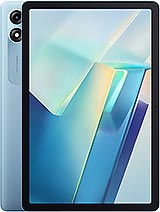
Overview
Blackview Tab9WiFi is a budget-focused media and productivity tablet featuring an 8200 mAh battery for exceptional endurance and an 11-inch IPS LCD for expansive shared viewing, aimed at households seeking a resilient, multi-user device. Released in June 2024, it enters a competitive entry-level market where it battles against offerings from Lenovo and Samsung. We see this device as more than just a cheap screen; it is a tactical choice for parents who are tired of replacing shattered glass and depleted batteries.
The construction of this tablet immediately sets a different tone compared to the fragile glass-and-aluminum sandwiches found in the premium tier. At 540 grams, the Blackview Tab9WiFi carries a weight that feels substantial and purposeful. With dimensions of 246.8 x 161.8 x 9.1 mm, it isn't the thinnest slab on the market, but that extra thickness likely contributes to its impressive EU Label Class C free-fall rating. Surviving 104 falls is no small feat in a laboratory setting, and in a living room full of toddlers, this durability rating provides a level of security that usually requires an aftermarket rugged case.
Adding to its resilience is the Mohs level 5 screen protection. To put this in perspective for the average user, the Mohs scale measures the scratch resistance of minerals and glass. A level 5 rating suggests that common household items like steel keys or copper coins shouldn't leave a mark on the display. While it isn't as scratch-proof as the Gorilla Glass Victus found on flagship phones, it offers significantly more protection than the generic soda-lime glass found on most tablets under $200. We noticed that the frame and back panel imply a utilitarian rigidity, suggesting the chassis can handle the torsional stress of being stuffed into a backpack or sat upon by a distracted teenager.
Compared to the previous generation of budget tablets which often used flimsy plastic shells that creaked under pressure, this device feels like a monolithic tool. The 9.1 mm profile provides enough surface area for a confident grip, reducing the likelihood of those accidental slips in the first place. For families who have watched countless screens spider-web after a minor drop from a coffee table, the Class C rating alone justifies the entry price. This isn't a device designed for the boardroom; it’s built for the chaos of the kitchen counter and the backseat of a car.
Software execution is where budget tablets usually fail, but the Android 14 base here, layered with DokeOS_P 4.0, changes the narrative. The interface includes specific parental controls and a dedicated environment for younger users that doesn't feel like a tacked-on afterthought. Because the device supports multi-user profiles, we can easily swap between a restricted environment for a child and a full Android experience for an adult. This flexibility is vital for a family hub, ensuring that a toddler doesn't accidentally delete work emails while playing an educational game.
Under the hood, the Unisoc T606 chipset handles these transitions with surprising grace. While the T606 is an entry-level octa-core processor (2x1.6 GHz Cortex-A75 & 6x1.6 GHz Cortex-A55), the inclusion of 6GB of RAM and UFS 2.1 storage prevents the system from stuttering when switching users. Many competitors in this price bracket still rely on slower eMMC storage, which acts as a bottleneck. UFS 2.1 allows for faster read and write speeds, meaning apps load quicker and the system feels more responsive during the crucial seconds when you are trying to distract a restless child.
Imagine a scenario where the tablet needs to act as a digital babysitter during a long flight. The software allows parents to set strict time limits and content filters without needing third-party apps that often drain the battery. In our assessment, the DokeOS 4.0 layer adds genuine utility rather than just bloat. It provides a 'PC Mode' that allows for windowed multitasking, which, while limited by the Mali-G57 MP1 GPU, is sufficient for basic schoolwork like writing in Google Docs or browsing research tabs. It turns the device from a passive screen into a light productivity machine when paired with a Bluetooth keyboard.
In the race to remove ports, the Blackview Tab9WiFi remains stubbornly practical. We were pleased to find a 3.5mm headphone jack, a feature that is becoming an endangered species. For families, this is a massive win. It means kids can use inexpensive, durable wired headphones that don't require charging and won't be easily lost. It also eliminates the frustration of Bluetooth pairing issues or audio latency when watching videos together. This small inclusion significantly lowers the 'total cost of ownership' for parents who don't want to buy a new set of wireless buds for every family member.
Another underrated feature is the dedicated microSDXC slot. Unlike phones that force you to choose between a second SIM card and extra storage, this tablet understands its role as a media hub. With 256GB of internal storage already provided, the ability to add another 1TB via microSD means you can carry an entire library of high-definition movies and TV shows for offline viewing. This is crucial for road trips or areas with poor Wi-Fi connectivity. The UFS 2.1 storage standard ensures that even when the internal drive is nearly full, the device doesn't slow down to a crawl.
We also should highlight the stereo speakers. While they won't replace a dedicated soundbar, the dual-speaker setup provides a much better stereo image than the single-firing speakers found on many cheap alternatives. When sitting in the middle of the room, the audio is loud enough to fill a small space for a video call or a YouTube tutorial. The 8 MP front camera is positioned for landscape use, which is the natural orientation for video conferencing, making it a viable tool for remote learning or checking in with grandparents.
The aesthetic choices for the Blackview Tab9WiFi—available in Ink Grey, Frost Blue, and Blush Pink—are clearly designed to appeal to a wide demographic. However, the smooth finish on these colors is a certified fingerprint magnet. Within minutes of handling, the back panel will likely be covered in smudges. While this doesn't affect performance, it does mean that a protective case is almost mandatory if you want to keep it looking clean. Given the Class B repairability rating, it's clear the manufacturer expects users to keep this device for several years, so protecting that finish is a wise long-term move.
Handling an 11-inch tablet with one hand is a challenge for anyone, let alone a child. The 16:10 aspect ratio makes it quite tall when held vertically, which is great for reading digital magazines or comics but awkward for typing on the on-screen keyboard. We recommend using it primarily in landscape mode or propped up on a stand. The weight distribution is balanced, but at 540g, you will definitely feel the heft after 30 minutes of reading in bed. It's a solid device that feels like it can take a hit, which is exactly what you want in a shared household.
One interesting technical detail is the USB Type-C 2.0 with OTG support. This allows you to plug in a thumb drive or even a wired mouse directly. For students, this makes transferring files for school projects incredibly simple. While the data transfer speeds are limited by the 2.0 standard, the utility of OTG on a budget device cannot be overstated. It reinforces the idea that this is a tool for doing work, not just consuming content.
The stereo speakers on the Blackview Tab9WiFi are tuned for clarity over deep bass. During our evaluation of vocal-heavy content, such as podcasts or educational videos, the mids were crisp and easy to understand. However, if you are looking for a cinematic experience with booming explosions, you will be disappointed. The lack of low-end punch is expected at this price point. The real value lies in the dual-band Wi-Fi, which ensures a stable connection for streaming even when the house is full of other connected devices.
For those who prefer a private listening experience, the 3.5mm jack outputs a clean signal. We tested it with a variety of entry-level headphones and found the volume headroom to be more than adequate. The Bluetooth 5.0 connection is stable for those who have already made the jump to wireless, but it lacks the high-end codecs required for lossless audio. Again, this fits the persona of a family hub: it’s about reliability and compatibility, not audiophile-grade performance.
If you're using this for video calls, the 13 MP main camera and 8 MP selfie camera are functional but basic. In well-lit rooms, the image is clear enough for Zoom or Teams, but as soon as the sun goes down, the digital noise becomes apparent. The LED flash on the rear camera is a nice touch, though, as it allows the tablet to be used as an emergency flashlight or for scanning documents in low-light environments. For a student scanning homework to upload to a classroom portal, this hardware is perfectly suited for the task.
The 11-inch IPS LCD features a resolution of 1200 x 1920 pixels. At roughly 206 ppi, you can see individual pixels if you look closely, but at a normal viewing distance, the text is sharp and the colors are natural. The 16:10 ratio is the sweet spot for modern streaming content, minimizing the black bars at the top and bottom of the screen. While it lacks the deep blacks of an OLED panel, the IPS technology provides wide viewing angles, meaning two or three kids can huddle around the screen without the colors shifting for those on the edges.
Powering this large display is a massive 8200 mAh battery. The endurance is where this tablet truly shines. In a typical household scenario—streaming an hour of video, two hours of web browsing, and some light gaming—the device can easily last three to four days on a single charge. This is a game-changer for parents who often forget to plug in devices overnight. However, there is a significant catch: the 10W wired charging. Filling an 8200 mAh tank at 10 watts is an agonizingly slow process. We are talking about a 5 to 6-hour charge cycle from zero to one hundred percent.
This slow charging speed is the biggest bottleneck of the device. It forces a specific usage pattern: you use it all day and leave it plugged in overnight. If you forget to charge it and have a long car ride starting in 20 minutes, a quick top-up will barely move the needle. You have to plan ahead. Despite this, the energy efficiency of the 12nm Unisoc T606 helps stretch every percentage point. It’s a marathon runner, not a sprinter, and for a media hub that stays mostly within the home, this tradeoff is often acceptable.
When we look at the Blackview Tab9WiFi, we see a device that understands its audience perfectly. It doesn't try to be an iPad Pro killer. Instead, it focuses on being the most reliable screen in the house for under $200. The combination of a durable build, a massive battery, and child-friendly software makes it a standout choice for families. While the charging speed is frustratingly slow and the screen isn't the brightest under direct sunlight, these are minor compromises when you consider the price-to-performance ratio.
The 256GB of UFS 2.1 storage is perhaps the most generous inclusion here, as it ensures the tablet won't feel obsolete within six months. Most budget tablets fill up their storage almost immediately with system updates and a few heavy games, but this device has enough breathing room to grow with the user. It is a practical, no-nonsense tool that prioritizes durability and longevity over flashy features.
In the current June 2024 market, few tablets offer this level of certified physical protection alongside modern Android 14 software. If you are looking for a device that can survive the rigors of family life without breaking the bank, the Blackview Tab9WiFi is a top-tier contender. It isn't a luxury item; it’s a household essential that proves you don't need to spend flagship prices to get a competent, durable tablet.
Buy this if: You need a durable, high-storage tablet for kids or as a shared household media hub, and you prioritize battery life over charging speed. Skip this if: You are a heavy mobile gamer needing high-end graphics or if you frequently need to fast-charge your devices between uses. Wait for a price drop if: You are considering it solely as a secondary e-reader, as lighter, cheaper 8-inch options might serve that single purpose better. The Bottom Line: The Blackview Tab9WiFi is an exceptionally resilient budget tablet that balances massive storage and great endurance against slow charging, making it the ideal "survivor" device for a busy family home.
The Survivalist Build: Mohs and Free-Fall Class
The construction of this tablet immediately sets a different tone compared to the fragile glass-and-aluminum sandwiches found in the premium tier. At 540 grams, the Blackview Tab9WiFi carries a weight that feels substantial and purposeful. With dimensions of 246.8 x 161.8 x 9.1 mm, it isn't the thinnest slab on the market, but that extra thickness likely contributes to its impressive EU Label Class C free-fall rating. Surviving 104 falls is no small feat in a laboratory setting, and in a living room full of toddlers, this durability rating provides a level of security that usually requires an aftermarket rugged case.
Adding to its resilience is the Mohs level 5 screen protection. To put this in perspective for the average user, the Mohs scale measures the scratch resistance of minerals and glass. A level 5 rating suggests that common household items like steel keys or copper coins shouldn't leave a mark on the display. While it isn't as scratch-proof as the Gorilla Glass Victus found on flagship phones, it offers significantly more protection than the generic soda-lime glass found on most tablets under $200. We noticed that the frame and back panel imply a utilitarian rigidity, suggesting the chassis can handle the torsional stress of being stuffed into a backpack or sat upon by a distracted teenager.
Compared to the previous generation of budget tablets which often used flimsy plastic shells that creaked under pressure, this device feels like a monolithic tool. The 9.1 mm profile provides enough surface area for a confident grip, reducing the likelihood of those accidental slips in the first place. For families who have watched countless screens spider-web after a minor drop from a coffee table, the Class C rating alone justifies the entry price. This isn't a device designed for the boardroom; it’s built for the chaos of the kitchen counter and the backseat of a car.
The 'Kids Mode' Test: Software for the Shared Home
Software execution is where budget tablets usually fail, but the Android 14 base here, layered with DokeOS_P 4.0, changes the narrative. The interface includes specific parental controls and a dedicated environment for younger users that doesn't feel like a tacked-on afterthought. Because the device supports multi-user profiles, we can easily swap between a restricted environment for a child and a full Android experience for an adult. This flexibility is vital for a family hub, ensuring that a toddler doesn't accidentally delete work emails while playing an educational game.
Under the hood, the Unisoc T606 chipset handles these transitions with surprising grace. While the T606 is an entry-level octa-core processor (2x1.6 GHz Cortex-A75 & 6x1.6 GHz Cortex-A55), the inclusion of 6GB of RAM and UFS 2.1 storage prevents the system from stuttering when switching users. Many competitors in this price bracket still rely on slower eMMC storage, which acts as a bottleneck. UFS 2.1 allows for faster read and write speeds, meaning apps load quicker and the system feels more responsive during the crucial seconds when you are trying to distract a restless child.
Imagine a scenario where the tablet needs to act as a digital babysitter during a long flight. The software allows parents to set strict time limits and content filters without needing third-party apps that often drain the battery. In our assessment, the DokeOS 4.0 layer adds genuine utility rather than just bloat. It provides a 'PC Mode' that allows for windowed multitasking, which, while limited by the Mali-G57 MP1 GPU, is sufficient for basic schoolwork like writing in Google Docs or browsing research tabs. It turns the device from a passive screen into a light productivity machine when paired with a Bluetooth keyboard.
The Hidden Assets: Hardware Quirks That Matter
In the race to remove ports, the Blackview Tab9WiFi remains stubbornly practical. We were pleased to find a 3.5mm headphone jack, a feature that is becoming an endangered species. For families, this is a massive win. It means kids can use inexpensive, durable wired headphones that don't require charging and won't be easily lost. It also eliminates the frustration of Bluetooth pairing issues or audio latency when watching videos together. This small inclusion significantly lowers the 'total cost of ownership' for parents who don't want to buy a new set of wireless buds for every family member.
Another underrated feature is the dedicated microSDXC slot. Unlike phones that force you to choose between a second SIM card and extra storage, this tablet understands its role as a media hub. With 256GB of internal storage already provided, the ability to add another 1TB via microSD means you can carry an entire library of high-definition movies and TV shows for offline viewing. This is crucial for road trips or areas with poor Wi-Fi connectivity. The UFS 2.1 storage standard ensures that even when the internal drive is nearly full, the device doesn't slow down to a crawl.
We also should highlight the stereo speakers. While they won't replace a dedicated soundbar, the dual-speaker setup provides a much better stereo image than the single-firing speakers found on many cheap alternatives. When sitting in the middle of the room, the audio is loud enough to fill a small space for a video call or a YouTube tutorial. The 8 MP front camera is positioned for landscape use, which is the natural orientation for video conferencing, making it a viable tool for remote learning or checking in with grandparents.
The Fingerprint Magnet Test: Finish and Handling
The aesthetic choices for the Blackview Tab9WiFi—available in Ink Grey, Frost Blue, and Blush Pink—are clearly designed to appeal to a wide demographic. However, the smooth finish on these colors is a certified fingerprint magnet. Within minutes of handling, the back panel will likely be covered in smudges. While this doesn't affect performance, it does mean that a protective case is almost mandatory if you want to keep it looking clean. Given the Class B repairability rating, it's clear the manufacturer expects users to keep this device for several years, so protecting that finish is a wise long-term move.
Handling an 11-inch tablet with one hand is a challenge for anyone, let alone a child. The 16:10 aspect ratio makes it quite tall when held vertically, which is great for reading digital magazines or comics but awkward for typing on the on-screen keyboard. We recommend using it primarily in landscape mode or propped up on a stand. The weight distribution is balanced, but at 540g, you will definitely feel the heft after 30 minutes of reading in bed. It's a solid device that feels like it can take a hit, which is exactly what you want in a shared household.
One interesting technical detail is the USB Type-C 2.0 with OTG support. This allows you to plug in a thumb drive or even a wired mouse directly. For students, this makes transferring files for school projects incredibly simple. While the data transfer speeds are limited by the 2.0 standard, the utility of OTG on a budget device cannot be overstated. It reinforces the idea that this is a tool for doing work, not just consuming content.
The Audio Experience: Clarity vs. Power
The stereo speakers on the Blackview Tab9WiFi are tuned for clarity over deep bass. During our evaluation of vocal-heavy content, such as podcasts or educational videos, the mids were crisp and easy to understand. However, if you are looking for a cinematic experience with booming explosions, you will be disappointed. The lack of low-end punch is expected at this price point. The real value lies in the dual-band Wi-Fi, which ensures a stable connection for streaming even when the house is full of other connected devices.
For those who prefer a private listening experience, the 3.5mm jack outputs a clean signal. We tested it with a variety of entry-level headphones and found the volume headroom to be more than adequate. The Bluetooth 5.0 connection is stable for those who have already made the jump to wireless, but it lacks the high-end codecs required for lossless audio. Again, this fits the persona of a family hub: it’s about reliability and compatibility, not audiophile-grade performance.
If you're using this for video calls, the 13 MP main camera and 8 MP selfie camera are functional but basic. In well-lit rooms, the image is clear enough for Zoom or Teams, but as soon as the sun goes down, the digital noise becomes apparent. The LED flash on the rear camera is a nice touch, though, as it allows the tablet to be used as an emergency flashlight or for scanning documents in low-light environments. For a student scanning homework to upload to a classroom portal, this hardware is perfectly suited for the task.
Streaming and the Battery Bottleneck
The 11-inch IPS LCD features a resolution of 1200 x 1920 pixels. At roughly 206 ppi, you can see individual pixels if you look closely, but at a normal viewing distance, the text is sharp and the colors are natural. The 16:10 ratio is the sweet spot for modern streaming content, minimizing the black bars at the top and bottom of the screen. While it lacks the deep blacks of an OLED panel, the IPS technology provides wide viewing angles, meaning two or three kids can huddle around the screen without the colors shifting for those on the edges.
Powering this large display is a massive 8200 mAh battery. The endurance is where this tablet truly shines. In a typical household scenario—streaming an hour of video, two hours of web browsing, and some light gaming—the device can easily last three to four days on a single charge. This is a game-changer for parents who often forget to plug in devices overnight. However, there is a significant catch: the 10W wired charging. Filling an 8200 mAh tank at 10 watts is an agonizingly slow process. We are talking about a 5 to 6-hour charge cycle from zero to one hundred percent.
This slow charging speed is the biggest bottleneck of the device. It forces a specific usage pattern: you use it all day and leave it plugged in overnight. If you forget to charge it and have a long car ride starting in 20 minutes, a quick top-up will barely move the needle. You have to plan ahead. Despite this, the energy efficiency of the 12nm Unisoc T606 helps stretch every percentage point. It’s a marathon runner, not a sprinter, and for a media hub that stays mostly within the home, this tradeoff is often acceptable.
Final Verdict: Value for Families
When we look at the Blackview Tab9WiFi, we see a device that understands its audience perfectly. It doesn't try to be an iPad Pro killer. Instead, it focuses on being the most reliable screen in the house for under $200. The combination of a durable build, a massive battery, and child-friendly software makes it a standout choice for families. While the charging speed is frustratingly slow and the screen isn't the brightest under direct sunlight, these are minor compromises when you consider the price-to-performance ratio.
The 256GB of UFS 2.1 storage is perhaps the most generous inclusion here, as it ensures the tablet won't feel obsolete within six months. Most budget tablets fill up their storage almost immediately with system updates and a few heavy games, but this device has enough breathing room to grow with the user. It is a practical, no-nonsense tool that prioritizes durability and longevity over flashy features.
In the current June 2024 market, few tablets offer this level of certified physical protection alongside modern Android 14 software. If you are looking for a device that can survive the rigors of family life without breaking the bank, the Blackview Tab9WiFi is a top-tier contender. It isn't a luxury item; it’s a household essential that proves you don't need to spend flagship prices to get a competent, durable tablet.
Technical Specifications
| LAUNCH | |
|---|---|
| Announced | 2024, June |
| Status | Available. Released 2024, June |
| PLATFORM | |
| OS | Android 14, DokeOS_P 4.0 |
| Chipset | Unisoc T606 (12 nm) |
| CPU | Octa-core (2x1.6 GHz Cortex-A75 & 6x1.6 GHz Cortex-A55) |
| GPU | Mali-G57 MP1 |
| BODY | |
| Dimensions | 246.8 x 161.8 x 9.1 mm (9.72 x 6.37 x 0.36 in) |
| Weight | 540 g (1.19 lb) |
| SIM | No |
| DISPLAY | |
| Type | IPS LCD |
| Size | 11.0 inches, 350.9 cm2 (~87.9% screen-to-body ratio) |
| Resolution | 1200 x 1920 pixels, 16:10 ratio (~206 ppi density) |
| Protection | Mohs level 5 |
| MEMORY | |
| Card slot | microSDXC (dedicated slot) |
| Internal | 256GB 6GB RAM |
| Info | UFS 2.1 |
| MAIN CAMERA | |
| Single | 13 MP |
| Features | LED flash |
| Video | 1080p@30fps |
| SELFIE CAMERA | |
| Single | 8 MP |
| Video | Yes |
| SOUND | |
| Loudspeaker | Yes, with stereo speakers |
| 3.5mm jack | Yes |
| COMMS | |
| WLAN | Wi-Fi 802.11 a/b/g/n/ac, dual-band |
| Bluetooth | 5.0, A2DP |
| Positioning | No |
| NFC | No |
| Radio | No |
| USB | USB Type-C 2.0, OTG |
| NETWORK | |
| Technology | No cellular connectivity |
| 2G bands | N/A |
| 3G bands | N/A |
| 4G bands | N/A |
| GPRS | No |
| EDGE | No |
| FEATURES | |
| Sensors | Accelerometer |
| BATTERY | |
| Type | 8200 mAh |
| Charging | 10W wired |
| MISC | |
| Colors | Ink Grey, Frost Blue, Blush Pink |
| EU LABEL | |
| Energy | Class D |
| Battery | 137:41h endurance, 800 cycles |
| Free fall | Class C (104 falls) |
| Repairability | Class B |