Stop Throwing Money Away on Disposable Tech and Look Closer at the Umidigi G9A
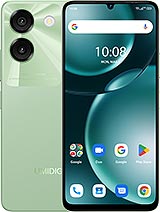
Overview
The Economics of the Ultra-Budget Market
The Umidigi G9A is an entry-level smartphone designed for users on a strict budget featuring a 5000 mAh battery for long-lasting endurance and a 6.75-inch IPS LCD for ample screen real estate, aimed at first-time smartphone owners and secondary device seekers. Released in September 2024, it competes with other low-cost alternatives like the Redmi A series and Infinix Smart lineup in the sub-$100 price bracket.
From an economic perspective, this device represents the absolute floor of what constitutes a functional smartphone in late 2024. While many consumers are tempted by high-end flagships with astronomical price tags, a segment of the market simply requires a communication tool that won't fail during a work shift. We must evaluate whether the cost-cutting measures taken here result in a viable tool or a frustrating paperweight.
The New vs Used Dilemma
In September 2024, the primary competitor for the Umidigi G9A isn't just other [budget phones](/trend/best-budget-phones-2026/), but the thriving used flagship market. For the price of this handset, one could potentially find a four-year-old premium device. However, those older units often suffer from degraded batteries and the end of software support cycles. This model counters that by offering a fresh 5000 mAh cell and the latest Android 14 (Go edition) software, providing a level of security and longevity that a second-hand gamble cannot guarantee.
There is a specific peace of mind that comes with a brand-new warranty and a battery that hasn't seen a thousand charge cycles. While the raw power of an old flagship is superior, the reliability of a new budget unit often wins out for users who cannot afford the downtime of a hardware failure. We see this as a pragmatic choice for the utility-focused consumer who prioritizes uptime over high-fidelity gaming.
Build Quality and Structural Integrity
This model measures 167.2 x 77 x 7.9 mm, making it a relatively thin device despite the large screen. The plastic construction is a necessary trade-off at this price point. Plastic doesn't just lower the cost; it provides a level of drop resilience that glass sandwiches lack. If this device falls on a sidewalk, the frame is more likely to scuff than shatter, which is a hidden value for users in rugged work environments.
We noticed the design mirrors the contemporary aesthetic of 2024, featuring large circular camera modules that give it a more premium appearance than its price suggests. However, the 189 g weight feels light in the hand, signaling the use of hollower plastics compared to the dense magnesium alloys found in higher tiers. The inclusion of a 3.5mm headphone jack remains a vital feature for budget buyers who prefer reliable wired audio over expensive Bluetooth peripherals.
The Visual Experience: Size vs Density
The 6.75-inch IPS LCD is a massive canvas, yet it operates at a 720 x 1600 pixel resolution. This results in a pixel density of approximately 260 ppi. For context, this is below the "Retina" threshold. While text is legible, users will notice soft edges on icons and slight pixelation when viewing high-resolution images. This is the classic budget trade-off: you get a big screen for media consumption, but you sacrifice the sharpness required for professional photo editing or high-density data sheets.
IPS technology ensures that viewing angles are decent, but the peak brightness of this panel will likely struggle under direct September sunlight. Indoors, the screen is perfectly adequate for YouTube or scrolling through social feeds. The teardrop notch for the 8 MP selfie camera is a dated design choice, but it maximizes screen-to-body ratio effectively without the complexity of a punch-hole manufacturing process.
Software and the Android Go Reality
Running Android 14 (Go edition) is a strategic necessity for the Umidigi G9A. Standard Android 14 would overwhelm the 4GB of RAM, leading to constant app crashes and UI lag. The Go edition is a streamlined version of the OS designed specifically for hardware with limited resources. It uses smaller app footprints and limits background processes to ensure that basic tasks like navigation and messaging remain fluid.
Users must understand that this is not a multitasking powerhouse. Opening more than three or four moderate apps will likely trigger the memory management system to kill background tasks. However, for the target demographic—those who primarily use WhatsApp, Facebook Lite, and Google Maps—the experience is surprisingly stable. The lack of bloatware in the Go edition is a significant plus, as it leaves more of the 64GB internal storage available for user data.
Performance Reality Check: The 28nm Struggle
The heart of the device is the Unisoc SC9863A chipset. By 2024 standards, this is an aging piece of silicon. Built on a 28nm process, it is significantly less power-efficient than the 4nm or 6nm chips found in [mid-range phones](/trend/best-mid-range-phones-2026/). The octa-core setup, consisting of Cortex-A55 cores, is designed for efficiency rather than speed. This means the phone will handle emails and web browsing fine, but 3D gaming is essentially off the table.
The IMG8322 GPU is an entry-level graphics core. It handles the UI rendering and video playback without issue, but attempting to run heavy titles like Genshin Impact or even high-fidelity versions of PUBG will result in unplayable frame rates. This handset is a tool for communication and information, not a gaming console. We must also note that 28nm chips tend to generate more heat during sustained tasks like GPS navigation, which can lead to thermal throttling.
Battery Endurance and the 10W Bottleneck
A 5000 mAh battery is the standout spec here. Combined with the low-resolution 720p screen and the energy-efficient (though older) CPU cores, this device can easily last two full days of moderate use. For a worker in the field or a student away from a charger all day, this endurance is the phone's greatest asset. In our analysis, the battery life is the primary reason to choose this model over a more powerful but battery-depleted used flagship.
The trade-off is the 10W wired charging. In an era where 65W and even 120W charging is becoming common, 10W is glacially slow. Charging a 5000 mAh battery from 0% to 100% will take nearly three hours. This is a device that you must charge overnight. If you forget to plug it in and only have 15 minutes before leaving the house, you won't get enough of a boost to see you through the morning. It requires disciplined charging habits.
Camera Hardware: Purely Functional
The 13 MP main camera is accompanied by an auxiliary lens primarily used for depth data. This hardware is designed for utility—scanning QR codes, taking photos of documents, or quick snaps in bright daylight. The f/2.2 aperture (standard for this sensor class) means that low-light performance is poor. In dim environments, the sensor cannot gather enough light, leading to significant digital noise and a loss of detail.
Video recording is capped at 1080p@30fps. Without optical or robust electronic stabilization, handheld video will appear shaky. The 8 MP front camera is sufficient for video calls, but selfies will lack the dynamic range and skin tone accuracy found on more expensive sensors. Again, we must view this through the lens of value: for a sub-$100 device, having a camera that functions reliably for basic documentation is the goal, and this handset meets that bar.
Audio, Connectivity, and Missing Links
The presence of a 3.5mm jack is a major win for the budget-conscious user. It allows for cheap, reliable audio without worrying about battery levels or pairing issues. The single loudspeaker provides enough volume for ringtones and speakerphone calls, but it lacks the depth and bass required for an immersive music experience. It is functional, not theatrical.
Connectivity is limited to 4G LTE. While the world is moving toward 5G, LTE remains the backbone of global mobile networks in 2024 and offers more than enough speed for the tasks this phone can handle. The Bluetooth 4.2 stack is older, meaning it has a shorter range and lower data throughput than the newer 5.3 standards, but it remains compatible with almost all modern accessories. The lack of NFC means no contactless payments (Google Pay), which is a significant omission for urban users but less critical for those in cash-heavy economies.
The Final Take on the Umidigi G9A
The Umidigi G9A is a textbook example of "good enough" engineering. It doesn't try to be a flagship killer; it tries to be a reliable companion for the price of a few tanks of gas. It prioritizes screen size and battery life—the two features budget users value most—while making aggressive cuts in processing power, charging speed, and camera optics. For a parent buying a first phone for a child, or an employer providing handsets to a fleet of drivers, the Umidigi G9A offers a compelling economic argument over the uncertainty of the used market.
Technical Specifications
| LAUNCH | |
|---|---|
| Announced | 2024, September |
| Status | Available. Released 2024, September |
| PLATFORM | |
| OS | Android 14 (Go edition) |
| Chipset | Unisoc SC9863A (28 nm) |
| CPU | Octa-core (4x1.6 GHz Cortex-A55 & 4x1.2 GHz Cortex-A55) |
| GPU | IMG8322 |
| BODY | |
| Dimensions | 167.2 x 77 x 7.9 mm (6.58 x 3.03 x 0.31 in) |
| Weight | 189 g (6.67 oz) |
| SIM | Nano-SIM + Nano-SIM |
| DISPLAY | |
| Type | IPS LCD |
| Size | 6.75 inches, 110.0 cm2 (~85.4% screen-to-body ratio) |
| Resolution | 720 x 1600 pixels, 20:9 ratio (~260 ppi density) |
| MEMORY | |
| Card slot | microSDXC (uses shared SIM slot) |
| Internal | 64GB 4GB RAM |
| MAIN CAMERA | |
| Dual | 13 MP, (wide) Auxiliary lens |
| Features | LED flash |
| Video | 1080p@30fps |
| SELFIE CAMERA | |
| Single | 8 MP, (wide) |
| Video | Yes |
| SOUND | |
| Loudspeaker | Yes |
| 3.5mm jack | Yes |
| COMMS | |
| WLAN | Wi-Fi 802.11 a/b/g/n |
| Bluetooth | 4.2, A2DP |
| Positioning | GPS, GLONASS, GALILEO, BDS |
| NFC | No |
| Radio | FM radio |
| USB | USB Type-C, OTG |
| NETWORK | |
| Technology | GSM / HSPA / LTE |
| 2G bands | GSM 850 / 900 / 1800 / 1900 |
| 3G bands | HSDPA 850 / 900 / 1700(AWS) / 1900 / 2100 |
| 4G bands | 1, 2, 3, 4, 5, 7, 8, 17, 18, 19, 20, 26, 28, 38, 40, 41, 66 |
| Speed | HSPA, LTE |
| FEATURES | |
| Sensors | Accelerometer, compass |
| Info | Virtual proximity sensing |
| BATTERY | |
| Type | 5000 mAh |
| Charging | 10W wired |
| MISC | |
| Colors | Space Black, Lake Green |