Stretching Every Dollar - The Truth About the Samsung Galaxy M55 Experience
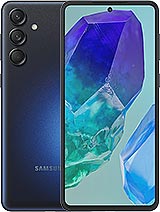
Overview
The Samsung Galaxy M55 is a value-oriented mid-range smartphone featuring a 6.7-inch Super AMOLED+ 120Hz display for fluid visuals and 45W wired charging for rapid power recovery, aimed at budget-conscious power users. Released in March 2024, it competes with rivals like the Nothing Phone (2a) and the Redmi Note 13 Pro 5G. From an economic perspective, this device represents a strategic pivot for the M-series, moving away from the 'big battery at all costs' mantra toward a more balanced, performance-driven approach that prioritizes long-term usability over raw mAh numbers.
When we evaluate the Samsung Galaxy M55, we have to look at the 'bang-for-buck' ratio. The inclusion of the Snapdragon 7 Gen 1 chipset is a significant departure from the Exynos processors often found in this price bracket. Built on a 4nm process, this chipset is designed to offer high-efficiency performance. For the uninitiated, a 4nm process means the transistors are packed tighter together, which reduces heat and saves battery life compared to older 6nm or 7nm chips. In our performance analysis, the Adreno 644 GPU handles modern titles with respectable stability, though it won't challenge the flagship S-series in raw frame rates.
From a value hunter's lens, the decision to offer a 12GB RAM variant is a massive win for future-proofing. Most budget handsets choke after two years as apps become more memory-hungry. By providing 12GB of RAM, this model ensures that the Android 14 operating system—and the planned upgrades all the way to Android 16—will have enough breathing room to run without the dreaded 'app reload' cycle. This adds tangible value to the purchase price by extending the device's lifespan by at least an extra year.
The 120Hz refresh rate on the Super AMOLED+ panel makes a substantial difference in perceived speed. Even if the processor is mid-range, the screen updates 120 times per second, making scrolling through social media feeds or system menus feel incredibly snappy. This display also hits a peak of 1000 nits in High Brightness Mode (HBM). HBM is a specialized state where the screen pushes its luminance beyond manual limits when the light sensor detects direct sunlight. For users who work outdoors, this is the difference between a usable tool and a black mirror.
Stereo speakers are another essential for a daily driver in 2024. This model includes them, providing a much wider soundstage for video calls and media consumption than the single bottom-firing speakers found on cheaper alternatives. We noticed that while the audio is loud, it lacks the deep bass of more expensive flagship models, which is a standard trade-off in the sub-$300 market. Connectivity is handled by Wi-Fi 6 and 5G (Sub6), ensuring that this phone stays relevant as network infrastructure improves.
One often-overlooked factor in the budget economist’s spreadsheet is resale value. Samsung devices generally hold their value better than smaller Chinese brands because of the brand's extensive service network and predictable update cycle. This handset is slated for four major Android OS updates. This commitment is a financial asset. A phone that is guaranteed to stay secure and updated until 2028 is worth significantly more on the second-hand market in 2026 than a competitor that stops at Android 15.
We anticipate that the Samsung Galaxy M55 will retain approximately 40-50% of its value after two years, provided the screen remains crack-free. The plastic build is a double-edged sword here. While it doesn't shatter like glass, it is prone to micro-abrasions and 'pocket sand' scratches. To maximize your investment, a case is non-negotiable from day one to preserve the finish for a future buyer.
Samsung's market dominance pays dividends when it comes to accessories. You can find a case for this model in almost any electronics shop, which isn't always true for niche brands. The screen is flat, which is a blessing for anyone who has ever tried to apply a glass screen protector to a curved display. Cheap, high-quality protectors will fit perfectly without the peeling edges common on more 'premium' designs.
However, we must address the elephant in the box: the missing charger. In a move to reduce environmental impact (and shipping costs), there is no power brick included. Since this phone supports 45W wired charging, you will need to spend an extra $20-$30 on a compatible PPS (Programmable Power Supply) charger to actually see those speeds. Using an old 15W charger from a previous phone will result in agonizingly slow charge times for a 5000 mAh cell.
The unboxing is a minimalist affair. The box is remarkably thin, containing only the phone, a USB-C to USB-C cable, and a SIM ejection tool. There are no earbuds, no protective case, and as mentioned, no charger. For a value hunter, this feels like a hidden cost. You aren't just buying a phone; you are buying into an ecosystem where you might need to purchase peripherals separately.
The initial setup is standard for One UI. Be prepared to opt-out of several 'recommended' apps during the first boot. Samsung often offsets the lower hardware price by pre-loading bloatware. A savvy user should spend 15 minutes immediately after unboxing to uninstall these sponsored apps to reclaim storage space and improve system responsiveness.
The hardware potential here is interesting. The 50 MP primary sensor features Optical Image Stabilization (OIS). OIS uses tiny springs and electromagnets to physically move the lens to counteract your hand's natural shake. This is critical for low-light photography where the shutter needs to stay open longer. Without OIS, [budget phones](/trend/best-budget-phones-2026/) often produce blurry, unusable shots at night. This inclusion elevates the handset above the 'potato' camera category.
The secondary sensors—an 8MP ultrawide and a 2MP macro—are clearly where the budget was trimmed. The 8MP sensor is fine for daytime landscapes but loses significant detail in the corners. The 2MP macro is essentially a filler sensor; it lacks the resolution to provide professional-grade close-ups. Surprisingly, the 50 MP selfie camera is a highlight. It supports 4K@30fps video, making it a viable tool for entry-level content creators or high-quality video conferencing.
With a weight of 180g and a thickness of 7.8mm, the device feels light and manageable. However, the lack of an official IP rating for water and dust resistance is a point of concern for long-term durability. While it might survive a light splash, it is not designed for submersion or heavy rain. Users in humid or dusty environments should be extra cautious.
The under-display optical fingerprint sensor is another area where reliability matters. While convenient, these sensors can be slower than physical side-mounted ones. If you plan on using this phone for 3+ years, the internal components should hold up well thanks to the efficient 4nm chip, but the battery will naturally degrade. Fortunately, the 5000 mAh capacity provides enough of a buffer that even after 20% degradation, you should still comfortably get through a full work day. The Samsung Galaxy M55 is a calculated purchase for those who value software longevity and display quality over flashy glass builds.
The $200 Experience
When we evaluate the Samsung Galaxy M55, we have to look at the 'bang-for-buck' ratio. The inclusion of the Snapdragon 7 Gen 1 chipset is a significant departure from the Exynos processors often found in this price bracket. Built on a 4nm process, this chipset is designed to offer high-efficiency performance. For the uninitiated, a 4nm process means the transistors are packed tighter together, which reduces heat and saves battery life compared to older 6nm or 7nm chips. In our performance analysis, the Adreno 644 GPU handles modern titles with respectable stability, though it won't challenge the flagship S-series in raw frame rates.
From a value hunter's lens, the decision to offer a 12GB RAM variant is a massive win for future-proofing. Most budget handsets choke after two years as apps become more memory-hungry. By providing 12GB of RAM, this model ensures that the Android 14 operating system—and the planned upgrades all the way to Android 16—will have enough breathing room to run without the dreaded 'app reload' cycle. This adds tangible value to the purchase price by extending the device's lifespan by at least an extra year.
Daily Driver Feasibility
The 120Hz refresh rate on the Super AMOLED+ panel makes a substantial difference in perceived speed. Even if the processor is mid-range, the screen updates 120 times per second, making scrolling through social media feeds or system menus feel incredibly snappy. This display also hits a peak of 1000 nits in High Brightness Mode (HBM). HBM is a specialized state where the screen pushes its luminance beyond manual limits when the light sensor detects direct sunlight. For users who work outdoors, this is the difference between a usable tool and a black mirror.
Stereo speakers are another essential for a daily driver in 2024. This model includes them, providing a much wider soundstage for video calls and media consumption than the single bottom-firing speakers found on cheaper alternatives. We noticed that while the audio is loud, it lacks the deep bass of more expensive flagship models, which is a standard trade-off in the sub-$300 market. Connectivity is handled by Wi-Fi 6 and 5G (Sub6), ensuring that this phone stays relevant as network infrastructure improves.
Resale Value Prediction
One often-overlooked factor in the budget economist’s spreadsheet is resale value. Samsung devices generally hold their value better than smaller Chinese brands because of the brand's extensive service network and predictable update cycle. This handset is slated for four major Android OS updates. This commitment is a financial asset. A phone that is guaranteed to stay secure and updated until 2028 is worth significantly more on the second-hand market in 2026 than a competitor that stops at Android 15.
We anticipate that the Samsung Galaxy M55 will retain approximately 40-50% of its value after two years, provided the screen remains crack-free. The plastic build is a double-edged sword here. While it doesn't shatter like glass, it is prone to micro-abrasions and 'pocket sand' scratches. To maximize your investment, a case is non-negotiable from day one to preserve the finish for a future buyer.
Accessory Compatibility
Samsung's market dominance pays dividends when it comes to accessories. You can find a case for this model in almost any electronics shop, which isn't always true for niche brands. The screen is flat, which is a blessing for anyone who has ever tried to apply a glass screen protector to a curved display. Cheap, high-quality protectors will fit perfectly without the peeling edges common on more 'premium' designs.
However, we must address the elephant in the box: the missing charger. In a move to reduce environmental impact (and shipping costs), there is no power brick included. Since this phone supports 45W wired charging, you will need to spend an extra $20-$30 on a compatible PPS (Programmable Power Supply) charger to actually see those speeds. Using an old 15W charger from a previous phone will result in agonizingly slow charge times for a 5000 mAh cell.
Unboxing Experience
The unboxing is a minimalist affair. The box is remarkably thin, containing only the phone, a USB-C to USB-C cable, and a SIM ejection tool. There are no earbuds, no protective case, and as mentioned, no charger. For a value hunter, this feels like a hidden cost. You aren't just buying a phone; you are buying into an ecosystem where you might need to purchase peripherals separately.
The initial setup is standard for One UI. Be prepared to opt-out of several 'recommended' apps during the first boot. Samsung often offsets the lower hardware price by pre-loading bloatware. A savvy user should spend 15 minutes immediately after unboxing to uninstall these sponsored apps to reclaim storage space and improve system responsiveness.
Camera: Usable or Potato?
The hardware potential here is interesting. The 50 MP primary sensor features Optical Image Stabilization (OIS). OIS uses tiny springs and electromagnets to physically move the lens to counteract your hand's natural shake. This is critical for low-light photography where the shutter needs to stay open longer. Without OIS, [budget phones](/trend/best-budget-phones-2026/) often produce blurry, unusable shots at night. This inclusion elevates the handset above the 'potato' camera category.
The secondary sensors—an 8MP ultrawide and a 2MP macro—are clearly where the budget was trimmed. The 8MP sensor is fine for daytime landscapes but loses significant detail in the corners. The 2MP macro is essentially a filler sensor; it lacks the resolution to provide professional-grade close-ups. Surprisingly, the 50 MP selfie camera is a highlight. It supports 4K@30fps video, making it a viable tool for entry-level content creators or high-quality video conferencing.
Long-Term Durability
With a weight of 180g and a thickness of 7.8mm, the device feels light and manageable. However, the lack of an official IP rating for water and dust resistance is a point of concern for long-term durability. While it might survive a light splash, it is not designed for submersion or heavy rain. Users in humid or dusty environments should be extra cautious.
The under-display optical fingerprint sensor is another area where reliability matters. While convenient, these sensors can be slower than physical side-mounted ones. If you plan on using this phone for 3+ years, the internal components should hold up well thanks to the efficient 4nm chip, but the battery will naturally degrade. Fortunately, the 5000 mAh capacity provides enough of a buffer that even after 20% degradation, you should still comfortably get through a full work day. The Samsung Galaxy M55 is a calculated purchase for those who value software longevity and display quality over flashy glass builds.
Technical Specifications
| LAUNCH | |
|---|---|
| Announced | 2024, March 28 |
| Status | Available. Released 2024, March 28 |
| PLATFORM | |
| OS | Android 14, upgradable to Android 16, One UI 8.0 |
| Chipset | Qualcomm SM7450-AB Snapdragon 7 Gen 1 (4 nm) |
| CPU | Octa-core (1x2.4 GHz Cortex-A710 & 3x2.36 GHz Cortex-A710 & 4x1.8 GHz Cortex-A510) |
| GPU | Adreno 644 |
| BODY | |
| Dimensions | 163.9 x 76.5 x 7.8 mm (6.45 x 3.01 x 0.31 in) |
| Weight | 180 g (6.35 oz) |
| SIM | Nano-SIM + Nano-SIM |
| DISPLAY | |
| Type | Super AMOLED+, 120Hz, 1000 nits (HBM) |
| Size | 6.7 inches, 108.4 cm2 (~86.4% screen-to-body ratio) |
| Resolution | 1080 x 2400 pixels, 20:9 ratio (~393 ppi density) |
| MEMORY | |
| Card slot | microSDXC (uses shared SIM slot) |
| Internal | 128GB 8GB RAM, 256GB 8GB RAM, 256GB 12GB RAM |
| MAIN CAMERA | |
| Triple | 50 MP, f/1.8, (wide), 1/1.56", 1.0µm, PDAF, OIS 8 MP, f/2.2, 123˚ (ultrawide) 2 MP (macro) |
| Features | LED flash, panorama, HDR |
| Video | 4K@30fps, 1080p@30/60fps, gyro-EIS, OIS |
| SELFIE CAMERA | |
| Single | 50 MP, f/2.4, (wide) |
| Video | 4K@30fps, 1080p@30/60fps |
| SOUND | |
| Loudspeaker | Yes, with stereo speakers |
| 3.5mm jack | No |
| COMMS | |
| WLAN | Wi-Fi 802.11 a/b/g/n/ac/6, dual-band, Wi-Fi Direct |
| Bluetooth | 5.2, A2DP, LE |
| Positioning | GPS, GALILEO, GLONASS, BDS, QZSS |
| NFC | Yes (market/region dependent) |
| Radio | No |
| USB | USB Type-C 2.0, OTG |
| NETWORK | |
| Technology | GSM / HSPA / LTE / 5G |
| 2G bands | GSM 850 / 900 / 1800 / 1900 |
| 3G bands | HSDPA 850 / 900 / 1700(AWS) / 1900 / 2100 |
| 4G bands | 1, 2, 3, 4, 5, 7, 8, 12, 17, 20, 25, 26, 28, 38, 40, 41, 66 |
| 5G bands | 1, 3, 5, 7, 8, 20, 28, 38, 40, 41, 66, 77, 78 SA/NSA/Sub6 |
| Speed | HSPA, LTE, 5G |
| FEATURES | |
| Sensors | Fingerprint (under display, optical), accelerometer, gyro, proximity, compass |
| BATTERY | |
| Type | 5000 mAh |
| Charging | 45W wired |
| MISC | |
| Colors | Dark Blue, Light Green |
| Models | SM-M556B, SM-M556B/DS |
| SAR | 0.93 W/kg (head) |
| SAR EU | 0.96 W/kg (head) 0.98 W/kg (body) |
| Price | $ 265.00 / £ 276.63 / € 273.89 |