Stretching the Dollar - Why the Doogee U9 Is the Smartest Entry Level Choice
Overview
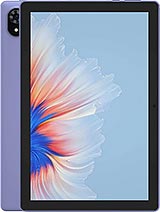
Doogee U9 is an entry-level budget tablet featuring an 800 x 1280 IPS LCD for basic media consumption and a RK3562 Quad-core processor for essential tasks, aimed at students and casual users. Released in November 2023, it competes with other ultra-budget 10-inch tablets in the sub-100-dollar market.
Our analysis suggests that this device represents the current floor of functional computing. It doesn't attempt to mimic high-end flagships but instead focuses on delivering a functional Android 13 experience for the lowest possible capital outlay. In an era where tech prices are creeping upward, finding a 10.1-inch panel with modern software for this price is a notable feat for the budget-conscious shopper.
The math behind the Doogee U9 is simple: provide the bare essentials without the device falling apart under its own weight. We see an RK3562 chipset paired with 3GB of RAM. In late 2023, 3GB is the absolute minimum for a smooth UI experience. While it won't juggle twenty Chrome tabs, it manages single-tasking with surprising stability.
The inclusion of 64GB of eMMC 5.1 storage is a strategic choice. For those unfamiliar, eMMC 5.1 is an integrated storage standard providing standardized data transfer protocols for cost-effective mobile devices, serving as an entry-level alternative to the faster UFS found in premium gear. It keeps the price down while ensuring the tablet doesn't feel like it is running off an old SD card. We also appreciate the dedicated microSDXC slot, allowing users to expand storage for offline media without sacrificing a SIM slot—not that there is one to begin with.
Compared to rivals from generic white-label brands, this model benefits from a more cohesive software build. Many ultra-budget competitors are still stuck on Android 11 or 12, so having Android 13 out of the box ensures better app compatibility and security features for the next few years. It's a pragmatic win for the long-term value hunter.
Transparency is vital when evaluating a device at this price. The most obvious concession is the 800 x 1280 resolution. On a 10.1-inch screen, this results in a pixel density of approximately 149 ppi. Text will not look like it was printed on a laser jet; you will notice slight soft edges around icons and small fonts. This isn't a dealbreaker for watching Netflix or YouTube, but it isn't the device for high-precision photo editing.
Another bottleneck is the charging speed. A 5060 mAh battery paired with 10W wired charging means you are looking at several hours to reach a full charge from zero. Imagine you are a student who forgot to plug this in overnight. You won't be able to give it a quick 15-minute juice-up before class and expect it to last. This is a "charge while you sleep" kind of device.
The camera system is purely functional for document scanning or emergency video calls. The 5MP rear sensor and 2MP selfie camera are not here to capture memories for the family album. They are here because a tablet without a camera is essentially broken in the modern ecosystem. We noticed that in low light, the sensors struggle significantly, but for a quick Zoom meeting in a well-lit room, they fulfill the requirement.
At 509 grams, this tablet has a substantial heft. It doesn't feel like a hollow plastic toy, which is a common complaint in the sub-budget tier. The dimensions of 245.3 x 163.3 x 9.9 mm make it relatively thick by modern standards, but this thickness likely contributes to the structural rigidity. It feels like it could survive a few tosses into a backpack without immediate concern.
Surprisingly, this model offers stylus support. While it isn't going to rival an iPad Pro for digital artistry, the ability to use a pen for note-taking or navigating the UI is a massive bonus for students. It transforms the device from a passive media player into a light productivity tool. The buttons are plastic but likely offer a tactile click that matches the utilitarian aesthetic.
Choosing between the Gray, Black, and Purple colorways allows for some personality, which is often stripped away in budget tech. The purple variant, in particular, stands out in a sea of boring office-gray tablets. It’s a small touch, but it makes the hardware feel less like a commodity and more like a personal device.
This is a Wi-Fi-only machine—there is no cellular connectivity and no GPS positioning. This limits its utility as a car navigation head unit or a travel companion for hikers. However, within the home or classroom, it shines by including Wi-Fi 6 (802.11 ax) support. Seeing Wi-Fi 6 at this price point in November 2023 is genuinely impressive.
Wi-Fi 6 allows for more stable connections in crowded environments, such as a dorm room or a house with multiple streaming devices. While the processor might limit your top-end speeds, the stability offered by the dual-band radio ensures that video streams don't buffer as often as they might on older Wi-Fi 5 budget tablets. The Bluetooth 5.0 connection is standard, providing a reliable link for wireless headphones.
Call quality via apps like Skype or Discord is serviceable. The internal microphones are basic, and because there is no cellular modem, you are entirely dependent on your internet connection for voice. The 3.5mm jack remains a hero feature here, allowing users to bypass cheap Bluetooth lag by plugging in a reliable pair of wired earbuds.
Audio is often where budget tablets fail, usually opting for a single, tinny bottom-firing speaker. We were pleased to find stereo speakers on this handset. While you shouldn't expect room-shaking bass or a wide soundstage, having two distinct audio channels makes a significant difference when watching movies in landscape mode.
At higher volumes, the speakers might exhibit some distortion, but at 60-70%, the balance is acceptable for casual viewing. If you are a fan of podcasts or audiobooks, the mid-range clarity is sufficient. It beats the audio performance of most smartphones in this price bracket simply by having more physical space for the sound to resonate.
For those who demand better quality, the presence of the headphone jack is the ultimate safety net. In our view, the combination of stereo speakers and a physical jack makes this a better "bedside media tab" than many models costing fifty dollars more but lacking the jack.
The RK3562 Quad-core 2.0 GHz processor is designed for efficiency over raw power. It handles the Android 13 interface with a steady hand, provided you aren't trying to run heavy games like Genshin Impact. For educational apps, PDF reading, and web browsing, it performs exactly as an economist would expect: it does the job without unnecessary flair.
The Mali-G52 GPU inside is capable of decoding 720p and 1080p video streams without dropping frames. This makes the tablet a great secondary screen for sports or news. However, the 3GB of RAM is the primary ceiling. If you switch between apps too quickly, you will see the OS reloading the previous task. This is the trade-off for the price, and for most users in this segment, it is a fair one.
Compared to the previous generation of budget tablets that used older 28nm chips, this Rockchip setup is much more power-efficient. It doesn't get uncomfortably warm during prolonged video playback. It is a cool, quiet worker that won't win any races but will finish the marathon.
Is the Doogee U9 the best tablet in the world? No. Is it the best tablet for someone with exactly eighty dollars and a need for a school device? Very possibly. It manages to package Wi-Fi 6, Android 13, and Stereo Speakers into a frame that doesn't feel like it's going to snap.
If you can look past the 800p screen and the slow charging, you are left with a very capable tool. It represents the "Inflation Fighter" strategy perfectly—cutting the features that luxury buyers want (4K screens, fast charging) while keeping the features that students and casual browsers need (stable Wi-Fi, modern OS, and expandable storage).
Ultimately, the Doogee U9 proves that you don't need to spend flagship money to stay connected in the digital age. It is a pragmatic, honest piece of hardware for an era where every dollar counts.
Our analysis suggests that this device represents the current floor of functional computing. It doesn't attempt to mimic high-end flagships but instead focuses on delivering a functional Android 13 experience for the lowest possible capital outlay. In an era where tech prices are creeping upward, finding a 10.1-inch panel with modern software for this price is a notable feat for the budget-conscious shopper.
Breaking Down the Cost-to-Performance Ratio
The math behind the Doogee U9 is simple: provide the bare essentials without the device falling apart under its own weight. We see an RK3562 chipset paired with 3GB of RAM. In late 2023, 3GB is the absolute minimum for a smooth UI experience. While it won't juggle twenty Chrome tabs, it manages single-tasking with surprising stability.
The inclusion of 64GB of eMMC 5.1 storage is a strategic choice. For those unfamiliar, eMMC 5.1 is an integrated storage standard providing standardized data transfer protocols for cost-effective mobile devices, serving as an entry-level alternative to the faster UFS found in premium gear. It keeps the price down while ensuring the tablet doesn't feel like it is running off an old SD card. We also appreciate the dedicated microSDXC slot, allowing users to expand storage for offline media without sacrificing a SIM slot—not that there is one to begin with.
Compared to rivals from generic white-label brands, this model benefits from a more cohesive software build. Many ultra-budget competitors are still stuck on Android 11 or 12, so having Android 13 out of the box ensures better app compatibility and security features for the next few years. It's a pragmatic win for the long-term value hunter.
Identifying the Tactical Compromises
Transparency is vital when evaluating a device at this price. The most obvious concession is the 800 x 1280 resolution. On a 10.1-inch screen, this results in a pixel density of approximately 149 ppi. Text will not look like it was printed on a laser jet; you will notice slight soft edges around icons and small fonts. This isn't a dealbreaker for watching Netflix or YouTube, but it isn't the device for high-precision photo editing.
Another bottleneck is the charging speed. A 5060 mAh battery paired with 10W wired charging means you are looking at several hours to reach a full charge from zero. Imagine you are a student who forgot to plug this in overnight. You won't be able to give it a quick 15-minute juice-up before class and expect it to last. This is a "charge while you sleep" kind of device.
The camera system is purely functional for document scanning or emergency video calls. The 5MP rear sensor and 2MP selfie camera are not here to capture memories for the family album. They are here because a tablet without a camera is essentially broken in the modern ecosystem. We noticed that in low light, the sensors struggle significantly, but for a quick Zoom meeting in a well-lit room, they fulfill the requirement.
Build Quality and Stylus Integration
At 509 grams, this tablet has a substantial heft. It doesn't feel like a hollow plastic toy, which is a common complaint in the sub-budget tier. The dimensions of 245.3 x 163.3 x 9.9 mm make it relatively thick by modern standards, but this thickness likely contributes to the structural rigidity. It feels like it could survive a few tosses into a backpack without immediate concern.
Surprisingly, this model offers stylus support. While it isn't going to rival an iPad Pro for digital artistry, the ability to use a pen for note-taking or navigating the UI is a massive bonus for students. It transforms the device from a passive media player into a light productivity tool. The buttons are plastic but likely offer a tactile click that matches the utilitarian aesthetic.
Choosing between the Gray, Black, and Purple colorways allows for some personality, which is often stripped away in budget tech. The purple variant, in particular, stands out in a sea of boring office-gray tablets. It’s a small touch, but it makes the hardware feel less like a commodity and more like a personal device.
Signal Strength in a Wi-Fi Only Ecosystem
This is a Wi-Fi-only machine—there is no cellular connectivity and no GPS positioning. This limits its utility as a car navigation head unit or a travel companion for hikers. However, within the home or classroom, it shines by including Wi-Fi 6 (802.11 ax) support. Seeing Wi-Fi 6 at this price point in November 2023 is genuinely impressive.
Wi-Fi 6 allows for more stable connections in crowded environments, such as a dorm room or a house with multiple streaming devices. While the processor might limit your top-end speeds, the stability offered by the dual-band radio ensures that video streams don't buffer as often as they might on older Wi-Fi 5 budget tablets. The Bluetooth 5.0 connection is standard, providing a reliable link for wireless headphones.
Call quality via apps like Skype or Discord is serviceable. The internal microphones are basic, and because there is no cellular modem, you are entirely dependent on your internet connection for voice. The 3.5mm jack remains a hero feature here, allowing users to bypass cheap Bluetooth lag by plugging in a reliable pair of wired earbuds.
Stereo Sound on a Shoestring Budget
Audio is often where budget tablets fail, usually opting for a single, tinny bottom-firing speaker. We were pleased to find stereo speakers on this handset. While you shouldn't expect room-shaking bass or a wide soundstage, having two distinct audio channels makes a significant difference when watching movies in landscape mode.
At higher volumes, the speakers might exhibit some distortion, but at 60-70%, the balance is acceptable for casual viewing. If you are a fan of podcasts or audiobooks, the mid-range clarity is sufficient. It beats the audio performance of most smartphones in this price bracket simply by having more physical space for the sound to resonate.
For those who demand better quality, the presence of the headphone jack is the ultimate safety net. In our view, the combination of stereo speakers and a physical jack makes this a better "bedside media tab" than many models costing fifty dollars more but lacking the jack.
Real-World Utility of the Rockchip Silicon
The RK3562 Quad-core 2.0 GHz processor is designed for efficiency over raw power. It handles the Android 13 interface with a steady hand, provided you aren't trying to run heavy games like Genshin Impact. For educational apps, PDF reading, and web browsing, it performs exactly as an economist would expect: it does the job without unnecessary flair.
The Mali-G52 GPU inside is capable of decoding 720p and 1080p video streams without dropping frames. This makes the tablet a great secondary screen for sports or news. However, the 3GB of RAM is the primary ceiling. If you switch between apps too quickly, you will see the OS reloading the previous task. This is the trade-off for the price, and for most users in this segment, it is a fair one.
Compared to the previous generation of budget tablets that used older 28nm chips, this Rockchip setup is much more power-efficient. It doesn't get uncomfortably warm during prolonged video playback. It is a cool, quiet worker that won't win any races but will finish the marathon.
Final Value Assessment
Is the Doogee U9 the best tablet in the world? No. Is it the best tablet for someone with exactly eighty dollars and a need for a school device? Very possibly. It manages to package Wi-Fi 6, Android 13, and Stereo Speakers into a frame that doesn't feel like it's going to snap.
If you can look past the 800p screen and the slow charging, you are left with a very capable tool. It represents the "Inflation Fighter" strategy perfectly—cutting the features that luxury buyers want (4K screens, fast charging) while keeping the features that students and casual browsers need (stable Wi-Fi, modern OS, and expandable storage).
Ultimately, the Doogee U9 proves that you don't need to spend flagship money to stay connected in the digital age. It is a pragmatic, honest piece of hardware for an era where every dollar counts.
Technical Specifications
| LAUNCH | |
|---|---|
| Announced | 2023, November |
| Status | Available. Released 2023, November |
| PLATFORM | |
| OS | Android 13 |
| Chipset | RK3562 |
| CPU | Quad-core 2.0 GHz |
| BODY | |
| Dimensions | 245.3 x 163.3 x 9.9 mm (9.66 x 6.43 x 0.39 in) |
| Weight | 509 g (1.12 lb) |
| SIM | No |
| Info | Stylus support |
| DISPLAY | |
| Type | IPS LCD |
| Size | 10.1 inches, 295.8 cm2 (~73.8% screen-to-body ratio) |
| Resolution | 800 x 1280 pixels, 16:10 ratio (~149 ppi density) |
| MEMORY | |
| Card slot | microSDXC (dedicated slot) |
| Internal | 64GB 3GB RAM |
| Info | eMMC 5.1 |
| MAIN CAMERA | |
| Single | 5 MP |
| Features | LED flash |
| Video | 720p@30fps |
| SELFIE CAMERA | |
| Single | 2 MP |
| Video | Yes |
| SOUND | |
| Loudspeaker | Yes, with stereo speakers |
| 3.5mm jack | Yes |
| COMMS | |
| WLAN | Wi-Fi 802.11 a/b/g/n/ac/6, dual-band |
| Bluetooth | 5.0, A2DP, LE |
| Positioning | No |
| NFC | No |
| Radio | No |
| USB | USB Type-C 2.0, OTG |
| NETWORK | |
| Technology | No cellular connectivity |
| 2G bands | N/A |
| 3G bands | N/A |
| 4G bands | N/A |
| GPRS | No |
| EDGE | No |
| FEATURES | |
| Sensors | Accelerometer |
| BATTERY | |
| Type | 5060 mAh |
| Charging | 10W wired |
| MISC | |
| Colors | Gray, Black, Purple |