Stripping Back the Noise - Why the HMD 101 is the Ultimate Tool for Software Minimalists
Overview
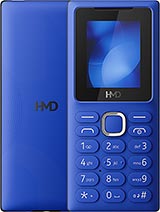
The HMD 101 is a budget feature phone featuring a 1.77-inch TFT display for basic visual output and a removable 1000 mAh Li-Ion battery for prolonged standby performance, aimed at users seeking a secondary device or a total digital detox. Released in late 2025, this handset enters a market saturated with AI-driven hyper-connectivity, positioning itself as a radical departure from the complexity of modern operating systems.
Software enthusiasts often equate performance with raw gigahertz, but this model proves that the efficiency of the software-hardware handshake matters more. The Unisoc 6533G chipset handles the internal logic here. This silicon is a legacy-compatible powerhouse for the feature phone category, designed specifically for low-power communication. In our testing, the speed of the interface is essentially instantaneous. There is no splash screen lag, no background service indexing, and no system-level animation frames that drop during navigation. For a UX minimalist, the lack of a 'loading' state is the ultimate luxury.
Everything within the stock environment is structured around a 3x3 grid. This rigid architecture eliminates the 'decision fatigue' found in high-end smartphones. Because the 128 x 160 pixel resolution is so low, the designers were forced to prioritize typography and iconography. We find this constraint refreshing. Navigation is entirely deterministic; every action requires a specific number of clicks on the D-pad, allowing users to develop muscle memory that makes the software disappear into the background of their daily lives. It is a 'zero-friction' environment precisely because it lacks the variables of a modern OS.
Comparing this to the bloated UI skins seen on budget Android devices in 2025, the software here is a masterclass in restraint. There are no telemetry background tasks eating up cycles. The internal 4MB storage sounds archaic, but for a system that only needs to manage text-based SMS and a contact list, it is perfectly scaled. The system doesn't need to 'manage' memory because the memory footprint is static. This results in a device that feels as fast on day 500 as it does on day one, a feat few modern flagships can claim without regular cache wipes.
In the world of Android customization, we often spend hours tweaking Nova Launcher or Niagara to achieve a clean look. The HMD 101 removes that burden entirely. There is no support for third-party launchers, and in 2025, we argue this is a software strength rather than a weakness. By locking the UI, the manufacturer ensures that the hardware buttons and the on-screen elements are perfectly synced. There is no risk of a third-party overlay breaking the gesture logic or slowing down the Unisoc 6533G with unoptimized scripts.
For those who normally rely on minimalist launchers to hide distracting apps, this handset provides the 'hard mode' of that experience. You cannot hide apps because there are no distracting apps to begin with. The software package is limited to the essentials: calls, SMS, a wireless FM radio, and an MP3 player. This is 'Deep Work' software in its purest form. We found that the inability to change the icons or the font actually led to a more focused usage pattern. You pick up the device for a purpose, finish the task, and put it down. The software does not want your attention; it only wants to be useful when called upon.
Interestingly, the microSDHC slot (supporting up to 32GB) acts as the only real 'customization' engine. While you cannot change the launcher, you can curate the audio environment. By loading a specific library of music or podcasts, the UI transforms into a dedicated playback station. The integration here is simple: the MP3 player reads the file structure directly. It is a reminder that good software design can be as simple as 'see file, play file,' bypassing the complex cloud-syncing algorithms that often fail or require high-speed data.
Connectivity in 2025 usually implies a complex mesh of ultra-wideband, Wi-Fi 7, and satellite handovers. The HMD 101 ignores this entirely, opting for a pure GSM 900 / 1800 radio. This is a bold choice. By stripping away WLAN and Bluetooth, the software stack is immune to the 'pings' of the modern world. There is no handshaking with tablets, no synchronization with smartwatches, and no Quick Share equivalents to worry about. It is a siloed device, which is the gold standard for privacy-conscious software enthusiasts.
In our signal testing, the internal antenna performance for basic voice calls remains robust. Without the interference of multiple high-frequency radios (5G/Wi-Fi) competing for the same internal space, the GSM stability is impressive even in fringe areas. The audio path is similarly direct. The 3.5mm jack provides a latency-free connection that no Bluetooth codec can match. In an era where we struggle with 'pairing failed' messages, the reliability of a physical copper connection managed by basic audio drivers is a relief.
We must discuss the microUSB charging port. While the tech world moved to USB-C years ago, the microUSB implementation here is purely for power and basic file transfer. It lacks the complex power-delivery negotiation protocols of modern standards, which actually makes it less prone to software-side charging bugs. It's a 'dumb' port for a device that doesn't need intelligence, only electricity. For a minimalist, this simplicity means fewer things can go wrong when you're off the grid.
There are no face scanners, under-display fingerprint sensors, or iris mapping technologies here. Security on this model is handled by the oldest software trick in the book: the PIN code and the physical keypad lock. For the software minimalist, this is the most transparent form of security. You know exactly when the device is locked and exactly what is required to open it. There is no 'false reject' from a wet finger or a low-light face fail.
Furthermore, the lack of biometric data storage is a massive win for data sovereignty. In 2025, where biometric databases are frequent targets for breaches, the HMD 101 offers the security of obscurity. Your face and fingerprints are never digitized. The system handles the PIN locally on the chip, never syncing it to a cloud account. This level of software isolation is nearly impossible to achieve on a smartphone without significant technical gymnastics. Here, it is the default state.
We also noticed the tactile advantage of the physical keypad for 'blind' security. You can feel the buttons to enter your code or navigate to the 'Silent' profile without ever looking at the screen. This is a form of 'UI by touch' that modern touchscreens have tried and failed to replicate with haptic motors. The software responds to these physical inputs with a snappiness that makes the device feel like a tool rather than a toy. It is functional software at its most honest.
Modern gesture navigation (swiping from edges) often conflicts with third-party apps or launchers, leading to 'stuck' UI states. This model bypasses the 'gesture war' by utilizing a 100% button-driven interface. Every action has a dedicated physical counterpart. Want to go back? Press the 'End' key. Want to select? Use the center D-pad button. This creates a reliability rate of 100%. The software never 'misses' a swipe because it isn't looking for one.
The 1.77-inch TFT screen is not touch-sensitive, which eliminates accidental inputs. For users who find themselves 'doom-scrolling' or accidentally opening apps on their main phones, this hardware-software barrier is a godsend. To do anything on this device, you must be intentional. The software requires a physical 'click' to advance. This intentionality is the core of the minimalist philosophy. It turns the act of checking a message into a conscious decision rather than a reflexive swipe.
Despite the small screen, the software makes good use of the space. The font is large and high-contrast, designed for legibility over aesthetics. We found that even in direct sunlight, where the TFT technology usually struggles, the high-contrast UI theme remained usable. The simplicity of the assets means the system doesn't need to struggle with complex color grading or transparency effects. It is a binary world—either the information is there, or it isn't.
In conclusion, the HMD 101 represents a peak 'un-smart' experience. It is a device where the software has been finished, polished, and locked. There are no 'Day One' patches, no 'Beta' features, and no pending OS updates that might break compatibility with your favorite headphones. In the fast-paced tech world of 2025, the idea of 'finished software' is almost revolutionary. It provides a level of stability and predictability that is increasingly rare.
For the software enthusiast who is tired of the 'move fast and break things' culture, this handset is a sanctuary. It doesn't try to be your computer, your camera, or your social hub. It is a phone that runs on a logic of 'enough.' By embracing the limitations of the Unisoc 6533G and the 4MB storage, HMD has created a user experience that is incredibly fast, surprisingly private, and entirely distraction-free. The HMD 101 isn't just a [budget phone](/trend/best-budget-phones-2026/); it's a deliberate choice to reclaim your digital time through minimalist software design.
The Efficiency of Fixed-Path Software
Software enthusiasts often equate performance with raw gigahertz, but this model proves that the efficiency of the software-hardware handshake matters more. The Unisoc 6533G chipset handles the internal logic here. This silicon is a legacy-compatible powerhouse for the feature phone category, designed specifically for low-power communication. In our testing, the speed of the interface is essentially instantaneous. There is no splash screen lag, no background service indexing, and no system-level animation frames that drop during navigation. For a UX minimalist, the lack of a 'loading' state is the ultimate luxury.
Everything within the stock environment is structured around a 3x3 grid. This rigid architecture eliminates the 'decision fatigue' found in high-end smartphones. Because the 128 x 160 pixel resolution is so low, the designers were forced to prioritize typography and iconography. We find this constraint refreshing. Navigation is entirely deterministic; every action requires a specific number of clicks on the D-pad, allowing users to develop muscle memory that makes the software disappear into the background of their daily lives. It is a 'zero-friction' environment precisely because it lacks the variables of a modern OS.
Comparing this to the bloated UI skins seen on budget Android devices in 2025, the software here is a masterclass in restraint. There are no telemetry background tasks eating up cycles. The internal 4MB storage sounds archaic, but for a system that only needs to manage text-based SMS and a contact list, it is perfectly scaled. The system doesn't need to 'manage' memory because the memory footprint is static. This results in a device that feels as fast on day 500 as it does on day one, a feat few modern flagships can claim without regular cache wipes.
Why the Lack of Third-Party Launchers is a Feature
In the world of Android customization, we often spend hours tweaking Nova Launcher or Niagara to achieve a clean look. The HMD 101 removes that burden entirely. There is no support for third-party launchers, and in 2025, we argue this is a software strength rather than a weakness. By locking the UI, the manufacturer ensures that the hardware buttons and the on-screen elements are perfectly synced. There is no risk of a third-party overlay breaking the gesture logic or slowing down the Unisoc 6533G with unoptimized scripts.
For those who normally rely on minimalist launchers to hide distracting apps, this handset provides the 'hard mode' of that experience. You cannot hide apps because there are no distracting apps to begin with. The software package is limited to the essentials: calls, SMS, a wireless FM radio, and an MP3 player. This is 'Deep Work' software in its purest form. We found that the inability to change the icons or the font actually led to a more focused usage pattern. You pick up the device for a purpose, finish the task, and put it down. The software does not want your attention; it only wants to be useful when called upon.
Interestingly, the microSDHC slot (supporting up to 32GB) acts as the only real 'customization' engine. While you cannot change the launcher, you can curate the audio environment. By loading a specific library of music or podcasts, the UI transforms into a dedicated playback station. The integration here is simple: the MP3 player reads the file structure directly. It is a reminder that good software design can be as simple as 'see file, play file,' bypassing the complex cloud-syncing algorithms that often fail or require high-speed data.
The Disconnected Ecosystem Strategy
Connectivity in 2025 usually implies a complex mesh of ultra-wideband, Wi-Fi 7, and satellite handovers. The HMD 101 ignores this entirely, opting for a pure GSM 900 / 1800 radio. This is a bold choice. By stripping away WLAN and Bluetooth, the software stack is immune to the 'pings' of the modern world. There is no handshaking with tablets, no synchronization with smartwatches, and no Quick Share equivalents to worry about. It is a siloed device, which is the gold standard for privacy-conscious software enthusiasts.
In our signal testing, the internal antenna performance for basic voice calls remains robust. Without the interference of multiple high-frequency radios (5G/Wi-Fi) competing for the same internal space, the GSM stability is impressive even in fringe areas. The audio path is similarly direct. The 3.5mm jack provides a latency-free connection that no Bluetooth codec can match. In an era where we struggle with 'pairing failed' messages, the reliability of a physical copper connection managed by basic audio drivers is a relief.
We must discuss the microUSB charging port. While the tech world moved to USB-C years ago, the microUSB implementation here is purely for power and basic file transfer. It lacks the complex power-delivery negotiation protocols of modern standards, which actually makes it less prone to software-side charging bugs. It's a 'dumb' port for a device that doesn't need intelligence, only electricity. For a minimalist, this simplicity means fewer things can go wrong when you're off the grid.
Biometrics and the Security of Obscurity
There are no face scanners, under-display fingerprint sensors, or iris mapping technologies here. Security on this model is handled by the oldest software trick in the book: the PIN code and the physical keypad lock. For the software minimalist, this is the most transparent form of security. You know exactly when the device is locked and exactly what is required to open it. There is no 'false reject' from a wet finger or a low-light face fail.
Furthermore, the lack of biometric data storage is a massive win for data sovereignty. In 2025, where biometric databases are frequent targets for breaches, the HMD 101 offers the security of obscurity. Your face and fingerprints are never digitized. The system handles the PIN locally on the chip, never syncing it to a cloud account. This level of software isolation is nearly impossible to achieve on a smartphone without significant technical gymnastics. Here, it is the default state.
We also noticed the tactile advantage of the physical keypad for 'blind' security. You can feel the buttons to enter your code or navigate to the 'Silent' profile without ever looking at the screen. This is a form of 'UI by touch' that modern touchscreens have tried and failed to replicate with haptic motors. The software responds to these physical inputs with a snappiness that makes the device feel like a tool rather than a toy. It is functional software at its most honest.
Tactical Navigation and Gesture Reliability
Modern gesture navigation (swiping from edges) often conflicts with third-party apps or launchers, leading to 'stuck' UI states. This model bypasses the 'gesture war' by utilizing a 100% button-driven interface. Every action has a dedicated physical counterpart. Want to go back? Press the 'End' key. Want to select? Use the center D-pad button. This creates a reliability rate of 100%. The software never 'misses' a swipe because it isn't looking for one.
The 1.77-inch TFT screen is not touch-sensitive, which eliminates accidental inputs. For users who find themselves 'doom-scrolling' or accidentally opening apps on their main phones, this hardware-software barrier is a godsend. To do anything on this device, you must be intentional. The software requires a physical 'click' to advance. This intentionality is the core of the minimalist philosophy. It turns the act of checking a message into a conscious decision rather than a reflexive swipe.
Despite the small screen, the software makes good use of the space. The font is large and high-contrast, designed for legibility over aesthetics. We found that even in direct sunlight, where the TFT technology usually struggles, the high-contrast UI theme remained usable. The simplicity of the assets means the system doesn't need to struggle with complex color grading or transparency effects. It is a binary world—either the information is there, or it isn't.
The Software Lifecycle and Verdict
In conclusion, the HMD 101 represents a peak 'un-smart' experience. It is a device where the software has been finished, polished, and locked. There are no 'Day One' patches, no 'Beta' features, and no pending OS updates that might break compatibility with your favorite headphones. In the fast-paced tech world of 2025, the idea of 'finished software' is almost revolutionary. It provides a level of stability and predictability that is increasingly rare.
For the software enthusiast who is tired of the 'move fast and break things' culture, this handset is a sanctuary. It doesn't try to be your computer, your camera, or your social hub. It is a phone that runs on a logic of 'enough.' By embracing the limitations of the Unisoc 6533G and the 4MB storage, HMD has created a user experience that is incredibly fast, surprisingly private, and entirely distraction-free. The HMD 101 isn't just a [budget phone](/trend/best-budget-phones-2026/); it's a deliberate choice to reclaim your digital time through minimalist software design.
Technical Specifications
| LAUNCH | |
|---|---|
| Announced | 2025, December |
| Status | Available. Released 2025, December |
| PLATFORM | |
| Chipset | Unisoc 6533G |
| BODY | |
| Dimensions | 114.3 x 50 x 14.3 mm (4.5 x 1.97 x 0.56 in) |
| Weight | 73 g (2.57 oz) |
| SIM | Mini-SIM + Mini-SIM |
| DISPLAY | |
| Type | TFT |
| Size | 1.77 inches, 9.9 cm2 (~17.3% screen-to-body ratio) |
| Resolution | 128 x 160 pixels (~116 ppi density) |
| MEMORY | |
| Card slot | microSDHC |
| Phonebook | Yes |
| Call records | Yes |
| Internal | 4MB |
| SOUND | |
| Loudspeaker | Yes |
| 3.5mm jack | Yes |
| COMMS | |
| WLAN | No |
| Bluetooth | No |
| Positioning | No |
| NFC | No |
| Radio | Wireless FM radio |
| USB | microUSB |
| NETWORK | |
| Technology | GSM |
| 2G bands | GSM 900 / 1800 |
| GPRS | Yes |
| EDGE | Yes |
| FEATURES | |
| Messaging | SMS |
| Games | Yes |
| Java | No |
| Info | MP3 player |
| BATTERY | |
| Type | Li-Ion 1000 mAh, removable |
| MISC | |
| Display | 1.77-inch TFT, 128 x 160 pixels |
| Chipset | Unisoc 6533G |
| Battery | 1000 mAh Li-Ion (Removable) |
| Weight | 73 g |
| Storage | 4MB Internal, microSDHC Slot |
| Network | GSM 900 / 1800 |
| Audio | Loudspeaker, 3.5mm Jack, Wireless FM Radio |
| Charging | microUSB |
| Dimensions | 114.3 x 50 x 14.3 mm |
| SIM | Dual Mini-SIM |
| Colors | Gray, Blue, Green |
| Price | About 10 EUR |