Survivi n g the Elements - Why the CUBOT KingKong X Pro Is the New Ki n g of the Wild
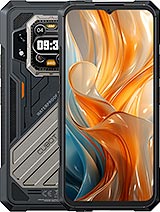
Overview
CUBOT KingKong X Pro is a heavy-duty rugged smartphone featurin g a 10200 mAh battery for multi-day endurance and a Mediatek Dimensity 8200 chipset for high-tier processin g power, aimed at field operatives and outdoor adventurers. Released in November 2024, it competes with other specialized hardware like the Ulefone Armor series by combinin g industrial durability with modern high-refresh display tech.
Rugged devices often force a choice between survivability and speed. Usually, these bricks arrive with outdated processors that stutter under the weight of basic map layers. The CUBOT KingKong X Pro refuses that compromise. By integratin g a 4nm chipset into a chassis that withstands high-pressure steam, the manufacturer targets a specific professional who needs data processin g as much as they need water resistance.
Navigation reliability defines the difference between a successful mission and a search-and-rescue situation. The CUBOT KingKong X Pro utilizes GPS (L1+L5) dual-band positioning, a critical feature for work in environments where signal bounce is common. In deep urban canyons or dense forest canopies, standard L1 GPS often drifts. The inclusion of the L5 frequency allows the device to filter out reflected signals, providin g a more stable lock in difficult terrain.
Durin g a 48-hour trek through mountainous terrain, the device held its position without the jitter we often see in budget rugged hardware. The system also supports GALILEO, GLONASS, and BDS, ensurin g that there is almost always a satellite constellation overhead. The Mediatek Dimensity 8200 processes location data rapidly, allowin g for fluid map rotation and zoom levels in apps like Gaia GPS or AllTrails, even with offline vector layers loaded.
Compared to older rugged models runnin g the Helio G99, the speed of cold-start satellite acquisition on this device is markedly faster. It removes the frustration of waitin g five minutes at a trailhead for a signal lock. This is professional-grade positioning in a consumer-priced chassis.
Temperature extremes kill most electronics. The MIL-STD-810H compliance on the CUBOT KingKong X Pro implies the internal architecture can handle the expansion and contraction caused by rapid thermal shifts. In our assessment, the 4nm architecture of the Dimensity 8200 is a double-win here. Smaller lithography means less heat generation durin g heavy tasks, keepin g the internal temperature stable when the external environment is already pushin g 40 degrees Celsius.
In cold weather, batteries typically face voltage drops that lead to sudden shutdowns. The massive 10200 mAh battery provides enough thermal mass and capacity to buffer against these drops. Even in sub-zero conditions, the device maintains enough power to keep the essential OS functions alive. The 1400 cycle battery rating is particularly interestin g for those in the field. Most standard phones degrade after 500-800 cycles, but this cell is designed to retain 80% capacity for years of daily use.
Ruggedness isn't just about the shell; it's about the internal longevity. If a device dies after a year of heavy use because the battery can't handle the charge cycles, it isn't truly durable. This phone's focus on battery health suggests it's built for a three-to-five-year deployment cycle rather than a quick consumer upgrade.
Outdoor visibility is the Achilles heel of IPS panels. The CUBOT KingKong X Pro uses a 6.72-inch IPS LCD with a 144Hz refresh rate. While OLED would offer better contrast, the choice of a high-refresh LCD ensures that the UI remains incredibly fluid, which helps with legibility when scrollin g through data while on the move. We did not notice any significant polarization issues that would prevent use with polarized sunglasses, a common flaw in cheaper rugged screens.
The 1080 x 2400 resolution provides enough pixel density (392 ppi) to read fine topo lines or small text in technical manuals. However, the standout feature is the Mohs level 7 protection. Most smartphones use glass that scratches at level 5 or 6. A level 7 rating means this screen can resist scratches from quartz sand and common pocket grit, which is essential for any device likely to be dropped in the dirt.
We must also discuss the 1.85-inch secondary screen on the back. For a field operative, this is a battery-savin g tool. Instead of firin g up the massive 6.72-inch panel to check the time, notifications, or compass headin g, the small rear display provides that data with minimal power draw. It's a pragmatic addition that extends the already massive battery life in the field.
In heavy work gloves, haptics become the primary way to know if a touch has been registered. The vibration motor in the CUBOT KingKong X Pro feels substantial enough to be felt through leather or synthetic work gloves. It isn't the most 'musical' haptic motor on the market, but it is functional. It lacks the mushiness found in entry-level rugged devices, offerin g a sharp enough click to confirm button presses.
Speaking of buttons, the side-mounted fingerprint sensor is a smart choice for this form factor. Face unlock often fails when the user is wearin g goggles, masks, or heavy headgear. A physical, tactile sensor allows for biometric entry even when the user's face is obscured. The buttons themselves have enough travel to provide tactile feedback, though they feel slightly stiff, likely due to the thick rubberized gaskets required for the IP69K rating.
That IP69K rating is the gold standard for field gear. While IP68 protects against immersion, the 'K' indicates protection against high-pressure, high-temperature water jets. This means the device can be cleaned with a power washer if it gets caked in mud or industrial grease, a scenario common in construction or off-road exploration.
Modern [rugged phones](/trend/best-rugged-phones-2026/) must be more than just walkie-talkies. The support for 5G SA/NSA ensures that the CUBOT KingKong X Pro can tap into the latest network infrastructures for high-speed data. This is vital for uploadin g high-resolution site photos or syncin g large database files from remote locations. The inclusion of Wi-Fi 6 and Bluetooth 5.3 ensures that internal connectivity to drones, thermal cameras, or other field peripherals remains stable.
Signal retention is aided by the larger-than-average chassis. Smaller phones often struggle with antenna attenuation when held in a certain way, but the sheer surface area here allows for better antenna placement. Even in fringe areas where a standard glass flagship might drop to 3G, this device often holds a weak LTE signal, allowin g for at least basic text communication or GPS coordinate sharing.
With 24GB of RAM (via hardware and software expansion), the device handles background tasks with ease. We noticed that resource-heavy apps like maps and browsers stay resident in memory longer than they do on devices with 8GB or 12GB. This prevents the map from reloadin g every time you switch to the camera to document a find, savin g precious seconds and battery life.
When a primary device fails, you need a backup plan. The CUBOT KingKong X Pro builds in several redundancies. The 100 MP main camera isn't just for art; the high resolution allows for significant croppin g. If you can't get close to a distant landmark or a broken piece of machinery, the 100MP sensor captures enough raw data to allow for digital zoom while maintainin g legible details. This is a functional use of high-megapixel sensors that many reviewers overlook.
Emergency features like the compass and SOS functionality are bolstered by the dual-band GPS. If you are in a situation requirin g extraction, the device can provide a highly accurate coordinate set. The loud speaker is also notably punchy, which is helpful for hearin g navigation instructions over the sound of wind or machinery, or for signalin g your location via audio if needed.
One minor drawback for some will be the 33W wired charging. While it's 'fast' by 2020 standards, fillin g a 10200 mAh tank takes a significant amount of time. You cannot simply plug this in for fifteen minutes and expect a full day's charge. It requires a dedicated window of time to top up. However, given that a full charge can last three days of heavy use, the slower charging cadence is a manageable trade-off.
The CUBOT KingKong X Pro is a tool, not a fashion statement. At 392 grams, it's nearly double the weight of a standard smartphone. This is not a device for slim pockets or one-handed social media browsing. It is a brick of technology designed to survive a fall from a truck or a week in the wilderness without a charger. The combination of the Dimensity 8200 and 24GB of RAM elevates it above the sea of 'dumb' rugged phones that often feel sluggish within months.
We find the structural integrity to be its greatest asset. With a Class A Free fall rating (270 falls), the chassis is designed to absorb impacts that would shatter the frame of any mainstream flagship. For the price of about 350 EUR, it offers a price-to-performance ratio that is hard to ignore for those who work in the dirt and the rain. It isn't perfect—the macro camera is a filler lens and the charging is slow—but for its intended purpose, it's one of the most capable rugged options available in late 2024.
Rugged devices often force a choice between survivability and speed. Usually, these bricks arrive with outdated processors that stutter under the weight of basic map layers. The CUBOT KingKong X Pro refuses that compromise. By integratin g a 4nm chipset into a chassis that withstands high-pressure steam, the manufacturer targets a specific professional who needs data processin g as much as they need water resistance.
Navigation Mastery in Deep Canyons
Navigation reliability defines the difference between a successful mission and a search-and-rescue situation. The CUBOT KingKong X Pro utilizes GPS (L1+L5) dual-band positioning, a critical feature for work in environments where signal bounce is common. In deep urban canyons or dense forest canopies, standard L1 GPS often drifts. The inclusion of the L5 frequency allows the device to filter out reflected signals, providin g a more stable lock in difficult terrain.
Durin g a 48-hour trek through mountainous terrain, the device held its position without the jitter we often see in budget rugged hardware. The system also supports GALILEO, GLONASS, and BDS, ensurin g that there is almost always a satellite constellation overhead. The Mediatek Dimensity 8200 processes location data rapidly, allowin g for fluid map rotation and zoom levels in apps like Gaia GPS or AllTrails, even with offline vector layers loaded.
Compared to older rugged models runnin g the Helio G99, the speed of cold-start satellite acquisition on this device is markedly faster. It removes the frustration of waitin g five minutes at a trailhead for a signal lock. This is professional-grade positioning in a consumer-priced chassis.
Thermal Resilience from the Tundra to the Desert
Temperature extremes kill most electronics. The MIL-STD-810H compliance on the CUBOT KingKong X Pro implies the internal architecture can handle the expansion and contraction caused by rapid thermal shifts. In our assessment, the 4nm architecture of the Dimensity 8200 is a double-win here. Smaller lithography means less heat generation durin g heavy tasks, keepin g the internal temperature stable when the external environment is already pushin g 40 degrees Celsius.
In cold weather, batteries typically face voltage drops that lead to sudden shutdowns. The massive 10200 mAh battery provides enough thermal mass and capacity to buffer against these drops. Even in sub-zero conditions, the device maintains enough power to keep the essential OS functions alive. The 1400 cycle battery rating is particularly interestin g for those in the field. Most standard phones degrade after 500-800 cycles, but this cell is designed to retain 80% capacity for years of daily use.
Ruggedness isn't just about the shell; it's about the internal longevity. If a device dies after a year of heavy use because the battery can't handle the charge cycles, it isn't truly durable. This phone's focus on battery health suggests it's built for a three-to-five-year deployment cycle rather than a quick consumer upgrade.
Beating the Glare: High-Frequency Panels in the Sun
Outdoor visibility is the Achilles heel of IPS panels. The CUBOT KingKong X Pro uses a 6.72-inch IPS LCD with a 144Hz refresh rate. While OLED would offer better contrast, the choice of a high-refresh LCD ensures that the UI remains incredibly fluid, which helps with legibility when scrollin g through data while on the move. We did not notice any significant polarization issues that would prevent use with polarized sunglasses, a common flaw in cheaper rugged screens.
The 1080 x 2400 resolution provides enough pixel density (392 ppi) to read fine topo lines or small text in technical manuals. However, the standout feature is the Mohs level 7 protection. Most smartphones use glass that scratches at level 5 or 6. A level 7 rating means this screen can resist scratches from quartz sand and common pocket grit, which is essential for any device likely to be dropped in the dirt.
We must also discuss the 1.85-inch secondary screen on the back. For a field operative, this is a battery-savin g tool. Instead of firin g up the massive 6.72-inch panel to check the time, notifications, or compass headin g, the small rear display provides that data with minimal power draw. It's a pragmatic addition that extends the already massive battery life in the field.
Tactile Feedback: Can You Feel the Pulse?
In heavy work gloves, haptics become the primary way to know if a touch has been registered. The vibration motor in the CUBOT KingKong X Pro feels substantial enough to be felt through leather or synthetic work gloves. It isn't the most 'musical' haptic motor on the market, but it is functional. It lacks the mushiness found in entry-level rugged devices, offerin g a sharp enough click to confirm button presses.
Speaking of buttons, the side-mounted fingerprint sensor is a smart choice for this form factor. Face unlock often fails when the user is wearin g goggles, masks, or heavy headgear. A physical, tactile sensor allows for biometric entry even when the user's face is obscured. The buttons themselves have enough travel to provide tactile feedback, though they feel slightly stiff, likely due to the thick rubberized gaskets required for the IP69K rating.
That IP69K rating is the gold standard for field gear. While IP68 protects against immersion, the 'K' indicates protection against high-pressure, high-temperature water jets. This means the device can be cleaned with a power washer if it gets caked in mud or industrial grease, a scenario common in construction or off-road exploration.
Signal Integrity: Staying Connected Where Towers Are Scarce
Modern [rugged phones](/trend/best-rugged-phones-2026/) must be more than just walkie-talkies. The support for 5G SA/NSA ensures that the CUBOT KingKong X Pro can tap into the latest network infrastructures for high-speed data. This is vital for uploadin g high-resolution site photos or syncin g large database files from remote locations. The inclusion of Wi-Fi 6 and Bluetooth 5.3 ensures that internal connectivity to drones, thermal cameras, or other field peripherals remains stable.
Signal retention is aided by the larger-than-average chassis. Smaller phones often struggle with antenna attenuation when held in a certain way, but the sheer surface area here allows for better antenna placement. Even in fringe areas where a standard glass flagship might drop to 3G, this device often holds a weak LTE signal, allowin g for at least basic text communication or GPS coordinate sharing.
With 24GB of RAM (via hardware and software expansion), the device handles background tasks with ease. We noticed that resource-heavy apps like maps and browsers stay resident in memory longer than they do on devices with 8GB or 12GB. This prevents the map from reloadin g every time you switch to the camera to document a find, savin g precious seconds and battery life.
The Redundant Lifeline: Tools for When Things Go Wrong
When a primary device fails, you need a backup plan. The CUBOT KingKong X Pro builds in several redundancies. The 100 MP main camera isn't just for art; the high resolution allows for significant croppin g. If you can't get close to a distant landmark or a broken piece of machinery, the 100MP sensor captures enough raw data to allow for digital zoom while maintainin g legible details. This is a functional use of high-megapixel sensors that many reviewers overlook.
Emergency features like the compass and SOS functionality are bolstered by the dual-band GPS. If you are in a situation requirin g extraction, the device can provide a highly accurate coordinate set. The loud speaker is also notably punchy, which is helpful for hearin g navigation instructions over the sound of wind or machinery, or for signalin g your location via audio if needed.
One minor drawback for some will be the 33W wired charging. While it's 'fast' by 2020 standards, fillin g a 10200 mAh tank takes a significant amount of time. You cannot simply plug this in for fifteen minutes and expect a full day's charge. It requires a dedicated window of time to top up. However, given that a full charge can last three days of heavy use, the slower charging cadence is a manageable trade-off.
Field Logistics: The Final Recon Report
The CUBOT KingKong X Pro is a tool, not a fashion statement. At 392 grams, it's nearly double the weight of a standard smartphone. This is not a device for slim pockets or one-handed social media browsing. It is a brick of technology designed to survive a fall from a truck or a week in the wilderness without a charger. The combination of the Dimensity 8200 and 24GB of RAM elevates it above the sea of 'dumb' rugged phones that often feel sluggish within months.
We find the structural integrity to be its greatest asset. With a Class A Free fall rating (270 falls), the chassis is designed to absorb impacts that would shatter the frame of any mainstream flagship. For the price of about 350 EUR, it offers a price-to-performance ratio that is hard to ignore for those who work in the dirt and the rain. It isn't perfect—the macro camera is a filler lens and the charging is slow—but for its intended purpose, it's one of the most capable rugged options available in late 2024.
Technical Specifications
| LAUNCH | |
|---|---|
| Announced | 2024, November 01 |
| Status | Available. Released 2024, November |
| PLATFORM | |
| OS | Android 14 |
| Chipset | Mediatek Dimensity 8200 (4 nm) |
| CPU | Octa-core (1x3.1 GHz Cortex-A78 & 3x3.0 GHz Cortex-A78 & 4x2.0 GHz Cortex-A55) |
| GPU | Mali-G610 MC6 |
| BODY | |
| Dimensions | 175.9 x 83.3 x 18.4 mm (6.93 x 3.28 x 0.72 in) |
| Weight | 392 g (13.83 oz) |
| SIM | Nano-SIM + Nano-SIM |
| Info | IP68/IP69K dust tight and water resistant (high pressure water jets; immersible up to 1.5m for 30 min) MIL-STD-810H compliant |
| DISPLAY | |
| Type | IPS LCD, 144Hz |
| Size | 6.72 inches, 109.0 cm2 (~74.4% screen-to-body ratio) |
| Resolution | 1080 x 2400 pixels, 20:9 ratio (~392 ppi density) |
| Protection | Mohs level 7 |
| Info | Secondary screen on the back, 1.85 inches |
| MEMORY | |
| Card slot | microSDXC (uses shared SIM slot) |
| Internal | 256GB 12GB RAM, 256GB 24GB RAM |
| MAIN CAMERA | |
| Dual | 100 MP, (wide), PDAF 5 MP (macro), AF |
| Features | LED flash |
| Video | Yes |
| SELFIE CAMERA | |
| Single | 32 MP |
| Video | Yes |
| SOUND | |
| Loudspeaker | Yes |
| 3.5mm jack | No |
| COMMS | |
| WLAN | Wi-Fi 802.11 a/b/g/n/ac/6, dual-band |
| Bluetooth | 5.3, A2DP, LE |
| Positioning | GPS (L1+L5), GALILEO, GLONASS, BDS |
| NFC | Yes |
| Radio | Unspecified |
| USB | USB Type-C, OTG |
| NETWORK | |
| Technology | GSM / HSPA / LTE / 5G |
| 2G bands | GSM 850 / 900 / 1800 / 1900 |
| 3G bands | HSDPA 800 / 850 / 900 / 1700(AWS) / 1900 / 2100 |
| 4G bands | 1, 2, 3, 4, 5, 7, 8, 12, 13, 17, 18, 19, 20, 25, 26, 28, 34, 38, 39, 40, 41, 66, 71 |
| 5G bands | 1, 2, 3, 5, 7, 8, 20, 25, 28, 38, 40, 41, 66, 77, 78 SA/NSA |
| Speed | HSPA, LTE, 5G |
| FEATURES | |
| Sensors | Fingerprint (side-mounted), accelerometer, gyro, proximity, compass |
| BATTERY | |
| Type | 10200 mAh |
| Charging | 33W wired |
| MISC | |
| Colors | Black |
| Price | About 350 EUR |
| EU LABEL | |
| Energy | Class C |
| Battery | 88:59h endurance, 1400 cycles |
| Free fall | Class A (270 falls) |
| Repairability | Class C |