Surviving the Bare Minimum with the ZTE Blade A33s
Overview
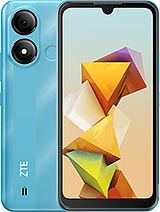
The ZTE Blade A33s is an entry-level smartphone featuring a 6.3-inch IPS LCD for basic visual tasks and a 4000 mAh battery for standard daily uptime, aimed at ultra-budget-conscious buyers or those seeking a secondary emergency device. Released in November 2023, it competes in the saturated bottom-tier market against rivals like the Redmi A2 and various Itel A-series models, prioritizing cost-cutting over performance metrics.
When we look at the ZTE Blade A33s, we aren't looking at a device designed to impress with speed or aesthetic flair. Instead, we are looking at a tool designed for survival. At this price point, the manufacturer has to make aggressive choices to keep the retail price under the hundred-dollar mark. The first thing one notices is the Unisoc SC9863A chipset. This is a 28nm octa-core processor that feels like a relic from a previous era of mobile computing. In an age where even mid-range chips have moved to 4nm or 6nm processes, 28nm implies a significant lack of efficiency and a higher tendency for thermal throttling during sustained use.
This handset isn't built for gaming or heavy multitasking. With only 2GB of RAM, the software experience relies heavily on Android 12 (Go edition). This lightweight version of Android is specifically optimized for low-memory hardware, stripping away background processes and utilizing 'Go' versions of popular apps like Maps, Gmail, and Assistant. Without this optimization, the device would likely be unusable. In our assessment, the overhead of the operating system occupies nearly half of the available memory, leaving very little room for third-party applications to run smoothly. Expect a delay when switching between apps and a noticeable pause when the keyboard populates on screen.
Can someone actually use this model as their primary phone in late 2023? The answer depends entirely on your patience. For simple communication—WhatsApp, basic web browsing, and voice calls—the unit performs adequately. The 4G LTE connectivity remains stable, and the inclusion of a 3.5mm headphone jack is a practical touch for those who haven't moved to wireless audio. However, the 32GB of internal storage is a major bottleneck. After the system files and basic updates, users will find themselves with less than 20GB of usable space. Thankfully, the dedicated microSDXC slot is not just a feature; it is a necessity for anyone planning to store photos or music.
The display is another area where the budget cuts are visible. A resolution of 480 x 1014 pixels on a 6.3-inch screen results in a pixel density of approximately 178 ppi. This is significantly below the 'Retina' standard, meaning text will look slightly fuzzy and icons will lack sharpness. The 19:9 aspect ratio is modern enough, but the thick bezels and the 'waterdrop' notch for the selfie camera remind you constantly that this is a value-first device. Sunlight legibility is also a challenge, as the IPS LCD panel doesn't reach the high nit levels required to overcome direct glare.
From a construction standpoint, the device is unapologetically plastic. This isn't necessarily a drawback in the budget segment. Plastic handles drops better than glass, as it absorbs impact rather than shattering. The textured back helps with grip, though the 10.3mm thickness makes it feel somewhat chunky in the hand. We expect the structural integrity to hold up under normal wear, but the lack of an official IP rating means users must be extremely careful around water or dust.
Regarding repairability, the plastic unibody design generally allows for easier access to internals compared to glass-sandwich flagships. However, the battery is not user-removable in the traditional sense, despite the older styling of the chassis. Finding replacement parts for a niche model like this might also prove difficult in the long run, as third-party screen or battery suppliers often prioritize higher-volume brands. The screen glass is basic reinforced glass, lacking the branded Gorilla Glass protection found in more expensive tiers, so a screen protector is mandatory here.
The 28nm architecture of the Unisoc SC9863A is inherently less efficient than modern chips. During charging or while using GPS navigation, the back of the handset will likely become quite warm. There are no sophisticated vapor chambers or graphite cooling pads here; the device relies on passive dissipation through its plastic frame. If pushed with a heavy task, the CPU will likely throttle its clock speeds to manage heat, leading to even more pronounced lag.
Charging is handled via a microUSB port, which is a frustrating inclusion in late 2023 when USB-C has become the universal standard. This means slower data transfer speeds and slower charging times for the 4000 mAh battery. Expect a full charge to take well over two hours. While the battery capacity seems decent for the low-resolution screen, the inefficient processor means you shouldn't expect multi-day battery life unless the phone is sitting idle. Most users will find it lasts a full day of light use, but not much more.
Audio quality on the device is functional but uninspired. The earpiece is loud enough for clear voice calls, which is the most critical metric for a phone in this category. The single loudspeaker located at the bottom (or back, depending on the specific regional revision) lacks bass and distorts at higher volumes. It is suitable for ringtones and speakerphone calls in quiet environments, but we would advise against using it for music or movies. The Bluetooth 5.2 support is a surprise, offering better stability and range for modern wireless earbuds than older [budget phones](/trend/best-budget-phones-2026/).
The camera system is perhaps the most obvious compromise. The main sensor is a 5 MP unit that uses software interpolation to produce 8 MP images. In the world of photography, interpolation is essentially 'fake' detail created by algorithms filling in the gaps between pixels. In daylight, the sensor captures enough information for a basic social media post or a record of a document. However, the dynamic range is narrow, frequently resulting in blown-out skies or crushed shadows.
The 2 MP selfie camera (interpolated to 5 MP) is barely sufficient for video calls. Image noise is prevalent even in well-lit rooms. There is no Night Mode to speak of, so photography in low light is essentially a non-starter. The LED flash can help in a pinch, but it often washes out subjects. For most users, this camera will serve as a tool for scanning QR codes rather than capturing memories.
In the grand scheme of the 2023 market, the ZTE Blade A33s occupies a precarious position. While it is undeniably affordable, the trade-offs are significant. The 2GB of RAM is the absolute minimum required to run a modern OS, and as apps become more resource-heavy over the next year, this device will struggle to keep up. It is a 'disposable' tech product in the sense that its hardware has no headroom for growth. However, for a student on a strict budget, a senior citizen who only needs a phone for emergencies, or a business requiring a fleet of cheap handsets for simple logistics, the value proposition is clear. It provides the essential connectivity of the modern world at the lowest possible entry price.
The ZTE Blade A33s serves as a reminder that the digital divide is real. While the tech world obsesses over foldable screens and 200MP sensors, many people just need a screen that turns on and a battery that lasts until dinner. If you approach this model with realistic expectations, recognizing it as a basic utility rather than a multimedia powerhouse, it fulfills its purpose. Just don't expect it to do anything fast.
The Realities of the Ultra-Budget Market
When we look at the ZTE Blade A33s, we aren't looking at a device designed to impress with speed or aesthetic flair. Instead, we are looking at a tool designed for survival. At this price point, the manufacturer has to make aggressive choices to keep the retail price under the hundred-dollar mark. The first thing one notices is the Unisoc SC9863A chipset. This is a 28nm octa-core processor that feels like a relic from a previous era of mobile computing. In an age where even mid-range chips have moved to 4nm or 6nm processes, 28nm implies a significant lack of efficiency and a higher tendency for thermal throttling during sustained use.
This handset isn't built for gaming or heavy multitasking. With only 2GB of RAM, the software experience relies heavily on Android 12 (Go edition). This lightweight version of Android is specifically optimized for low-memory hardware, stripping away background processes and utilizing 'Go' versions of popular apps like Maps, Gmail, and Assistant. Without this optimization, the device would likely be unusable. In our assessment, the overhead of the operating system occupies nearly half of the available memory, leaving very little room for third-party applications to run smoothly. Expect a delay when switching between apps and a noticeable pause when the keyboard populates on screen.
Daily Driver Feasibility
Can someone actually use this model as their primary phone in late 2023? The answer depends entirely on your patience. For simple communication—WhatsApp, basic web browsing, and voice calls—the unit performs adequately. The 4G LTE connectivity remains stable, and the inclusion of a 3.5mm headphone jack is a practical touch for those who haven't moved to wireless audio. However, the 32GB of internal storage is a major bottleneck. After the system files and basic updates, users will find themselves with less than 20GB of usable space. Thankfully, the dedicated microSDXC slot is not just a feature; it is a necessity for anyone planning to store photos or music.
The display is another area where the budget cuts are visible. A resolution of 480 x 1014 pixels on a 6.3-inch screen results in a pixel density of approximately 178 ppi. This is significantly below the 'Retina' standard, meaning text will look slightly fuzzy and icons will lack sharpness. The 19:9 aspect ratio is modern enough, but the thick bezels and the 'waterdrop' notch for the selfie camera remind you constantly that this is a value-first device. Sunlight legibility is also a challenge, as the IPS LCD panel doesn't reach the high nit levels required to overcome direct glare.
Repairability and Physical Durability
From a construction standpoint, the device is unapologetically plastic. This isn't necessarily a drawback in the budget segment. Plastic handles drops better than glass, as it absorbs impact rather than shattering. The textured back helps with grip, though the 10.3mm thickness makes it feel somewhat chunky in the hand. We expect the structural integrity to hold up under normal wear, but the lack of an official IP rating means users must be extremely careful around water or dust.
Regarding repairability, the plastic unibody design generally allows for easier access to internals compared to glass-sandwich flagships. However, the battery is not user-removable in the traditional sense, despite the older styling of the chassis. Finding replacement parts for a niche model like this might also prove difficult in the long run, as third-party screen or battery suppliers often prioritize higher-volume brands. The screen glass is basic reinforced glass, lacking the branded Gorilla Glass protection found in more expensive tiers, so a screen protector is mandatory here.
Thermal Management and Power
The 28nm architecture of the Unisoc SC9863A is inherently less efficient than modern chips. During charging or while using GPS navigation, the back of the handset will likely become quite warm. There are no sophisticated vapor chambers or graphite cooling pads here; the device relies on passive dissipation through its plastic frame. If pushed with a heavy task, the CPU will likely throttle its clock speeds to manage heat, leading to even more pronounced lag.
Charging is handled via a microUSB port, which is a frustrating inclusion in late 2023 when USB-C has become the universal standard. This means slower data transfer speeds and slower charging times for the 4000 mAh battery. Expect a full charge to take well over two hours. While the battery capacity seems decent for the low-resolution screen, the inefficient processor means you shouldn't expect multi-day battery life unless the phone is sitting idle. Most users will find it lasts a full day of light use, but not much more.
Audio and Communication Components
Audio quality on the device is functional but uninspired. The earpiece is loud enough for clear voice calls, which is the most critical metric for a phone in this category. The single loudspeaker located at the bottom (or back, depending on the specific regional revision) lacks bass and distorts at higher volumes. It is suitable for ringtones and speakerphone calls in quiet environments, but we would advise against using it for music or movies. The Bluetooth 5.2 support is a surprise, offering better stability and range for modern wireless earbuds than older [budget phones](/trend/best-budget-phones-2026/).
Camera: Usable or Potato?
The camera system is perhaps the most obvious compromise. The main sensor is a 5 MP unit that uses software interpolation to produce 8 MP images. In the world of photography, interpolation is essentially 'fake' detail created by algorithms filling in the gaps between pixels. In daylight, the sensor captures enough information for a basic social media post or a record of a document. However, the dynamic range is narrow, frequently resulting in blown-out skies or crushed shadows.
The 2 MP selfie camera (interpolated to 5 MP) is barely sufficient for video calls. Image noise is prevalent even in well-lit rooms. There is no Night Mode to speak of, so photography in low light is essentially a non-starter. The LED flash can help in a pinch, but it often washes out subjects. For most users, this camera will serve as a tool for scanning QR codes rather than capturing memories.
Long-Term Value Assessment
In the grand scheme of the 2023 market, the ZTE Blade A33s occupies a precarious position. While it is undeniably affordable, the trade-offs are significant. The 2GB of RAM is the absolute minimum required to run a modern OS, and as apps become more resource-heavy over the next year, this device will struggle to keep up. It is a 'disposable' tech product in the sense that its hardware has no headroom for growth. However, for a student on a strict budget, a senior citizen who only needs a phone for emergencies, or a business requiring a fleet of cheap handsets for simple logistics, the value proposition is clear. It provides the essential connectivity of the modern world at the lowest possible entry price.
The ZTE Blade A33s serves as a reminder that the digital divide is real. While the tech world obsesses over foldable screens and 200MP sensors, many people just need a screen that turns on and a battery that lasts until dinner. If you approach this model with realistic expectations, recognizing it as a basic utility rather than a multimedia powerhouse, it fulfills its purpose. Just don't expect it to do anything fast.
Technical Specifications
| LAUNCH | |
|---|---|
| Announced | 2023, November |
| Status | Available. Released 2023, November |
| PLATFORM | |
| OS | Android 12 (Go edition) |
| Chipset | Unisoc SC9863A (28 nm) |
| CPU | Octa-core (4x1.6 GHz Cortex-A55 & 4x1.2 GHz Cortex-A55) |
| GPU | IMG8322 |
| BODY | |
| Dimensions | 160 x 78 x 10.3 mm (6.30 x 3.07 x 0.41 in) |
| Weight | - |
| SIM | Nano-SIM + Nano-SIM |
| DISPLAY | |
| Type | IPS LCD |
| Size | 6.3 inches, 99.0 cm2 (~79.3% screen-to-body ratio) |
| Resolution | 480 x 1014 pixels, 19:9 ratio (~178 ppi density) |
| MEMORY | |
| Card slot | microSDXC (dedicated slot) |
| Internal | 32GB 2GB RAM |
| MAIN CAMERA | |
| Single | 5 MP (interpolated to 8 MP), AF |
| Features | LED flash |
| Video | 1080p@30fps |
| SELFIE CAMERA | |
| Single | 2 MP (interpolated to 5 MP) |
| Video | Yes |
| SOUND | |
| Loudspeaker | Yes |
| 3.5mm jack | Yes |
| COMMS | |
| WLAN | Wi-Fi 802.11 b/g/n |
| Bluetooth | 5.2, A2DP, LE |
| Positioning | GPS |
| NFC | No |
| Radio | Unspecified |
| USB | microUSB |
| NETWORK | |
| Technology | GSM / HSPA / LTE |
| 2G bands | GSM 850 / 900 / 1800 / 1900 |
| 3G bands | HSDPA 850 / 900 / 1900 / 2100 |
| 4G bands | LTE |
| Speed | HSPA, LTE |
| FEATURES | |
| Sensors | Fingerprint (rear-mounted, optional), accelerometer |
| BATTERY | |
| Type | 4000 mAh |
| MISC | |
| Colors | Silver, Blue, Green |