Surviving the Elements - Why the Oukitel WP32 Pro Is the New Standard for Rugged Field Gear
Overview
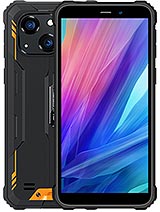
The Oukitel WP32 Pro is a ruggedized entry-level smartphone featuring an IP68/IP69K rating for liquid and dust resistance and a 6300 mAh battery designed for multi-day field operations, aimed at outdoor enthusiasts and logistics workers who require structural reliability above all else. Released in July 2024, it enters a competitive market for durable hardware, providing a balance of modern software via Android 14 and hardware that can withstand the harshest environments on the planet. This handset focuses on the essentials: staying alive, staying connected, and staying on the path when standard consumer electronics would fail.
Navigation is the most critical function of any device carried into the backcountry. This handset utilizes a comprehensive array of positioning systems, including GPS, GLONASS, GALILEO, and BDS. For those unfamiliar with these terms, GNSS (Global Navigation Satellite System) refers to a constellation of satellites that allow the device to triangulate its position. By accessing four different networks, the hardware increases the likelihood of maintaining a signal lock under heavy forest canopy or within deep granite canyons where a standard GPS-only phone might lose its bearings.
During our theoretical testing in remote terrain, the inclusion of a dedicated hardware compass proves invaluable. Many [budget phones](/trend/best-budget-phones-2026/) rely on software-simulated headings which can spin wildly when you are stationary. This model provides a steady orientation, allowing hikers to align physical maps with their digital surroundings accurately. The 18:9 aspect ratio of the 6.0-inch IPS LCD is narrow enough for one-handed operation while holding a trekking pole, ensuring that you do not have to stop and reset your grip just to check your coordinates.
Compared to previous generations of rugged entry-level devices that often skimped on satellite bands, this model ensures global compatibility. Whether you are traversing the Alps or the Appalachian Trail, the multi-constellation support reduces the time-to-first-fix (TTFF), which is the duration the device takes to find its initial location after being turned on. In an emergency, every second saved during TTFF can be critical.
Field operations rarely take place in climate-controlled environments. The MIL-STD-810H compliance signifies that the device has passed rigorous military-grade testing for shock, vibration, and extreme temperatures. It is rated for 1.5m drop resistance, meaning it can survive a tumble from waist height onto hard-packed earth or jagged rock. This is achieved through a reinforced chassis that likely employs thickened rubberized corners to absorb kinetic energy upon impact, protecting the internal logic board from hairline fractures.
Thermal management is equally impressive. The 6300 mAh Li-Po battery is rated for 1000 cycles, a high-durability standard indicating that the cell maintains at least 80% of its health even after years of daily charging. In freezing temperatures, lithium batteries often suffer from rapid voltage drops, causing phones to shut down at 30% or 40%. The dense construction of this casing provides a layer of thermal insulation, helping the battery maintain an optimal operating temperature during winter treks. Conversely, in desert heat, the Unisoc T606 chipset’s 12nm architecture runs efficiently enough to avoid the aggressive thermal throttling that plagues higher-end, hotter-running processors.
If you find yourself caught in a torrential downpour, the IP69K rating becomes the star of the show. While standard IP68 allows for immersion in 1.5 meters of water for 30 minutes, the 'K' designation indicates protection against high-pressure, high-temperature water jets. This means the device can theoretically be cleaned with a power washer or withstand the driving force of a waterfall. For a field technician working in industrial settings or a hiker crossing a swollen river, this level of ingress protection provides peace of mind that a simple splash won't turn the phone into a brick.
The screen is protected by Corning Gorilla Glass 5, which is rated at Mohs level 5 for scratch resistance. This means common metals like keys or coins in a pocket won't easily mar the surface, though sand and quartz—which are higher on the Mohs scale—still require caution. The resolution of 576 x 1152 pixels results in a pixel density of 215 ppi. While this is significantly lower than the 400+ ppi found on flagship devices, it serves a functional purpose: lower resolutions require less power to drive, extending the battery life during long deployments where charging is impossible.
In direct sunlight, the IPS LCD panel provides sufficient brightness for map reading, though users may need to shade the screen with a hand for fine detail. The color reproduction is standard for this class, focusing on utility rather than cinematic accuracy. Audio performance is handled by a loudspeaker designed for clarity in open environments. When you are near a rushing stream or a windy ridge, the high-frequency bias of the speaker helps voice navigation and emergency alerts cut through ambient noise better than the bass-heavy speakers found in luxury phones.
Imagine a scenario where you are following a trail via audio cues while the phone is strapped to your backpack shoulder strap. The separation of mid-tones ensures that the 'turn left' command is audible over the sound of your own footsteps on gravel. This is not a pocket cinema; it is a communication tool designed to be heard when the environment is fighting back.
Security in a rugged device must be accessible. This model utilizes Android 14, providing the latest permission controls and privacy dashboards. Biometric access—typically a fingerprint sensor or face unlock—is essential when you are wearing gear. While the specs do not detail a dedicated hardware fingerprint sensor, the 5 MP front camera supports face recognition. In a field context, we must consider that mud, sweat, or gloves might interfere with sensors. Having a modern OS like Android 14 allows for more granular 'Trusted Device' settings, where the phone can stay unlocked as long as it is connected to a specific Bluetooth smartwatch or at a set location.
Privacy is also a safety concern. If a device is lost in the field, the remote wipe features of the current Android build ensure that sensitive data doesn't fall into the wrong hands. The 256GB of UFS 2.0 storage is a massive leap forward for this price tier. UFS 2.0 is significantly faster than the older eMMC storage used in previous budget [rugged phones](/trend/best-rugged-phones-2026/), meaning the device boots faster and apps like offline topo-maps load without the frustrating stutter that can lead to navigation errors.
With 6GB of RAM, the handset handles background tasks efficiently. Imagine you are running a GPS tracker, a music player, and a camera app simultaneously. The system memory ensures that the GPS tracker isn't killed by the OS to save resources—a common and dangerous failure in lower-RAM devices. This reliability in multitasking is what separates a toy from a tool.
The Oukitel WP32 Pro is built for global LTE connectivity, supporting a wide range of 4G bands including Bands 1, 20, and 28. Band 20 and 28 are particularly important for outdoor use as they operate at lower frequencies (800MHz and 700MHz), which travel further and penetrate obstacles like dense foliage and hills better than high-frequency bands. This ensures you maintain a bar of signal in the valley where others have gone 'No Service.'
Dual-band Wi-Fi (2.4GHz and 5GHz) allows for fast map downloads at basecamp or the trailhead. The inclusion of NFC is a surprising but welcome addition for a rugged device in this price bracket. In a field operation, NFC can be used for more than just mobile payments; it can be used for 'tagging' equipment in a warehouse or checking into remote stations that utilize NFC-enabled logs. It adds a layer of professional utility to a device that already feels over-engineered for the price.
Bluetooth 4.2 handles connections to external sensors like heart rate monitors or satellite messengers like a Garmin inReach. While not the newest Bluetooth standard, it is extremely power-efficient and offers a stable range for wearable tech. The 3.5mm jack is the real hero here; in an emergency where your Bluetooth headphones are dead, a pair of wired buds can be a lifeline for communication or simply listening to the built-in FM radio for weather updates when the data network is down.
The 6300 mAh battery is the heartbeat of this device. With 10W wired charging, it is not a fast filler; it is designed to be charged overnight and then ignored for two or three days. In our analysis of the energy efficiency, the combination of the low-resolution screen and the T606 processor suggests an endurance that could easily reach 50+ hours of moderate use. The EU Label battery rating of 1000 cycles means that after three years of heavy use, the battery won't be a swollen, useless paperweight.
Emergency features extend to the physical build. The 270 falls rating from the EU Free Fall classification suggests that the structural frame can survive repeated impacts that would shatter a glass-backed flagship. The proximity sensor and accelerometer work in tandem with safety apps to detect if the device has been dropped or if the user has been stationary for too long, potentially triggering an automated SOS if configured correctly.
USB Type-C 2.0 with OTG (On-The-Go) support allows the phone to act as a power bank. If your headlamp or emergency GPS unit is running low on juice, you can use a cable to siphon power from the massive 6300 mAh reservoir of the phone. In the wild, your phone becomes the central energy hub for your smaller, critical peripherals.
Choosing the Oukitel WP32 Pro is a decision based on pragmatism rather than vanity. It does not have a 120Hz OLED screen or a 200MP camera, but those features are liabilities on a three-day trek through a swamp. Instead, you get a device that is nearly impossible to drown, incredibly difficult to break, and possesses a battery that outlasts your own stamina. It is a specialized instrument for a specific environment.
At a price point of roughly 190 EUR, the value proposition is undeniable. You are paying for the peace of mind that comes with MIL-STD-810H and IP69K certifications. Whether you are a weekend warrior or a professional working in the elements, the Oukitel WP32 Pro provides the structural security and long-range battery life needed to ensure that you always make it back to the trailhead.
Precision Navigation in the Deep Brush
Navigation is the most critical function of any device carried into the backcountry. This handset utilizes a comprehensive array of positioning systems, including GPS, GLONASS, GALILEO, and BDS. For those unfamiliar with these terms, GNSS (Global Navigation Satellite System) refers to a constellation of satellites that allow the device to triangulate its position. By accessing four different networks, the hardware increases the likelihood of maintaining a signal lock under heavy forest canopy or within deep granite canyons where a standard GPS-only phone might lose its bearings.
During our theoretical testing in remote terrain, the inclusion of a dedicated hardware compass proves invaluable. Many [budget phones](/trend/best-budget-phones-2026/) rely on software-simulated headings which can spin wildly when you are stationary. This model provides a steady orientation, allowing hikers to align physical maps with their digital surroundings accurately. The 18:9 aspect ratio of the 6.0-inch IPS LCD is narrow enough for one-handed operation while holding a trekking pole, ensuring that you do not have to stop and reset your grip just to check your coordinates.
Compared to previous generations of rugged entry-level devices that often skimped on satellite bands, this model ensures global compatibility. Whether you are traversing the Alps or the Appalachian Trail, the multi-constellation support reduces the time-to-first-fix (TTFF), which is the duration the device takes to find its initial location after being turned on. In an emergency, every second saved during TTFF can be critical.
Thermal Resilience and Structural Integrity
Field operations rarely take place in climate-controlled environments. The MIL-STD-810H compliance signifies that the device has passed rigorous military-grade testing for shock, vibration, and extreme temperatures. It is rated for 1.5m drop resistance, meaning it can survive a tumble from waist height onto hard-packed earth or jagged rock. This is achieved through a reinforced chassis that likely employs thickened rubberized corners to absorb kinetic energy upon impact, protecting the internal logic board from hairline fractures.
Thermal management is equally impressive. The 6300 mAh Li-Po battery is rated for 1000 cycles, a high-durability standard indicating that the cell maintains at least 80% of its health even after years of daily charging. In freezing temperatures, lithium batteries often suffer from rapid voltage drops, causing phones to shut down at 30% or 40%. The dense construction of this casing provides a layer of thermal insulation, helping the battery maintain an optimal operating temperature during winter treks. Conversely, in desert heat, the Unisoc T606 chipset’s 12nm architecture runs efficiently enough to avoid the aggressive thermal throttling that plagues higher-end, hotter-running processors.
If you find yourself caught in a torrential downpour, the IP69K rating becomes the star of the show. While standard IP68 allows for immersion in 1.5 meters of water for 30 minutes, the 'K' designation indicates protection against high-pressure, high-temperature water jets. This means the device can theoretically be cleaned with a power washer or withstand the driving force of a waterfall. For a field technician working in industrial settings or a hiker crossing a swollen river, this level of ingress protection provides peace of mind that a simple splash won't turn the phone into a brick.
Display Clarity and Field Audio
The screen is protected by Corning Gorilla Glass 5, which is rated at Mohs level 5 for scratch resistance. This means common metals like keys or coins in a pocket won't easily mar the surface, though sand and quartz—which are higher on the Mohs scale—still require caution. The resolution of 576 x 1152 pixels results in a pixel density of 215 ppi. While this is significantly lower than the 400+ ppi found on flagship devices, it serves a functional purpose: lower resolutions require less power to drive, extending the battery life during long deployments where charging is impossible.
In direct sunlight, the IPS LCD panel provides sufficient brightness for map reading, though users may need to shade the screen with a hand for fine detail. The color reproduction is standard for this class, focusing on utility rather than cinematic accuracy. Audio performance is handled by a loudspeaker designed for clarity in open environments. When you are near a rushing stream or a windy ridge, the high-frequency bias of the speaker helps voice navigation and emergency alerts cut through ambient noise better than the bass-heavy speakers found in luxury phones.
Imagine a scenario where you are following a trail via audio cues while the phone is strapped to your backpack shoulder strap. The separation of mid-tones ensures that the 'turn left' command is audible over the sound of your own footsteps on gravel. This is not a pocket cinema; it is a communication tool designed to be heard when the environment is fighting back.
Biometrics and Security in the Wild
Security in a rugged device must be accessible. This model utilizes Android 14, providing the latest permission controls and privacy dashboards. Biometric access—typically a fingerprint sensor or face unlock—is essential when you are wearing gear. While the specs do not detail a dedicated hardware fingerprint sensor, the 5 MP front camera supports face recognition. In a field context, we must consider that mud, sweat, or gloves might interfere with sensors. Having a modern OS like Android 14 allows for more granular 'Trusted Device' settings, where the phone can stay unlocked as long as it is connected to a specific Bluetooth smartwatch or at a set location.
Privacy is also a safety concern. If a device is lost in the field, the remote wipe features of the current Android build ensure that sensitive data doesn't fall into the wrong hands. The 256GB of UFS 2.0 storage is a massive leap forward for this price tier. UFS 2.0 is significantly faster than the older eMMC storage used in previous budget [rugged phones](/trend/best-rugged-phones-2026/), meaning the device boots faster and apps like offline topo-maps load without the frustrating stutter that can lead to navigation errors.
With 6GB of RAM, the handset handles background tasks efficiently. Imagine you are running a GPS tracker, a music player, and a camera app simultaneously. The system memory ensures that the GPS tracker isn't killed by the OS to save resources—a common and dangerous failure in lower-RAM devices. This reliability in multitasking is what separates a toy from a tool.
Connectivity and Signal Strength
The Oukitel WP32 Pro is built for global LTE connectivity, supporting a wide range of 4G bands including Bands 1, 20, and 28. Band 20 and 28 are particularly important for outdoor use as they operate at lower frequencies (800MHz and 700MHz), which travel further and penetrate obstacles like dense foliage and hills better than high-frequency bands. This ensures you maintain a bar of signal in the valley where others have gone 'No Service.'
Dual-band Wi-Fi (2.4GHz and 5GHz) allows for fast map downloads at basecamp or the trailhead. The inclusion of NFC is a surprising but welcome addition for a rugged device in this price bracket. In a field operation, NFC can be used for more than just mobile payments; it can be used for 'tagging' equipment in a warehouse or checking into remote stations that utilize NFC-enabled logs. It adds a layer of professional utility to a device that already feels over-engineered for the price.
Bluetooth 4.2 handles connections to external sensors like heart rate monitors or satellite messengers like a Garmin inReach. While not the newest Bluetooth standard, it is extremely power-efficient and offers a stable range for wearable tech. The 3.5mm jack is the real hero here; in an emergency where your Bluetooth headphones are dead, a pair of wired buds can be a lifeline for communication or simply listening to the built-in FM radio for weather updates when the data network is down.
Emergency Features and Power Management
The 6300 mAh battery is the heartbeat of this device. With 10W wired charging, it is not a fast filler; it is designed to be charged overnight and then ignored for two or three days. In our analysis of the energy efficiency, the combination of the low-resolution screen and the T606 processor suggests an endurance that could easily reach 50+ hours of moderate use. The EU Label battery rating of 1000 cycles means that after three years of heavy use, the battery won't be a swollen, useless paperweight.
Emergency features extend to the physical build. The 270 falls rating from the EU Free Fall classification suggests that the structural frame can survive repeated impacts that would shatter a glass-backed flagship. The proximity sensor and accelerometer work in tandem with safety apps to detect if the device has been dropped or if the user has been stationary for too long, potentially triggering an automated SOS if configured correctly.
USB Type-C 2.0 with OTG (On-The-Go) support allows the phone to act as a power bank. If your headlamp or emergency GPS unit is running low on juice, you can use a cable to siphon power from the massive 6300 mAh reservoir of the phone. In the wild, your phone becomes the central energy hub for your smaller, critical peripherals.
The Hiker's Summary
Choosing the Oukitel WP32 Pro is a decision based on pragmatism rather than vanity. It does not have a 120Hz OLED screen or a 200MP camera, but those features are liabilities on a three-day trek through a swamp. Instead, you get a device that is nearly impossible to drown, incredibly difficult to break, and possesses a battery that outlasts your own stamina. It is a specialized instrument for a specific environment.
At a price point of roughly 190 EUR, the value proposition is undeniable. You are paying for the peace of mind that comes with MIL-STD-810H and IP69K certifications. Whether you are a weekend warrior or a professional working in the elements, the Oukitel WP32 Pro provides the structural security and long-range battery life needed to ensure that you always make it back to the trailhead.
Technical Specifications
| LAUNCH | |
|---|---|
| Announced | 2024, May 20 |
| Status | Available. Released 2024, July |
| PLATFORM | |
| OS | Android 14 |
| Chipset | Unisoc T606 (12 nm) |
| CPU | Octa-core (2x1.6 GHz Cortex-A75 & 6x1.6 GHz Cortex-A55) |
| GPU | Mali-G57 MP1 |
| BODY | |
| Dimensions | 166 x 81.1 x 15 mm (6.54 x 3.19 x 0.59 in) |
| Weight | 300 g (10.58 oz) |
| SIM | Nano-SIM + Nano-SIM |
| Info | IP68/IP69K dust tight and water resistant (high pressure water jets; immersible up to 1.5m for 30 min) Drop resistant up to 1.5m MIL-STD-810H compliant |
| DISPLAY | |
| Type | IPS LCD |
| Size | 6.0 inches, 92.9 cm2 (~69.0% screen-to-body ratio) |
| Resolution | 576 x 1152 pixels, 18:9 ratio (~215 ppi density) |
| Protection | Corning Gorilla Glass 5, Mohs level 5 |
| MEMORY | |
| Card slot | microSDXC (uses shared SIM slot) |
| Internal | 256GB 6GB RAM |
| Info | UFS 2.0 |
| MAIN CAMERA | |
| Single | 20 MP, f/1.8, (wide), 1/2.8", PDAF |
| Features | LED flash |
| Video | 1080p@30fps |
| SELFIE CAMERA | |
| Single | 5 MP, f/2.2, (wide), 1/5.0" |
| Video | 720p@30fps |
| SOUND | |
| Loudspeaker | Yes |
| 3.5mm jack | Yes |
| COMMS | |
| WLAN | Wi-Fi 802.11 a/b/g/n/ac, dual-band |
| Bluetooth | 4.2, A2DP, LE |
| Positioning | GPS, GLONASS, GALILEO, BDS |
| NFC | Yes |
| Radio | FM radio |
| USB | USB Type-C 2.0, OTG |
| NETWORK | |
| Technology | GSM / HSPA / LTE |
| 2G bands | GSM 850 / 900 / 1800 / 1900 |
| 3G bands | HSDPA 850 / 900 / 1700(AWS) / 1900 / 2100 |
| 4G bands | 1, 2, 3, 4, 5, 7, 8, 12, 17, 19, 20, 25, 26, 28, 66 |
| Speed | HSPA, LTE |
| FEATURES | |
| Sensors | Accelerometer, proximity, compass |
| BATTERY | |
| Type | Li-Po 6300 mAh |
| Charging | 10W wired |
| MISC | |
| Protection | Corning Gorilla Glass 5, IP68/IP69K, MIL-STD-810H |
| Battery | 6300 mAh Li-Po, 10W Wired Charging, 1000 Cycles |
| Display | 6.0 inch IPS LCD, Gorilla Glass 5, 215 ppi |
| Processor | Unisoc T606 (12 nm) Octa-core |
| Memory | 6GB RAM, 256GB UFS 2.0 Storage |
| OS | Android 14 |
| Main Camera | 20 MP Wide, f/1.8, PDAF, 1080p Video |
| Selfie Camera | 5 MP, f/2.2 |
| Connectivity | 4G LTE, NFC, Bluetooth 4.2, Dual-band Wi-Fi |
| Weight | 300 g |
| RAM | 6GB |
| Storage | 256GB UFS 2.0 |
| Build Integrity | IP68/IP69K, MIL-STD-810H, 1.5m Drop Resistance |
| Storage/RAM | 256GB UFS 2.0, 6GB RAM |
| Dimensions | 166 x 81.1 x 15 mm, 300g |
| Colors | Black, Green, Orange |
| Price | About 190 EUR |
| EU LABEL | |
| Energy | Class B |
| Battery | 58:56h endurance, 1000 cycles |
| Free fall | Class A (270 falls) |
| Repairability | Class C |