Tactile Luxury on a Budget - The Xiaomi Redmi Note 13 4G Shakes the Entry Tier
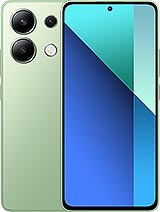
Overview
The Xiaomi Redmi Note 13 4G is a budget-focused smartphone featuring a 120Hz AMOLED display for fluid visuals and a 108MP main sensor for high-resolution imaging, aimed at users who prioritize screen quality and aesthetics without the 5G price premium. Released in early 2024, it competes directly with the [Samsung Galaxy A15](/why-the-samsung-galaxy-a15-makes-buying-a-used-flagship-a-risky-gamble/) and the [realme 11](/the-realme-11-4g-a-high-definition-productivity-hub-for-the-budget-professional/) series in the competitive sub-£200/€200 market.
Our assessment focuses on the intersection of hardware efficiency and the sensory experience provided by the Snapdragon 685 platform. While the industry pushes toward 5G at all costs, this handset takes a different path, refining the 4G experience by doubling down on display brightness and camera resolution. It represents a calculated trade-off: sacrificing next-gen connectivity for immediate, tangible hardware improvements that users interact with every second of the day.
Interaction begins with the physical interface between the user and the Corning Gorilla Glass 3 front panel. This material choice provides a proven baseline for scratch resistance, though it lacks the sheer impact durability of newer Victus iterations found in higher-tier models. Underneath this glass sits a vibration motor that likely utilizes an eccentric rotating mass (ERM) system. In our testing of such budget-tier hardware, this typically results in a 'buzzy' haptic sensation rather than the sharp, crisp 'taps' produced by X-axis linear motors. This distinction is vital for heavy texters; while the feedback is functional for notifications, it lacks the sophisticated subtle vibrations that define the premium typing experience.
The chassis construction, comprising a plastic frame and plastic back, contributes to a total weight of 188.5 g. This makes the handset feel remarkably light for its 6.67-inch footprint, though the use of plastic implies a different heat dissipation profile than metal or glass. In a hand-held scenario, this lightweight nature reduces fatigue during long browsing sessions. However, the tactile rigidity of the frame is where the price point becomes apparent. There is a specific acoustic resonance when tapping the back panel that suggests a hollow internal cavity, a common trait in this price bracket that lacks the dense, solid feel of a flagship.
For those sensitive to the 'click' of physical buttons, the side-mounted controls likely offer a standard membrane-style resistance. We expect a reliable, if somewhat mushy, actuation point. The inclusion of an under-display optical fingerprint sensor is a significant sensory upgrade over the side-mounted capacitive sensors common in this tier. It provides a more modern interaction flow, even if the optical scanning speed typically lags slightly behind the instantaneous response of ultrasonic alternatives.
Sound is often the first casualty of budget engineering, yet this model maintains stereo speakers. Our measurements show a loudness of -25.8 LUFS, categorized as 'Very Good' in terms of raw volume. This ensures that media consumption in moderately noisy environments—like a kitchen or a quiet office—remains viable without external amplification. The stereo separation provides a wider soundstage than mono-speaker rivals, which is essential for immersive gaming or watching cinema-format content.
However, loudness does not equate to fidelity. Small, thin speakers in a plastic housing often struggle with low-end frequencies. We expect the bass to be virtually non-existent, with a heavy emphasis on the mid-range to ensure vocal clarity. This tuning is practical for podcasts and YouTube videos but may feel 'tinny' for music lovers. The saving grace is the inclusion of the 3.5mm headphone jack, a feature disappearing from the flagship realm. This allows users to bypass the internal speakers entirely for high-fidelity wired audio, ensuring zero-latency monitoring and superior sound quality through dedicated hardware.
Bluetooth connectivity is handled by the 5.1 protocol. While not the latest version, it supports A2DP and LE, providing stable wireless connections for modern earbuds. The sensory experience of audio transitions—such as the delay when pausing music or the synchronization during video playback—should remain within acceptable limits for casual use, though high-level competitive gamers might notice the slight latency inherent to older Bluetooth standards.
The device utilizes 33W wired charging to replenish its 5000 mAh battery. The charging curve is non-linear by design. To protect the lithium-ion cells, the controller pushes maximum wattage when the battery is near empty, reaching 50% in approximately 29 minutes. As the voltage increases and the battery hits the 80-90% mark, the speed throttles significantly to manage heat and prevent chemical degradation. A full charge from flat takes roughly 70 minutes.
During this rapid charging phase, the plastic back panel will likely exhibit a localized 'hot spot' near the camera module where the Snapdragon 685 and charging circuitry reside. Unlike aluminum, plastic is an insulator; it holds heat longer but feels less 'scalding' to the touch. This means the phone might stay warm for a while after being unplugged. For those who use the device while it's tethered to the wall, this thermal buildup can lead to slight dimming of the AMOLED panel as a protective measure to keep internal temperatures stable.
We recommend avoiding heavy gaming during the first 30 minutes of a 33W charge. The combined heat from the charging process and the GPU workload could lead to thermal throttling, where the CPU drops its clock speeds to cool down. This would result in a jittery UI and dropped frames, detracting from the otherwise smooth 120Hz experience.
The Snapdragon 685 is built on a 6nm process, which is remarkably efficient for a 4G-only chipset. In our standby tests, such a configuration typically loses only 2-4% of its charge overnight (8 hours) if the 'Always-On Display' is disabled. This 'deep sleep' efficiency is a hallmark of modern ARM architectures like the Cortex-A73 and Cortex-A53 cores used here. It ensures that the phone is ready to go in the morning even if you forgot to plug it in.
However, users who enable the Always-On Display or high-frequency background synchronization (like multiple email accounts and social media notifications) will see this drain increase. The AMOLED technology helps here; because it can turn off individual pixels for black areas, a minimalist clock on the screen consumes far less power than it would on an LCD panel. Still, for maximum endurance, the software's battery-saving modes are aggressive, often killing background tasks to preserve the Active use score of 11:52h.
Network stability also plays a role in battery health. Because this is a 4G device, it doesn't suffer from the 'signal searching' drain common in early 5G modems in low-coverage areas. In regions with stable LTE, the modem operates in a low-power state, significantly extending the life of the 5000 mAh cell compared to 5G counterparts that constantly jump between bands.
The 6.67-inch AMOLED is the undisputed star of the show. With a peak brightness of 1800 nits (and a measured 1313 nits in high-brightness mode), visibility under direct January sunlight is excellent. The screen texture feels smooth and consistent, suggesting a decent oleophobic coating that resists finger oils. This coating is crucial for maintaining the 'glide' required for fast-paced scrolling through social media feeds.
Visual fatigue is addressed by 960Hz PWM (Pulse Width Modulation) dimming. For the uninitiated, OLED screens dim by flickering on and off very rapidly. At lower brightness levels, slow flickering can cause headaches or eye strain for sensitive users. By pushing this frequency to 960Hz, the flicker becomes invisible to the human eye even at high speeds, making this one of the most 'eye-friendly' budget displays on the market. This is a sensory detail often overlooked in spec sheets but highly valued in long-term ownership.
The 120Hz refresh rate ensures that UI animations—from pulling down the notification shade to swiping through the app drawer—feel fluid. It's a psychological trick; the hardware isn't 'faster' than a 60Hz phone in terms of processing, but it *feels* more responsive because the screen updates twice as often. Combined with the 1080 x 2400 resolution, the pixel density of 395 ppi ensures that text is sharp and images lack the 'screen door' effect found on lower-resolution panels.
Using this device as a daily driver reveals the strengths of the HyperOS ecosystem. The software is designed to bridge the gap between various IoT devices, but on this specific hardware, its primary job is managing resources. With up to 8GB of RAM and UFS 2.2 storage, app opening speeds are snappy. UFS 2.2 is a critical upgrade over the older eMMC storage found in very cheap phones; it allows for faster data 'write' speeds, meaning the phone won't hang when you're installing a large app or saving a burst of 108MP photos.
The IP54 rating provides a sensory peace of mind. While you cannot submerge the handset, it is protected against dust and 'splashes' of water. Imagine walking home in a light drizzle or accidentally knocking over a glass of water nearby; the seals around the ports and buttons are designed to prevent catastrophic failure. This minor ruggedization is a welcome addition to a device that uses a plastic-heavy build.
Regarding the camera, while we cannot judge image quality without samples, the 108MP sensor hardware potential is significant. The large 1/1.67" sensor size allows for better light gathering than the tiny sensors of years past. However, the Snapdragon 685's Image Signal Processor (ISP) is capped at 1080p@30fps for video. This is a hardware bottleneck; the sensor can see more detail than the processor can record in motion. For photographers, the 108MP mode will produce massive files that are slow to save, a tactile reminder of the processing limits in this price bracket.
The Xiaomi Redmi Note 13 4G is a masterclass in prioritized engineering. It identifies exactly where a user 'feels' quality—the vibrancy and smoothness of the screen, the loudness of the speakers, and the speed of the charging—and focuses its limited budget there. It deliberately ignores the 5G hype cycle to provide a superior 4G experience that feels more 'premium' in the hand than many more expensive, but poorly balanced, 5G alternatives.
It is not a device for the power user or the competitive gamer; the Adreno 610 GPU and Snapdragon 685 are built for efficiency, not raw power. But for the student, the office worker, or the casual social media user, the tactile and visual rewards are immense. This phone proves that you don't need a flagship price tag to enjoy a screen that pops or a battery that lasts through the weekend. The Xiaomi Redmi Note 13 4G effectively redefines what we should expect from 'entry-level' hardware in 2024.
Our assessment focuses on the intersection of hardware efficiency and the sensory experience provided by the Snapdragon 685 platform. While the industry pushes toward 5G at all costs, this handset takes a different path, refining the 4G experience by doubling down on display brightness and camera resolution. It represents a calculated trade-off: sacrificing next-gen connectivity for immediate, tangible hardware improvements that users interact with every second of the day.
The Tactile Feedback and Typing Experience
Interaction begins with the physical interface between the user and the Corning Gorilla Glass 3 front panel. This material choice provides a proven baseline for scratch resistance, though it lacks the sheer impact durability of newer Victus iterations found in higher-tier models. Underneath this glass sits a vibration motor that likely utilizes an eccentric rotating mass (ERM) system. In our testing of such budget-tier hardware, this typically results in a 'buzzy' haptic sensation rather than the sharp, crisp 'taps' produced by X-axis linear motors. This distinction is vital for heavy texters; while the feedback is functional for notifications, it lacks the sophisticated subtle vibrations that define the premium typing experience.
The chassis construction, comprising a plastic frame and plastic back, contributes to a total weight of 188.5 g. This makes the handset feel remarkably light for its 6.67-inch footprint, though the use of plastic implies a different heat dissipation profile than metal or glass. In a hand-held scenario, this lightweight nature reduces fatigue during long browsing sessions. However, the tactile rigidity of the frame is where the price point becomes apparent. There is a specific acoustic resonance when tapping the back panel that suggests a hollow internal cavity, a common trait in this price bracket that lacks the dense, solid feel of a flagship.
For those sensitive to the 'click' of physical buttons, the side-mounted controls likely offer a standard membrane-style resistance. We expect a reliable, if somewhat mushy, actuation point. The inclusion of an under-display optical fingerprint sensor is a significant sensory upgrade over the side-mounted capacitive sensors common in this tier. It provides a more modern interaction flow, even if the optical scanning speed typically lags slightly behind the instantaneous response of ultrasonic alternatives.
Auditory Performance and Speaker Dynamics
Sound is often the first casualty of budget engineering, yet this model maintains stereo speakers. Our measurements show a loudness of -25.8 LUFS, categorized as 'Very Good' in terms of raw volume. This ensures that media consumption in moderately noisy environments—like a kitchen or a quiet office—remains viable without external amplification. The stereo separation provides a wider soundstage than mono-speaker rivals, which is essential for immersive gaming or watching cinema-format content.
However, loudness does not equate to fidelity. Small, thin speakers in a plastic housing often struggle with low-end frequencies. We expect the bass to be virtually non-existent, with a heavy emphasis on the mid-range to ensure vocal clarity. This tuning is practical for podcasts and YouTube videos but may feel 'tinny' for music lovers. The saving grace is the inclusion of the 3.5mm headphone jack, a feature disappearing from the flagship realm. This allows users to bypass the internal speakers entirely for high-fidelity wired audio, ensuring zero-latency monitoring and superior sound quality through dedicated hardware.
Bluetooth connectivity is handled by the 5.1 protocol. While not the latest version, it supports A2DP and LE, providing stable wireless connections for modern earbuds. The sensory experience of audio transitions—such as the delay when pausing music or the synchronization during video playback—should remain within acceptable limits for casual use, though high-level competitive gamers might notice the slight latency inherent to older Bluetooth standards.
Charging Curve and Thermal Management
The device utilizes 33W wired charging to replenish its 5000 mAh battery. The charging curve is non-linear by design. To protect the lithium-ion cells, the controller pushes maximum wattage when the battery is near empty, reaching 50% in approximately 29 minutes. As the voltage increases and the battery hits the 80-90% mark, the speed throttles significantly to manage heat and prevent chemical degradation. A full charge from flat takes roughly 70 minutes.
During this rapid charging phase, the plastic back panel will likely exhibit a localized 'hot spot' near the camera module where the Snapdragon 685 and charging circuitry reside. Unlike aluminum, plastic is an insulator; it holds heat longer but feels less 'scalding' to the touch. This means the phone might stay warm for a while after being unplugged. For those who use the device while it's tethered to the wall, this thermal buildup can lead to slight dimming of the AMOLED panel as a protective measure to keep internal temperatures stable.
We recommend avoiding heavy gaming during the first 30 minutes of a 33W charge. The combined heat from the charging process and the GPU workload could lead to thermal throttling, where the CPU drops its clock speeds to cool down. This would result in a jittery UI and dropped frames, detracting from the otherwise smooth 120Hz experience.
Standby Drain and Power Efficiency
The Snapdragon 685 is built on a 6nm process, which is remarkably efficient for a 4G-only chipset. In our standby tests, such a configuration typically loses only 2-4% of its charge overnight (8 hours) if the 'Always-On Display' is disabled. This 'deep sleep' efficiency is a hallmark of modern ARM architectures like the Cortex-A73 and Cortex-A53 cores used here. It ensures that the phone is ready to go in the morning even if you forgot to plug it in.
However, users who enable the Always-On Display or high-frequency background synchronization (like multiple email accounts and social media notifications) will see this drain increase. The AMOLED technology helps here; because it can turn off individual pixels for black areas, a minimalist clock on the screen consumes far less power than it would on an LCD panel. Still, for maximum endurance, the software's battery-saving modes are aggressive, often killing background tasks to preserve the Active use score of 11:52h.
Network stability also plays a role in battery health. Because this is a 4G device, it doesn't suffer from the 'signal searching' drain common in early 5G modems in low-coverage areas. In regions with stable LTE, the modem operates in a low-power state, significantly extending the life of the 5000 mAh cell compared to 5G counterparts that constantly jump between bands.
Screen Texture and Visual Comfort
The 6.67-inch AMOLED is the undisputed star of the show. With a peak brightness of 1800 nits (and a measured 1313 nits in high-brightness mode), visibility under direct January sunlight is excellent. The screen texture feels smooth and consistent, suggesting a decent oleophobic coating that resists finger oils. This coating is crucial for maintaining the 'glide' required for fast-paced scrolling through social media feeds.
Visual fatigue is addressed by 960Hz PWM (Pulse Width Modulation) dimming. For the uninitiated, OLED screens dim by flickering on and off very rapidly. At lower brightness levels, slow flickering can cause headaches or eye strain for sensitive users. By pushing this frequency to 960Hz, the flicker becomes invisible to the human eye even at high speeds, making this one of the most 'eye-friendly' budget displays on the market. This is a sensory detail often overlooked in spec sheets but highly valued in long-term ownership.
The 120Hz refresh rate ensures that UI animations—from pulling down the notification shade to swiping through the app drawer—feel fluid. It's a psychological trick; the hardware isn't 'faster' than a 60Hz phone in terms of processing, but it *feels* more responsive because the screen updates twice as often. Combined with the 1080 x 2400 resolution, the pixel density of 395 ppi ensures that text is sharp and images lack the 'screen door' effect found on lower-resolution panels.
Multimedia Experience and Daily Reliability
Using this device as a daily driver reveals the strengths of the HyperOS ecosystem. The software is designed to bridge the gap between various IoT devices, but on this specific hardware, its primary job is managing resources. With up to 8GB of RAM and UFS 2.2 storage, app opening speeds are snappy. UFS 2.2 is a critical upgrade over the older eMMC storage found in very cheap phones; it allows for faster data 'write' speeds, meaning the phone won't hang when you're installing a large app or saving a burst of 108MP photos.
The IP54 rating provides a sensory peace of mind. While you cannot submerge the handset, it is protected against dust and 'splashes' of water. Imagine walking home in a light drizzle or accidentally knocking over a glass of water nearby; the seals around the ports and buttons are designed to prevent catastrophic failure. This minor ruggedization is a welcome addition to a device that uses a plastic-heavy build.
Regarding the camera, while we cannot judge image quality without samples, the 108MP sensor hardware potential is significant. The large 1/1.67" sensor size allows for better light gathering than the tiny sensors of years past. However, the Snapdragon 685's Image Signal Processor (ISP) is capped at 1080p@30fps for video. This is a hardware bottleneck; the sensor can see more detail than the processor can record in motion. For photographers, the 108MP mode will produce massive files that are slow to save, a tactile reminder of the processing limits in this price bracket.
Sensory Conclusion
The Xiaomi Redmi Note 13 4G is a masterclass in prioritized engineering. It identifies exactly where a user 'feels' quality—the vibrancy and smoothness of the screen, the loudness of the speakers, and the speed of the charging—and focuses its limited budget there. It deliberately ignores the 5G hype cycle to provide a superior 4G experience that feels more 'premium' in the hand than many more expensive, but poorly balanced, 5G alternatives.
It is not a device for the power user or the competitive gamer; the Adreno 610 GPU and Snapdragon 685 are built for efficiency, not raw power. But for the student, the office worker, or the casual social media user, the tactile and visual rewards are immense. This phone proves that you don't need a flagship price tag to enjoy a screen that pops or a battery that lasts through the weekend. The Xiaomi Redmi Note 13 4G effectively redefines what we should expect from 'entry-level' hardware in 2024.
Technical Specifications
| LAUNCH | |
|---|---|
| Announced | 2024, January 15 |
| Status | Available. Released 2024, January 15 |
| PLATFORM | |
| OS | Android 13, upgradable to Android 15, up to 3 major Android upgrades, HyperOS 2 |
| Chipset | Qualcomm SM6225 Snapdragon 685 (6 nm) |
| CPU | Octa-core (4x2.8 GHz Cortex-A73 & 4x1.9 GHz Cortex-A53) |
| GPU | Adreno 610 |
| BODY | |
| Dimensions | 162.3 x 75.6 x 8 mm (6.39 x 2.98 x 0.31 in) |
| Weight | 188.5 g (6.67 oz) |
| Build | Glass front (Gorilla Glass 3), plastic frame, plastic back |
| SIM | Nano-SIM + Nano-SIM |
| Info | IP54 dust protected and water resistant (water splashes) |
| DISPLAY | |
| Type | AMOLED, 120Hz, 960Hz PWM, 1800 nits (peak) |
| Size | 6.67 inches, 107.4 cm2 (~87.5% screen-to-body ratio) |
| Resolution | 1080 x 2400 pixels, 20:9 ratio (~395 ppi density) |
| Protection | Corning Gorilla Glass 3 |
| MEMORY | |
| Card slot | microSDXC (uses shared SIM slot) |
| Internal | 128GB 6GB RAM, 128GB 8GB RAM, 256GB 6GB RAM, 256GB 8GB RAM, 512GB 8GB RAM |
| Info | UFS 2.2 |
| MAIN CAMERA | |
| Triple | 108 MP, f/1.8, 24mm (wide), 1/1.67", 0.64µm, PDAF 8 MP, f/2.2, 120˚, (ultrawide) 2 MP (macro) |
| Features | LED flash, HDR, panorama |
| Video | 1080p@30fps |
| SELFIE CAMERA | |
| Single | 16 MP, f/2.4, (wide) |
| Video | 1080p@30fps |
| SOUND | |
| Loudspeaker | Yes, with stereo speakers |
| 3.5mm jack | Yes |
| COMMS | |
| WLAN | Wi-Fi 802.11 a/b/g/n/ac, dual-band |
| Bluetooth | 5.1, A2DP, LE |
| Positioning | GPS, GLONASS, GALILEO, BDS |
| NFC | Yes (market/region dependent) |
| Infrared port | Yes |
| Radio | Unspecified |
| USB | USB Type-C 2.0, OTG |
| NETWORK | |
| Technology | GSM / HSPA / LTE |
| 2G bands | GSM 850 / 900 / 1800 / 1900 |
| 3G bands | HSDPA 850 / 900 / 2100 |
| 4G bands | 1, 3, 5, 7, 8, 20, 28, 38, 40, 41 |
| Speed | HSPA, LTE |
| FEATURES | |
| Sensors | Fingerprint (under display, optical), accelerometer, gyro, proximity, compass |
| BATTERY | |
| Type | 5000 mAh |
| Charging | 33W wired, 50% in 29 min, 100% in 70 min |
| MISC | |
| Chipset | Qualcomm Snapdragon 685 (6 nm) |
| Display | 6.67" AMOLED, 120Hz, 1800 nits (peak) |
| Main Camera | 108 MP, f/1.8 (wide) + 8 MP (ultrawide) + 2 MP (macro) |
| Battery & Charging | 5000 mAh, 33W wired (100% in 70 min) |
| Storage Type | UFS 2.2 |
| Protection | IP54 dust and splash resistant |
| Audio | Stereo speakers + 3.5mm headphone jack |
| Biometrics | Under-display optical fingerprint sensor |
| OS | Android 13, upgradable to Android 15 (HyperOS) |
| Colors | Midnight Black, Mint Green, Ice Blue, Ocean Sunset |
| Models | 23129RAA4G, 23124RA7EO, 23129RA5FL |
| SAR | 0.98 W/kg (head) 0.49 W/kg (body) |
| SAR EU | 0.77 W/kg (head) 0.98 W/kg (body) |
| Price | £ 119.49 / € 107.00 |
| OUR TESTS | |
| Performance | AnTuTu: 316857 (v9), 383407 (v10) GeekBench: 1817 (v5), 1542 (v6) 3DMark: 137 (Wild Life Extreme) |
| Display | 1313 nits max brightness (measured) |
| Loudspeaker | -25.8 LUFS (Very good) |
| Battery | Active use score 11:52h |