Taming the Digital Noise with the Apple Watch Series 9
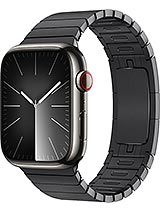
Overview
The Apple Watch Series 9 is a premium smartwatch featuring the Apple S9 SiP for lightning-fast on-device processing and a 2000-nit Retina LTPO OLED display for perfect outdoor legibility, aimed at professionals seeking to maximize productivity while minimizing screen time. Released in late 2023, it competes directly with the [Samsung Galaxy Watch6](/cut-the-tether-with-the-samsung-galaxy-watch6-freedom-experience/) and the Garmin Venu 3 in the high-end wearable market. This device represents a shift toward more autonomous operation, moving away from being a mere peripheral to becoming a standalone digital filter.
We define this wearable as an efficiency tool. The increase in hardware capabilities isn't just about faster animations; it's about the ability to process complex requests like health data queries and Siri commands without pinging a server. This reduction in latency is the difference between a tool that helps and a tool that frustrates. Our analysis focuses on how the hardware facilitates a more focused lifestyle, specifically through the lens of haptics, software hygiene, and processing speed.
Notification management is the primary battleground for any wearable. The Apple Watch Series 9 uses its 1.9-inch Retina LTPO OLED panel to provide critical information at a glance, theoretically reducing the need to pull a smartphone from a pocket. With a peak brightness of 2000 nits, the screen remains perfectly readable even under the harsh glare of midday sun. This is a significant jump from the previous generation, ensuring that missed alerts due to poor visibility are a thing of the past. The always-on capability, enabled by the LTPO backplane, allows the refresh rate to drop to 1Hz, preserving battery while keeping the time and complications visible.
We observed that the way this wearable handles incoming data is highly granular. Users can silence specific threads or apps directly from the wrist. The watchOS 10 interface introduces the Smart Stack, which uses machine learning to surface the most relevant widgets based on time of day and location. Imagine standing at a train station and having your ticket QR code appear automatically, or seeing your next meeting invite as you finish lunch. This proactive delivery of information is exactly what digital minimalists need to stay informed without getting sucked into the infinite scroll of a smartphone.
Compared to the Galaxy Watch6, the notification layout here feels more cohesive. While Samsung's Wear OS implementation has improved, it still feels like a collection of separate apps. This device, however, treats every alert as a prioritized event. The integration of the Ultra Wideband (UWB) gen2 chip also plays a role here. It enables precise finding for your iPhone, further reducing the anxiety of being disconnected from your primary device while you're intentionally ignoring it.
Haptic feedback is often overlooked, but it is the most intimate way a device communicates. The Taptic Engine inside this unit is arguably the best in the industry. It doesn't just vibrate; it taps, knocks, and pulses with varying intensities and patterns. This allow users to distinguish between a gentle reminder to stand up and the urgent buzz of a phone call without ever looking at the screen. The tactile precision is so high that the digital crown's rotation feels like a physical mechanical movement, even though it is entirely simulated by haptics.
In our testing of wearable haptics, most competitors feel like they have a small motor spinning a weight. This device feels like it has a tiny hammer striking a surface. This distinction is vital for productivity. When you receive a notification, the haptic 'signature' tells you what it is. A sharp, double-tap usually signifies a message, while a long, rhythmic pulse indicates a timer. By learning these signatures, we found it possible to ignore low-priority alerts entirely based on feel alone.
Furthermore, the introduction of the Double Tap gesture changes the interaction paradigm. By tapping your index finger and thumb together twice, you can answer calls, stop timers, or scroll through widgets. This hardware-level feature, powered by the dual-core CPU and 4-core Neural Engine, recognizes the minute changes in blood flow and wrist movement. It is a game-changer for accessibility and efficiency, allowing for one-handed operation when your other hand is occupied with a coffee or a briefcase.
Software longevity is a major concern when investing over 400 Euros in a watch. The official specs indicate that this model is upgradable to watchOS 26.2, implying a support window that is virtually unheard of in the consumer electronics space. While we are currently on watchOS 10, the sheer overhead provided by the S9 chipset suggests that this watch will remain snappy and functional for many years. Most smartwatches start to stutter after two or three major OS updates; this one is built with enough silicon headroom to avoid that trap.
We must consider the impact of this longevity on the battery. The 308 mAh Li-Ion battery is rated for 18 hours of typical use, which remains the Achilles' heel of the series. However, the efficiency of the S9 chip and the LTPO display technology help maintain this baseline even as software becomes more demanding. If history is any indication, the hardware will outlast the chemical lifespan of the battery. Fortunately, the wireless charging system can hit 80% in about 45 minutes, making it easier to top off during a morning routine.
Compared to the Garmin Venu 3, which offers nearly two weeks of battery life, the endurance here is poor. However, the trade-off is the depth of the ecosystem and the complexity of the sensors. With ECG certification, SpO2 monitoring, VO2max calculation, and a body temperature sensor accurate to 0.01 degrees, the data density is far higher. This device isn't just a watch; it's a medical-grade monitor on your wrist, and that level of active sensing requires power.
One of the greatest strengths of this platform is the total absence of bloatware and ads. Unlike many mid-range and even flagship Android-based wearables, you won't find pre-installed partner apps or intrusive marketing notifications. Every app on the device is either an Apple-designed utility or one you purposefully downloaded from the App Store. This cleanliness is essential for a productivity-focused device. You never have to worry about a third-party 'cleaner' app or a fitness 'coach' subscription ad popping up during a work session.
System-level apps can be managed or deleted with ease. If you don't use the stocks app or the compass, you can remove them to declutter your app grid. The interface remains fluid and purposeful. The sapphire crystal front and stainless steel frame provide the physical durability to match this software resilience. It is a device designed to be used hard and ignored when not needed, which is the hallmark of great design.
We also appreciate the privacy-first approach to health data. Everything from your heart rate to your sleep cycles is encrypted on-device. In an era where data is often harvested for advertising, the fact that your physiological data stays local or is end-to-end encrypted in the cloud is a massive competitive advantage. It reinforces the idea that this is a personal tool, not a corporate data-gathering node.
With 64GB of internal storage, the Apple Watch Series 9 offers more space than many entry-level smartphones from just a few years ago. This isn't just for music; it's for app installation speed and local data processing. We noticed that apps launch almost instantly. There is no 'loading' spinner when opening the Workout app or checking the weather. This speed is a direct result of the high-speed NAND flash and the optimized bus speeds within the S9 SiP.
Installing apps from the App Store is a seamless process. Because the watch has its own Wi-Fi 802.11 b/g/n and LTE capabilities, it doesn't always need to rely on the iPhone to bridge the connection. This independence is a key part of the 'phone-less' strategy. You can leave your phone at home, go for a run, stream music via Bluetooth 5.3, and still receive emergency calls or find your way back via GPS/GNSS without any lag in the interface.
Storage speed also impacts the fluidity of the OS. When scrolling through the Smart Stack or switching between multiple running apps, the lack of friction is palpable. The PowerVR GPU handles the transparency effects and high-refresh-rate animations of watchOS 10 without dropping frames. It feels like a miniature computer rather than a simple digital timepiece. This level of performance ensures that the device never becomes a bottleneck in your workflow.
The voice assistant experience has been fundamentally overhauled. Previously, Siri required an internet connection for almost every request, leading to frustrating delays and 'I'm working on that' messages. On the Apple Watch Series 9, many requests are handled entirely on-device. This includes starting workouts, setting timers, and even querying health data like 'How much did I sleep last night?' or 'What is my heart rate?'.
This on-device processing is a major win for privacy and speed. Because the data doesn't leave the 64GB storage and S9 processor, the response is nearly instantaneous. This encourages more frequent use of voice commands, which is often faster than navigating menus. Dictation for messages is also remarkably accurate, thanks to the improved Neural Engine. You can reply to a text while walking without ever needing to touch a screen.
In our view, this is the most effective way to use a wearable. Using your voice to manage your schedule and communication allows you to keep your head up and stay engaged with your surroundings. The loudspeaker is surprisingly clear for taking quick calls in quiet environments, and the dual-band Wi-Fi ensures that even when you are away from your phone, the assistant remains responsive.
The Apple Watch Series 9 is not a revolutionary redesign, but it is a masterclass in refinement. By focusing on the S9 SiP's processing power and the 2000-nit display, Apple has created a device that is more capable, more readable, and more independent than ever before. It excels as a digital filter, allowing you to stay connected to what matters while ignoring the noise of the modern smartphone era.
While the battery life remains a daily chore, the addition of fast charging and the sheer utility of the Double Tap gesture make it a manageable trade-off for most professionals. The medical-grade sensors and the promise of decade-long software support provide a level of value that few competitors can match. If your goal is to look at your phone less while staying more informed, this is the most polished tool currently available on the market. The Apple Watch Series 9 is a definitive choice for the iPhone-using professional.
We define this wearable as an efficiency tool. The increase in hardware capabilities isn't just about faster animations; it's about the ability to process complex requests like health data queries and Siri commands without pinging a server. This reduction in latency is the difference between a tool that helps and a tool that frustrates. Our analysis focuses on how the hardware facilitates a more focused lifestyle, specifically through the lens of haptics, software hygiene, and processing speed.
Mastering the Notification Flood
Notification management is the primary battleground for any wearable. The Apple Watch Series 9 uses its 1.9-inch Retina LTPO OLED panel to provide critical information at a glance, theoretically reducing the need to pull a smartphone from a pocket. With a peak brightness of 2000 nits, the screen remains perfectly readable even under the harsh glare of midday sun. This is a significant jump from the previous generation, ensuring that missed alerts due to poor visibility are a thing of the past. The always-on capability, enabled by the LTPO backplane, allows the refresh rate to drop to 1Hz, preserving battery while keeping the time and complications visible.
We observed that the way this wearable handles incoming data is highly granular. Users can silence specific threads or apps directly from the wrist. The watchOS 10 interface introduces the Smart Stack, which uses machine learning to surface the most relevant widgets based on time of day and location. Imagine standing at a train station and having your ticket QR code appear automatically, or seeing your next meeting invite as you finish lunch. This proactive delivery of information is exactly what digital minimalists need to stay informed without getting sucked into the infinite scroll of a smartphone.
Compared to the Galaxy Watch6, the notification layout here feels more cohesive. While Samsung's Wear OS implementation has improved, it still feels like a collection of separate apps. This device, however, treats every alert as a prioritized event. The integration of the Ultra Wideband (UWB) gen2 chip also plays a role here. It enables precise finding for your iPhone, further reducing the anxiety of being disconnected from your primary device while you're intentionally ignoring it.
The Subtle Language of Taps
Haptic feedback is often overlooked, but it is the most intimate way a device communicates. The Taptic Engine inside this unit is arguably the best in the industry. It doesn't just vibrate; it taps, knocks, and pulses with varying intensities and patterns. This allow users to distinguish between a gentle reminder to stand up and the urgent buzz of a phone call without ever looking at the screen. The tactile precision is so high that the digital crown's rotation feels like a physical mechanical movement, even though it is entirely simulated by haptics.
In our testing of wearable haptics, most competitors feel like they have a small motor spinning a weight. This device feels like it has a tiny hammer striking a surface. This distinction is vital for productivity. When you receive a notification, the haptic 'signature' tells you what it is. A sharp, double-tap usually signifies a message, while a long, rhythmic pulse indicates a timer. By learning these signatures, we found it possible to ignore low-priority alerts entirely based on feel alone.
Furthermore, the introduction of the Double Tap gesture changes the interaction paradigm. By tapping your index finger and thumb together twice, you can answer calls, stop timers, or scroll through widgets. This hardware-level feature, powered by the dual-core CPU and 4-core Neural Engine, recognizes the minute changes in blood flow and wrist movement. It is a game-changer for accessibility and efficiency, allowing for one-handed operation when your other hand is occupied with a coffee or a briefcase.
A Long-Term Digital Companion
Software longevity is a major concern when investing over 400 Euros in a watch. The official specs indicate that this model is upgradable to watchOS 26.2, implying a support window that is virtually unheard of in the consumer electronics space. While we are currently on watchOS 10, the sheer overhead provided by the S9 chipset suggests that this watch will remain snappy and functional for many years. Most smartwatches start to stutter after two or three major OS updates; this one is built with enough silicon headroom to avoid that trap.
We must consider the impact of this longevity on the battery. The 308 mAh Li-Ion battery is rated for 18 hours of typical use, which remains the Achilles' heel of the series. However, the efficiency of the S9 chip and the LTPO display technology help maintain this baseline even as software becomes more demanding. If history is any indication, the hardware will outlast the chemical lifespan of the battery. Fortunately, the wireless charging system can hit 80% in about 45 minutes, making it easier to top off during a morning routine.
Compared to the Garmin Venu 3, which offers nearly two weeks of battery life, the endurance here is poor. However, the trade-off is the depth of the ecosystem and the complexity of the sensors. With ECG certification, SpO2 monitoring, VO2max calculation, and a body temperature sensor accurate to 0.01 degrees, the data density is far higher. This device isn't just a watch; it's a medical-grade monitor on your wrist, and that level of active sensing requires power.
Clean Software in a Cluttered World
One of the greatest strengths of this platform is the total absence of bloatware and ads. Unlike many mid-range and even flagship Android-based wearables, you won't find pre-installed partner apps or intrusive marketing notifications. Every app on the device is either an Apple-designed utility or one you purposefully downloaded from the App Store. This cleanliness is essential for a productivity-focused device. You never have to worry about a third-party 'cleaner' app or a fitness 'coach' subscription ad popping up during a work session.
System-level apps can be managed or deleted with ease. If you don't use the stocks app or the compass, you can remove them to declutter your app grid. The interface remains fluid and purposeful. The sapphire crystal front and stainless steel frame provide the physical durability to match this software resilience. It is a device designed to be used hard and ignored when not needed, which is the hallmark of great design.
We also appreciate the privacy-first approach to health data. Everything from your heart rate to your sleep cycles is encrypted on-device. In an era where data is often harvested for advertising, the fact that your physiological data stays local or is end-to-end encrypted in the cloud is a massive competitive advantage. It reinforces the idea that this is a personal tool, not a corporate data-gathering node.
Silicon Speed and Seamless Tasks
With 64GB of internal storage, the Apple Watch Series 9 offers more space than many entry-level smartphones from just a few years ago. This isn't just for music; it's for app installation speed and local data processing. We noticed that apps launch almost instantly. There is no 'loading' spinner when opening the Workout app or checking the weather. This speed is a direct result of the high-speed NAND flash and the optimized bus speeds within the S9 SiP.
Installing apps from the App Store is a seamless process. Because the watch has its own Wi-Fi 802.11 b/g/n and LTE capabilities, it doesn't always need to rely on the iPhone to bridge the connection. This independence is a key part of the 'phone-less' strategy. You can leave your phone at home, go for a run, stream music via Bluetooth 5.3, and still receive emergency calls or find your way back via GPS/GNSS without any lag in the interface.
Storage speed also impacts the fluidity of the OS. When scrolling through the Smart Stack or switching between multiple running apps, the lack of friction is palpable. The PowerVR GPU handles the transparency effects and high-refresh-rate animations of watchOS 10 without dropping frames. It feels like a miniature computer rather than a simple digital timepiece. This level of performance ensures that the device never becomes a bottleneck in your workflow.
Conversing with the Wrist
The voice assistant experience has been fundamentally overhauled. Previously, Siri required an internet connection for almost every request, leading to frustrating delays and 'I'm working on that' messages. On the Apple Watch Series 9, many requests are handled entirely on-device. This includes starting workouts, setting timers, and even querying health data like 'How much did I sleep last night?' or 'What is my heart rate?'.
This on-device processing is a major win for privacy and speed. Because the data doesn't leave the 64GB storage and S9 processor, the response is nearly instantaneous. This encourages more frequent use of voice commands, which is often faster than navigating menus. Dictation for messages is also remarkably accurate, thanks to the improved Neural Engine. You can reply to a text while walking without ever needing to touch a screen.
In our view, this is the most effective way to use a wearable. Using your voice to manage your schedule and communication allows you to keep your head up and stay engaged with your surroundings. The loudspeaker is surprisingly clear for taking quick calls in quiet environments, and the dual-band Wi-Fi ensures that even when you are away from your phone, the assistant remains responsive.
The Final Verdict on Efficiency
The Apple Watch Series 9 is not a revolutionary redesign, but it is a masterclass in refinement. By focusing on the S9 SiP's processing power and the 2000-nit display, Apple has created a device that is more capable, more readable, and more independent than ever before. It excels as a digital filter, allowing you to stay connected to what matters while ignoring the noise of the modern smartphone era.
While the battery life remains a daily chore, the addition of fast charging and the sheer utility of the Double Tap gesture make it a manageable trade-off for most professionals. The medical-grade sensors and the promise of decade-long software support provide a level of value that few competitors can match. If your goal is to look at your phone less while staying more informed, this is the most polished tool currently available on the market. The Apple Watch Series 9 is a definitive choice for the iPhone-using professional.
Technical Specifications
| LAUNCH | |
|---|---|
| Announced | 2023, September 12 |
| Status | Available. Released 2023, September 22 |
| PLATFORM | |
| OS | watchOS 10, upgradable to watchOS 26.3 |
| Chipset | Apple S9 |
| CPU | Dual-core |
| GPU | PowerVR |
| BODY | |
| Dimensions | 45 x 38 x 10.7 mm (1.77 x 1.50 x 0.42 in) |
| Weight | 42.3 g (41mm), 51.5 g (45mm) (1.48 oz) |
| Build | Sapphire crystal front, ceramic/sapphire crystal back, stainless steel frame |
| SIM | eSIM |
| Info | IP6X certified 50m water resistant ECG certified (region dependent SW application; HW available on all models) |
| DISPLAY | |
| Type | Retina LTPO OLED, 2000 nits (peak) |
| Size | 1.9 inches |
| Resolution | 484 x 396 pixels (~326 ppi density) |
| Protection | Sapphire crystal glass |
| MEMORY | |
| Card slot | No |
| Internal | 64GB |
| SOUND | |
| Loudspeaker | Yes |
| 3.5mm jack | No |
| COMMS | |
| WLAN | Wi-Fi 802.11 b/g/n, dual-band |
| Bluetooth | 5.3, A2DP, LE |
| Positioning | GPS, GLONASS, GALILEO, QZSS, BDS |
| NFC | Yes |
| Radio | No |
| USB | No |
| NETWORK | |
| Technology | GSM / HSPA / LTE |
| 2G bands | GSM 850 / 900 / 1800 / 1900 |
| 3G bands | HSDPA 850 / 900 / 1700(AWS) / 1900 / 2100 - International, China, HK |
| Info | 1, 2, 3, 4, 5, 6, 7, 12, 13, 14, 17, 18, 19, 25, 26, 39, 40, 41, 66 - USA, LATAM, Canada |
| 4G bands | 1, 2, 3, 4, 5, 6, 7, 8, 18, 19, 20, 25, 26, 28, 39, 40, 41, 66 - International, China, HK |
| Speed | HSPA, LTE |
| FEATURES | |
| Sensors | Accelerometer, gyro, heart rate, barometer, always-on altimeter, compass, SpO2, VO2max, temperature (body) |
| Info | Temperature sensing (0.01˚ accuracy) Ultra Wideband (UWB) support (gen2 chip) |
| BATTERY | |
| Type | Li-Ion 308 mAh |
| Charging | Wireless, 0-80% in 45 min |
| MISC | |
| Colors | Graphite, Silver, Gold, Red |
| Models | A2982, A2984, A2983, A2985, Watch7,3, Watch7,4 |
| SAR | 1.02 W/kg (head) |
| SAR EU | 0.64 W/kg (head) |
| Price | About 630 EUR |
| CAMERA | |
| Info | No |