Stop Falling for Carrier Deals - Why the TCL Ion X Proves Cheap Hardware Is Often a Costly Choice
Overview
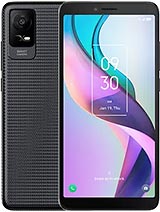
The TCL Ion X is an entry-level smartphone designed primarily for the North American prepaid market and budget-conscious consumers seeking essential connectivity. Released in January 2023, it competes in the ultra-low-cost segment against devices like the Samsung Galaxy A03 and the Motorola Moto G Pure, prioritizing a low barrier to entry over high-performance specifications. This handset centers on a MediaTek Helio G25 chipset and 3GB RAM, offering a basic Android experience for users whose needs don't extend beyond messaging, light web browsing, and standard telephony.
In the current market, the TCL Ion X is frequently marketed as a 'free' device when signing up for specific prepaid plans or switching carriers. However, a Senior Budget Tech Economist must look past the initial $0 price tag. While the device itself might not cost anything upfront, the mandatory monthly service plans required to secure that 'free' status often carry a premium. Over a 12-month period, a user might pay $480 in service fees for a device that retails for approximately $100. For the value hunter, buying a slightly more capable device unlocked and pairing it with a low-cost MVNO (Mobile Virtual Network Operator) often results in a lower total cost of ownership.
The hardware limitations of the TCL Ion X create a 'performance tax'. Because it utilizes 32GB of eMMC 5.1 storage, the device will inevitably slow down as the storage fills. Unlike UFS (Universal Flash Storage) found in [mid-range phones](/trend/best-mid-range-phones-2026/), eMMC 5.1 functions similarly to an SD card, with significantly slower read/write speeds. This means that even 'free' users will pay in time—waiting for apps to open, waiting for the camera to initialize, and dealing with system stutters that aren't present on devices with slightly better silicon.
The internal architecture relies on the MediaTek MT6762G Helio G25, a 12nm chipset. Imagine this processor as a small four-cylinder engine tasked with pulling a heavy trailer. It features an octa-core setup with four 2.0 GHz Cortex-A53 cores and four 1.5 GHz Cortex-A53 cores. While eight cores sound impressive in marketing materials, the Cortex-A53 is an aging architecture focused entirely on power efficiency rather than raw speed. In 2023, this setup struggles with modern, heavy-weight apps like Facebook or high-resolution Instagram feeds. Users should expect a deliberate pace when navigating the UI.
Gaming on the PowerVR GE8320 GPU is limited to the basics. Casual titles like Subway Surfers or Candy Crush will run, but anything involving 3D rendering or complex physics will likely see significant frame drops. This isn't a flaw so much as a design reality; the hardware is optimized to keep the lights on and the battery lasting throughout a standard workday, not to provide a mobile gaming hub. The inclusion of only 3GB of RAM is the real bottleneck here. Modern Android iterations are memory-hungry, and 3GB leaves very little 'breathing room' for multitasking. Switching between a Maps app and a browser will almost certainly result in the first app being closed by the system to reclaim memory.
This model measures 156.5 x 75.2 x 8.9 mm and weighs a manageable 177.4 grams. The construction is predominantly plastic, which is the standard at this price point. Plastic has the benefit of being more impact-resistant than glass, making it a decent choice for those who don't want to worry about every minor drop. The back panel features a textured finish that likely provides a secure grip, preventing the device from sliding off surfaces or out of the hand. While it lacks the premium heft of a flagship, it feels functional and utilitarian.
The buttons are located on the right side, following a standard layout. Given the plastic build, users can expect a slightly muffled tactile response compared to the crisp click of metal buttons, but they remain easy to find by feel alone. The 6.0-inch IPS LCD occupies the front with a 720 x 1440 pixel resolution. This is an 18:9 aspect ratio, which feels a bit 'retro' compared to the ultra-tall 20:9 screens common in 2023, but it makes the phone easier to use with one hand. The 268 ppi density means text won't be razor-sharp, but for reading emails and texts, it is perfectly adequate.
For a device at this level, connectivity is the primary mission. The TCL Ion X supports GSM, HSPA, and LTE bands, including critical North American bands like 12, 66, and 71. Band 71 is particularly important for T-Mobile users, as it provides better signal penetration into buildings and across rural areas. In our analysis of the specs, the signal stability should be reliable for standard voice calls and basic data, though don't expect the blazing speeds of a 5G flagship. This is a 4G handset through and through.
It features Dual-band Wi-Fi 802.11 a/b/g/n/ac, which is a pleasant surprise. Many [budget phones](/trend/best-budget-phones-2026/) omit the 5GHz Wi-Fi band, but having it here means the device can connect to less congested networks in apartment buildings or offices. Bluetooth 5.1 is also present, ensuring a stable connection for wireless earbuds or car kits. However, there is no NFC, so those hoping to use Google Pay for contactless transactions will be disappointed. You'll still need to carry your physical wallet.
The audio setup includes a single loudspeaker and a 3.5mm headphone jack. In an era where flagship phones have abandoned the jack, its presence here is a major win for budget-conscious users who don't want to invest in expensive Bluetooth headphones or dongles. The loudspeaker is likely tuned for clarity in the vocal range rather than deep bass, making it suitable for speakerphone calls and podcasts, though music will lack depth and richness at higher volumes.
TCL has implemented Virtual Proximity Sensing instead of a physical hardware sensor. This technology uses the accelerometer and touch data to turn off the screen when the phone is held to the ear. While it saves on manufacturing costs, these software-based solutions can sometimes be less reliable than traditional infrared sensors, occasionally resulting in accidental 'ear-dialing' if the phone isn't held at the correct angle during a call.
The standout feature for the value hunter is the removable 3000 mAh Li-Ion battery. This is a rarity in 2023. Most modern phones seal the battery inside, meaning that once the battery's health declines after two years, the whole phone is effectively e-waste unless you pay for a professional repair. With this handset, you can simply pop off the back cover and swap in a fresh cell. This extends the functional life of the hardware significantly and allows users to carry a spare charged battery for long trips without needing a power bank.
Charging is handled via USB Type-C 2.0, but speeds are capped at 10W wired. This is quite slow by modern standards. Given the 3000 mAh capacity, a full charge will likely take over two hours. However, the energy-efficient Helio G25 and low-resolution screen mean that 3000 mAh should comfortably last a full day of moderate use. It's a trade-off: you get slower charging, but you gain the ability to physically replace the power source whenever you wish.
If you are buying this device from a carrier, it will be locked to their network for a period—usually 60 to 360 days depending on the provider's policy. For the true value hunter, the TCL Ion X is best used as a 'bridge' phone or a backup. Because it lacks a fingerprint sensor—relying instead on PINs, patterns, or basic face unlock—the security is less convenient than higher-tier models. Furthermore, with only 32GB of internal space, a microSDXC card is a mandatory additional purchase if you plan on taking any photos or downloading music.
The camera system is strictly for utility. The 13 MP main camera with PDAF (Phase Detection Auto Focus) can capture documents and basic daylight snaps, but it will struggle significantly in low-light environments due to the small 1/3.06" sensor. The 5 MP selfie camera is sufficient for video calls, but don't expect professional-grade portraits. Both cameras max out at 1080p@30fps for video, which is the bare standard for 2023.
When evaluating the TCL Ion X, the decision comes down to your tolerance for slow performance. If you are coming from an older flagship, the lag will be noticeable. However, if you are looking for a reliable, cheap device for a child, a senior, or as a dedicated work line where only calls and texts matter, this phone makes financial sense—especially given the removable battery. Avoid paying the full MSRP; this is a device that should only be acquired through heavy discounts or as part of a low-cost prepaid bundle where the service itself is the primary value.
The Expensive Reality of the Free Phone
In the current market, the TCL Ion X is frequently marketed as a 'free' device when signing up for specific prepaid plans or switching carriers. However, a Senior Budget Tech Economist must look past the initial $0 price tag. While the device itself might not cost anything upfront, the mandatory monthly service plans required to secure that 'free' status often carry a premium. Over a 12-month period, a user might pay $480 in service fees for a device that retails for approximately $100. For the value hunter, buying a slightly more capable device unlocked and pairing it with a low-cost MVNO (Mobile Virtual Network Operator) often results in a lower total cost of ownership.
The hardware limitations of the TCL Ion X create a 'performance tax'. Because it utilizes 32GB of eMMC 5.1 storage, the device will inevitably slow down as the storage fills. Unlike UFS (Universal Flash Storage) found in [mid-range phones](/trend/best-mid-range-phones-2026/), eMMC 5.1 functions similarly to an SD card, with significantly slower read/write speeds. This means that even 'free' users will pay in time—waiting for apps to open, waiting for the camera to initialize, and dealing with system stutters that aren't present on devices with slightly better silicon.
Under the Hood: Efficiency Over Power
The internal architecture relies on the MediaTek MT6762G Helio G25, a 12nm chipset. Imagine this processor as a small four-cylinder engine tasked with pulling a heavy trailer. It features an octa-core setup with four 2.0 GHz Cortex-A53 cores and four 1.5 GHz Cortex-A53 cores. While eight cores sound impressive in marketing materials, the Cortex-A53 is an aging architecture focused entirely on power efficiency rather than raw speed. In 2023, this setup struggles with modern, heavy-weight apps like Facebook or high-resolution Instagram feeds. Users should expect a deliberate pace when navigating the UI.
Gaming on the PowerVR GE8320 GPU is limited to the basics. Casual titles like Subway Surfers or Candy Crush will run, but anything involving 3D rendering or complex physics will likely see significant frame drops. This isn't a flaw so much as a design reality; the hardware is optimized to keep the lights on and the battery lasting throughout a standard workday, not to provide a mobile gaming hub. The inclusion of only 3GB of RAM is the real bottleneck here. Modern Android iterations are memory-hungry, and 3GB leaves very little 'breathing room' for multitasking. Switching between a Maps app and a browser will almost certainly result in the first app being closed by the system to reclaim memory.
Build Quality and Ergonomic Design
This model measures 156.5 x 75.2 x 8.9 mm and weighs a manageable 177.4 grams. The construction is predominantly plastic, which is the standard at this price point. Plastic has the benefit of being more impact-resistant than glass, making it a decent choice for those who don't want to worry about every minor drop. The back panel features a textured finish that likely provides a secure grip, preventing the device from sliding off surfaces or out of the hand. While it lacks the premium heft of a flagship, it feels functional and utilitarian.
The buttons are located on the right side, following a standard layout. Given the plastic build, users can expect a slightly muffled tactile response compared to the crisp click of metal buttons, but they remain easy to find by feel alone. The 6.0-inch IPS LCD occupies the front with a 720 x 1440 pixel resolution. This is an 18:9 aspect ratio, which feels a bit 'retro' compared to the ultra-tall 20:9 screens common in 2023, but it makes the phone easier to use with one hand. The 268 ppi density means text won't be razor-sharp, but for reading emails and texts, it is perfectly adequate.
Connectivity and Signal Reliability
For a device at this level, connectivity is the primary mission. The TCL Ion X supports GSM, HSPA, and LTE bands, including critical North American bands like 12, 66, and 71. Band 71 is particularly important for T-Mobile users, as it provides better signal penetration into buildings and across rural areas. In our analysis of the specs, the signal stability should be reliable for standard voice calls and basic data, though don't expect the blazing speeds of a 5G flagship. This is a 4G handset through and through.
It features Dual-band Wi-Fi 802.11 a/b/g/n/ac, which is a pleasant surprise. Many [budget phones](/trend/best-budget-phones-2026/) omit the 5GHz Wi-Fi band, but having it here means the device can connect to less congested networks in apartment buildings or offices. Bluetooth 5.1 is also present, ensuring a stable connection for wireless earbuds or car kits. However, there is no NFC, so those hoping to use Google Pay for contactless transactions will be disappointed. You'll still need to carry your physical wallet.
Audio Dynamics and Utility
The audio setup includes a single loudspeaker and a 3.5mm headphone jack. In an era where flagship phones have abandoned the jack, its presence here is a major win for budget-conscious users who don't want to invest in expensive Bluetooth headphones or dongles. The loudspeaker is likely tuned for clarity in the vocal range rather than deep bass, making it suitable for speakerphone calls and podcasts, though music will lack depth and richness at higher volumes.
TCL has implemented Virtual Proximity Sensing instead of a physical hardware sensor. This technology uses the accelerometer and touch data to turn off the screen when the phone is held to the ear. While it saves on manufacturing costs, these software-based solutions can sometimes be less reliable than traditional infrared sensors, occasionally resulting in accidental 'ear-dialing' if the phone isn't held at the correct angle during a call.
The Removable Battery Advantage
The standout feature for the value hunter is the removable 3000 mAh Li-Ion battery. This is a rarity in 2023. Most modern phones seal the battery inside, meaning that once the battery's health declines after two years, the whole phone is effectively e-waste unless you pay for a professional repair. With this handset, you can simply pop off the back cover and swap in a fresh cell. This extends the functional life of the hardware significantly and allows users to carry a spare charged battery for long trips without needing a power bank.
Charging is handled via USB Type-C 2.0, but speeds are capped at 10W wired. This is quite slow by modern standards. Given the 3000 mAh capacity, a full charge will likely take over two hours. However, the energy-efficient Helio G25 and low-resolution screen mean that 3000 mAh should comfortably last a full day of moderate use. It's a trade-off: you get slower charging, but you gain the ability to physically replace the power source whenever you wish.
Unlocking the Potential
If you are buying this device from a carrier, it will be locked to their network for a period—usually 60 to 360 days depending on the provider's policy. For the true value hunter, the TCL Ion X is best used as a 'bridge' phone or a backup. Because it lacks a fingerprint sensor—relying instead on PINs, patterns, or basic face unlock—the security is less convenient than higher-tier models. Furthermore, with only 32GB of internal space, a microSDXC card is a mandatory additional purchase if you plan on taking any photos or downloading music.
The camera system is strictly for utility. The 13 MP main camera with PDAF (Phase Detection Auto Focus) can capture documents and basic daylight snaps, but it will struggle significantly in low-light environments due to the small 1/3.06" sensor. The 5 MP selfie camera is sufficient for video calls, but don't expect professional-grade portraits. Both cameras max out at 1080p@30fps for video, which is the bare standard for 2023.
The Final Buying Advice
When evaluating the TCL Ion X, the decision comes down to your tolerance for slow performance. If you are coming from an older flagship, the lag will be noticeable. However, if you are looking for a reliable, cheap device for a child, a senior, or as a dedicated work line where only calls and texts matter, this phone makes financial sense—especially given the removable battery. Avoid paying the full MSRP; this is a device that should only be acquired through heavy discounts or as part of a low-cost prepaid bundle where the service itself is the primary value.
Technical Specifications
| LAUNCH | |
|---|---|
| Announced | 2023, January 26 |
| Status | Available. Released 2023, January 26 |
| PLATFORM | |
| OS | Android, TCL UI |
| Chipset | Mediatek MT6762G Helio G25 (12 nm) |
| CPU | Octa-core (4x2.0 GHz Cortex-A53 & 4x1.5 GHz Cortex-A53) |
| GPU | PowerVR GE8320 |
| BODY | |
| Dimensions | 156.5 x 75.2 x 8.9 mm (6.16 x 2.96 x 0.35 in) |
| Weight | 177.4 g (6.24 oz) |
| SIM | Nano-SIM |
| DISPLAY | |
| Type | IPS LCD |
| Size | 6.0 inches, 92.9 cm2 (~78.9% screen-to-body ratio) |
| Resolution | 720 x 1440 pixels, 18:9 ratio (~268 ppi density) |
| MEMORY | |
| Card slot | microSDXC (dedicated slot) |
| Internal | 32GB 3GB RAM |
| Info | eMMC 5.1 |
| MAIN CAMERA | |
| Single | 13 MP, (wide) 1/3.06", 1.12µm, PDAF |
| Features | LED flash |
| Video | 1080p@30fps |
| SELFIE CAMERA | |
| Single | 5 MP, (wide) 1/5.0", 1.12µm |
| Video | 1080p@30fps |
| SOUND | |
| Loudspeaker | Yes |
| 3.5mm jack | Yes |
| COMMS | |
| WLAN | Wi-Fi 802.11 a/b/g/n/ac, dual-band |
| Bluetooth | 5.1, A2DP, LE |
| Positioning | GPS |
| NFC | No |
| Radio | Unspecified |
| USB | USB Type-C 2.0 |
| NETWORK | |
| Technology | GSM / HSPA / LTE |
| 2G bands | GSM 850 / 900 / 1800 / 1900 |
| 3G bands | HSDPA 850 / 1700(AWS) / 1900 |
| 4G bands | 2, 4, 5, 12, 25, 26, 41, 66, 71 |
| Speed | HSPA, LTE |
| FEATURES | |
| Sensors | Accelerometer |
| Info | Virtual proximity sensing |
| BATTERY | |
| Type | Li-Ion 3000 mAh, removable |
| Charging | 10W wired |
| MISC | |
| Colors | Black |
| Price | About 100 EUR |